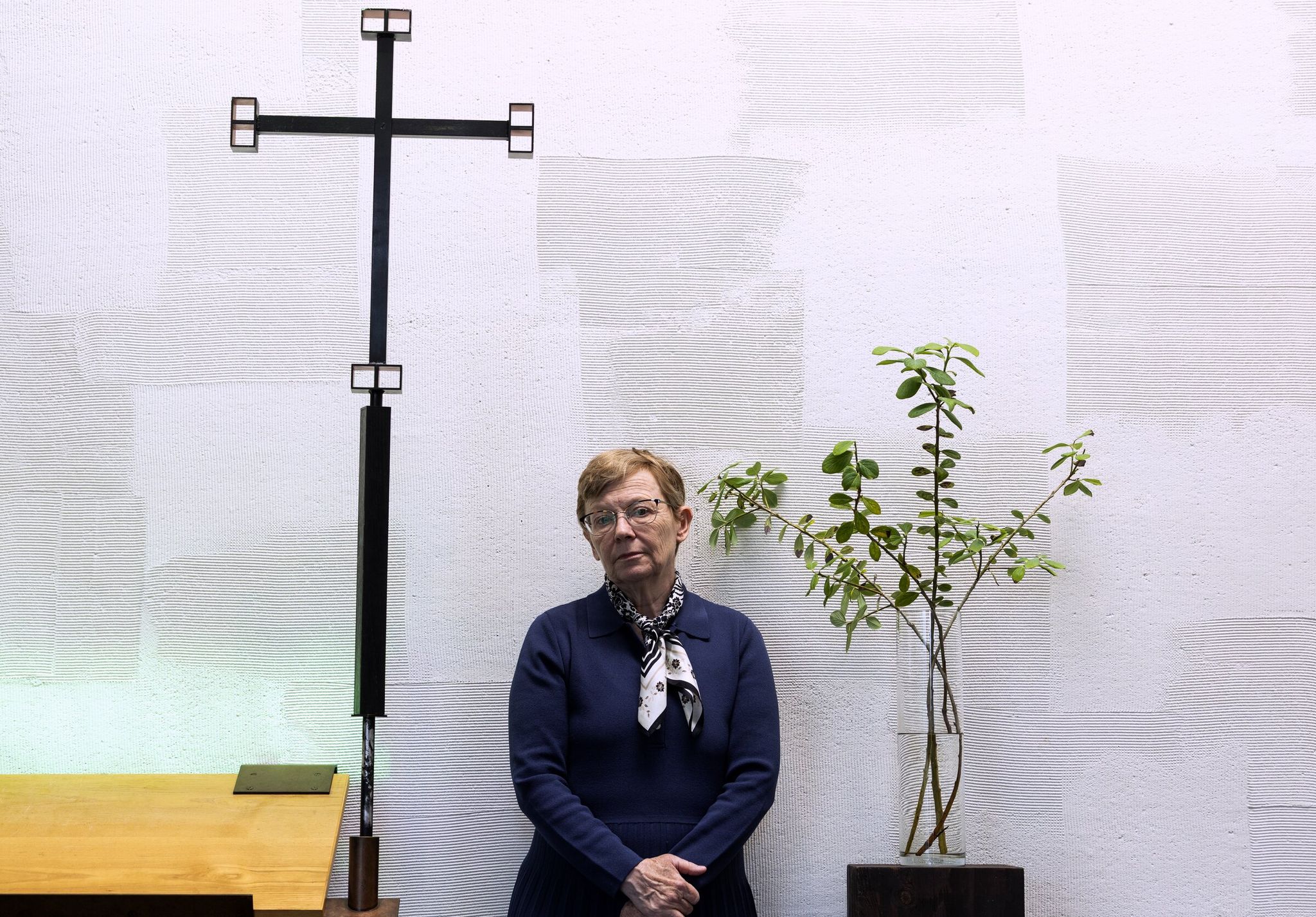
In Seattle, officials are considering indefinite closures of problem streets to combat violence. For the first time, a woman — mathematician Maura Maast — is leading Seattle University.
Seattle Proposes Closing “Problem Streets” Due to Crime and Armed Violence
The Seattle City Council is considering an emergency ordinance that would allow authorities to indefinitely close traffic on certain streets to combat crime and shootings. As reported by CHS Capitol Hill Seattle News, the measure will be discussed on Tuesday at a meeting of the Public Safety Committee. The proposal is being introduced by Seattle City Council member Deborah Juarez, and it is part of Mayor Cathy Wilson’s broader plan to reduce violence on Aurora Avenue, where armed incidents are especially severe.
The proposal is to expand an existing city code that already allows problem alleys to be closed into full streets. The city plans to adopt the provision as an emergency ordinance—this will require at least three-quarters of the council members’ votes, as well as a mutually agreed upon effective date. If the document is approved, the Seattle Department of Transportation (SDOT) would receive authority to close roadways “to maintain or improve public safety.” However, before doing so, SDOT must consult with the police chief. Notably, the ordinance does not spell out a procedure for reopening streets—it only addresses expanding authority to initiate closures.
These measures could become a new tool for tackling crime “hot spots” like those that have formed at the intersection of 12th Avenue and Jackson Street, or on Pike Street and Broadway. Earlier in the same area, Broadway had already seen proposals to close some alleys. At the same time, urban activists continue to argue for closing streets to cars—such as Barbara Bailey Way—to create more comfortable conditions for pedestrians and cyclists. The committee meeting is also expected to include discussion of further development of the CARE Department, which handles crisis response, and clarification of language in the municipal code defining its mission.
The idea of closing streets in response to violence has drawn mixed reactions: on the one hand, it could reduce the number of shootings in the short term; on the other, it remains unclear how and when streets would reopen, and whether this could create additional traffic problems. The city is clearly looking for new levers to address the situation, and this ordinance is just another step in a series of experiments restricting traffic for safety.
Seattle University’s First Woman and Mathematician in Charge
Maura Maast, a former dean at Fordham University and a mathematics professor, has become the 23rd president of Seattle University. She is not only the first woman to hold the post, but, as she notes with a smile, the first mathematician. Her appointment marks an important milestone for the Jesuit Catholic university, which is in the midst of transformation: a merger with Cornish College of the Arts, moving from a trimester system to a semester system, and building a new academic museum tied to a landmark arts endowment. As reported by The Seattle Times, Maast’s selection reflects a broader trend in Catholic higher education, where Jesuit universities increasingly entrust leadership to laypeople rather than priests. Maast herself sees this as a positive shift.
At age 61, Maast arrives in Seattle after ten years as dean of Fordham College in Rose Hill, located in the Bronx borough of New York, where she was also the first woman in that role. She expanded academic advising programs and strengthened fundraising by launching paid internships for students. Before Fordham, she worked as a mathematics professor and administrator at the University of Massachusetts Boston. She earned her doctorate in mathematics from the University of North Carolina, and her specialization is differential geometry, a branch of mathematics that studies smooth manifolds and the curvature of spaces. Maast is the author of the award-winning textbook Math for Common Sense and co-editor of a collection on women’s contributions to mathematics.
As a leader and educator, she calls herself a problem-solver who is driven by the goal of getting students to the finish line. It began in the classroom, where students who were afraid of math were enrolled. At Fordham, she reshaped the advising system after discovering that the need for student support exceeded what faculty could provide. The new system created dedicated full-time advisors who help students with academic performance and choosing majors. “We don’t serve our students if they have to crack codes,” Maast said. This approach aligns closely with the pressing challenges in higher education: officials in Washington State and other regions are sounding alarms about a shortage of graduates with postsecondary education. About one-third of Seattle University students are first-year students from families in which nobody has previously attended college, and a similar share receive Pell Grants—federal financial aid for low-income students.
Maast acknowledges that she stepped away from teaching and research so that her problem-solving skills could benefit a larger number of people. “Mathematics gave me deep satisfaction and changed my life. But as an administrator, I solve problems that affect other people’s lives,” she explains. She also has experience raising funds: she helped secure funding for paid internships for students in the humanities and provided philanthropic support for faculty research, including projects on the ethical use of artificial intelligence.
Maast’s ties to Catholic education run deep. Raised in a Catholic family, she earned her bachelor’s degree at the University of Notre Dame and later became an active member of the Clavius Mathematics Group, an international network of Jesuits and lay mathematicians named for the 16th-century astronomer and mathematician Clavius. She believes in numbers: for her, seeking truth through the construction of mathematical proofs is akin to divine work. Mathematics also teaches that there are different kinds of infinity, including infinitesimal numbers between zero and one. In her view, ideas like these help people grasp the divine. “God is infinite,” Maast says. “God is in the molecules of this table, in the trees outside the window, and in the flying birds. I can’t grasp that.”
She recalls that her path to the presidency of Seattle University happened through “a divine confluence of circumstances.” She received a call from a search consultant while she was on sabbatical after ten years at Fordham, traveling through Jesuit and Catholic universities around the world. If the offer had come a few months earlier, she likely would have been too focused on contemplating the future to say yes. Seattle University drew her in because, in her view, it is putting into practice fundamental Jesuit university principles—especially in a region with deep economic inequality. Jesuit universities, Maast believes, are responsible for bringing together people with different viewpoints and helping students make sense of complex social issues, especially poverty. Rather than avoiding these tensions, universities should prepare students for thoughtful, respectful dialogue. As an example, she pointed to the Sandbaugh Center for Community Engagement, which connects students and faculty with nearby neighborhoods through community-based learning, research, and volunteering. In 2025, the center launched a $500,000 annual program to support youth development and education in Yesler Terrace, a social housing neighborhood located near the campus.
When announcing the appointment, the university’s board of trustees highlighted these priorities in particular—her experience strengthening student support, her commitment to social justice, and her deep academic scholarship. “The board is confident she will lead the university forward with clarity, purpose, and care for the educational mission,” said Patrick Calllans, chair of the board. Maast plans to spend her first months meeting with students, faculty, and staff, walking through the campus, and learning both about the university and the city. “I want every student to know what I look like,” she said. “And that I’m here with them.” And, of course, she intends to find out where in Seattle you can get the best cup of coffee.
Seattle University’s First Woman to Lead
Seattle University, one of the leading Jesuit institutions of higher education in the United States, announced the appointment of Dr. Maura Maast as its 23rd president. It is a historic moment: for the first time in the university’s 134-year history, the president will be a woman. The decision was made unanimously by the board of trustees, and Dr. Maast will begin her duties on September 1.
Maura Maast previously served as dean of Fordham College in Rose Hill at Fordham University, where she was also the first woman in that position. Before that, she was a professor of mathematics at the University of Massachusetts Boston and held several leadership academic posts. “I’m both thrilled and deeply moved to be selected as the 23rd president of Seattle University,” Maast said, noting the university’s commitment to Jesuit values, science, and social justice. Her appointment is an important step for gender equality in higher education, especially in Catholic institutions where women have long been excluded from top leadership roles.
Board of trustees chair Pat Calllans emphasized that Maast brings “steadfast commitment to Jesuit, Catholic values,” as well as experience in higher education and a focus on student success. At Fordham, she expanded the college’s donor base, attracted philanthropic support, launched new advising and internship programs, and supported faculty research and innovation in curriculum. Maast herself is an award-winning professor of mathematics and a specialist in differential geometry, as well as a member of the Association for Women in Mathematics. She earned her bachelor’s degree in mathematics and anthropology from the University of Notre Dame and her doctorate in mathematics from the University of North Carolina.
The previous Seattle University president, Eduardo M. Peñaelver, left the post in March to lead Georgetown University. He was the first Latino president and the first layman to hold the position since the university’s founding in 1891. Maast’s appointment continues a trend toward greater inclusivity in leadership at Catholic universities, where women are increasingly appearing at the top. Her experience in mathematics and administration, along with her commitment to social justice, suggests that Seattle University will continue building its academic reputation and deepening its ties with the community. More on the decision can be read in a KOMO article.