A scandal involving the Storm owner, the return of the Blue Angels without “Fat Albert,” and the way NFL contracts could shape the future of the Seahawks—these are the top stories from Seattle.
Storm co-owner Celeste Keton berated teenage fans supporting Sophie Cunningham
The game between the Indiana Fever and the Seattle Storm in Seattle on July 29 ended with the visitors winning 105-95, but the incident drew attention not so much for the score as for what happened off the court. As Yahoo Sports reports, Storm co-owner Celeste Keton verbally insulted two teenage girls who attended the game holding signs supporting Indiana reserve defensive back Sophie Cunningham. The incident came amid recent comments by Cunningham about the need to “protect women’s sports”—those words sparked a wave of debate, but also rallied supporters.
The girls held signs reading “We love Sophie” and “Thank you, Sophie, for telling the truth.” According to them, they were simply watching the game, not bothering anyone, and cheering for both teams. Suddenly, an elderly woman approached them—and it turned out to be Celeste Keton. “I’ve never heard anyone yell at me like that in my life,” one of the girls said. “I thought she would be friendly, but she started yelling and cursing.” Witnesses claim that Keton referred to the girls as “crazy” using explicit language. The teenager began to cry; trying to call security went nowhere—security was instead told to write it up in the club office.
The incident happened against the backdrop of a Cunningham support action organized before the game. Cunningham herself, in a prior interview with ESPN, said she would like to protect young athletes from competing against transgender women. “I’ve never said that I hate transgender people,” she emphasized. “I’m for love and truth. But I want to protect girls in the locker room and on the field who shouldn’t be competing with biological men.” Those remarks drew a mixed reaction: some in the audience accused Cunningham of being transphobic, while others backed her.
The situation with Keton became especially heated because the club owner is a public-facing figure, and her actions are seen as the organization’s official position. The Seattle Storm has not commented on the incident yet, but reporter Brandi Cruz—who reported what happened—stressed that the teenagers were not behaving aggressively; they were simply expressing an opinion that has a right to exist. The episode has once again raised the question of how ready professional sports are to tolerate different viewpoints—especially in the context of the heated debate over transgender athletes. One key issue is the lack of clear conduct rules for team owners, who in a moment of emotion can cross boundaries, which is unacceptable, particularly when dealing with underage fans. The club’s response to this incident will be a test of the inclusive and respectful values it claims to hold.
Blue Angels return to Seattle: without “Fat Albert,” but with thunder over the lake
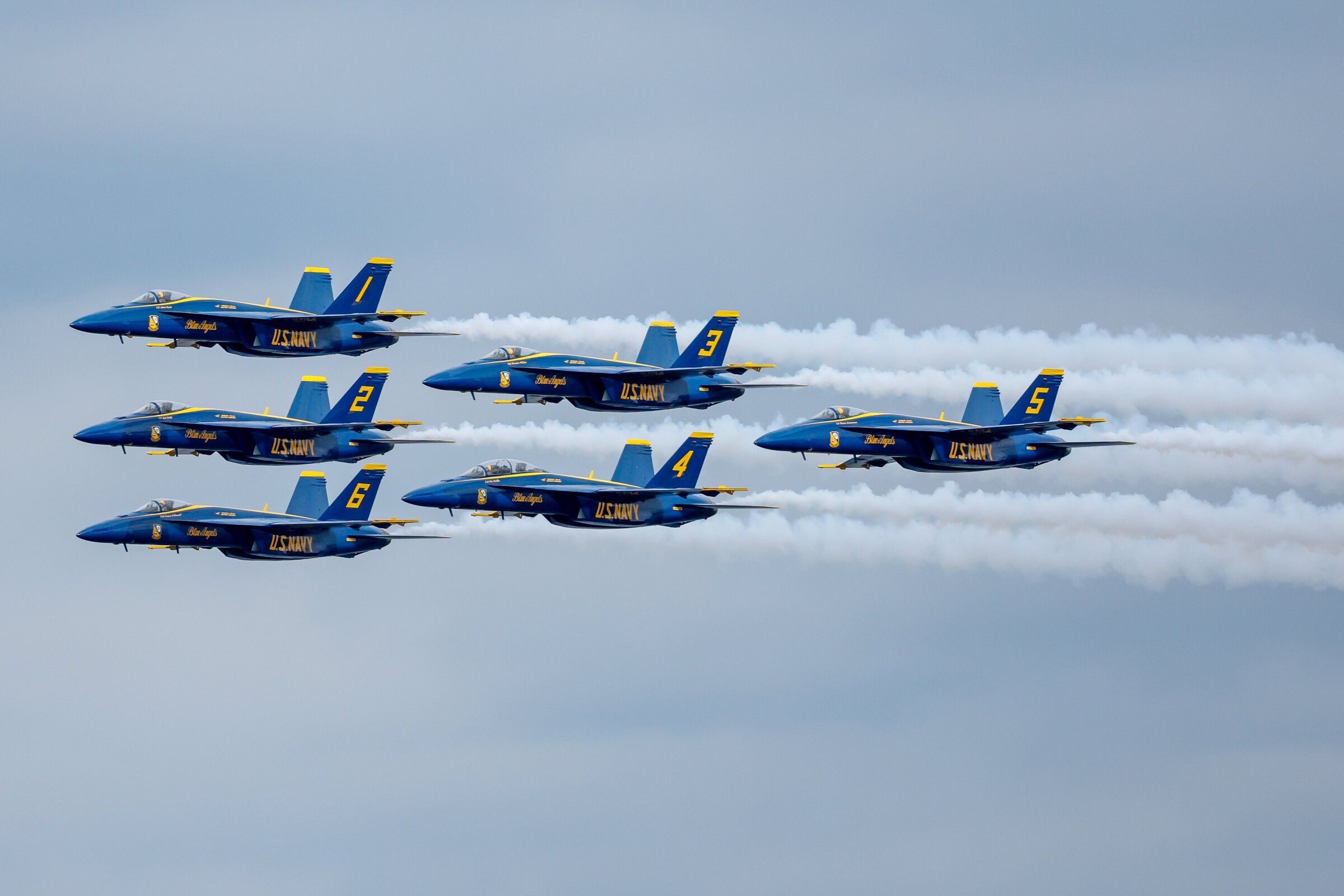
Every summer, Seattle residents crane their necks when F/A-18 Super Hornet jets from the U.S. Navy’s famous precision flying team, the Blue Angels, sweep through the sky above the city. This year, the Seafair Weekend Festival runs Friday through Sunday, and Boeing’s signature air show promises to be spectacular once again. But there’s an important difference: for the first time in many years, the Blue Angels will not be accompanied by the legendary transport aircraft C-130 Hercules nicknamed “Fat Albert.”
That plane—pushing performances since the 1970s with eye-catching takeoffs and maneuvers—was sent for scheduled maintenance to the UK back in November of last year, and it will return next season. So viewers will get the classic performance of six fighter jets, but without the familiar “warm-up” from the heavy transport.
The show kicks off as early as Thursday with practice flights from 11:00 a.m. to 1:00 p.m. and from 3:30 p.m. to 4:30 p.m., though organizers warn the schedule may change and that the run-throughs are not guaranteed. Official performances are set for Friday, Saturday, and Sunday from 3:30 p.m. to 4:30 p.m. each day. Notably, the Friday show is free—it’s paid for by Windermere Real Estate—while Saturday and Sunday require tickets to watch from Genesee Park. This year’s program also includes civilian pilots, vintage aircraft, and parachute demonstrations. Participants include the National Archives Boeing 737 “Freedom Plane,” a 500-pound microjet aircraft by Torrey Ward, and the amphibious Consolidated PBY-5A Catalina 9767.
Where’s the best place to watch? The Blue Angels typically fly over the southern portion of Lake Washington—directly across from Genesee Park in south Seattle. Argosy Cruises, which offers sightseeing cruises during the show, recommends free viewing spots: Seward Park, Lake Washington Boulevard, Mount Baker Park, and the community of Stən-Sayers, as well as beaches on Mercer Island. But parking in many of these locations is limited, so organizers encourage people to use public transportation. In addition, the Museum of Flight hosts special weekend events on Saturday and Sunday, with opportunities to watch aircraft takeoffs and landings. The I-90 bridge connecting both sides of the lake will be open throughout the weekend.
In recent years, Blue Angels shows have increasingly faced criticism due to the deafening noise that irritates residents and scares pets. The debate flared up especially after an incident on July 15, when a member of the team flew eerily low over a beach in Pensacola, Florida. Even so, for thousands of viewers, Seafair remains one of the biggest summer events. As The Seattle Times notes in its article, a record 225,000 people came to watch the team last year—and organizers are expecting no less this time. Read more about the history and specifics of the show in the original piece by The Seattle Times.
Baker Mayfield and Jalen Carter: what the new market means for Sam Darnold and Byron Murphy Jr.’s future contracts with the Seahawks
In the NFL, each offseason brings a recalibration of players’ salaries, and this week’s news is especially important for the Seahawks. Two developments—the collapse of negotiations between Baker Mayfield and the Tampa Bay Buccaneers, and Jalen Carter’s record contract with the Philadelphia Eagles—create a new backdrop for Seattle’s future talks with quarterback Sam Darnold and defensive tackle Byron Murphy Jr. Both players are entering the final years of their current contracts, and how their league counterparts’ deals progress will directly affect how much the Seahawks are willing to offer.
Let’s start with Baker Mayfield. As ESPN reports, he’s heading to training camp without a new agreement and will play the final year of his $100 million contract before becoming an unrestricted free agent. The parallels with Sam Darnold are striking: both quarterbacks went through difficult years with different teams before hitting their breakthrough. Their salaries are almost identical: Darnold makes $33.5 million per year (15th among quarterbacks), while Mayfield makes $33.33 million (16th). No other QB has an average annual value between $23 million and $43 million, creating a unique “island” in the league’s salary structure.
Previously, it was expected that a new Mayfield contract could set the benchmark for Darnold. As ESPN analyst Bill Barnwell explained on Seattle Sports, if Mayfield were to get, say, $50 million per year, Darnold’s agent could argue for $52–55 million, citing a Super Bowl win, a stronger arm, and consistent performance. Now that negotiations have stalled, the Seahawks are left in uncertainty: either negotiate with Darnold while the quarterback market hasn’t set a clear floor yet, or risk him testing free agency in 2026.
The second piece of news is a record contract for defensive tackle Jalen Carter. Philadelphia signed the tight end—though he’s actually a defensive tackle—for four years, $152 million, with the possibility of increasing to $160 million. The guaranteed amount of $106 million and average annual value of $38 million are the highest figures ever for this position. Before Carter, only two players had average annual values above $30 million: Jeffrey Simmons ($35.28M) and Chris Jones ($31.75M). Drafted 9th overall in 2023, Carter recorded 13.5 sacks and 25 sacks for losses over three seasons. Byron Murphy Jr., the 16th pick in 2024, just had a breakout season with 7 sacks and is now clearly aiming to become one of the highest-paid defensive tackles.
For the Seahawks, that means negotiations with Murphy will unfold in a suddenly inflated market. If the benchmark was about $30 million a year not long ago, agents can now cite $38 million. That said, Murphy is still in his second season, and the situation with his contract won’t become fully relevant until a year from now. Still, it’s already clear that Seattle will either have to pay market rates or find a compromise.
Taken together, both stories—the failed Mayfield deal and Carter’s record contract—set the stage for future decisions in Seattle. For Darnold, the lack of a clear benchmark could help the club drive the price down—or complicate negotiations if his agent pushes for more based on the uniqueness of the situation. For Murphy, it sends a clear signal that the cost of young, high-talent defensive tackles will keep rising. As the author of Seattle Sports wrote in their article, all of this could fundamentally affect the Seahawks’ budget in the next offseason. The team will have to decide whether they’re willing to shell out $50+ million for a quarterback and $38+ million for a defensive tackle—or whether they’ll have to part ways with someone among their stars.