Today’s news digest focuses on Seattle: star baseball player Julio Rodríguez of the “Mariners” is out with a concussion but is expected to return after the All-Star Game; Mayor Kеtie Wilson is facing pushback from the city council over her free school meals program; and a radio show host criticized her proposal to ban “junk fees” hidden in rental agreements, warning that base rent will rise.
Julio Rodríguez Will Miss the Final Series Before the Break, But Will Return After the All-Star Game
Seattle Mariners center fielder Julio Rodríguez will not play in the final series of the first half of the season against the Tampa Bay Rays, but the club hopes he’ll be back after the break for the All-Star Game. Rodríguez was placed on the 7-day injured list (IL) with a concussion following an incident in a game against the Los Angeles Angels on July 4. In that moment, he was hit in the back of the head with a thrown ball while running from first to second base in the bottom of the first inning. The player stayed in the game for another inning, but was replaced by Víctor Robles in the top of the third.
Rodríguez is currently working with the team’s staff at T-Mobile Park in Seattle while the Mariners are on a six-game road trip through Florida.
Team manager Dan Wilson confirmed to reporters that Rodríguez is gradually ramping up his workload and is feeling better. “Julio continues to work. Baseball practices become more intense every day, and that is a very positive sign. I think that by the time the break comes around, he’ll be able to reach a condition where the symptoms are completely gone and he’ll be ready to return to the field after the break,” Wilson was quoted as saying by Seattle Sports. He is expected to return in the home series against the San Francisco Giants next Friday after the All-Star break.
In addition, the manager addressed the status of utility player Brandon Donovan, who has been sidelined since mid-May with a groin muscle strain. The precise timeline for a rehab assignment has not yet been announced, but Wilson said it is coming soon. “We just want to make sure he’s fully ready. He’s checking all the necessary boxes, and I think in the coming days he’ll begin baseball activities as part of his rehabilitation,” Wilson added. For the Mariners, Rodríguez’s return is a key moment: the All-Star-caliber center fielder is a team leader both offensively and defensively, and his absence has been felt strongly in the results.
Seattle Mayor Hits a Roadblock: City Council Suggests Delaying Free Meals for All Students
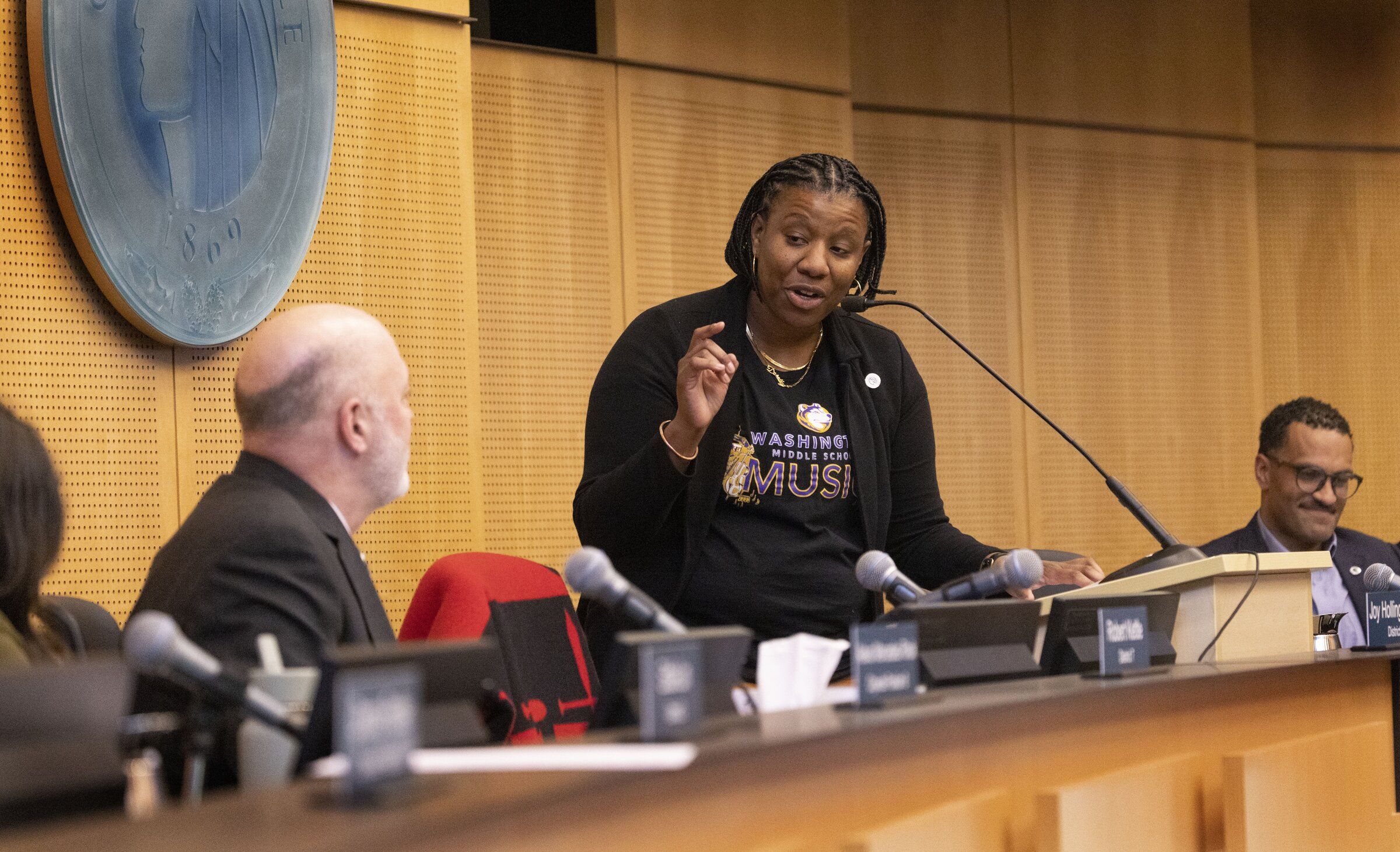
Mayor Kаtie Wilson’s plan to provide free school lunches for all students in Seattle has met resistance from the city council. At last week’s meeting, councilmembers proposed significantly postponing implementation of the initiative, as well as the preschool voucher program, in order to direct funding to support low-income families. As reported by The Seattle Times, amendments put forward by council president Joy Hollingsworth and councilmember Dionn Foster would shift the start of universal free meals for Seattle public school students to the 2027–2028 school year. Instead, the proposal is to invest the freed-up $3 million into an existing child food assistance program for low-income families, which operates on weekends and during school breaks.
Previously, Mayor Wilson announced the use of $1.3 billion in voter-approved property tax funding from November to introduce free breakfasts and lunches in all Seattle schools. About half of the schools already provide such meals, but Wilson wanted to make them universal so that no child would go hungry. In her written statement, she emphasized, “We shouldn’t delay the implementation of this proven universal policy, which we know will change the lives of children and families.” She also noted that the plan includes backup mechanisms to ensure funding for the program for at least through 2031.
However, councilmembers raised concerns about the long-term sustainability of the initiative. The main risk, they said, is tied to the recently adopted Washington tax on high incomes (the so-called “millionaires tax”), which is intended to be an additional funding source for school meals starting in 2029. The tax is already being challenged in courts by conservative organizations, and if it is overturned, the program would be in jeopardy. “Delaying by one year gives time to see whether the long-term viability of this program is threatened,” the amendment states. According to Dionn Foster, the proposed compromise would allow resources to be focused on the students who need them most, which better aligns with the principles of racial equity built into the targeted tax. She called it a “no-lose situation.”
A second amendment concerns a pilot program for preschool education vouchers (the Seattle Preschool Program), which the mayor has also promoted. Rather than launching it in 2026–2027, the council proposes redirecting more than $920,000 from that budget to strengthen food assistance for low-income families. Notably, the preschool program itself, launched back in 2015, has already proven effective at reducing racial gaps in children’s readiness for school—but due to long waitlists, many families cannot get into it.
A final vote on the package of 11 amendments in the council committee overseeing the education tax is scheduled for July 22. If the amendments are adopted, it would be a significant blow to one of Mayor Wilson’s key campaign promises. At the same time, supporters of the delay argue that the approach is more rational: first provide food to those who need it most, and then, with stable funding, expand the program to all students. The question of how quickly Seattle can implement fully universal school meals remains open.
“I Don’t Know When People Will Figure It Out”: John Curley Criticizes Seattle Mayor’s Proposal to Ban Hidden Rent Fees
Seattle Mayor Kаtie Wilson has put forward a proposal to ban so-called “junk fees” in rental agreements for housing. However, John Curley, the host of a radio show on KIRO Newsradio, sharply criticized the initiative on air, saying it would not make housing more affordable, but would instead shift the burden to all renters by raising base rent. In comments for MyNorthwest.com, Curley noted that Seattle residents constantly vote for new taxes and programs, but do not realize that, in the end, they pay for them themselves—through their rent.
Curley gave a concrete example: suppose an apartment rents for $2,300 per month. Of that amount, $300 to $350 goes toward a property tax that is already built into the rate. Add votes for family support and education programs—those also land on the renter. And there is the Climate Commitment Act, which, according to Curley, adds another $35 to $50 to the same rent. And this is only the tip of the iceberg.
Junk fees include, for example, charges for pets, additional services, or paperwork fees. The mayor believes that eliminating them would reduce the financial burden on renters. But Curley sees it differently: “You think the landlord won’t pass those costs on to everyone?” If you remove the pet charge, the damage from a ruined carpet or furniture will be spread across all renters—even those who don’t have a cat or a dog. The same goes for raising the minimum wage: property owners would simply add those costs into the rent rate.
Curley emphasized that in Seattle people are used to solving problems with “big government,” but in reality every new law or tax ultimately hits the pocket of the very voters who supported it. “When are people going to realize they’re paying for everything themselves?” he fumed. “You think the government is going to come in and make life more affordable? It never has, and it never will.” In his view, instead of banning specific fees, lawmakers should consider the combined effect of all municipal decisions that ultimately turn rent into an unaffordable burden.
This stance reflects a long-running dispute between those who support regulating the housing market and those who believe that any restrictions only drive prices higher. The Climate Commitment Act that Curley mentioned is a program in the state of Washington to reduce carbon emissions, funded by the sale of pollution allowances. Consumers do feel its impact on fuel and utilities—and, as Curley’s argument shows, these added costs are included in rent. So, even if the mayor’s proposal seems well-intentioned, it could lead to all renters—regardless of whether they have pets or use additional services—paying more for base rent, which is unlikely to make Seattle more livable.