Seattle is having a packed day: the “Mariners” have announced their starting trio of pitchers for a series against the “Giants,” the “Kraken” have unveiled an expanded 2026–27 season calendar with games in Helsinki, and an unexpected thunderstorm briefly disrupted the city’s summer calm.
Mariners’ starting trio for the Giants series: Rayan’s return and rotation intrigue
Immediately after the All-Star break, the Seattle Mariners begin a home series against the San Francisco Giants, and the club has already announced its pitchers for three games over the weekend. On Friday, right-hander Bryce Miller will take the hill with an impressive 2.18 ERA, and his counterpart will be Landen Roupp. The Saturday game goes to Bryan Woo, who, with a 4.23 ERA, has shown an uneven but promising performance; he will face the Giants’ rotation leader Logan Webb, who has a 3.86 figure. The series finale is set for Sunday: Logan Gilbert (3.32 ERA) will square off against a familiar name for Seattle fans—Robby Ray, who moved to San Francisco after the 2023 season. Ray, the 2021 Cy Young Award winner with the Mariners, has already faced his former team twice since the trade and has allowed just two runs in nine innings. This matchup will be his third since leaving.
Notably, Seattle currently has six starting pitchers, and it remains unclear how workload will be managed after this series. As the Seattle Times reports, citing insider Ryan Divish, each of the six is expected to get one start after the break—meaning that in the home series against the Cincinnati Reds, Luis Castillo, George Kirby, and Emerson Hancock would be the ones to go. However, a return to a “piggyback” strategy is also possible (when two pitchers share one game: one starts while the other throws the bulk of the innings). This tactic was used earlier in the season due to a lack of pitching depth, but now that the team has a sixth quality starter, it may be needed again to manage workload.
For those unfamiliar with baseball statistics: ERA (Earned Run Average) is the average number of earned runs a pitcher allows per nine innings. The lower the number, the more effective the pitcher. An ERA below 3.00 is considered excellent, and Miller’s 2.18 this season is second-best in the American League, pointing to dominance. The story of Robby Ray adds extra drama: in 2021 he won the league’s top pitcher award playing for the Mariners, then landed a big contract—but after an injury and inconsistency, he was traded to San Francisco. Now he’s showing strong form (8 wins, 6 losses, 3.38 ERA) and will be motivated to prove that the teams that moved on from him made a mistake.
The key takeaway: the Mariners are approaching the second half of the season with a strong, deep rotation—five pitchers with ERAs below 4.30, and all healthy. The decision on whether to use six starters and possibly return to “piggyback” will depend on the results of the series against the Giants. For fans, that means the team is trying to keep its arms fresh in the push for a playoff spot, where every game is worth its weight in gold. The full list of announced starting pitchers is available in the original article on Seattle Sports. Games begin Friday at 7:10 p.m. local time; radio coverage starts with a pregame show at 6:00 p.m. on Seattle Sports 710 AM and in the app.
New Seattle Kraken season: 84 games, matches in Helsinki and schedule changes
In the upcoming 2026–27 season, the Seattle Kraken will face an unusually long regular-season stretch—NHL has increased the number of games from 82 to 84, while cutting the preseason from six games to four. This expanded calendar has been used by the league before, from 1992 to 1995, but since the 1995–96 season teams have played 82 games. Now, the Kraken will open the season on the road against the Calgary Flames on October 1, and then host the same team at home on October 4. The standout feature of the schedule, however, will be two “home” games in Helsinki at the Hartwall Arena against the reigning Stanley Cup champions, the Carolina Hurricanes, in November. The trip to Finland will be wrapped by a long run on home ice: before it, Seattle will play six of seven games at home, and after it, nine of thirteen.
The calendar turned out to be quirky: the team has nine separate road games, one in each of the following cities—Calgary, San Jose, Edmonton, Anaheim, San Jose again, Vancouver twice, Anaheim again, and Las Vegas. Typically, the NHL tries to group trips—for example, games against the Anaheim Ducks and the Los Angeles Kings are often scheduled in a single swing through Southern California. Here, though, the Kraken will have to make four separate trips to that region. Such a logistical challenge is likely tied to the league’s desire to vary the schedule and give more local fans opportunities to see their team, but for the players it means extra flights and a disrupted rhythm. To make weeknight home games easier for viewers, Monday through Thursday match times have been moved to 6:40 p.m. local time—a decision made after polling season-ticket holders.
A date that could become especially notable is December 10, when the Washington Capitals—featuring Alexander Ovechkin—visit Seattle. For the Russian sniper, this could be his last trip of his career, given his age and the ongoing chase for the Gretzky record. The Kraken’s All-Star break will begin on February 4 and last nine days. The season will end with a four-game road trip through the Midwest: Dallas, Nashville, St. Louis, and Chicago, with the final game on April 10 against the Blackhawks.
As for ticketing, the club has rolled out the “Build-A-Pack” program: fans can assemble a bundle of three to nine games with discounts up to 32% compared with single-game tickets. Half-season and full-season memberships are already available; they offer 25% off food and drinks, priority for the playoffs, and access to ticketed private events. The cheapest single-game tickets start at $65.50, the lowest price in the team’s six-season history. Tickets go on sale to the general public on July 21, and American Express cardholders can purchase them a day earlier, on July 20. As the article emphasizes, increasing the number of regular-season games is a return to a format that hasn’t been used in thirty years, and it will inevitably affect how teams prepare and the workload on players. It’s worth noting that the FOX 13 Seattle release also mentions rookie contract signings and draft picks, but the biggest news is the calendar and ticketing flexibility. For Kraken fans, this kind of season will be a test of endurance: more hockey, new logistical quirks, and possibly a historic farewell to one of the league’s greatest legends.
Thunder over Seattle: a skyward barrage that won’t last long
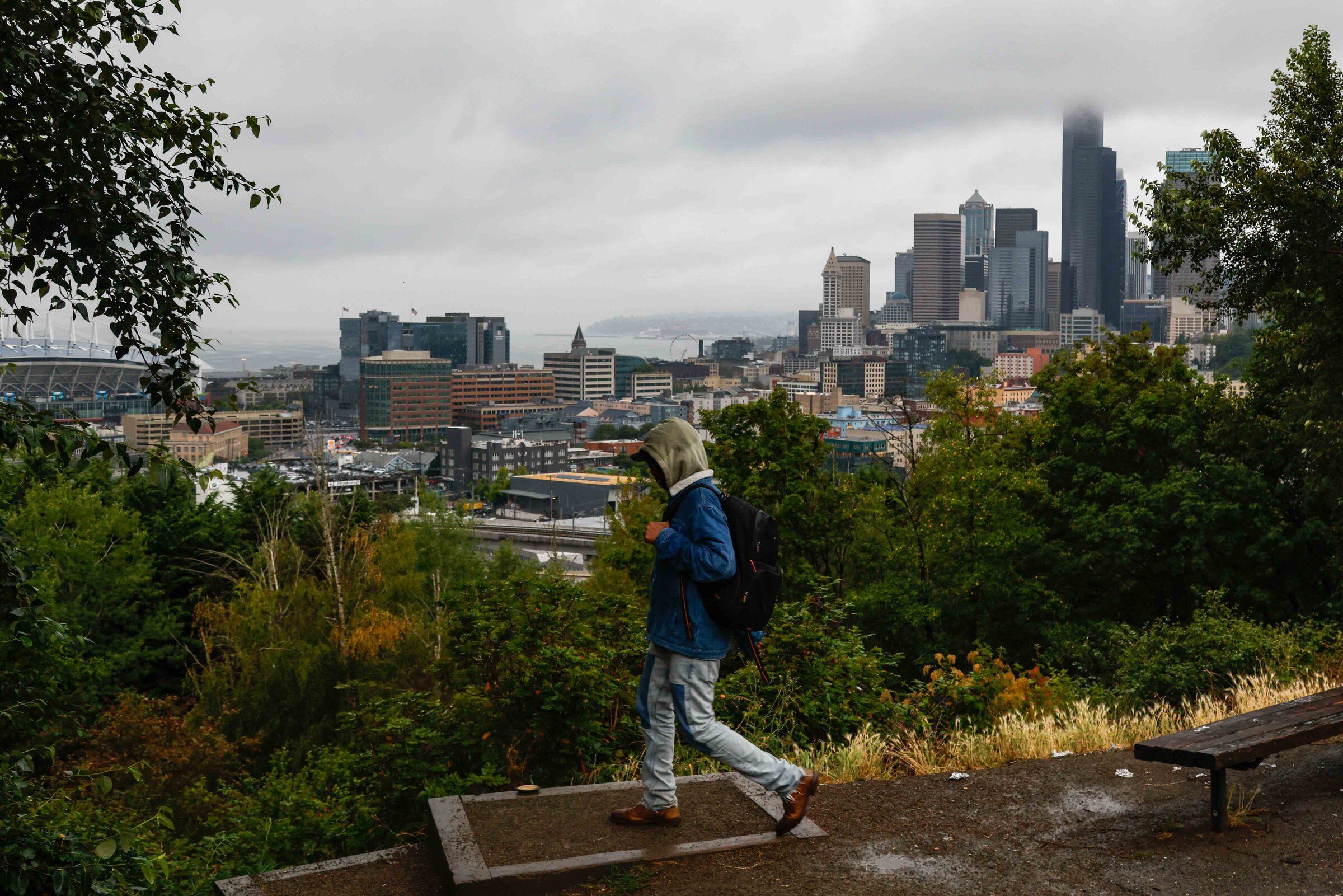
Residents of Seattle, used over the past few weeks to scorching sunshine and summer heat, suddenly heard real thunder roll over the city. The sky—clear just moments earlier—filled with heavy gray moisture, and a short downpour swept over the streets. It was a sharp, but as forecasters promise, brief incursion of a thunderstorm front that caught many off guard—reminding everyone that the weather in the region can always surprise. By evening, though, the system should move on, and the city will once again be under the sunny warmth typical of mid-August.
The thunderstorm that hit Seattle Thursday morning wasn’t just a whimsical bit of nature—it was a fairly serious event. As meteorologist Dev McMillian of the National Weather Service said in a post for The Seattle Times, through midday the city would see frequent lightning, and brief periods of rain with possible hail were also possible. The specialist warned that in such weather it is dangerous to be near tall trees and utility poles—lightning strikes the highest objects. Fire risk is a particular concern: the dry summer has left plenty of dry underbrush that ignites easily, and lightning can strike as far as 16 kilometers from the center of the storm, even where there’s no rainfall at all. Air travel was affected too: at Seattle–Tacoma International Airport, a temporary ban on takeoffs and landings was issued for nearly an hour and a half, and then an additional restriction affected Delta Air Lines flights. Such measures, called “ground stops,” are used for safety when weather conditions suddenly deteriorate and visibility drops due to gusty winds or heavy precipitation—in this case, the cause was a lightning-producing thunderstorm that can damage ground equipment or create hazards for personnel on the airfield.
Fortunately, the phenomenon is expected to be short-lived. The storm front is moving from south to north and by mid-day will shift toward the Olympic Mountains and the Cascade Range, leaving behind only a 20–30% chance of additional thunderstorms and scattered showers. And on Friday, according to the forecast, Seattle residents will see a return to clear skies and near-ideal late-summer temperatures—around 24–25 degrees Celsius (75–78 °F). The weekend will also bring sunshine, and on Sunday the temperature readings will climb again to about 27 °C (80 °F). So this sudden thunderstorm episode is only a quick reminder that even in the middle of steady summer, nature can still make adjustments—but within a day, all that will remain will be wet leaves on the pavement and the lingering sense of surprise at an unexpected change of scenery.