Day in review: the Seahawks await Darnold’s return but lose defensive players, the Mariners were officially eliminated from playoff contention after a disastrous September, and an unusual donut tour is taking visitors around Seattle, revealing the city’s history through its local bakeries.
Seahawks: Good News on Darnold and a Warning Sign on Defense
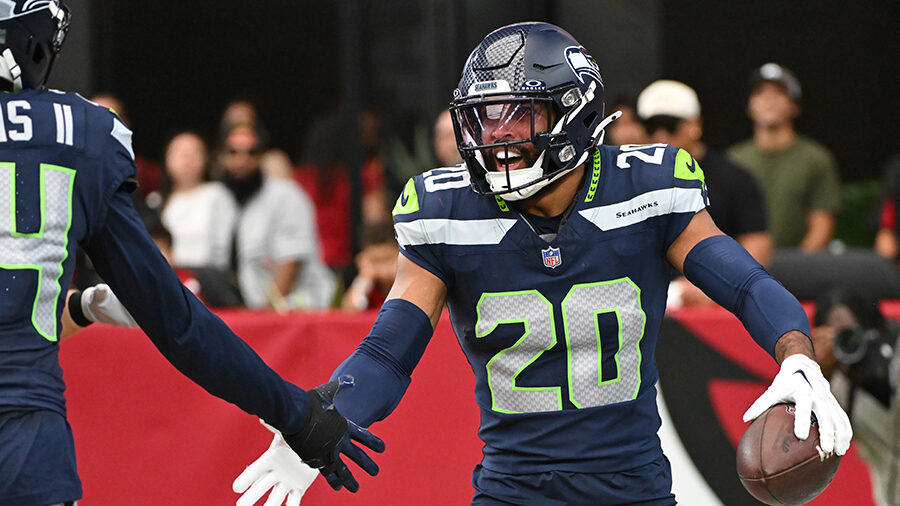
The Seattle Seahawks’ injury report on Thursday gave fans two sharply contrasting reasons for concern and optimism. On the one hand, the team appears likely to get its starting quarterback, Sam Darnold, back—and that is exactly the news Seattle has been waiting for since the start of the season. On the other, Julian Love’s unexpected appearance on the injury report was a reminder that the Seahawks’ defensive depth is currently being held together by little more than hope. That is the picture presented in a Seattle Sports report, which truly contains both good and bad news.
Let’s start with the positive. Sam Darnold, who suffered a glute injury on the opening drive of the season, took part fully in practice on Thursday for the first time since the injury. He had been limited the previous day, which was itself the first step toward a return, but full participation means the quarterback is moving in the right direction and could well take the field Sunday against the Washington Commanders. Before practice, Darnold told reporters that he felt good and was “really pushing” to play this weekend. For a team that began the season with questions at quarterback, it is arguably the biggest news of the week.
There is, however, a troubling side to the report. Julian Love, one of the key players in the secondary, unexpectedly appeared on the report with a calf injury and did not participate in practice. Notably, he was not listed at all on Wednesday, suggesting the injury is new and adding to the uncertainty. The situation is made worse by the fact that the Seahawks’ safety position was already in poor shape. Ty Okada, a fourth-year player, is dealing with a hamstring injury and missed his second consecutive practice. Rookie Bud Clark, a second-round pick, was lost for the season during the preseason after suffering an ankle fracture. As a result, the team’s 53-man roster is left with only three nominally healthy safeties: Rayshawn Jenkins, Nick Emmanwori and A.J. Finley. Emmanwori, however, has played more of a hybrid role than that of a traditional safety. Jenkins, signed from the practice squad on Wednesday, has played the last two games in Okada’s place and will apparently make his third straight start against Washington.
As for the other injuries, rookie running back Jaden Shirden was limited for a second straight practice because of a chest injury suffered in the Week 2 victory over the Arizona Cardinals, a 31–7 win. Several other players, along with Darnold, improved their status. George Holani, dealing with a neck injury; fullback Brady Russell, with a chest injury; receiver Cooper Kupp, with a back injury; and linebacker Ernest Jones IV, with a neck injury, all practiced fully after being limited Wednesday. Nose tackle Brandon Pili also took a step forward, moving from “did not participate” to “limited participation” while dealing with a concussion and a neck injury, although the neck issue was a new addition to the report.
The main takeaway is simple: Darnold’s return could stabilize an offense that has shown uneven play even at 2–0—a topic columnist Stacy Rost has already addressed in discussing three major questions facing the Seahawks’ offense. At the same time, Love’s injury and Okada’s lingering absence leave the defense vulnerable, particularly against Washington, which can attack effectively through the air. If Love cannot play, the Seahawks will have to rely on an improvised safety combination, almost inevitably creating additional risks deep down the field.
For those unfamiliar with the terminology, a safety is a defensive back who plays deep in the secondary and helps defend against long passes, so losing several players at the position can seriously undermine a team’s ability to stop the deep ball. “Full participation in practice” means a player worked without restrictions and, in the coaching staff’s assessment, is close to returning, while “limited participation” signals that the medical staff is not yet ready to clear the player for a full workload. A nose tackle is a powerful defensive lineman whose job is to push through the middle of the opposing offensive line.
It is also worth remembering another development mentioned by Sports Illustrated in the context of the club’s latest news: head coach Mike Macdonald has already commented on leaked remarks he made about Denver Broncos coach Sean Payton, while the club placed Anthony Bradford on injured reserve and signed a safety to the active roster. Taken together, all of this shows that the Seahawks are operating amid constant roster reshuffling, with every new injury forcing the coaching staff to improvise. Thursday’s report is therefore more than a list of names—it is an indicator of how fragile the team’s balance remains ahead of an important game.
A Culinary Route Through Seattle: How Donuts Tell the City’s Story
Seattle is known for its coffee boom, music scene and Pike Place Market, but the city has another culinary attraction that many tourists know little about. It is an unusual walking tour that combines two seemingly unrelated pleasures: fresh donuts and an introduction to the city’s history. The Seattle Underground Donut Tour has operated in the city since 2018 and has since become a genuine alternative to traditional sightseeing excursions. The two-hour walk through downtown Seattle includes stops at several local bakeries, each with its own story and loyal customers.
The route begins at the flagship Top Pot Doughnuts store, one of the city’s best-known donut brands. Company founder Mark Klebeck says taking part in the tour gives both tourists and locals a chance to see a familiar product in a new way. Guests come, he says, to try “handcrafted donuts” and house-roasted coffee, and the experience becomes part of a larger outing rather than simply a snack. The group then heads to Doce, stops at the Amazon Spheres—the famous glass spheres on Amazon’s campus, where participants can enjoy their dessert in peace—and continues to Dahlia Bakery, associated with renowned Seattle restaurateur Tom Douglas.
Tour guide and manager Deb Harick emphasizes that the appeal of the format extends far beyond the donuts themselves. “Fried dough has been present in every culture throughout history,” she says, while donuts are the kind of food people deliberately go out to get and therefore are always connected with memories. Harick also speaks directly about the tour’s mission: supporting local businesses, which she calls “the heart and soul of Seattle.” The route ends at Daily Dozen Doughnut Company in Pike Place Market, a location that is itself a symbol of the city and a must-see stop for any traveler.
A review from Lisa Sprague, a tourist from Michigan, is telling. She said the tour took her to places she probably would not have visited on her own, allowed her to try excellent donuts and taught her a great deal about the history of Seattle and Pike Place Market. Her experience illustrates how a local food tour can serve as a cultural guide. More information about the tour is available from KIRO 7 News, which covered one of the excursions.
The key point is that the Seattle Underground Donut Tour is not merely a dessert tasting, but a carefully designed economic and cultural initiative. It supports small businesses, introduces visitors to the city’s history and creates an emotional connection with the place through food. In Seattle, where competition for tourists’ attention is fierce, the format is a winning one: it is less expensive than traditional attractions while still providing a sense of authenticity and local character. The word “Underground” in the tour’s name refers to Seattle’s well-known history: after the Great Fire of 1889, the city was essentially rebuilt above the old street level, creating underground passageways that are now tourist attractions as well. In this way, even the project’s name helps immerse visitors in the city’s history, while the donuts become a universal language understood by every guest.
“The Broken Bat” as an Ominous Sign: How the Mariners Lost Their Way to the Playoffs
The Seattle Mariners’ season ended before the calendar did—and it is all the more painful because the decisive blow did not come in a battle with the league’s powerhouses, but against what appeared to be an ideal schedule. The club, which reached Game 7 of the American League Championship Series last year and won its division for the first time in a quarter-century, was officially eliminated from playoff contention in 2026 after the Texas Rangers defeated the New York Mets 3–1 on Thursday afternoon. The result erased even Seattle’s mathematical chances. To reach the postseason, the Mariners needed to win all four of their remaining games while both Texas and Houston lost all four of theirs. Only that scenario would have produced a three-way tie atop the AL West, with Seattle holding the tiebreaker advantage. But the miracle never came.
The most frustrating part is the context of the failure. Entering September five games back, Seattle received perhaps the softest schedule of any contender: 22 games, including three against the Rangers, two against the Astros and 17 against the Athletics, Angels and Rockies—the three worst teams in the league this season. It was not merely a favorable schedule, but effectively an invitation to the playoffs. Instead, the team went 8–10 through the first 18 of those games. That collapse, rather than any single loss or outside result, sealed its fate.
The contrast with preseason expectations is striking. After last year’s success, the analytical service FanGraphs gave the Mariners a 59.9% chance of winning the AL West, an 80.9% chance of making the playoffs and a 9.5% chance of winning the World Series. Only the Los Angeles Dodgers ranked higher in all three categories. In other words, Seattle entered the season as the division favorite and one of the leading contenders for the title, but will finish 73–85—the team’s first sub-.500 full-season record since 2019, ending the best run in franchise history of five consecutive winning seasons.
The ominous symbolism surrounding the Mariners deserves special attention. The year began with the unveiling of a statue of legendary player Ichiro Suzuki holding a cracked bat. In a season when the club was pursuing its first consecutive playoff appearances since 2000–01, the detail feels almost too revealing. Instead of October baseball, Seattle will watch the postseason from home for the third time in four years. The question is no longer how to defend a title, but how to explain such a rapid decline.
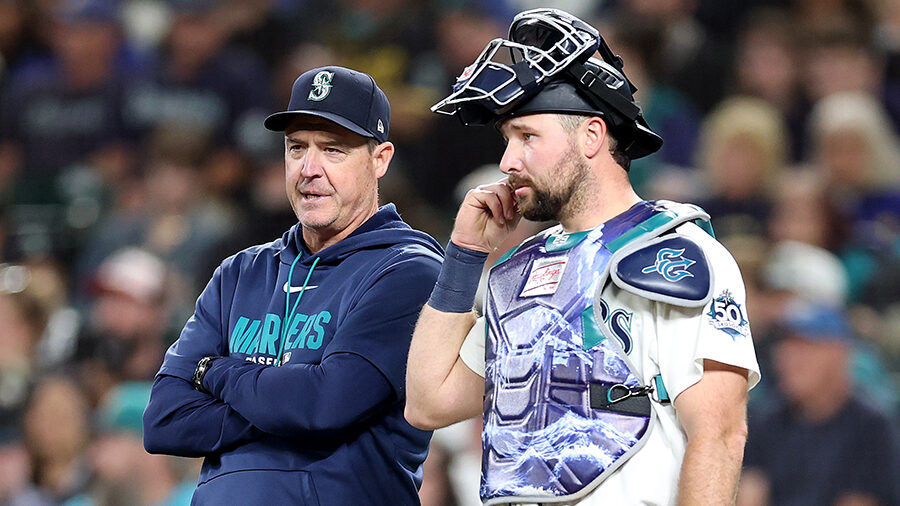
The causes will require serious examination. Seattle Sports also mentions injured players, a special chest protector featuring Rick Rizzs that Cal Raleigh prepared, and whether J.P. Crawford can justify his return to the Mariners in 2027. The last point is particularly revealing: the club is already being forced to think about a long-term rebuild rather than an immediate boost. More can be found in the original Seattle Sports article.
The main conclusions for those following the team are these. First, the Mariners did not squander an abstract opportunity, but a specific and nearly guaranteed path through the league’s weakest opponents. That points to systemic problems with mental resilience and roster depth, rather than bad luck. Second, the September collapse wiped away all the optimism from last season and cast doubt on the club’s strategy, which failed to add the pieces needed for a late-season push. Third, the financial and reputational consequences will be significant: missing the playoffs will affect attendance, broadcast revenue and the team’s appeal to free agents. Finally, the statue with the cracked bat has already become a meme among fans—but behind it lies a real story about how a favorite became a spectator.
For those who find the terminology confusing: the playoffs in MLB are the postseason stage featuring the best teams from the regular season. The AL West is the American League’s Western Division, home to the Mariners, Rangers, Astros, Angels and Athletics. A tiebreaker is an additional criterion used when teams have identical records to determine their position in the standings; in this case, Seattle held the advantage in a three-way tie. FanGraphs is a respected analytical outlet that publishes probability forecasts based on statistical models. A 73–85 record means 73 wins and 85 losses, or a winning percentage below .500. Ichiro Suzuki is a legendary Japanese outfielder and one of the greatest players in Mariners history. Understanding these details helps convey the scale of the collapse: this was not an ordinary disappointing season, but the downfall of a team widely considered the favorite.