Seattle launches its first social housing project, the Broncos defeat the Seahawks in overtime thanks to their defense, and the NBA debates expansion, Towns’ contract and the Magic’s future.
Seattle Builds Social Housing: The First Project and Ambitious Plans
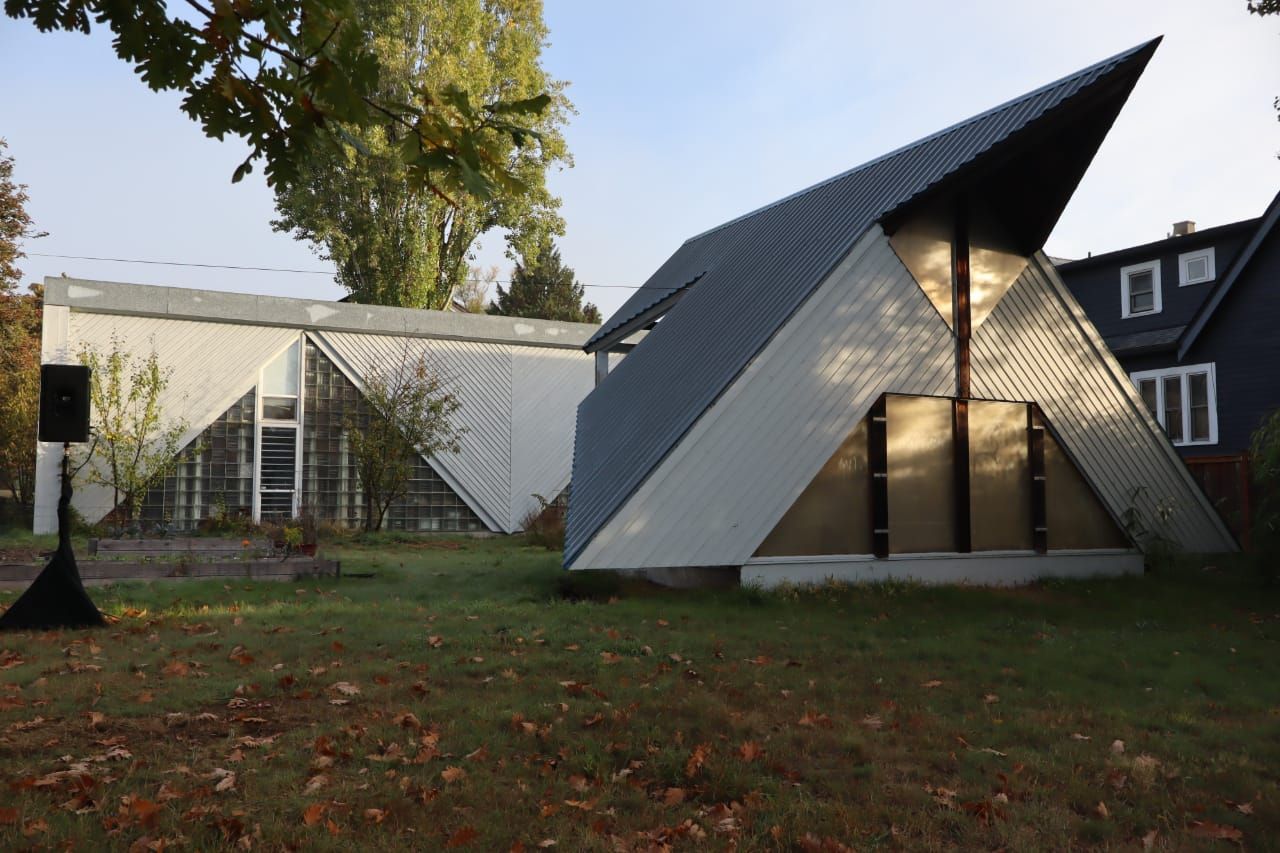
Seattle has witnessed an event that could prove a turning point for the city’s housing policy. The three-year-old Social Housing Developer (SSHD)—an agency created to build and manage permanently affordable housing—has received the green light for its first construction project. The board of directors unanimously voted to acquire a site on E Yesler Way in the Central District, where a 20-unit building is planned. This is more than just another construction project: it marks the shift from theoretical discussions about social housing to practical implementation—and does so with symbolic significance that will be appreciated by anyone following housing policy in the state.
The 7,800-square-foot site—about 725 square meters—at 2402 E Yesler Way belongs to the family of the late Frank Chopp, a former speaker of the Washington State House of Representatives who died in 2025. Chopp was known for his decades-long fight for affordable housing, and he was the first legislator to support the social housing initiative when the organization House Our Neighbors was just beginning its campaign. His widow, Nancy Long, who controls the property, offered the land herself for affordable or social housing, giving the deal a particular emotional resonance. “It’s a very moving moment because Frank was the first legislator to publicly support social housing,” SSHD interim CEO Tiffany McCoy said in an interview with The Urbanist after the vote. “I know he would have been proud.”
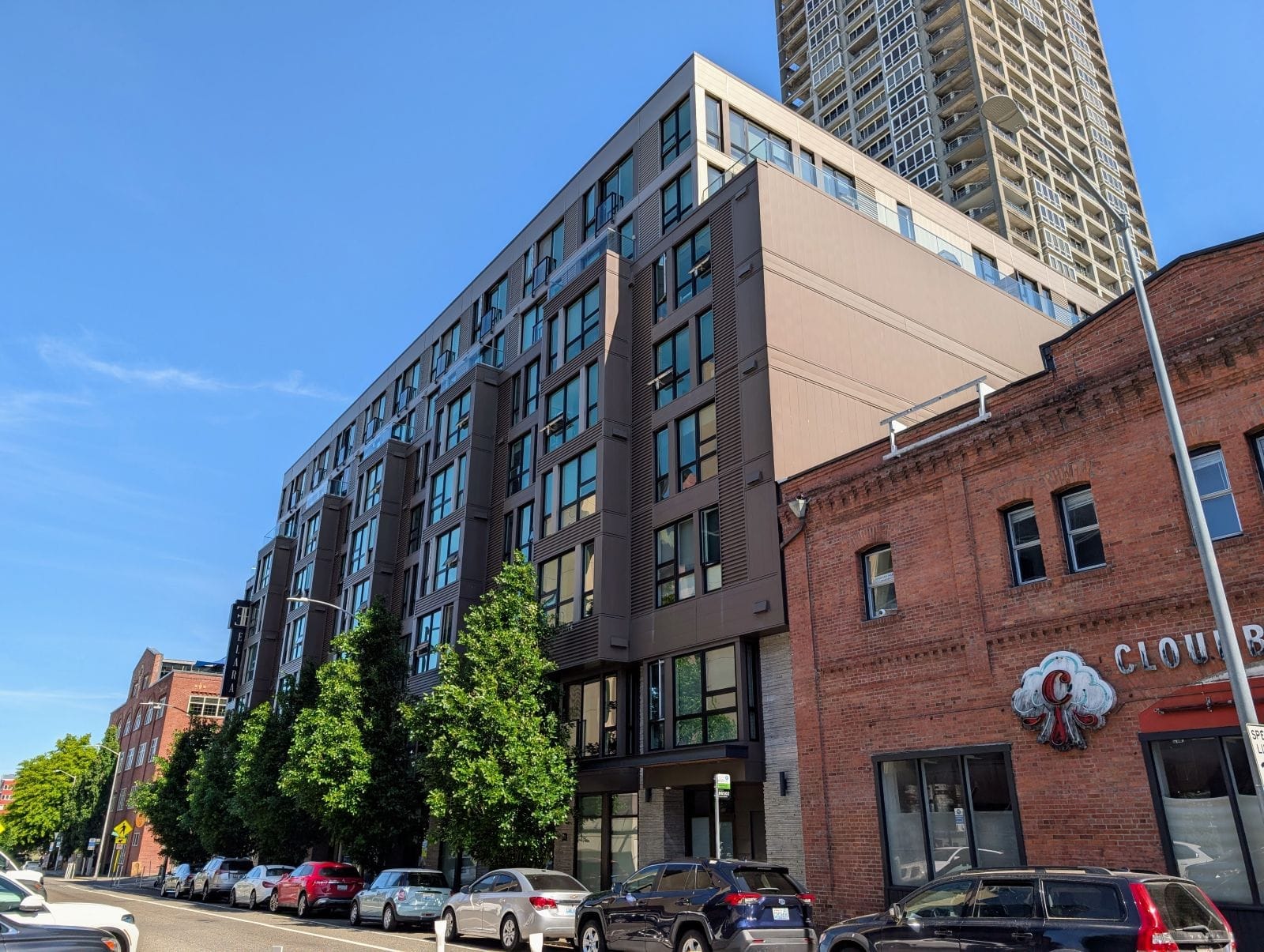
The land cost $1.2 million, while the total project is estimated at $15 million. Construction is scheduled to begin in 2027, with the first residents expected to move in in 2028. The project, called Central District House, will be SSHD’s second. The first was the purchase of the 150-unit Elara at the Market building on Western Avenue for $60.9 million—a deal that prompted more than 10,000 people to apply for housing, clearly demonstrating the enormous demand for such homes in the city.
The financial foundation for accelerating the program proved stronger than expected. In February 2025, Seattle voters approved Proposition 1A—a 5% payroll tax on annual compensation exceeding $1 million. Annual revenue had been projected at around $50 million, but reality exceeded all expectations: $115 million was collected in the first year. These additional resources allow the agency to scale up faster than originally anticipated. At Thursday’s meeting, the board also approved a project pipeline that, contingent on a bond issuance—an instrument allowing the agency to borrow against future tax revenue—includes six new construction projects and four acquisitions by the end of 2027.
Central District House is notable not only for its history but also for its design approach. The building will be constructed to the passive house standard—a design method in which a home requires virtually no active heating or cooling because of its highly airtight envelope, high-quality insulation and carefully designed ventilation. In addition, SSHD will use for the first time expanded powers granted under House Bill 1687, passed earlier this year. The law allows social housing developers to request deviations from existing zoning requirements—a right previously reserved for public housing authorities. In this case, the project plans to adjust the setback from the property line so that windows do not face directly onto the neighboring building. “We want to use our new powers under the Housing Cooperation Act to pull the facade back and be better neighbors,” McCoy explained.
The Central District’s history adds social urgency to the project. The neighborhood was historically the center of Seattle’s African American community, but over the past several decades it has experienced widespread displacement due to gentrification. McCoy speaks directly of the area’s “deep tension” and “very racist past.” In response, SSHD plans to use a community-preference plan and an aggressive marketing strategy to prioritize people with roots in the neighborhood. This is an important precedent: social housing is being positioned not merely as affordable housing, but as a tool for restoring justice to communities harmed by discriminatory housing policies.
Personnel changes at SSHD’s leadership also merit mention. Tiffany McCoy, who previously headed House Our Neighbors, became interim CEO in January after Roberto Jimenez, the agency’s first selected leader, was dismissed. A key addition since then has been Ginger Siegel, who became chief development officer. Michael Eliason, a well-known architect and advocate of the Baugruppen concept—a model of collective construction in which future residents participate in the design and financing—remains director of design and policy.
Despite the optimism, questions remain. Design details are still scarce, and the timeline—construction beginning in 2027—could slip. McCoy, however, hints at announcements to come: a project with between 50 and 250 units is expected to be announced by the end of this year or early next year. “I see tremendous momentum,” she says. “There’s a lot we can’t talk about publicly yet, but there’s much more ahead.”
This project is a test of the viability of Seattle’s entire social housing model. If SSHD can not only build apartments but also keep them permanently affordable, avoiding the expiring affordability restrictions that undermine many affordable housing programs, it could become a model for other U.S. cities. For now, the signs are encouraging: the money is there, the political will is there, and the land has been acquired. All that remains is to build.
Broncos Suffocate Seahawks: How Denver’s Defense Outplayed Sam Darnold in Overtime
On Friday night at Denver’s Mile High Stadium, something happened that is uncommon in the modern NFL: a team that did almost nothing on offense still defeated the reigning champion. The Denver Broncos beat the Seattle Seahawks 17–14 in overtime, and the game will go down in the textbooks as an example of how defense can still win a game almost by itself. Will Lutz kicked a 53-yard field goal to give the home team the victory, moving the Broncos to 4–2, while the Seahawks fell to 3–3 and continue to struggle after their championship season.
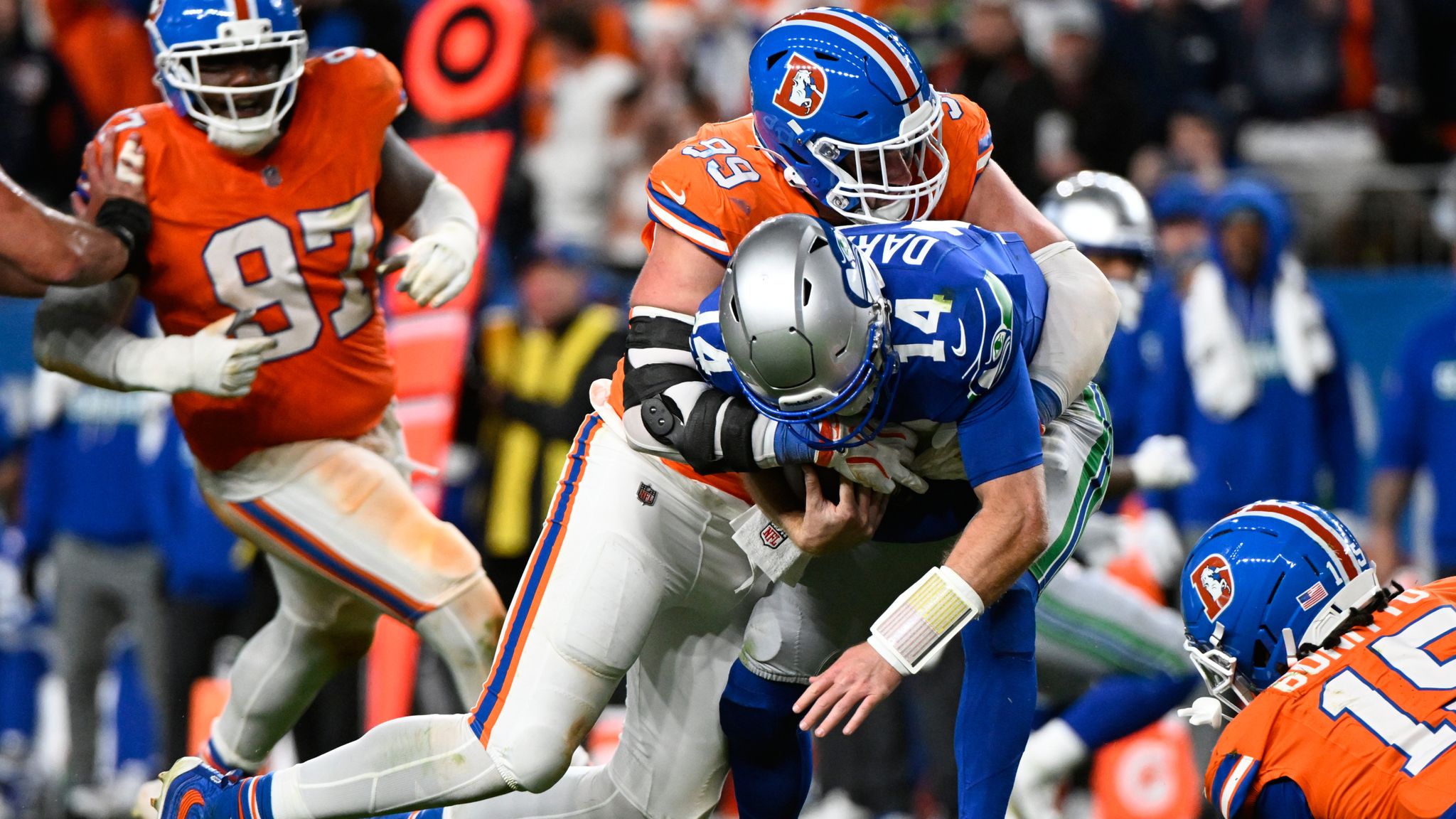
The story of the game revolves around one man: Sam Darnold. Seattle’s quarterback endured one of the toughest nights of his career, completing just 27 of 51 passes for 278 yards, throwing no touchdowns, being intercepted twice and posting a quarterback rating of only 52.6. Five sacks by Denver’s defense turned his pocket into a zone of constant pressure, and that pressure determined the outcome. Tellingly, Seattle gained 353 yards to Denver’s 168—nearly twice as many—and still lost. It was a classic illustration of the fact that in American football, total yards mean little if they are not converted into points.
Denver started slowly, with the Seahawks opening the first quarter with a Jason Myers field goal. In the second quarter, the Broncos put together two scoring drives: J.K. Dobbins scored on a 4-yard run, and R.J. Harvey added a 1-yard touchdown. That effectively ended the home team’s offensive success; they never reached the end zone again. Bo Nix, Denver’s young quarterback, finished with a modest 107 passing yards, and his performance was so unremarkable that the victory rested entirely on the defense and special teams. For context, in the NFL, a sack is when a defender brings down the quarterback with the ball behind the line of scrimmage, pushing the team backward; an interception is when a defender catches a pass thrown by the opposing quarterback and takes possession. The quarterback rating is a composite measure of passing efficiency, and 52.6 is very poor—the typical starting quarterback posts a rating above 90.
Seattle did not give up. In the fourth quarter, Darnold finally put together two scoring drives. George Holani scored from 1 yard out after an 11-play, 67-yard drive with five minutes remaining, while Darnold converted a two-point attempt—a rare play in which the ball, after being passed to Rachid Shaheed, was tipped at the very edge of the end zone. That cut the deficit to three points. The Seahawks’ defense held as well, and after Shaheed’s return, Darnold received excellent field position with a minute left. Myers then tied the game with a 34-yard field goal. It appeared the champion had seized the initiative.
But the game was decided on the very first overtime possession. Broncos cornerback Ja’Quan McMillian stepped directly in front of Shaheed and intercepted the ball—Darnold’s second interception and, effectively, the verdict. The excellent field position allowed Lutz to calmly hit the winning 53-yard field goal. Seattle’s Jaxon Smith-Njigba stood out with 12 receptions for 134 yards—the only player consistently winning his matchups—but even his efforts were not enough. Emanuel Wilson gained 52 rushing yards on 14 carries.
The game is a good reminder that after winning the championship, the Seahawks have encountered a classic problem: opponents have adjusted, and the offense is no longer unpredictable. Darnold, who was one of last season’s heroes, now looks like a quarterback who can be picked apart if pressure is applied. For Denver, the result sends a different message: a team with an average offense can fight its way to victories through defense, but over the long term, such swings are dangerous—against stronger offenses, five sacks and two interceptions may not be enough. Still, the 4–2 record speaks for itself, and the Broncos remain in the race. The next games will show whether this was a lucky defensive outburst or a new team identity. The 2026 season, including the playoffs and Super Bowl LXI, which will be held on February 14, 2027, is being broadcast on Sky Sports, giving fans a chance to see whether Denver can maintain its defensive form.
The main conclusions from the game are simple. Denver’s defense won the game by itself despite Bo Nix’s struggles, while Darnold and the Seahawks confirmed the worst fears: a championship title does not protect a team from sacks and interceptions. Ja’Quan McMillian became the hero of the night with one play, and Will Lutz was the man who turned someone else’s mistake into three points. Perhaps most importantly, in a league obsessed with passing yards, this game was a reminder that defense can still dictate the terms.
NBA: Seattle Under Threat, Towns Contract Drama and Hidden Signals from Orlando
The NBA season has not yet begun, but behind-the-scenes negotiations are already in full swing, and the stakes are sometimes higher than in playoff games. The issue is not only individual players’ salaries, but also what the league will look like five years from now. Expansion, a possible team move to Mexico City, a clash between New York’s owner and his own star center, and Orlando’s quiet struggle with a tax apocalypse are all intertwined in a knot that Commissioner Adam Silver and the league’s team executives will have to untangle.
Let’s begin with the biggest story. The return of the Seattle SuperSonics, which seemed almost certain just a year ago, has suddenly ceased to be guaranteed. According to ESPN, at the most recent Board of Governors meeting, Adam Silver made it clear to owners that expansion to Seattle was no longer a “stone-cold lock.” He also raised Mexico City again. According to sources, an investor group has already approached the league with a plan to build an arena and create a new district. It is a classic negotiating tactic: create an alternative to raise the price. Las Vegas, apparently, is almost certain to receive an expansion team—the bidding war there is serious, and the franchise price could exceed $10 billion. Seattle, however, presents a problem: local groups’ offers, including that of the favorite—the consortium led by Samantha Holloway, owner of the Kraken and Climate Pledge Arena—are substantially lower than those from Las Vegas. Silver, whose day-to-day work largely involves increasing franchise values, clearly wants to raise the stakes. He even hinted that the league might add not two teams at once, as it did in 1988, 1989 and 1995, but stagger their arrivals—or limit expansion to just one team. For owners, that is a painful signal: every club was counting on a one-time expansion payment of $500–600 million. One team that spoke with ESPN has budgeted for $533 million. That money has long been allocated—for salaries, arena renovations or debt repayment. If Seattle does not get a team, all those plans could collapse. Formally, the league is not considering moving Portland or another team to Seattle as leverage, but privately that possibility cannot be ruled out. The bottom line: the return of the Sonics remains the most likely outcome, but it is probably best to keep the champagne in the refrigerator for now.
The second major story is the contract saga involving Karl-Anthony Towns and the New York Knicks. For the first time in a long while, the club issued a public statement saying negotiations on an extension were paused. It was not an official release, which is unusual for president Leon Rose but entirely in keeping with owner James Dolan. The message is clear: the Knicks want to focus on defending their title rather than individual negotiations, especially since their top five players will collectively earn $192 million this season. Towns responded with disappointment but said he was focused on the season. One prominent agent offered a blunt assessment: “Owners created a system in which players are forced to pursue extensions to maximize their value, and then they get angry when those who have earned it ask for a new contract.” Rivals see two scenarios. In the first, Towns exercises his $61 million option for the 2027–28 season. The Knicks remain below the second apron, with a cap of around $236 million, but would likely lose Josh Hart and Miles McBride. Towns has already shown a willingness to reduce that figure in exchange for long-term guarantees. In the second, he declines the option and enters free agency, where the Golden State Warriors, Clippers and Atlanta are already waiting. If Towns leaves, New York could clear around $40 million and rebuild around Jalen Brunson. That is why the club is also holding off on an extension for Hart. Most likely, the sides will eventually reach an agreement—it is a championship-caliber partnership, and both sides are simply bargaining.
The third story is the quiet but revealing situation in Orlando. The Magic could face the luxury tax for the first time since 2010, and their tax bill this season is estimated at roughly $32 million. In the franchise’s 37-year history, it has paid only $39 million in taxes. After trading four first-round picks for Desmond Bane, the club’s supply of draft assets has been depleted. Now rivals are watching Anthony Black closely. He had a breakout season, averaging 15 points and starting 40 games, and is seeking a rookie-scale extension before Monday’s deadline. The benchmark is Golden State’s Brandin Podziemski, who signed a five-year, $110 million contract—$22 million per year. According to sources, Orlando is not yet prepared to offer Black the same amount, although team president Jeff Weltman has publicly expressed hope for an agreement. “We’re in much tighter circumstances than we have been in past years,” Weltman acknowledged. One Eastern Conference executive believes the Magic will not trade Black even if no deal is reached, because Jalen Suggs’ health problems—he has played only 92 games since signing a $150 million extension—make Black essential to the team. Weltman rarely makes trades, especially during the season, so it is possible that Black will become a restricted free agent this summer. “Extensions aren’t always done immediately; sometimes they happen later,” Weltman said philosophically. In the NBA, as in these negotiations, patience is as much an asset as money.