Shooting at the SODO station leaves one injured. Plans are being considered to remove Route 99 from South Park. Seattle hosts the 2026 World Cup match USA vs. Belgium.
One person was hurt in a shooting at the SODO station in Seattle
Last night, shots were fired near the SODO light rail station in Seattle. According to police, the incident occurred in the 500 block of South Lander Street. An unknown suspect opened fire, and one man was wounded as a result. The injured man was taken promptly to the nearest hospital. Seattle police reported the incident on social media at around 10:51 p.m. on Monday. Authorities have not yet released a description of the suspect, and the investigation is still at an early stage.
The incident is another reminder of the problem of street crime in major U.S. cities. While details about the shooting are scarce, the fact that it happened in the immediate vicinity of a public transportation stop is especially worrying. The SODO station is an important transit hub serving both residents and visitors to the city—particularly during big events, such as Music Week or sports matches. Officials have not yet linked the shooting to any major event, but say the situation is under control.
Until police issue official statements about motives or possible links to other crimes, FOX 13 Seattle notes that this is a developing story and updates will come as more information is available. For local residents, the lack of a suspect description and unclear circumstances are an additional reason to stay alert, especially at night. Incidents like this inevitably raise questions about the effectiveness of safety measures in public places and Seattle’s transportation infrastructure, even though authorities are not rushing to conclusions.
Can Route 99 be removed from this part of Seattle?
Residents of Seattle’s South Park neighborhood have long been pushing for changes involving Route 99, which runs directly through their residential area. A two-year study completed by city officials has finally offered concrete options, including the full removal of the highway. South Park, explains María Guadalupe Ramírez, the director of the Reconnect South Park coalition project, is a unique corner of the city—many people don’t even realize it is part of Seattle. To get there from downtown, you have to cross an industrial zone. South Park was traditionally a Latino neighborhood—at one point, 60% of its residents were Latino, but due to gentrification that share has fallen to 30%. The area is full of Mexican restaurants and taco trucks—good places to grab a beer and dine with friends.
Historically, South Park was an agricultural suburb, but today it is a residential district surrounded by factories and warehouses. Industry depends on the highway that slices through the neighborhood. The result is disastrous health statistics: according to previous studies, residents of South Park live, on average, 11 fewer years than people in other parts of Seattle. Rates of asthma, COPD, and cancer are higher. According to Ramírez, Route 99 is the main source of air pollution and noise. This is made worse by the proximity of King County International Airport flight paths from Seattle-Tacoma International Airport, and by the Duwamish River, which runs nearby and is a Superfund site (a term for particularly dangerous contaminated areas whose cleanup requires federal funding). Back in 2018, then-Mayor Jenny Durkan acknowledged: “South Park and Georgetown, the Duwamish Valley for decades have carried the burden of environmental injustice.” María Guadalupe Ramírez emphasizes that diesel exhaust from the highway flows into the river and that the noise seriously harms health.
The highway itself—State Route 99—runs from Everett in the north to Fife in the south, passing through Seattle and including streets such as Aurora Avenue and International Boulevard. It was once a segment of the federal highway US 99 connecting California and Washington. In the 1960s, after Interstate 5 was built, the road was transferred to the state. Over decades, Route 99 has been changed more than once—the most visible example being the demolition of the Alaska Way Viaduct and its replacement with a tunnel under downtown Seattle. In South Park, Route 99 runs along West Marginal Way South. The two-year city study recently completed, as reported by KUOW, presents four options, one of which is the complete removal of the highway through South Park. These are still only options, but the very fact that they have emerged is an important step for a neighborhood that has endured transportation burdens for decades.
USA vs. Belgium in Seattle: What to expect from the 2026 World Cup Round of 16 match
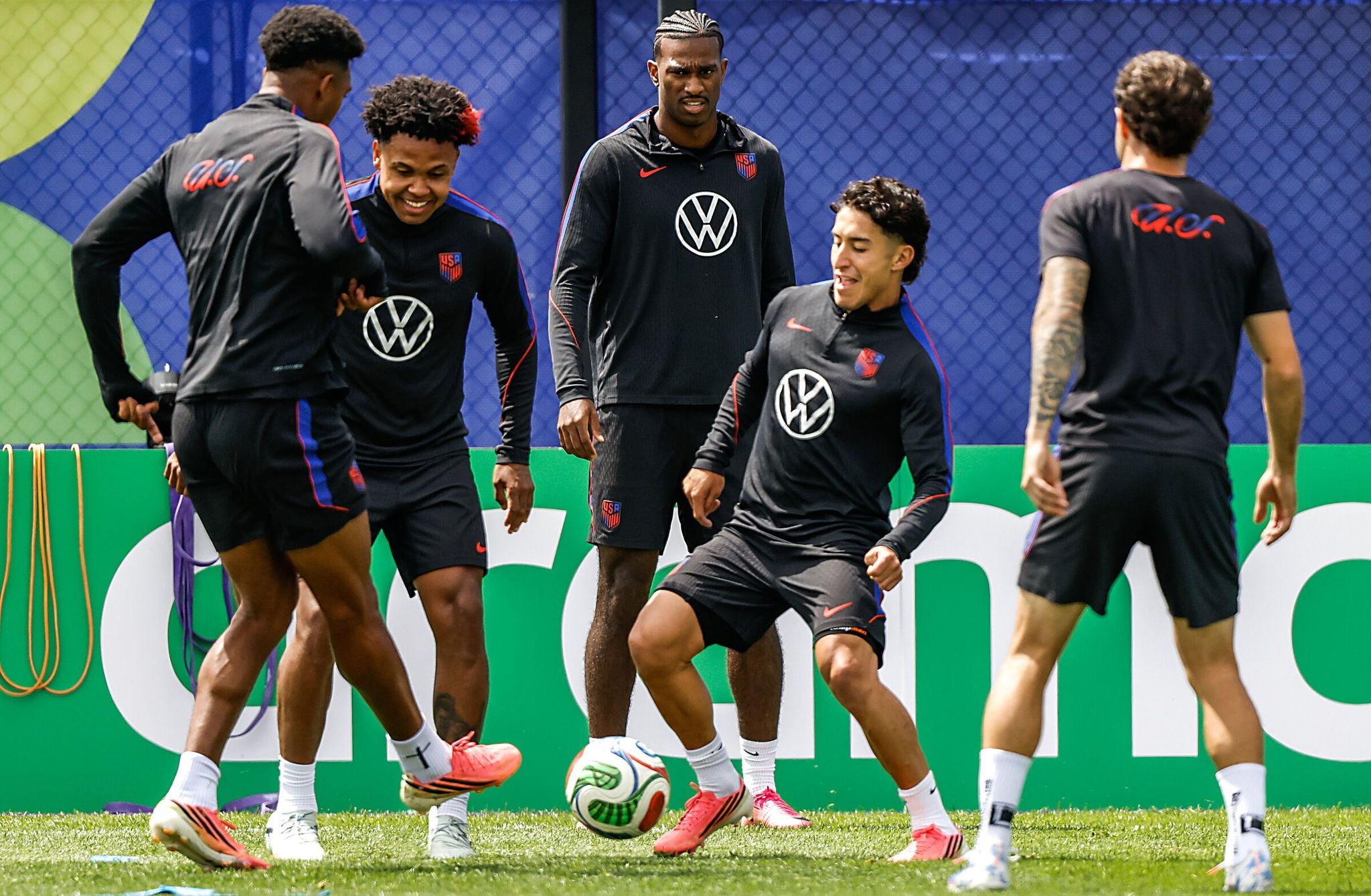
The last three weeks have been a real celebration of football for Seattle. The city hosted five World Cup matches featuring eight teams, proving that it is among the best—or possibly the best—football cities in the United States. Now it’s time for the finale: on Monday, Seattle will play its sixth and final World Cup match, and it’s hard to imagine a more fitting matchup than the home tournament team, the United States, taking on formidable Belgium. The winner advances to the quarterfinals, and the stakes are as high as they get.
Led by Mauricio Pochettino, the U.S. team is heading into the match in great form, having won their Group D and routed Paraguay and Australia. The squad plays exciting attacking football, but the main test is coming now. Belgium, which finished first in Group G and sits ninth in the FIFA rankings, made it to the knockout stage, though not without difficulty. Their most recent meeting with the U.S. was three months ago in an international friendly in Atlanta, when the “Red Devils” thrashed the Americans 5–2. That defeat is one of the few—but still memorable—results in a series where Belgium leads 6–1–0, and the only U.S. win came at the very first World Cup in 1930.
The key storyline of this game is both teams’ desire to reach the quarterfinals. For the U.S., it would be their first appearance in the last eight since 2002, and the history of their rivalry with Belgium adds extra drama. In 2014 in Brazil, the Americans almost won in regulation time, but in stoppage time Chris Wondolowski sent the ball over the crossbar from six meters out. Then Tim Howard made a record 16 saves, but goals by De Bruyne and Lukaku in extra time gave Belgium the win. Now the U.S. has a chance to get revenge. And there’s a major boost: FIFA has rescinded the one-match suspension of forward Folarin Balogun, who received a red card against Bosnia and Herzegovina. Citing Article 27 of the disciplinary regulations, the appeal was granted, and the team’s top scorer with three goals will be on the pitch.
The key tactical battle will be Belgium’s wingers against the U.S. fullbacks. As noted in an article by The Seattle Times, Belgium’s best moments against Senegal were created from the flanks: a cross by Mënyé led to Lukaku’s goal, while Trossard’s cross led to Tillemans’s goal. On the left for the U.S. is Jeddie Robinson (23 defensive actions and 18 recoveries), and on the right is Alex Freeman (24 defensive actions, 8 tackles). They will have to contain the opponent’s attacks, which intensify after substitutions such as De Ketelaere and Lukaku come on.
Tyler Adams, the U.S. central midfielder, deserves special attention. At 27, he operates as the team’s lone holding midfielder, allowing Weston McKennie and Malik Tillman to push forward freely. For the tournament, Adams has made 21 defensive actions and 7 interceptions—the best numbers on the team. His work in breaking up play will be key to neutralizing Belgium’s midfield.
It’s also worth watching how Pochettino’s team handles Romelu Lukaku. Belgium’s all-time leading scorer in history, due to injuries he had a mixed season at Napoli, so coach Rudy Garcia uses him as a “joker” in the second half—and it has paid off. Lukaku has scored and provided assists in several matches, using the space between central defenders. Pochettino can switch to a five-defender setup when defending, moving right winger Dest to the outside-back role to form a triple of center backs (Tim Ream, Chris Richards, and Freeman) to keep the Belgian striker in check.
Belgium’s goalkeeper Thibaut Courtois also cannot be overlooked. At 34, the keeper was already facing the Americans back in 2014, when he was 22. He then set a record in the 2022 UEFA Champions League final, making 9 saves. In this tournament, he hasn’t been heavily tested so far, but his experience could decide the outcome—especially if the match goes to a penalty shootout.
The match promises to be tight. The Americans are on the rise, while Belgium knows how to survive even in the toughest situations, something they proved in the Round of 16 when they came back from 0–2 down against Senegal thanks to Lukaku’s goal and a double by Tillemans—where the decisive penalty was scored in the 125th minute, the latest goal in World Cup history. The article author’s prediction is 2–2 in regulation time and a U.S. win in the penalty shootout, helped by a packed stadium in Seattle. If that happens, the Americans will reach the quarterfinals for the first time in 24 years. And Belgium will have to remember how Howard stood on his head in 2014—only this time Courtois will be on the other side.