
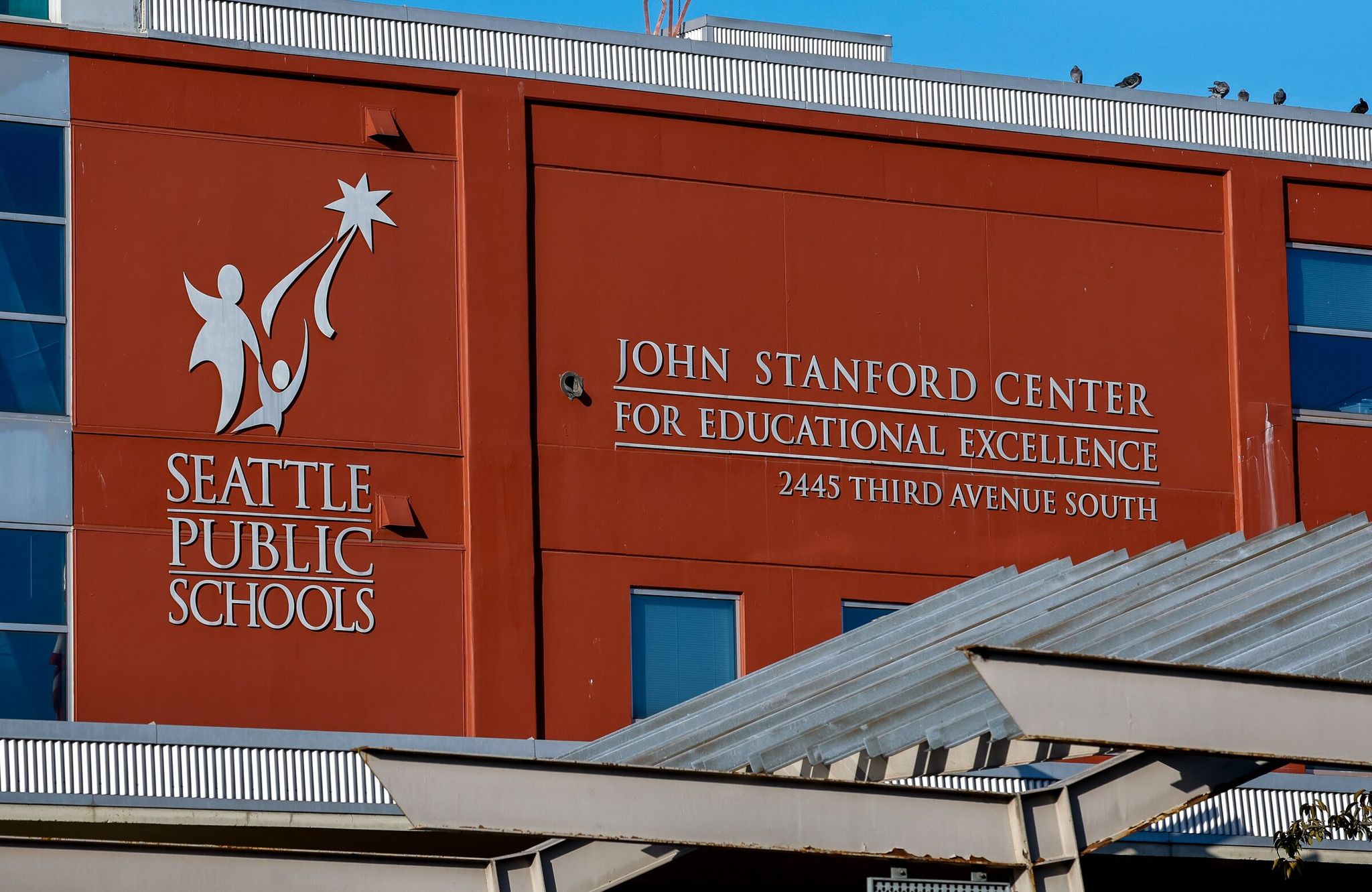
In April the Seattle School Board unanimously approved a new English-language curriculum for students from kindergarten through fifth grade. The seven-member school board, whose members are elected to four-year terms from single-member districts across the city, voted to set the curriculum policy. Teachers will begin using the updated materials in September when the new school year starts. This is the first time Seattle’s public schools — the largest district in the state with more than 100 schools — have officially adopted an approach based on the "science of reading," a method grounded in decades of brain research.
The "science of reading" brings together strategies shown to be effective in teaching children to read: segmenting words into sounds, blending those sounds, and explicit, systematic phonics instruction. The previous curriculum did not align with this research, so teachers who wanted to use the new methods had to adapt materials on their own. Now the shift is mandatory: in March the Washington state legislature passed a bipartisan law requiring schools to implement evidence-based programs for children from kindergarten through fourth grade.
Selecting the new curriculum took 18 months. A team of 38 Seattle teachers, principals, and parents piloted materials from eight different vendors in multiple classrooms. The committee ultimately recommended Emerge from McGraw Hill — the same program chosen by the Lake Washington School District in Redmond, which is smaller but wealthier because of tech companies and is one of the top-performing districts in the Pacific Northwest. Lake Washington’s choice serves as an important precedent for Seattle, since success there could increase pressure to adopt similar approaches to narrow the achievement gap between the city’s wealthy and poor neighborhoods, where high inequality creates splits between high- and low-performing schools.
Committee members said Emerge stands out for its user-friendly approach to structured literacy. The program teaches children to break words into parts — identifying initial, medial and final sounds and blending them when reading and writing. It emphasizes phonics in an explicit and repetitive way, which especially helps children who struggle with reading, including those at risk for dyslexia.
Support for struggling students will also change with the new course. Previously they might be pulled out of class and given simplified assignments. Now the teacher will work with the whole group, including weaker readers, so no one falls behind grade-level standards. At the same time, 20 minutes of each lesson is set aside for independent tablet work — games and individualized exercises to advance stronger students.
It was precisely those 20 minutes of screen time that sparked debate at board meetings. Many parents and educators in a region that houses the headquarters of Microsoft, Amazon and other tech giants are aware of the risks of digital addiction, reduced social skills and health issues, so some board members expressed concern that device time could increase and that the youngest students would learn to read not from paper books. District officials promised strict monitoring of the limit but could not guarantee enforcement. The program also includes a digital teacher portal that makes it easier to track each student’s progress in real time.
The cost to implement the program from 2026 through 2032 will be $5.78 million. The district will pay for it from a capital levy approved by voters in February 2025. That local property tax raises funds solely for building construction, facility repairs and major equipment, not for ongoing instructional programs. Under the levy rules the money can be spent only on technology — a point that drew criticism from district leadership, which called it "unfortunate" to fund key instructional materials from an off-budget source rather than core funds, arguing that using these dollars circumvents legal restrictions and risks spending on short-term technology solutions at the expense of long-term capital projects.
The new curriculum includes more diverse and complex texts than the old course. Authors on the list include Shel Silverstein, Langston Hughes, Grace Lin, Pat Mora and Ibtihaj Muhammad. Teachers noted that children will now be able to find these books in libraries and bookstores, which increases motivation to read.
Principal training will begin in May, followed by teacher training in June. Preparation will continue through the 2028–29 school year. Members of the implementation committee hope that uniform lessons across the district will lead to steadier and higher student outcomes. "Emerge will level the playing field," said one parent and former elementary school teacher.
Based on: Seattle Schools adopts new reading curriculum for K-5 students