
Starting Monday, a unified mobile phone policy covering all district schools goes into effect in Seattle. For elementary and middle school students, phones will be completely banned for the entire school day, including recess and lunch. High school students will be allowed to use phones only during passing periods between classes and at lunch — devices will also be banned in classrooms. An exception is made for students who need phones for medical reasons, and smartwatches are not covered by the new rules.
Previously, each Seattle school set its own rules for phone use, which created chaos and unequal conditions. The new unified standard is being introduced for the first time in the district's history. Superintendent Ben Schuldiner, presenting the policy at a special meeting, emphasized that phones "cause addiction, distract and interfere with children’s learning." The decision is based on analysis of practices in five pilot schools, study of other districts' experiences in the state and across the country, and surveys of students, parents and educators. Schuldiner notes he met with principals several weeks ago and received their full support — in his view, "they've been waiting for this for years." Recall that the Seattle school district superintendent is an appointed position, hired by the elected Seattle School Board, and he has the authority to implement district-wide educational policies for all schools, although such decisions usually require Board approval.
Notably, Washington state has not yet enacted a statewide ban on phones in schools, although 28 states have already passed such laws. According to a survey conducted by the Office of the Superintendent of Public Instruction, 53% of the state's school districts limit phone use only during class time, and only 31% require complete abstention for the entire school day. The recently passed law (Senate Bill 5346) only directs the agency to develop recommendations and conduct research, but does not require strict limits.
The new policy has drawn criticism from some parents and even school board members. They argue that the rules are not strict enough for high school students. Particular dissatisfaction was caused by the slogan "No cell, bell to bell," which parents found confusing: that phrase typically implies a ban for the whole school day, but in Seattle it refers only to class time. Critics also point out that the burden of enforcing the rules effectively falls on teachers.
In response to complaints, Superintendent Schuldiner explained that a strict ban for high schoolers would be unenforceable: almost all high schools have open campuses where students can leave the grounds during lunch. The "open campus" policy is not universal in the U.S. — it is a local decision of individual districts; in Seattle it is common as a way to give older students more independence, whereas in most other U.S. regions, as well as in Europe and Asia, schools are typically closed. A strict ban, Schuldiner said, would only push students to skip club meetings so they could "be with their phones."
Nevertheless, questions remain. For example, the district’s presentation cites research showing that after using a phone, students need 20 minutes to refocus. Parents rightly ask: if passing periods last only five minutes, how can classes function effectively when students arrive with phones? It is worth noting that 5-minute passing periods are standard for most U.S. middle and high schools, tied to tight schedules that fit 6–8 classes a day. Many educators and parents criticize this system precisely because of research on cognitive switching — 5 minutes is often insufficient even to move between classrooms, let alone to restore attention. For now, Seattle is taking a cautious step toward limiting gadgets; the debate between reducing distraction and the practicality of implementing the rules is clearly just beginning.
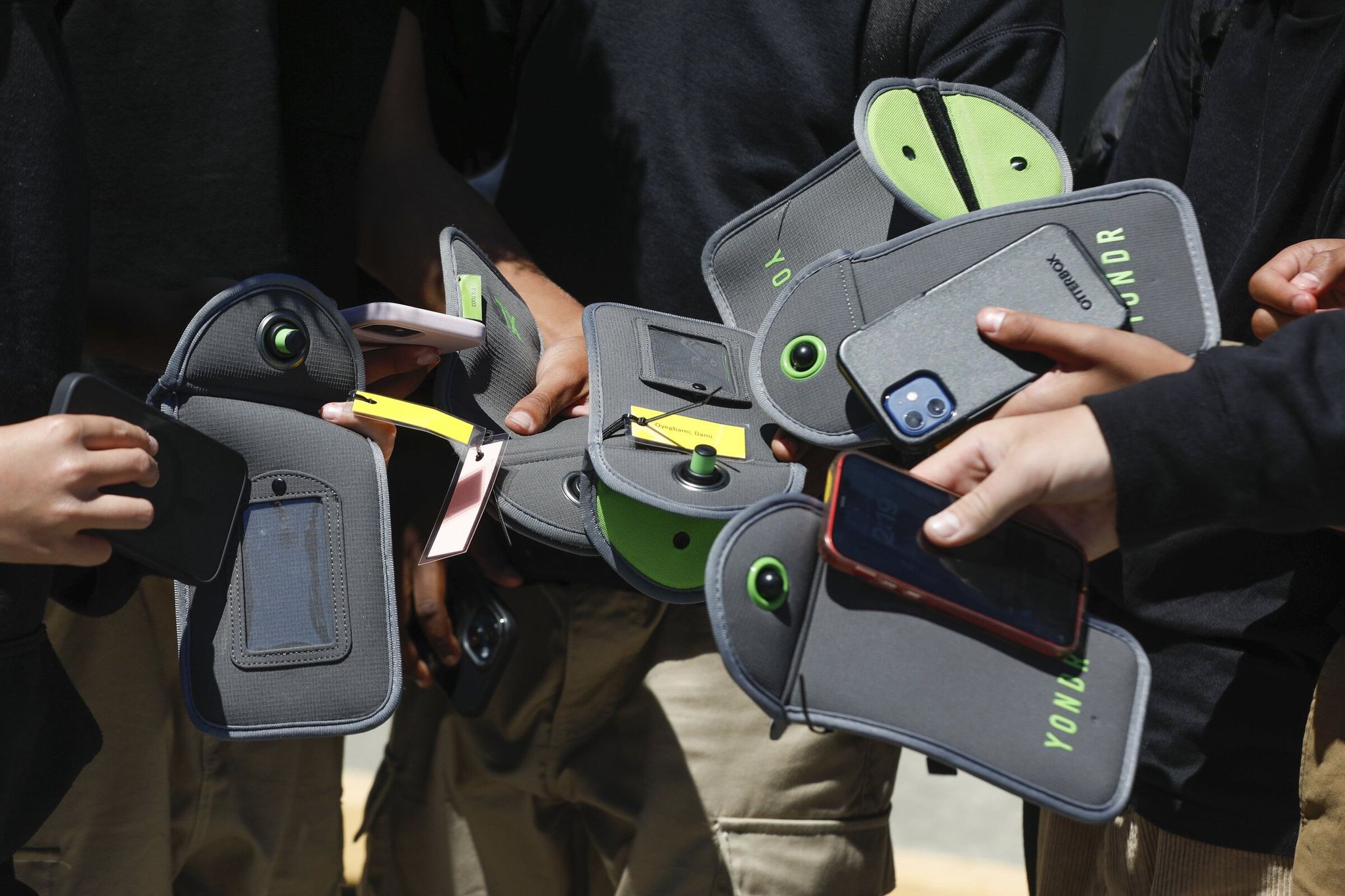
Based on: Seattle school district’s new cellphone rules go into effect Monday