In brief: a reorganisation of Seattle schools with a new structure and cost savings; Jimothy the raccoon with a short spine who became a sensation; three trade-deadline scenarios for the Mariners.
Reorganising Seattle schools’ central office: a new management structure and cost savings
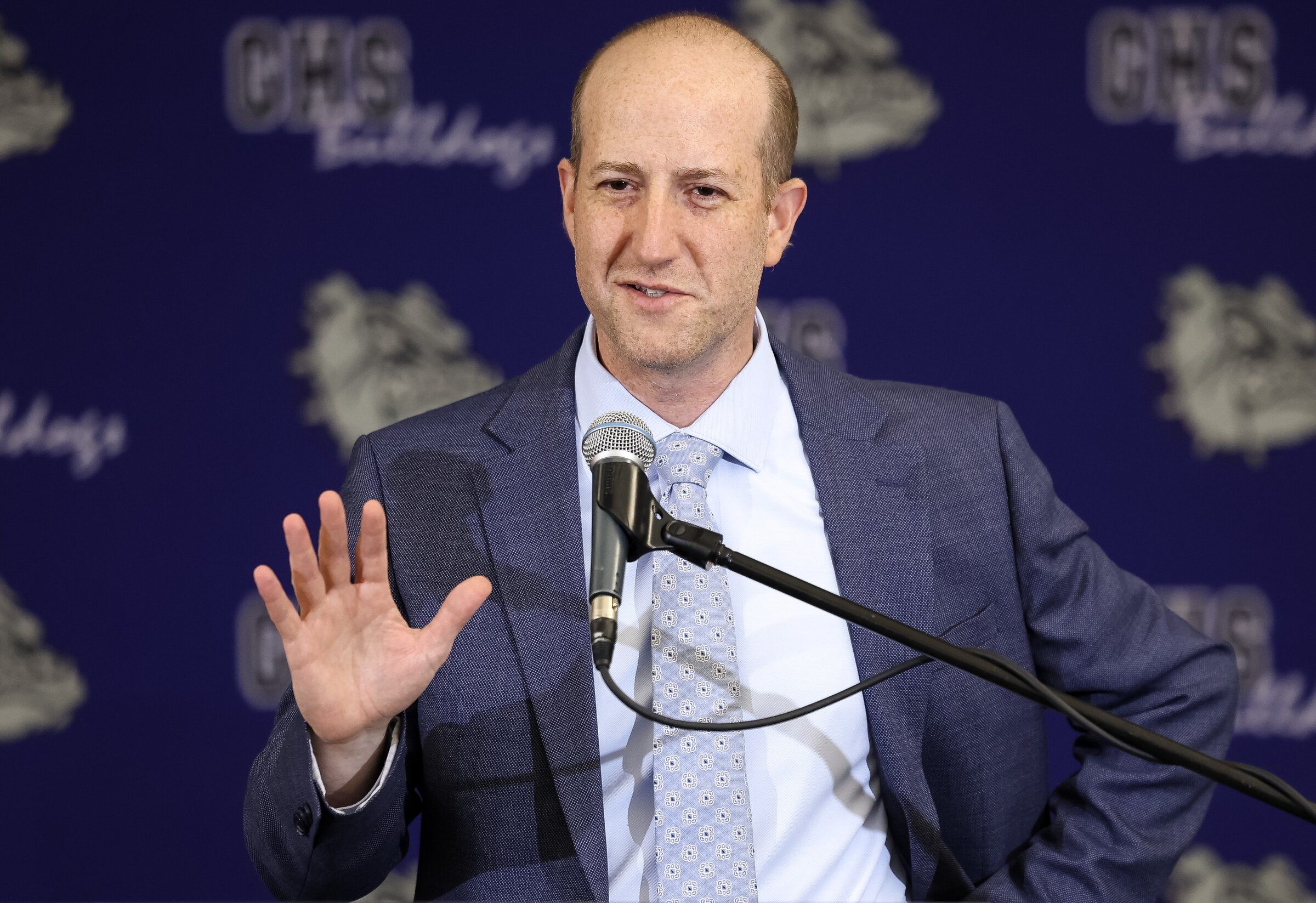
Seattle Public Schools is beginning a major overhaul of its central administration. Instead of the previous set-up divided by geographic regions, the district is introducing a management system by education level — from elementary through high school. As reported in an article by The Seattle Times, Superintendent Ben Shuldiner has already announced the appointment of seven new executive directors who will oversee schools not by neighborhood, but by grade span: three directors will cover all 64 elementary schools, one director each will cover K-8 (kindergarten through 8th grade), middle schools, high schools and athletics, as well as alternative and non-traditional programs. The district has 106 schools serving about 50,000 students.
According to Shuldiner, this approach will help schools at the same level share experience more effectively and adopt best practices. In addition, leaders will now have subject-specific experience at the level they oversee. The reorganisation has already generated savings of nearly $10 million, and over the next year the district plans to save an additional $5 million to $10 million. It’s part of Shuldiner’s February promise: to balance the district’s budget, which currently runs a $100 million deficit.
Most of the new directors already worked in the district: three of them were previously regional leaders. For example, James Mercer now oversees elementary schools, Katrina Hunt oversees middle schools, and Christopher Carter oversees high schools and athletics. Jessica Conte and Rina Dis, who were also named elementary school directors, previously served as coaches for school principals and also were principals within the district. The only leader who came from outside was Lynn Herink, who will lead alternative and non-traditional schools — she previously served as a principal in Federal Way.
In the coming weeks, the district will announce new openings, including an assistant superintendent position for student and family support, as well as an assistant superintendent for special populations — responsible for special education, multilingual students, gifted students, career and technical education, and preschool programs. Shuldiner says that after these appointments, he will continue reshaping the central office to make it more efficient and more focused on supporting schools and students, ultimately leading to multi-million-dollar savings. It’s important to understand that the “$100 million deficit” refers to the difference between district revenue and spending, and that these structural changes are designed to reduce administrative costs without directly cutting school programs.
Jimothy: why this short-spine raccoon won the world — and received an honor from Washington’s governor
An unusual raccoon named Jimothy, spotted in the Ballard neighborhood of Seattle, has become an unexpected internet sensation. His distinguishing feature is an abnormally short body, making it seem as though the animal has no neck. As FOX 13 Seattle reports, this is most likely caused by a rare condition: Short Spine Syndrome, in which the vertebrae are compressed, creating the raccoon’s unusually shaped appearance. But Jimothy didn’t just capture the attention of millions around the world — he also inspired good deeds. Through auctions featuring his images and donations, thousands of dollars were raised for the local Ballard Food Bank.
Ballard residents began filming Jimothy on phones and doorbell cameras as he ran along sidewalks, fences and backyards. The videos spread across social media, racking up millions of views. Soon, the raccoon’s fame reached far beyond Seattle. A particular reaction came from Washington State Governor Bob Ferguson: he recorded a video message declaring Jimothy “Washingtonian of the Day.” “He has truly captured people’s hearts across our entire state, across the country, and even across the world,” Ferguson said. “There is only one honor I can give him: to name him Washingtonian of the Day.”
A short spine in raccoons is extremely rare. Short Spine Syndrome is a congenital abnormality in which the number or length of the vertebrae is reduced, making the animal’s body unnaturally short while still not preventing it from living an active life. Jimothy is a vivid example of how even physical differences don’t stop someone from becoming famous — and a symbol of resilience. Local artists have painted portraits of him, and one of Ballard’s walls features a mural in his honor.
Jimothy’s story is notable not only for going viral, but also for how the community rallied around the unusual animal. The donations collected will help the food bank that supports people in need in the neighborhood. It shows that internet fame can have a real positive impact that goes far beyond memes and likes.
Three scenarios for the perfect Mariners trade deadline
The 2026 season is not playing out as magically for the Seattle Mariners as the historic 2025 run. The team is hovering around .500, more like a clunky machine than a well-oiled one. Still, the Mariners have a tradition of improving in the second half: since 2021, they’ve posted winning records after the All-Star break in every season except one. To reach the playoffs and defend the AL West championship, they need to add again — and to do that, they must address clear weaknesses before the August 3 deadline. The earlier they make a trade, the faster they can improve their play. General manager Jerry Dipoto and Justin Hollander have repeatedly shown a willingness to act decisively.
This summer, Seattle has clear needs. First, at least one impact right-handed hitter: the team is among the worst in the league against left-handed pitchers, a problem made worse by slumps from Cal Raleigh, Julio Rodríguez, Víctor Robles, and the poor outings of Rob Refsnyder and Leo Rivas. Second, bullpen help — either long relief or high-leverage: due to injuries to Matt Brash and Cooper Criswell, and the lack of progress from the replacement options in the bullpen, Seattle’s bullpen has split into an elite group (Munoz, Bazardo, Speier, Ferrer) and an unreliable group (Davila, Wilcox, Raker), forcing the team to give up close games. Third, catcher help: yes, the Mariners have an abundance of starters, but their weakest spots are at catcher, first base, and the left side of the infield. Any major right-handed bat would cover either a corner outfield role or third base.
In an article published on Lookout Landing, the author lays out three scenarios for a perfect deadline, each aimed at solving one or more of these problems.
First scenario: a “big” deal with San Francisco. The Mariners get outfielder Heliot Ramos and right-hander Jason Foley, giving up prospects Johnny Fermoelo and Christian Little. Ramos is a 26-year-old right-handed hitter who has spent his career tearing up left-handed pitching (135 wRC+ against them over his career, 144 this season). His contract runs for three more years after this, which fits Seattle’s approach — they rarely take pure “rental” players. He also plays on a corner of the outfield, where a couple of years from now a spot should open after Randy Arozarena’s departure. Foley is a ground-ball reliever with a high percentage of balls on the ground, who closed out games for Detroit. The prospect cost is realistic: Fermoelo is a speed outfielder with plenty of swing-and-miss, while Little is a slowly developing right-hander. The author believes this trade makes sense for both the present and the future.
Second scenario: strengthening the bullpen with a trade with San Diego. The Mariners get left-hander Adrian Morejon, right-hander Jeremiya Estrada, and outfielder Ramon Laureano, sending Emerson Hancock, Ryan Bliss, and Carlos Jimenez to San Diego. Morejon is one of the top five relievers in MLB over the past three years by fWAR (5.2). He’s hitting the free-agent market, and the Padres would benefit from trading for him so they don’t have to commit to a big contract. Estrada is a fiery pitcher with an excellent splitter, controlled for another three years through arbitration. Laureano is recovering from hip surgery, but could help in the playoffs, and his contract helps San Diego get closer to the tax threshold (they’re currently $10–15 million above the $244 million limit). The price is high, but reasonable: Hancock is coming off a breakout season, Bliss is a deep infield option, and Jimenez is a promising outfielder. The author approves the deal, albeit reluctantly, because trading away a starter for relievers isn’t really his style.
Third scenario: “Ace and come home” with Minnesota. The Mariners get right-hander Joe Ryan, third baseman Royce Lewis, and left-hander Taylor Rogers, giving up Emerson Hancock, Luis Castillo, prospect Lazaro Montes, and cash. Ryan has the best season of his career (3.38 ERA, 2.5 fWAR), and he would be an upgrade over Castillo, who is older and more expensive. Lewis is a former No. 1 draft pick who could reignite with a new team, and Rogers is a left-handed reliever with poor surface stats, but with a normal FIP (3.96 compared to 5.45 ERA). The challenge is that the Twins don’t want to give up easily, so they would need Castillo as a replacement for Ryan — and also some help shedding salary. Montes is a power slugger who would fit perfectly in Minnesota’s compact park. The author finds this option intriguing, but complicated to carry out.
The article also explains the complex terms: wRC+ is a weighted measure of hitter productivity relative to a league average of 100; fWAR is wins above replacement as rated by Fangraphs; BABIP is the batting average on balls in play; arbitration is the procedure that determines a player’s salary; the tax threshold is the point at which teams face penalties for exceeding the payroll cap. The key takeaway is that the Mariners’ 2026 deadline isn’t about superstar signings — it’s about targeted upgrades to weak spots without breaking the farm system.