In Seattle, schedules were changed after a school-area shooting to provide psychological support. At the same time, Amazon cut thousands of jobs in the region, reflecting a trend toward cost optimization in the tech sector.
Four Seattle schools adjust schedules after fatal shooting
In response to a tragic shooting in the Rainier Valley area on Friday that killed two teenagers, four Seattle public schools adjusted Monday schedules to provide time for psychological support for staff and students. The incident, believed to be targeted, occurred at a bus stop shortly after nearby schools let out, raising deep concerns about safety in the school environment.
New Seattle Public Schools superintendent Ben Schuldiner, who officially started Sunday, immediately identified increased safety measures as a top priority. Accordingly, according to a district press release, South Shore PK-8 will start classes on Monday with a two-hour delay, beginning at 10:55 a.m., to give staff time to receive needed support and prepare to meet students. Upper-grade schools — Rainier Beach High School, Alan T. Sugiyama Middle School, and Interagency Academy Southeast — will begin the school day at 12:30 p.m. Dunlap Elementary will operate on its regular schedule.
The shooting occurred Friday at about 4:00 p.m. at a bus stop near South Shore PK-8 and Rainier Beach High School, roughly half an hour after dismissal. Seattle police, investigating the double murder, believe the attack was targeted and said they do not see a broader threat to the community. The King County medical examiner has not yet released the names of the deceased teenagers, but both are reported to likely have been students in Seattle public schools. On Saturday, dozens of people, including relatives of the deceased, gathered for a vigil to honor them. The mother of one of the victims, who did not give her name, addressed the crowd: “He didn’t deserve this. He was a wonderful child. He was my only one, and he’s gone.”
The school district, working with Seattle police and city officials, is taking steps to increase police presence and patrols in the area for the coming week. Individual and group crisis counseling is also being provided for students. Seattle Mayor Gadea Wilson (note: original name in Russian was "Кэти Уилсон"; keep as written if it's a proper name—if intended as "Katy Wilson", retain original—here preserved as Katie Wilson) in her Instagram statement emphasized: “Seattle owes our kids more than words. We are obligated to ensure their safety, care, and a future full of opportunity.” The school district is also asking anyone with information about the shooting to contact Seattle Police’s anonymous tip line at 206-233-5000. This incident, happening on the new superintendent’s first workday, is a stark reminder of the safety challenges schools face and the need not only for immediate responses to tragedy but for systematic work to create a protected environment for children and youth.
Amazon cuts: thousands in Seattle-area lose jobs
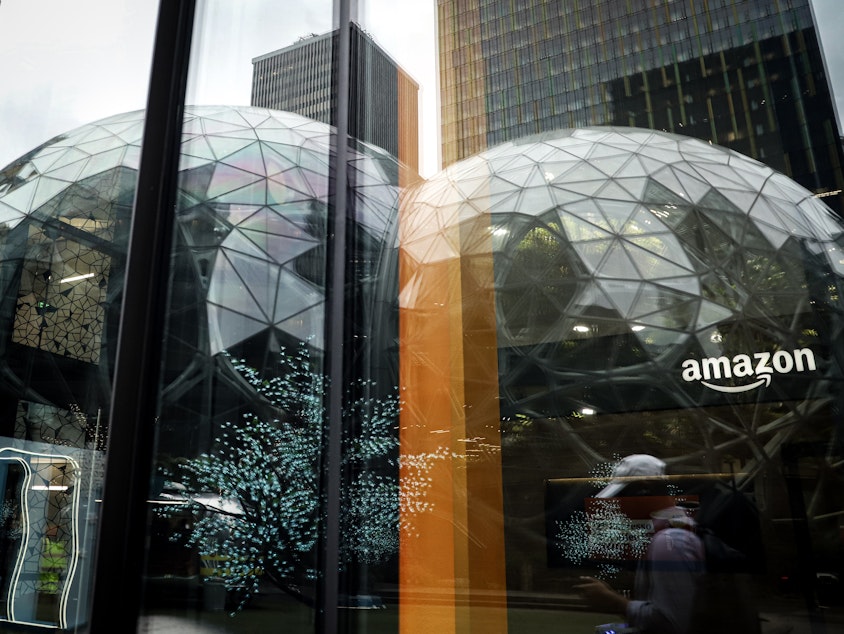
The wave of layoffs in the tech sector continues to pick up momentum, and this time the heavy blow landed on the headquarters of one of the giants. Amazon carried out another large round of cuts that hit its heartland — the Seattle region. According to official figures, 2,198 employees in Washington state were laid off just last week, with more than 1,400 of them working directly in Seattle and about 630 in nearby Bellevue. These figures form part of the broader corporate restructuring under which Amazon plans to cut 16,000 jobs worldwide.
As reported by The Seattle Times, the current layoffs follow an October round that saw more than 2,300 Amazon employees lose their jobs in the Puget Sound region. That brings the total number of cuts in this location over a short period to nearly 4,500 people. Most U.S.-based employees who are laid off are being given 90 days to search for another role within Amazon. Those who cannot find an internal position will be offered a severance package that includes severance pay, outplacement services, and health insurance. In a memo to staff, Amazon’s head of human resources, Beth Galetti, explained the moves as efforts to “remove layers of management and reduce bureaucracy.” That phrase has become a corporate euphemism for an effort to increase efficiency and cut costs amid economic uncertainty.
The context extends far beyond a single company. Seattle, long a symbol of the tech boom, is now undergoing a painful correction. Since the start of 2025, tech companies have laid off nearly 9,800 workers in Washington state. That figure includes not only Amazon but other industry giants such as Microsoft and companies with large regional centers like Meta. Just on Monday, according to state regulators, T-Mobile announced the elimination of 393 positions. These mass layoffs reflect a broader trend in the tech sector, which after many years of rapid growth and aggressive hiring is now focused on reducing costs and improving operational efficiency in the face of a potential economic downturn and market shifts.
The implications are multifaceted. Locally, it means the loss of thousands of well-paid jobs, which could exert pressure on the housing market and the service sector in the Seattle area. For the industry as a whole, it signals the end of an era of unchecked growth and a transition to a more mature — and perhaps more cautious — phase of development. For employees, including those who keep their jobs, it creates an atmosphere of uncertainty. At the same time, Amazon’s offer of internal job searches and severance packages indicates an attempt to soften the blow and maintain its reputation as a responsible employer. However, as the outlet notes, the story is still unfolding, and the wave of cuts does not yet appear to have peaked. A region that built its prosperity on tech innovation now must seek a new balance in a changing economic reality.
Amazon cuts: more than 2,000 jobs in Seattle
A new wave of mass layoffs at Amazon is beginning to take shape for the greater Seattle metro region, where the company’s historic headquarters is located. While the tech sector as a whole continues to face turbulence, the local consequences are becoming increasingly tangible.
According to an official notice filed with the state of Washington, as part of the global layoff of 16,000 positions announced last week, about 2,200 jobs will be eliminated in the state. As KUOW reports, engineers were hit particularly hard: hundreds of developers in the Seattle area are receiving layoff notices. These numbers clarify the local scale of the restructuring, which is part of the largest round of layoffs in the company’s history, initiated amid slowing growth after rapid expansion during the pandemic. The situation is made worse by other local firms also announcing cuts, which has already pushed the Seattle-area unemployment rate above 5%.
Experts note that workforce reductions have become a familiar practice in the tech industry over the past several years. Andy Challenger, vice president at Challenger, Gray and Christmas, a consulting firm specializing in layoffs, does not expect this trend to change soon. His comment highlights the systemic nature of the problem: after years of aggressive hiring and investment in growth, companies are now forced to adjust their operating models to seek greater efficiency and profitability amid economic uncertainty and higher interest rates. For the Seattle region, whose economy is closely tied to the fortunes of tech giants, these cuts have far-reaching consequences affecting not only the labor market but also real estate, small businesses, and the overall economic dynamic.