Today’s digest: the Seattle school district appeals an $8 million payment over a teacher’s assault of a student, residents decide the fate of a $480 million library levy, and police seize a “ghost gun” from a 15-year-old suspect in a festival shooting.
Seattle school district appeals $8 million verdict in student assault case
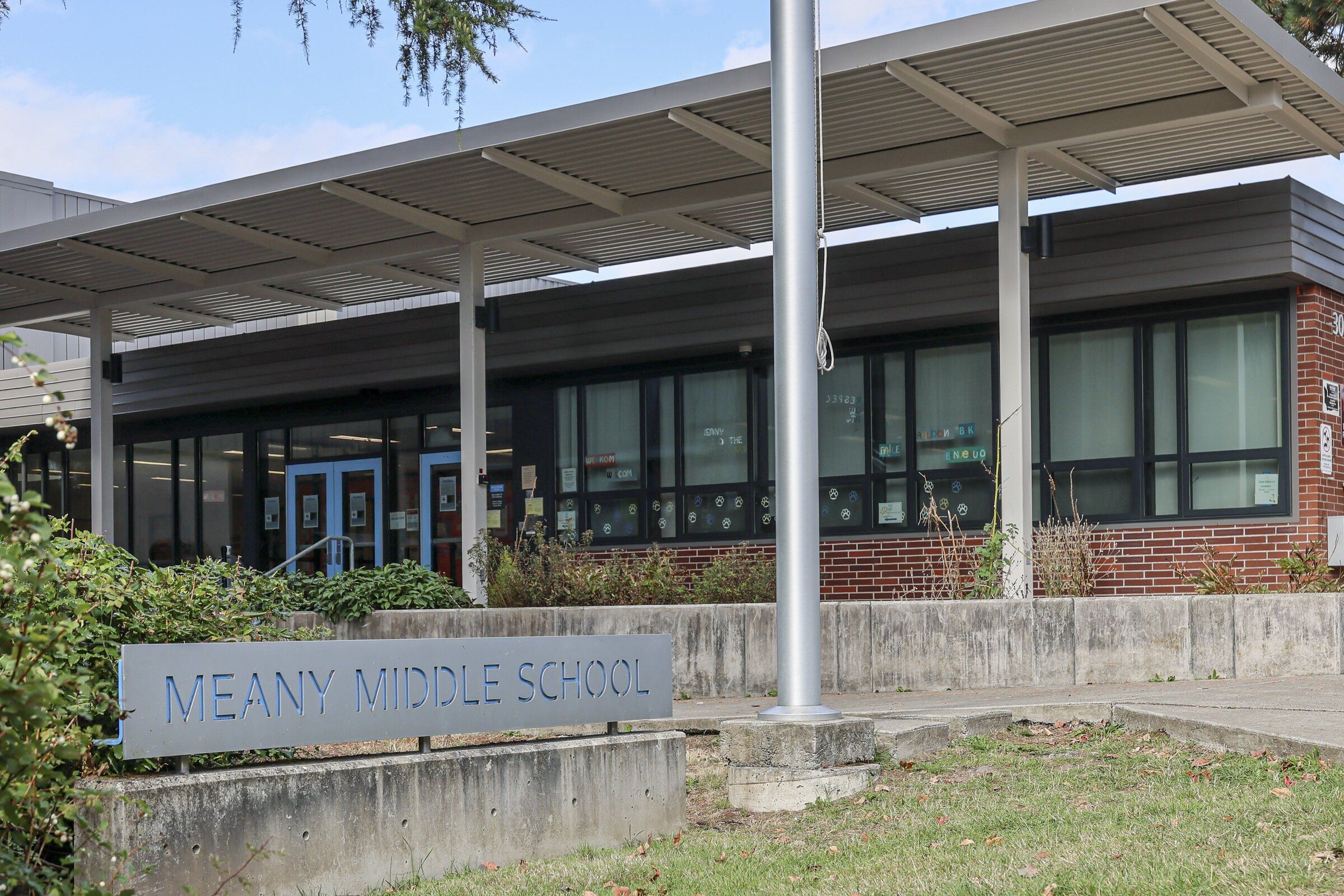
The Seattle Public Schools district has filed an appeal of a jury verdict that ordered it to pay $8 million to former student Zakaria Sheikhbarrim. The incident occurred in 2018, when a math teacher, James Johnson, struck a 13-year-old student and kicked him out of a class at Meany Middle School. According to a report by the Seattle Times, the district first tried unsuccessfully to obtain a new trial, and now is asking a higher court to revisit the verdict and related court decisions.
Last November, the jury found the district responsible for the student’s injuries and violations of the state’s anti-discrimination laws. During the proceedings, the district itself acknowledged negligence in supervising, training, and keeping Johnson on staff. However, after the verdict was issued, the district filed a motion for a new trial, arguing that the victim’s attorneys improperly leaned on jurors’ emotions, that the court gave the jury incorrect instructions, and that one juror was biased after concluding that showing the student’s Instagram photos was racist. Investigators also raised questions about potential misconduct by the presiding juror— a former court lawyer with experience in discrimination cases—who was suspected of pushing the jurors toward punishing the district. Judge Sean P. O’Donnell, who is currently running for the state Supreme Court, denied the motion on June 23, and on July 17 also rejected Sheikhbarrim’s attorneys’ constitutional claims alleging violations of the right to education and due process.
Despite that, on July 10 the district filed an appeal in the Washington State Court of Appeals, and after the judge’s July ruling, it updated the appeal to add questions about the attorney-fee rates the district is required to pay. The district has not yet disclosed the specific grounds for the appeal, but the notices indicate it is challenging the November verdict, the denial of a new trial, and part of the decision on attorney’s fees. A new law firm has joined the district’s legal team—Carney Badley Spellman. In its filing, the district expressed disappointment and said it intends to seek a fair outcome through the appeal.
For their part, Sheikhbarrim’s attorneys filed a “cross-appeal”—a procedural step that allows them to protect their interests in the event the district’s appeal is accepted. They said they would withdraw their appeal if the court does not take up the district’s case. “We would rather have the process end and the verdict stand,” said attorney Lara Hruska. She emphasized that her client suffered a traumatic brain injury as a result of the collision with the teacher and is dealing with post-traumatic stress disorder, and that any delay in payment deprives him of the ability to get treatment and stable housing.
The incident took place in January 2018, when a teacher struck the 13-year-old Sheikhbarrim during a dispute over a backpack—school rules prohibited backpacks in classrooms. Student witnesses said that during the confrontation racist slurs were spoken. Teacher James Johnson is Black, and the injured student is also Black, a Somali-American Muslim. The lawsuit alleged that the district ignored warnings about Johnson’s behavior for years, including complaints about inappropriate contact with female students. After the incident, the teacher received a five-day suspension, then was transferred to another school, where complaints continued. The district fired Johnson only in 2021, after a KUOW investigation was published.
Sheikhbarrim’s attorneys said that after the trial and under new leadership, the district has become faster to respond to parents’ requests and cases of alleged abuse of students. “I think the community is saying, ‘We will not tolerate this. It was unacceptable… We don’t do this anymore,’” Hruska said. The verdict and the subsequent appeal have become an important precedent, showing that courts can impose serious financial liability on schools for failing to address problematic teachers. But the final payout is on hold pending the appellate court’s decision, leaving the victim’s family in uncertainty.
Seattle residents decide the fate of libraries: $480 million tax on the ballot
By August 4, Seattle residents must decide the future of public libraries: Proposition 1 is on the ballot— a seven-year property-tax levy of $480 million. The funds will support a library system that includes 27 branches. As reported by KOMO, the new measure is intended to replace a 2019 collection set to expire this year, which raised $219 million. If the tax is approved, the amounts collected from homeowners would more than double, but officials say this is the only way to maintain the current level of services.
Seattle’s chief librarian, Tom Fay, emphasized that the levy covers about one-third of the system’s operating budget—meaning the money used for salaries, buying books, maintaining buildings, and day-to-day operations. “If the levy doesn’t pass, we’ll have to make some very difficult decisions,” the outlet quotes him as saying. Brian Lawrence, executive director of the Seattle Public Library Foundation, added that if the initiative fails, branch closures, reduced hours, or longer wait times for books could be possible—services that residents have long come to rely on.
According to city calculations, in the first year the levy would increase by about 19 cents per $1,000 of assessed property value. For a homeowner with a $872,000 home value— the Seattle median— the annual payment would be about $193. Librarians say the increase is unavoidable: “Books cost more, salaries have increased, and construction and labor cost more,” Fay said.
Library visitors are also weighing in on the debate. Seattle resident Luna Rivera admits that if she had to buy every book she reads, she would go broke. Allen Chirella, a regular user of the computer room, calls the library an essential public resource. Ballots must be mailed no later than Election Day—August 4. In that way, the outcome of the vote will directly determine how accessible books, digital materials, computer stations, and other services that people today take for granted will remain for city residents.
Festival tragedy: Seattle police seize a “ghost gun” from a 15-year-old suspect
Last weekend, at the Bite of Seattle food festival in Seattle, a shooting left three people dead and four others injured. Police said they confiscated what’s known as a “ghost gun” from one of the alleged shooters—a 15-year-old. The weapon, assembled from parts bought online, has no serial number, making it nearly impossible to trace. The second person involved in the exchange of gunfire was 19-year-old Junior Si Niko Semo, who, according to investigators, died from multiple gunshot wounds. Authorities are still searching for a third possible suspect.
At a press conference on Tuesday, Police Chief Sean Barnes said multiple firearms were found at the scene. The teenager, according to reports, had with him an 89 mm polymer pistol with an extended magazine holding 33 rounds—at the time it was seized, 19 rounds remained. A second weapon—apparently not used in the shooting—was found with a full 7-round magazine. The third was a 9 mm Glock 45 with a device for fully automatic fire (an “auto switch”); it had 21 rounds remaining out of 40. Crime scene investigators found 14 shell casings from two different firearms. Police said none of the weapons found were reported stolen.
The shooting began around 6 p.m. on Sunday in the busy festival area, near the iconic Space Needle. Two bystanders died—56-year-old Ashley Whitehead and 44-year-old Carlos Israel Sanchez Villalba. Four other people were injured but their injuries were not life-threatening. Police also said another possible victim may have gone to the hospital on their own for a gunshot wound, but after treatment left the medical facility without providing identifying information. Because of “legal barriers,” police do not know their identity, and Chief Barnes appealed to them through the media: “If this person is you, please contact us. First, we want to make sure you’re okay, and second, if you want to speak with an investigator, let us know—perhaps you saw what happened.”
The term “ghost gun” has been appearing more and more in U.S. crime reports. It refers to firearms assembled at home from spare parts ordered online. Those parts are sold without any background check of the buyer, and the finished product is not marked with a serial number, making it “invisible” to authorities. In this case, Seattle police found a pistol printed on a 3D printer or assembled from polymer components on the teenager—one of the most common types of “ghost” guns.
Since the incident, more than 80 calls have come into the hotline. Investigators are reviewing dozens of pieces of digital evidence and continuing to check the area. It is still unclear what caused the shooting, but it is known that there was an argument between the two shooters—the teenager and his 19-year-old “partner”—that escalated into crossfire. The tragedy at Bite of Seattle again raises questions about the availability of homemade firearms and the need for stricter regulation of the online market for spare parts and components used to build guns. As police noted, one of the seized devices—a Glock 45 with a switch for automatic fire—can turn a semi-automatic pistol into a kind of mini-machine gun, significantly increasing the number of victims in mass shootings.
This story, covered in an NBC News article, shows that even traditionally calm events in the heart of the city are not immune to bursts of violence involving weapons assembled on the spot. The ages of the suspects—15 and 19—add to the alarm: how was a minor able to buy and assemble a pistol capable of firing about three dozen rounds without reloading? Answers will likely come after detectives finish analyzing digital evidence and interview the detained suspect. For now, Seattle residents are mourning the victims, while police search for the third participant.