Seattle’s final hot day of summer could arrive as early as Tuesday, but the warmth will also bring wildfire smoke back with it. Meanwhile, the Seahawks have lost fan favorite Jake Bobo to a serious knee injury, while a preseason matchup against the Titans will help determine who becomes the starting quarterback.
Tuesday Could Be Seattle’s Last Truly Hot Day of Summer as Wildfire Smoke Returns
Seattle forecasters are asking a provocative question: could the coming Tuesday mark the end of the truly hot days this summer? According to a recent analysis by meteorologist Scott Sistek of the Emerald City Weather blog, the region’s summer may enter a new phase as early as this week. Before residents and visitors say goodbye to the heat, however, they will have to deal with the return of wildfire smoke.
The article uses an engaging analogy, comparing Seattle’s summer weather pattern to children playing on a quiet street: when someone shouts, “Car!” everyone briefly moves aside to let the vehicle pass, then returns to the game. Summer in this region works much the same way—occasional weather systems briefly interrupt a run of sunny days, but conditions soon return to normal. For example, Seattle-Tacoma International Airport has still recorded no measurable precipitation throughout August, underscoring the dry nature of the current season.
The remnants of the cyclone that brought record-setting thunderstorms and six hours of lightning activity to Vancouver and Vancouver Island last weekend are gradually moving away, giving way to sunshine. Forecasters are calling for clear skies and temperatures around 27 degrees Celsius on Monday, while Tuesday promises to be particularly interesting. Winds will shift direction, bringing warmer air and temperatures of 29–30 degrees Celsius—already considered “hot” by local standards. Longtime Seattle residents know that most people begin feeling uncomfortable around 28–29 degrees, with anything higher prompting widespread complaints about the heat.
There is, however, a downside to this temperature peak. As Sistek notes, the change in wind direction will almost certainly bring wildfire smoke back from British Columbia. Forecast models indicate that Seattle’s skies will become hazy by Monday or Tuesday, although preliminary data suggest that heavy ground-level smoke is unlikely. Conditions may be more complicated near the foothills of the Cascades, where smoke from Eastern Washington and the Canadian Fraser River valleys could arrive and reduce air quality. The smoke will probably temper the heat somewhat, but experts advise enjoying the warmth while it lasts, because the weather is about to change.
Beginning Wednesday, atmospheric pressure will shift and a cold front will move through the region. Winds will turn westward again, clearing out both the heat and the smoke while bringing cloudier skies and cooler conditions. Light rain is possible north of Seattle, but significant precipitation is not expected. By the end of the week, temperatures will fall to a comfortable 23–25 degrees Celsius, with dry but mostly clear weather continuing. Long-range forecast models point to increased storm activity around the beginning of September, which could bring meaningful rainfall and a substantial cooldown, although the exact timing remains uncertain.
Experts are reassuring those who are not ready to give up summer weather: warm days are still possible in September, and the region’s climate history includes instances when temperatures reached 30 degrees Celsius even in October. Still, the overall forecast trend is shifting toward a more “cyclonic” pattern, with more clouds and cooler winds from the ocean. That does not necessarily mean autumn will arrive early in the fullest sense, but the number of truly hot days will decline.
Sistek cites interesting statistics from Dana Felton, a meteorologist with the National Weather Service. Last Saturday marked Seattle’s 37th consecutive day with temperatures of at least 21 degrees Celsius, placing the city tenth in the historical rankings for the length of such streaks. The record was set in 2017, when the streak lasted 72 consecutive days. There is also a chance that this August will become only the sixth month in recorded history in which every day was warmer than 21 degrees Celsius. The other such years were 2022, 2017, 2012, 2003 and 1967. At the same time, the airport could match the 2012 record for the lowest amount of August rainfall, with only a trace of rain recorded.
Here is an interesting fact for climate-record enthusiasts: Seattle’s lowest temperature ever recorded in August has not been surpassed since August 8, 1974, when the thermometer fell to 8.9 degrees Celsius. The statistic is a striking reminder that the region can still surprise even at the height of summer, although the warming trend of recent decades is becoming increasingly clear.
In short, Seattle is on the verge of a noticeable shift in its weather pattern. The last truly summery day could arrive as early as Tuesday, bringing another round of wildfire smoke with it. Although a complete farewell to warm weather is not expected, those looking forward to cooler autumn conditions should prepare for changes in the coming days.
Preseason Test: Seahawks vs. Titans — A Battle for Rhythm and Coaches’ Trust
NFL preseason games rarely become events capable of overshadowing the regular season, but these August matchups often produce decisions that shape a team’s fortunes for months. When the Seattle Seahawks take the field at Nissan Stadium in Nashville against the Tennessee Titans on August 23, 2026, more than an exhibition-game victory will be at stake. The teams will also be evaluating which quarterbacks deserve starting roles and which belong further down the depth chart. For both franchises, the game will serve as a kind of litmus test of roster depth and players’ ability to handle pressure.
The Titans enter the matchup with confidence after a convincing 19–13 victory in their preseason opener. Their success was built on fundamentals: a powerful rushing attack that produced 167 yards on the ground and steady kicking that generated 13 points. That is exactly the style a head coach wants at the foundation of his team—ball control, patience and the ability to punish opponents for their mistakes. Tennessee was less impressive through the air, however. Cam Ward, the leading candidate for the starting quarterback job, managed just 57 passing yards, displaying caution more than aggression. His competitors, Will Levis and Mitchell Trubisky, saw very limited action, only intensifying the intrigue surrounding Tennessee’s quarterback position.
Seattle presents a very different picture. The team comes into the game after a painful 17–7 loss in its first preseason contest, in which the offense showed a troubling trend: only 156 total yards, including just 49 passing yards. The Seahawks’ attack was undermined by its own mistakes, including three sacks that ended drives and a lack of depth in the route concepts. Notably, the team’s only touchdown came from Drew Lock, who, despite throwing for just 40 yards on nine completions in 13 attempts, looked like the offense’s most energetic component. His touchdown pass was one of the few bright spots in an otherwise dull performance. Lock now faces a more difficult task—not merely producing statistics, but playing consistently, avoiding sacks and giving his receivers opportunities for big plays.
Special attention should be paid to the young players using the preseason as a showcase for their abilities. Jalen Milroe, Lock’s backup, displayed his primary asset in the previous game: mobility. His 36 rushing yards and 20-yard run were the longest gains on the team, making him a dangerous weapon when the passing pocket collapses. That same mobility also worked against him, however. Three sacks for 27 yards showed that he too often tries to buy time with his legs instead of making quick decisions. Against the Titans, whose defense recorded two sacks and seven quarterback hits in its opening game, Milroe will need to find the right balance between aggression and caution.
For Tennessee, Tony Pollard is expected to return after missing part of the team’s practices but working fully on Friday. His presence in the rushing game would represent more than a simple boost—it would shift the emphasis of the entire offense. Pollard had only four carries in the first game but gained 22 yards and scored a touchdown, reminding everyone of his explosive ability. If the Titans continue to use him as their primary ball carrier, Seattle’s defense will have to make significant adjustments. In the previous game, the Seahawks recorded only two tackles for loss and no sacks, pointing to weaknesses along the defensive front.
Tactically, the matchup looks like a classic clash of philosophies. Tennessee is trying to find balance between the run and the pass through Ward, while Seattle is seeking consistency through short, quick throws designed to avoid pressure. It will be interesting to see how the Seahawks’ coaching staff uses Milroe. The team could deploy special packages featuring him, forcing the opposing defense to prepare for unfamiliar looks. Ward, meanwhile, completed only 41.7% of his passes in the first game—five of 12—and needs to show progress, as the competition for the job in Tennessee remains intense and Levis and Trubisky are waiting for their opportunities.
As with any preseason game, this matchup should not be judged by its headline names alone. The real value lies in the details: Can Lock demonstrate leadership? Can Milroe avoid turnovers? Can Pollard show that his return is not a one-off appearance but the beginning of a new chapter for the Titans’ offense? For fans following every move made by their favorite players, the game offers a chance to see how the pieces are coming together before the regular season begins. The game will be broadcast live on FOX at 8:00 p.m. Eastern Time and will also be available on the FOX One streaming service, which offers new users three days of free viewing. Those seeking deeper analysis and pregame context can visit the FOX Sports website, which features extensive coverage of the players and the teams’ tactical schemes. This game will be worth watching less for the final score than for how young players compete for roster spots, because in the NFL, the preseason is the only time when mistakes do not cost careers—but coaches remember them forever.
Jake Bobo’s Injury: Seahawks Lose Fan Favorite Before Season Begins
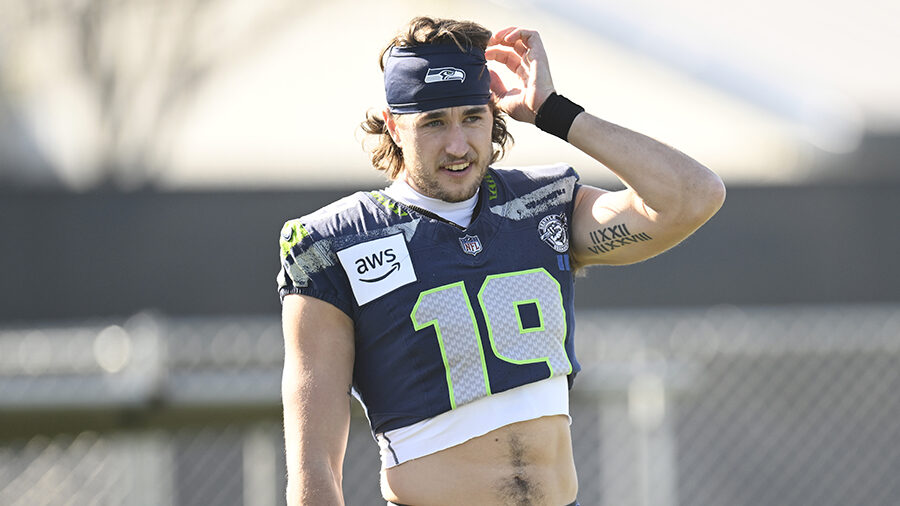
The Seattle Seahawks placed wide receiver Jake Bobo on injured reserve Saturday, effectively ending his 2026 season before it began. It is disappointing news for the team and its fans, who had grown fond of Bobo because of his hard work and unconventional plays. Head coach Mike Macdonald has already described the knee injury Bobo suffered Friday during a joint practice with the Tennessee Titans as “serious,” leaving the club in urgent need of a replacement.
The Seahawks signed Julian Hicks to take Bobo’s place. The young receiver has yet to appear in an NFL regular-season game. Hicks, 26, went undrafted in 2024 after playing for Albany and spent last season on the Green Bay Packers’ practice squad. His path to Seattle has been a winding one: the Seahawks signed him only a week ago, then released him Wednesday after acquiring cornerback Trevon Diggs, and have now brought him back. The sequence is a reminder of how unpredictable life in the NFL can be.
Bobo’s loss is about more than losing a single receiver. At 28 years old and entering his fourth NFL season, he was valuable not so much for his statistics—34 receptions for 323 yards and three touchdowns in 45 games—but for his versatility and special-teams contributions. Nearly 600 special-teams snaps over three seasons made him one of the team’s most valuable rotational players in that area. Fans loved him because he consistently made the most of his opportunities without being a superstar, always finding a way to contribute when it mattered.
The Seahawks now face the difficult task of finding someone who can fill the void. Hicks is unlikely to immediately become the kind of “people’s hero” Bobo was, but he has an opportunity to prove himself. The team also has other candidates who could step into a larger role. The situation is another reminder of how short NFL careers can be and how important roster depth is. For now, fans can only hope that Bobo makes a full recovery and that the team finds a way to compensate for his absence. The details of the injury and his exact recovery timeline have not been disclosed, but the coach’s tone made it clear that Bobo will not be seen on the field this season.
Incidentally, Seattle Sports news also mentions other important developments involving the team, including the sale of the franchise to the Haslam group, which has cleared its final major hurdle. That means major changes are ahead for the Seahawks, and Bobo’s injury is only one episode in that transformation.