News from Seattle and its suburbs: The New York Times wryly calls tech-heavy Bellevue and Kirkland "small cities" for careers, while Seattle's mayor pauses expansion of police cameras, trying to balance safety and privacy.
How "small-city" Bellevue ended up in The New York Times spotlight
Overview: An unexpected nod from one of the world's most influential publications made Washington state residents smile and reflect. The New York Times, citing research from the CoworkingCafe platform, ranked Bellevue and Kirkland among the best "small cities" for building a big career. That label for these dynamic, tech-heavy, and quite expensive Seattle suburbs sounded ironic, provoking a lively reaction on social media, while also highlighting their growing economic significance.
According to The New York Times piece, based on research by CoworkingCafe, Bellevue placed 12th and neighboring Kirkland 9th in the "Top 20 Best Small Cities for a Big Career" ranking. The study analyzed 298 U.S. cities with populations under 250,000 across a range of metrics: income levels, housing affordability, labor market conditions, remote-work trends, access to healthcare, education levels, commute times, and other quality-of-life factors. The authors note that a new wave of compactly built cities is quietly transforming into "career opportunity hubs," challenging the stereotype that success is only possible in major metropolises.
However, many found the application of the term "small city" to Bellevue amusing. As the piece points out, Bellevue is the fifth-largest city in Washington state with about 158,000 residents. Its skyline of high-rises with glass facades glowing at sunset is clearly visible from Seattle across Lake Washington. Light rail already runs through the city, and soon it will be directly connected to Seattle. At the same time, the median home price in Bellevue, according to Redfin, approaches a staggering $1.6 million. That combination — compactness, enormous cost of living, and concentration of tech firms — prompted the ironic reaction from locals. One Bluesky user joked that it's hilarious to call moving to Kirkland, Bellevue, or Silicon Valley "a farewell to big-city life," adding sarcastically: "Yeah, man, I'm leaving the bustle and noise of the metropolis to buy a luxury mansion in the tech capital of the world." Lex Wong, founder of the parody news site The Needling, reacted succinctly: "Bellevue was ca-a-a-lled small," accompanied by a laughing-with-tears emoji. Seattle comedian Brett Hamill quipped on social media: "If you moved to Kirkland because of this list, you may be entitled to compensation."
Despite the irony, this attention from The New York Times underscores an important trend. CoworkingCafe points to the emergence of new centers of economic power that, while not giants like New York or Los Angeles, offer high quality of life, developed infrastructure, and strong career prospects, especially in tech. Bellevue and Kirkland certainly fit that description. Their "small" status is largely formal and demographic, while their economic and cultural influence, and close ties to Seattle, make them full-fledged nodes of the metropolitan area. As the author concludes, any publicity is good publicity. And while everyone debates whether Bellevue can be called a "small city," these places continue to strengthen their positions as powerful and attractive locations on the map not only of the state but of the country.
Seattle mayor pauses expansion of police video surveillance system
Mayor Katie Wilson's decision to pause the rollout of additional surveillance cameras was an attempt to find a balance between public safety and civil liberties. The move reflects the complex debates underway in the city and nationwide around surveillance technologies, their effectiveness, and potential risks to vulnerable populations.
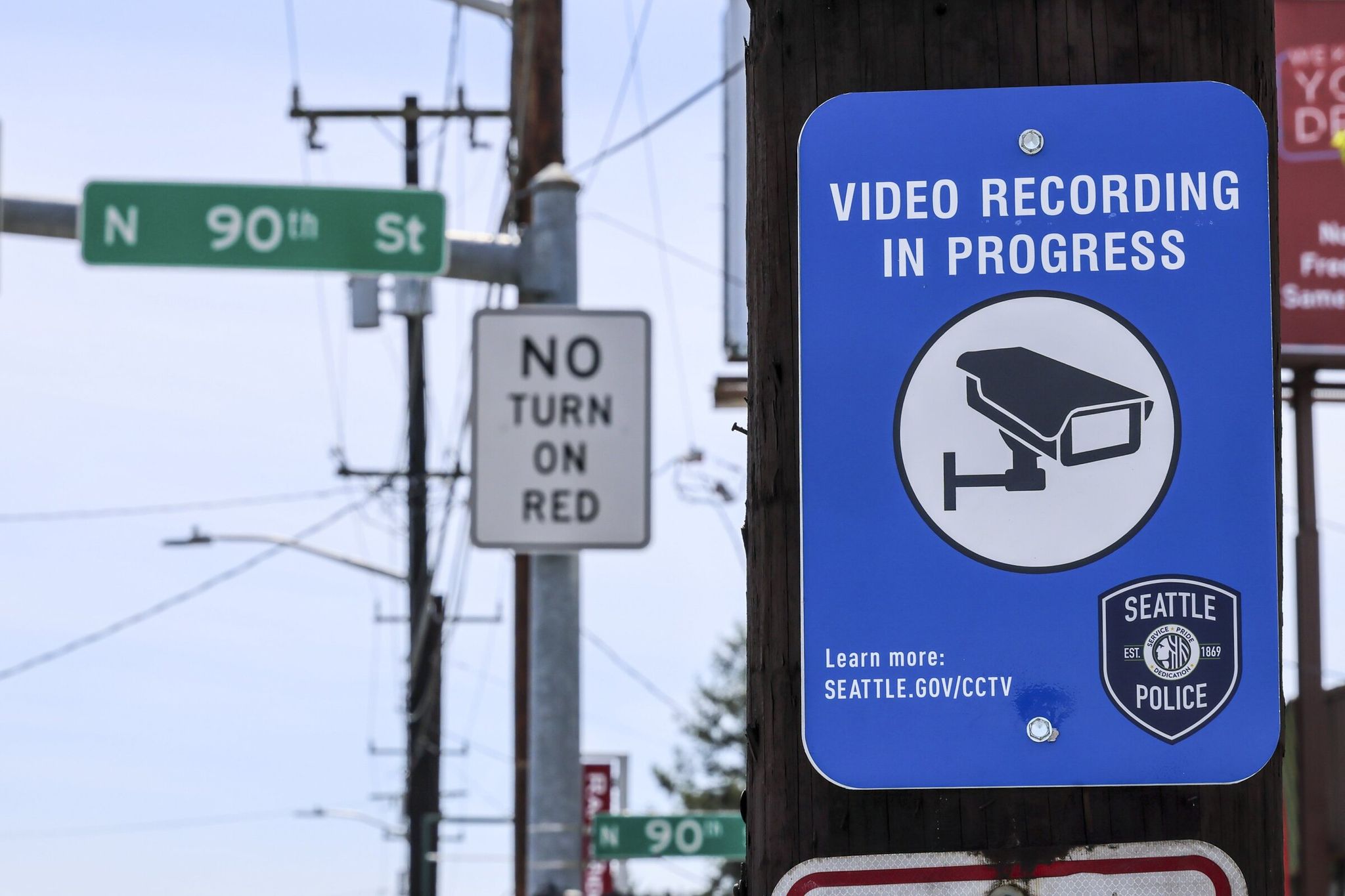
Mayor Katie Wilson announced a pause on plans to install additional police surveillance cameras, except in the stadium district ahead of the FIFA World Cup. This decision, reported by The Seattle Times, was driven by concerns that surveillance technologies could be used to target immigrants and contribute to a pervasive system of monitoring. However, Wilson did not shut off the 62 cameras already operating on Aurora Avenue, downtown, and in the Chinatown-International District. The sole exception was a camera near a reproductive-health clinic, which will be turned off pending a thorough review of privacy protocols. At the same time, the city will disable automatic license plate recognition technology installed on roughly 400 police and patrol vehicles until its use policy is brought into compliance with new state laws.
The pause, the mayor said, will give the administration several months to conduct a comprehensive audit of camera-use protocols. The audit will involve experts from the New York University Policing Project, which focuses on improving accountability and transparency in police work. Wilson acknowledged that cameras help solve some crimes, including serious ones, but stressed they are not the sole key to safety. On the other hand, there are legitimate concerns about privacy, excessive surveillance, and potential misuse of these technologies. She also noted that cameras are not the primary threat to immigrants, transgender people, or those seeking reproductive-health services.
This decision is an early political test for Wilson, who has been in office less than three months. She has faced pressure from opposing sides. Business associations and downtown interest groups urged continuation of the surveillance expansion initiated by former mayor Bruce Harrell. Police Chief Sean Barnes, whom Wilson decided to keep in his post, called the cameras "invaluable." Conversely, activists and volunteers who worked on her campaign collected a petition calling for an immediate stop to expansion, fearing Wilson was backing away from campaign promises. Campaign organizer Sochitl Maekovich expressed disappointment, saying people had worked with the expectation of getting "not Bruce Harrell." Wilson also cited appeals from mothers worried about their children's safety, especially after the killing of two Rainier Beach High School students.
A special case is the installation of cameras in the stadium district ahead of the World Cup. The mayor approved this, but only on the condition that they be activated only if the city receives information about a credible threat. A specific definition of such a threat has not yet been established. This shows an attempt to strike a compromise between securing a large event and minimizing continuous surveillance.
Wilson's decision illustrates the broader dilemma facing modern cities: how to use technological tools to fight crime without crossing the line and creating infrastructure for mass surveillance. Her remark that "sometimes as mayor you make decisions that will please no one" aptly captures the difficulty of finding balance in this emotionally charged debate, where arguments about practical safety and fundamental rights collide.
Seattle mayor pauses expansion of police cameras in Capitol Hill and Central District
Mayor Katie Wilson's decision to pause the rollout of police cameras and automatic license-plate readers sparked lively debate about balancing public safety and privacy. City officials faced a tough choice: on one hand, the technology has proven effective in solving crimes; on the other, it raises serious concerns about potential misuse by law enforcement.
Mayor Katie Wilson announced a pause on the expansion of the Real Time Crime Center (RTCC) camera system into Capitol Hill and the Central District, and a temporary halt to Seattle Police Department use of automatic license plate readers (ALPR). This decision, reported in a CHS Capitol Hill Seattle News article, was made in response to concerns about possible misuse of collected data, including by federal agencies such as Immigration and Customs Enforcement (ICE). Wilson emphasized that cameras cannot be the only answer to the city's public-safety problems and announced a privacy and data-governance audit for surveillance technologies.
The existing "pilot" camera system downtown, in the International District, and along Aurora Avenue will continue to operate. Moreover, the mayor approved installing cameras in the stadium area for the upcoming summer World Cup. However, these new cameras will not be connected to the RTCC unless a specific threat justifies such action. Wilson said that if there were a surge in immigration raids similar to those in Minneapolis, she would be prepared to shut off all cameras to prevent their use by federal authorities. She also ordered the police to immediately inform the mayor and city council of any data sharing with ICE, even if the data are not part of the video program.
This decision runs counter to the position of Police Chief Sean Barnes and system supporters like City Council Public Safety Committee chair Bob Kettle. Seattle Police Department (SPD) has previously said that analysis shows: when RTCC analysts have access to the camera network and key databases, the likelihood of apprehending suspects triples. Police argued that expanding the system to the Capitol Hill night hub around East Pike and Cal Anderson Park, and to a large portion of the Central District from East Cherry to Jackson, was necessary to prevent firearm violence. The installation on Capitol Hill was estimated at about $400,000 with $35,000 in annual operating costs, and in the Central District about $425,000 with the same yearly costs.
Despite the pause, officers from the East Precinct, whose jurisdiction includes these neighborhoods, regularly request information from RTCC analysts about suspicious vehicles or photos of suspects. But due to the limited coverage of the current system, many of these requests go unanswered. The center currently operates 19 hours a day, seven days a week, combining technology with real-time analysis.
Regarding automatic license plate readers, which capture vehicle plates as patrol cars move around the city, Wilson said the pause will give Seattle time to align local policy with new state legislation designed to limit potential abuses of the technology.
In her statement the mayor urged the public to look at the bigger picture: "There is no question these cameras help solve crimes, including serious ones like homicides. But also: cameras are not the only key to safety in our neighborhoods." She acknowledged her decision would satisfy neither those calling for an immediate shutdown of all cameras nor those seeking to speed up deployment, and called for working together on the larger task of making neighborhoods safer while protecting immigrants and other vulnerable communities.
While some officials, including Bob Kettle, urge completion of the audit before the World Cup, Wilson gave no specific timeline for the review or a final decision on cameras in Capitol Hill and the Central District. Thus the city remains in a state of uncertainty, trying to find a compromise between effective police tools and protection of civil liberties in an age of ubiquitous surveillance.