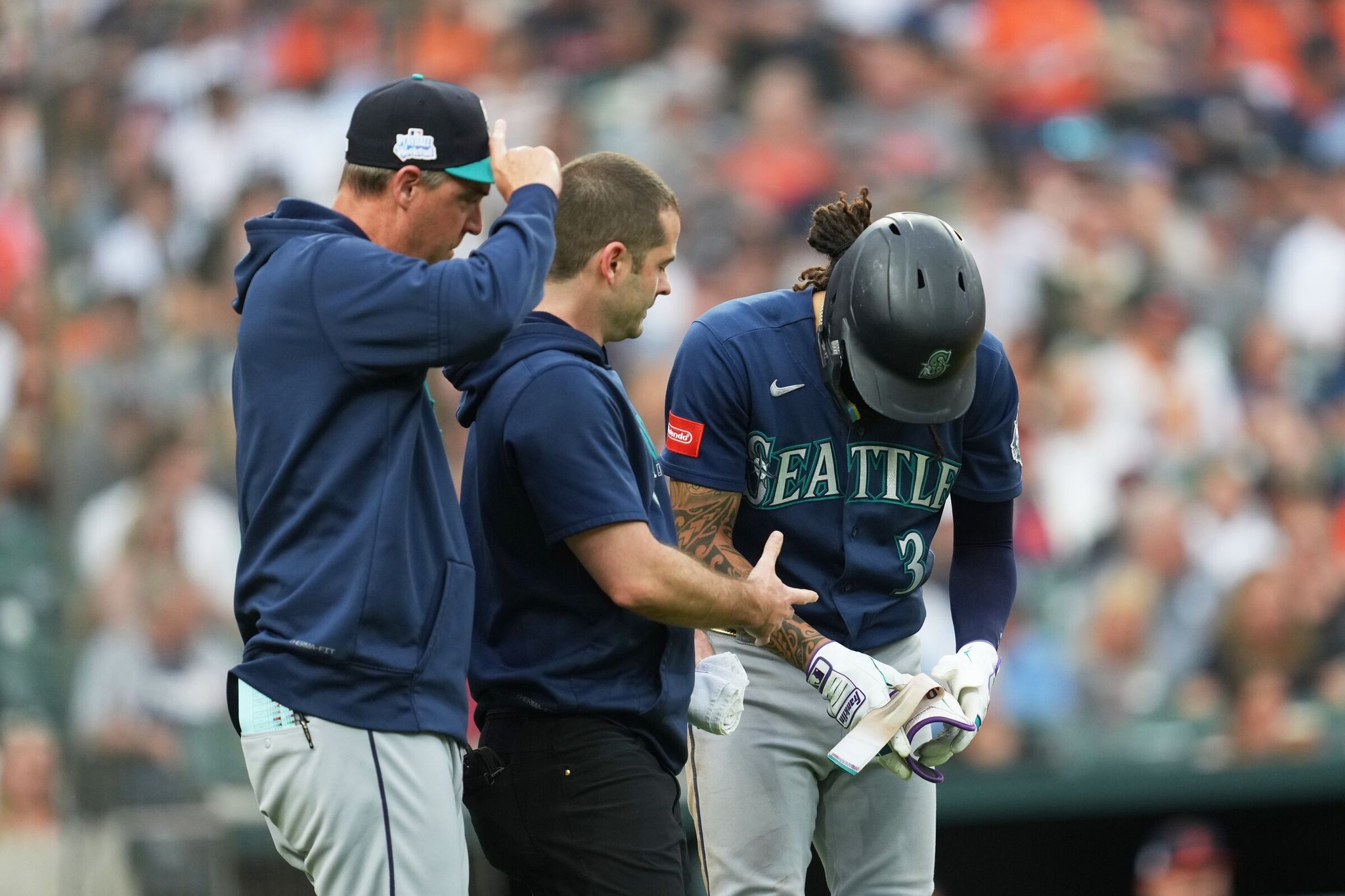
Today in the news: Seattle is bracing for a possible heat wave up to 32°C — meteorologists are warning but reassuring that a repeat of the 2021 heat dome is not expected. In sports — the hockey club Seattle Torrent lost three key players due to PWHL expansion, and the baseball Mariners are without their lead shortstop J.P. Crawford after a hand injury.
Anticipated heat in Seattle: forecasts point to possible highs near 90°F
Residents of Western Washington should pay attention to long-range forecasts that hint at a potential heat wave in the Puget Sound area in about ten days. Meteorologists urge caution in interpreting these signals, but the signal is strong enough to merit attention. Ted Buehner, a meteorologist at KIRO Newsradio with many years at the National Weather Service in Seattle, explained on “Seattle’s Morning News” what recent model runs are showing. His message was measured but clear: if the forecast verifies, the region could face a serious problem. He stressed that, if model runs line up, the region could see another heat wave with thermometers likely reaching about 90°F (around 32°C). For Seattle this is not just warm weather but an event the city is unprepared for: most homes lack central air conditioning, and people aren’t acclimated to those temperatures. It’s worth recalling the last time a similar pattern occurred in late June 2021, when a heat dome over the Pacific Northwest led to hundreds of deaths.
Attention has focused on maps circulating online based on the European model (ECMWF). They show so‑called 850‑millibar temperature anomalies. That may sound technical, but it’s actually straightforward. Imagine the atmosphere about 1.5 kilometers up — that’s the 850‑millibar level. Meteorologists like to analyze that layer because it sits above the morning marine layer and low clouds, giving a cleaner picture of which air mass is over the region. An anomaly shows how much warmer or cooler that air mass is than normal for this time of year. According to current ECMWF runs for June 15–17, the air at that height over Puget Sound will be 14–16°C warmer than normal. In Fahrenheit that’s 25–29°F above normal. And when the air about 1.5 kilometers up is that hot, surface temperatures tend to follow. That typically means street‑level temperatures in Seattle could be well above 90°F.
How does this forecast compare to the 2021 heat dome? According to World Weather Attribution, surface temperatures at the peak of that event were 16–20°C above normal. In Seattle on June 28, 2021, the thermometer hit 108°F (about 42°C), more than 30°F above the normal late‑June maximum. The upper‑level ridge that caused that event was later described as a 4–4.5 standard deviation event. In plain language, that means “this shouldn’t occur more often than once in a thousand or ten thousand years.” In this context a “ridge” is an atmospheric feature: imagine the atmosphere as a river of air flowing west to east across the country. That river usually has bends and rises. A ridge is a large upward bulge — a dome of high pressure — located very high, around 5.5 kilometers (18,000 feet). When such a ridge stalls over a region and refuses to move, it acts like a lid. Air beneath it sinks and warms; clouds can’t form, and the sun beats down day after day. That’s the driving mechanism behind any major heat wave in the Pacific Northwest. In 2021 the ridge that formed over British Columbia was the strongest ever measured in that part of the world. Current model runs show a ridge forming, but not that extreme one. Forecasts for 2026 show high temperatures and mid‑level anomalies reaching values similar to 2021. However, at least so far, the historic upper‑level ridge that made the 2021 heat dome so deadly is missing. That’s an important difference, and it’s why Buehner is watching the models rather than issuing an alert.
Ted Buehner has forecasted Pacific Northwest weather since the 1970s. He’s not prone to false alarms, so his recommendation to pay attention carries weight. He also carries personal scars from the last big heat event. He recalls judging a baseball game on the first day of that 2021 heat wave and suffering heat exhaustion. That’s one of the risks of extreme heat. Don’t count on the Washington coast as a guaranteed refuge. During Seattle heat waves people often load their cars and drive to Ocean Shores or Westport. Buehner advises checking the forecast before you go. Because of offshore flow — when air moves from Eastern Washington and British Columbia toward the ocean — the coast can often be even hotter than Seattle. During the 2021 heat dome, Quillayute on the Pacific coast hit 110°F (43°C). Forks was hotter than Atlanta and Chicago. When winds shift east, the marine layer is pushed off the coast and the beach starts to feel like Tri‑Cities. The picture should become clearer in the next four to five days. Buehner urges people to stay tuned, since models can verify or break down — both remain possible.
As for preparing for a possible heat wave, it’s better to do the boring but important tasks now while the forecast is still uncertain. It’s much easier to skip preparations than to frantically hunt for a working air conditioner when the National Weather Service issues a red‑level warning. Start at home. Pull the window air conditioner out of storage and make sure it works before you need it. Check window screens; find fans. If you don’t have air conditioning at all, learn where the nearest cooling center is and write the address on your refrigerator. King, Pierce, and Snohomish counties typically open cooling centers in libraries and community centers during heat events. Hydration matters: drink water before you feel thirsty, not after. Cut back on alcohol and caffeine during the hottest times, as they work against you. Check on those who can’t care for themselves: elderly neighbors, children, people on medications that affect thermoregulation, and people who live alone. A simple two‑minute knock on the door during heat saved lives in this region. Many of the 2021 fatalities were elderly people living alone in apartments without air conditioning. Don’t forget animals: dogs and cats need shade and fresh water. Pavement can heat enough to burn paws. Walk dogs early in the morning or after sunset. Livestock and chickens also need extra water and shade. Know the signs of heat exhaustion and heat stroke. Heat exhaustion shows heavy sweating, weakness, nausea, and a rapid but weak pulse. Cool the person and give fluids. Heat stroke is an emergency: hot, dry skin, confusion, body temperature over 39.5°C (103°F), possible loss of consciousness. Call 911 immediately. Plan your weekends around the heat, not in spite of it. Move long hikes, gardening, and other strenuous outdoor work to early next week before any ridge sets in. That’s when people get hurt. The atmosphere will tell us more in a few days, and being prepared ahead of time is sensible. Harger Charlie in his piece at MyNorthwest.com emphasizes that the forecast is not final, but preparations are worth starting now.
Seattle Torrent lose leaders: PWHL expansion deals blow to last‑place club
The Seattle Torrent, last season’s bottom team in the Professional Women’s Hockey League (PWHL), unexpectedly became a prime talent supplier for new teams. In the expansion league’s first stage, the club lost three key players — including Olympic champions — raising questions about its competitiveness next season. According to FOX 13 Seattle, forward Hannah Bilka and defenseman Kyla Barnes signed with Detroit, and goalie Corinne Schroeder went to San Jose. All three were core figures for Seattle, and their departures are a serious blow.
Bilka, who scored four goals and had five assists in 14 games, signed a two‑year deal, though her past season was marred by an upper‑body injury sustained at the Olympics. Barnes, by contrast, was an iron‑woman regular, playing all 30 games and totaling eight points. Schroeder, with a .915 save percentage and 2.56 goals‑against average, was one of the few bright spots in the Torrent’s defense. Interestingly, despite the team’s poor results, its players were in demand elsewhere. Under expansion rules, current clubs can lose no more than three contracted players in this stage, so the Torrent is temporarily protected — four more players, including Lexi Adzia and Jenna Buglioni, remain under contract and could not be selected.
However the biggest threat to Seattle comes from players not currently under contract. Captain Hilary Knight and one of the team’s top scorers, Julia Gosling, top a list of 14 free agents who could sign with any of the league’s 12 clubs starting June 10. There were rumors Knight might join Bilka and Barnes in Detroit, but nothing official yet. Players like Emily Brown, Brooke Bryant, and Aneta Techralova are also at risk. The situation is worsened by the second expansion stage beginning June 10, when the Torrent will only be able to protect three of those players. The club risks losing its core, making building a competitive roster for next season extremely difficult. General manager Megan Turner faces a tough job: keep the leaders or find suitable replacements in the upcoming free‑agent market opening Monday.
Mariners lose key player: J.P. Crawford exits after being hit by pitch
Friday’s game between the Seattle Mariners and the Detroit Tigers was marred by an unpleasant incident: the Mariners’ starting shortstop J.P. Crawford was forced to leave early with an injury to his right hand. This occurred just minutes after Crawford had shown grit by staying in the game after being hit by a pitch. Crawford was injured in the top of the third inning when Tigers pitcher Framber Valdez lost control of a 95‑mph fastball (about 153 km/h) that came inside and struck Crawford on his throwing hand near the pinky. As The Seattle Times reports, Crawford initially stayed at the base, but when Julio Rodríguez hit into a double play he was forced to run to second base and then exited the game.
In the third inning Colt Emerson came in to replace Crawford at shortstop, and Patrick Wisdom took over at third base. There is no official word yet on the severity of the injury, but the situation looks concerning. It’s important to note the hand hit capped off a rough night for Crawford. Earlier, in the first inning after Rob Refsnyder’s single, Crawford awkwardly slipped while trying to reach home, likely spraining his ankle. Despite the discomfort, Crawford managed a terrific defensive dive in an inning to record a force out at second. This incident comes against a decent offensive line for Crawford this season: entering the game his batting average was .224, but he had already hit 10 home runs — his best career total for early June. The Mariners will likely await exam results, and if there is a fracture it would be a significant loss for the team, given that the injured hand is his throwing hand.