In Seattle, officials are debating a levy for road repairs, tallying the results of a large cleanup ahead of the 2026 World Cup, and WinCo’s plans to open a store have run into environmental disagreements.
WinCo’s plan to open a Seattle store faces environmental hurdles
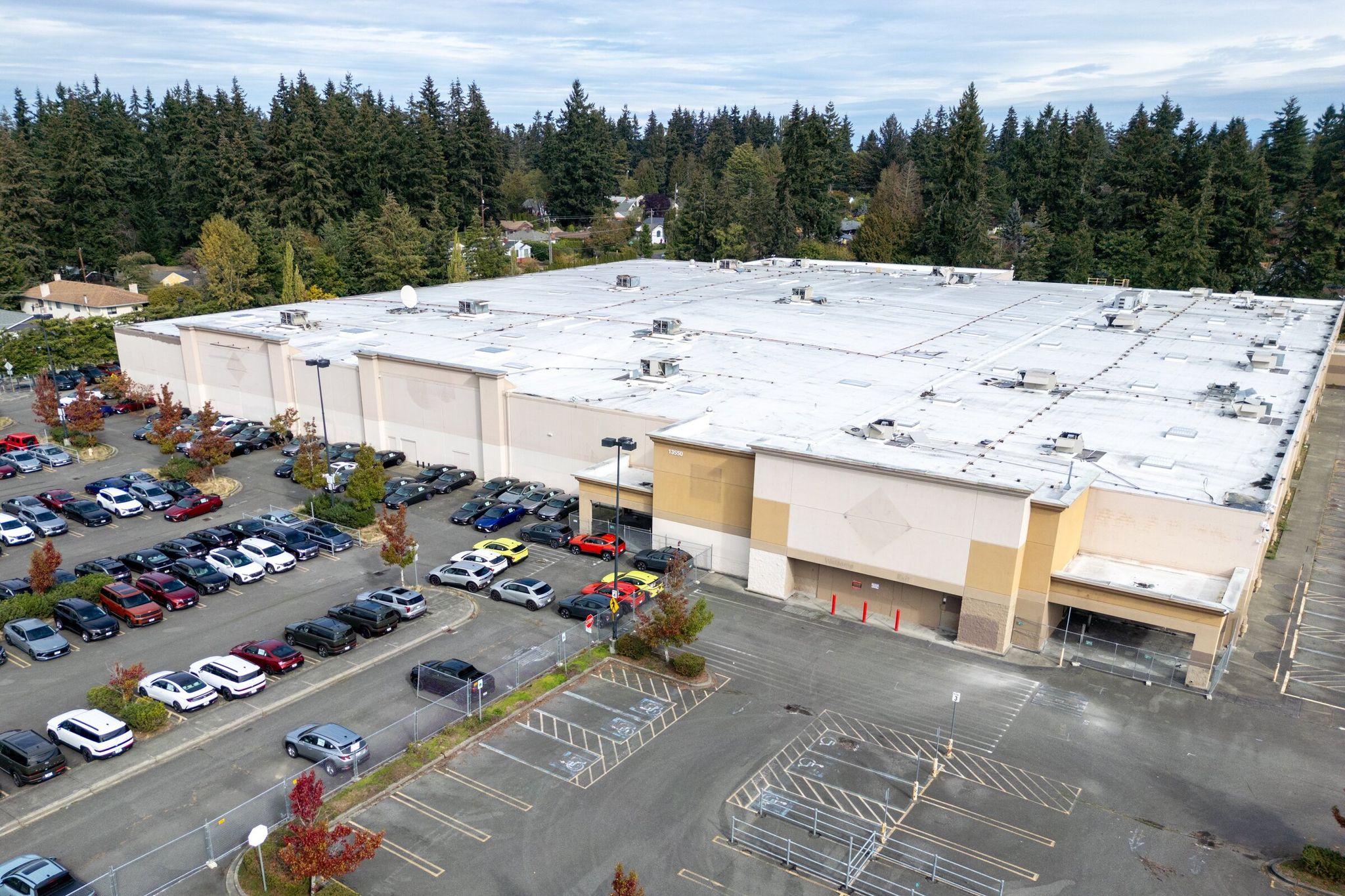
Residents of north Seattle may have to wait even longer for a grocery store to open in the building that has sat vacant since 2018, the former Sam’s Club. Plans by discount supermarket chain WinCo— which two years ago intended to open its first Seattle store there—have encountered an unexpected obstacle over environmental disagreements, putting the whole project in doubt.
Hopes for a new, lower-priced grocery option in a high-demand neighborhood took a significant hit. Last week a municipal appeals hearing officer vacated the city’s earlier determination of no significant environmental impact for the project. That ruling, detailed in The Seattle Times, could delay the plans for many months or even prompt WinCo to abandon its Seattle entry entirely. The proposal called for a major renovation of the building and a reconfiguration of the parking lot on Aurora Avenue. The setback comes at a difficult time: across Washington state there has been a rise in large vacant retail spaces after closures by chains such as Rite Aid, Kroger and Bed Bath & Beyond.
This wasn’t the first attempt to revive the site. In 2021 Costco had similar plans that never materialized. WinCo—known for significantly lower prices compared with local competitors like QFC, Safeway or Sprouts—seemed an ideal candidate, especially amid high inflation for groceries and gas. The chain already has about two dozen stores in Washington, the nearest being in Edmonds. Initially the process moved smoothly: city officials conducted an evaluation under the State Environmental Policy Act (SEPA) and found no significant issues.
However, last fall a coalition called “Working Families of Lake Washington” appealed that decision. The group, which has no public website and is not officially registered in the state, had previously unsuccessfully tried to block a WinCo opening in Renton. Their attorney, Karl Anuta, said the group is made up of King County residents and is not opposed to the store per se. Their central demand is that the city conduct a more thorough analysis of the environmental consequences of a large operation replacing an eight-year vacancy. “You go from eight years of nothing to a big operation with many impacts. You can’t just issue permits and expect neighbors to deal with the consequences,” Anuta said. The group pointed to potential increases in traffic and related pollution affecting local waterways.
Although hearing officer Ryan Vansil noted in his decision that the group had not fully proven significant environmental harm, he agreed with their main procedural claim. The city erred by comparing the project’s impacts to those of an active big-box store rather than to the current reality—a vacant building. “Failing to analyze existing conditions to establish a baseline is a clear error, and the hearing officer is firmly convinced an error was made,” Vansil wrote. That means Seattle’s Department of Construction and Inspections must conduct a new, more detailed analysis that accounts for the shift from “zero” activity to an active retail site.
The future of the property at 13550 Aurora Avenue is again uncertain. While WinCo decides whether—and how—to proceed, the former Sam’s Club building will remain vacant, disappointing neighbors who had publicly expressed hopes on social media. The situation highlights the delicate balance between efforts to spur economic development and fill vacant spaces on one hand, and environmental and social accountability to the local community on the other.
City Council votes on funding measure for road repairs
Seattle is approaching a consequential decision that could affect the condition of city streets and residents’ wallets. The City Council is preparing to vote on a proposal to create a dedicated fund to finance road repair and maintenance. The move comes amid growing concern over the state of streets and the need to find sustainable funding sources for their improvement.
The initiative, detailed in KIRO 7 News Seattle, would establish a targeted levy—a special tax or charge typically approved locally for specific purposes, such as education or, in this case, infrastructure. Such measures often require approval beyond the council, sometimes going to voters, though the exact mechanism in this situation needs clarification. The levy aims to address chronic underfunding of road maintenance, which leads to potholes, uneven surfaces and other issues that hamper travel and increase vehicle wear. Proponents argue that without additional investment the situation will worsen, ultimately costing the city and residents more. The report likely includes specifics on the amount needed, the potential duration of the levy, and how funds would be allocated—important details for understanding the scale of the proposed changes.
A council vote is only the first step. If the proposal gains support, public discussions would follow and the measure might be placed before voters in a citywide referendum. That raises questions about financial burdens on residents, especially amid broader economic uncertainty. Conversely, road improvements could yield long-term savings through reduced vehicle repair costs, enhanced safety and boosted economic activity. The article’s accompanying video likely features interviews with council members, experts or residents whose views reveal both support and concerns about the plan. The vote’s outcome and subsequent steps will directly affect daily life in Seattle, determining how quickly and effectively the city can tackle one of its most pressing infrastructure problems.
Cleanup before the World Cup: how Seattle removed tons of trash and hundreds of thousands of needles from the streets
Ahead of a major sporting event, Seattle has undertaken unprecedented cleanup efforts. A new report shows impressive numbers: millions of pounds of waste and hundreds of thousands of used syringes were removed from streets thanks to a combination of city programs and volunteer energy. The large-scale cleanup is not only preparation for hosting FIFA World Cup 2026 visitors, but also part of a long-term strategy to improve quality of life in the city.
According to the “Seattle Clean City 2025 Community Impact Report,” published April 14, last year city areas—including roadways and public spaces—saw 5.3 million pounds of trash removed. To illustrate the scale, report authors compared that weight to roughly 530 orcas—the largest whales found along Washington state’s coast. A critically important task was collecting sharps—sharp medical items, primarily used injection needles. Officials collected and safely disposed of 661,105 sharps, an effort directly tied to issues of drug addiction and public safety. These efforts were part of a coordinated approach that brought together city departments, volunteers, local businesses and nonprofits.
Residents played a key role. The “Adopt a Street” program counts more than 2,000 active volunteers who together logged nearly 32,000 hours. The city values that contribution at $1.3 million. As Seattle City Council President Joy Hollingsworth noted in a press release, the city’s strength has always been its people, and this work shows what a community united by responsibility and pride in their neighborhoods can accomplish. Meanwhile, city services processed more than 34,700 cleanup requests across various programs.
Technology and data analysis were also important tools. The city expanded a pilot project to install cameras to combat illegal dumping. The report claims that at some problematic sites this reduced incidents “from dozens a year to zero.” Improved data collection helps track volumes and response times more accurately, and analysis of thousands of requests allows the city to model “hot spots” and optimize proactive cleanup routes. The city also upgraded its servicing program for trash and recycling bins in public spaces, which officials say significantly reduced overflowing containers, vandalism and illegal dumping.
All these measures take on extra significance with the upcoming global event. As reported on KOMO, Seattle expects more than 750,000 visitors during FIFA World Cup 2026. Andrew Lee, general manager and CEO of Seattle Public Utilities, said the work reflects the city’s commitments to the community, with a focus on creating clean, healthy neighborhoods. Preparations for the World Cup—including forecasting increased trash volumes and coordinating cleanup strategies across agencies—are built on 2025 experience: refined routes, strengthened partnerships, expanded pilot projects and improved technologies. In this way, efforts to present the city well to international visitors have catalyzed systemic improvements that will primarily benefit Seattle residents.