
Three Seattle city council members are pushing to revive a program of free breakfasts and lunches for all students in the public school system. This time, however, they want it funded out of the city’s general fund rather than through a dedicated property tax for education. That tax—known as the Education Levy—is approved by Seattle voters and routed directly to the public schools for capital repairs of buildings, technology upgrades, student support programs, and teacher salaries. It is considered targeted funding because the money does not get blended into the state’s broader budget, but using it to pay for school meals has still sparked controversy.
Earlier, Mayor Katy Wilson proposed setting aside $3 million from the education tax for free meals for all students through 2028. But several council members questioned whether that approach is sustainable. Washington state plans to introduce a tax on high incomes—often referred to as a “millionaires tax”—to cover the costs of meals starting in 2029. The measure is a Capital Gains Tax enacted in 2021 for people with income from selling assets above $250,000 (about 0.2% of taxpayers). Critics call it an income tax that is prohibited by the state constitution in Washington, and they have challenged it in court on that basis; the case is now before the Washington State Supreme Court. At the same time, opponents of the tax are gathering signatures for a referendum to repeal it by popular vote, arguing that it will harm investment and business. As a result, the future of the entire free-meals program remains unclear.
As an alternative, some lawmakers have proposed delaying the rollout by a year and instead directing funds to food vouchers for low-income families, to help children during school vacations. Supporters of the universal approach argue that targeted aid creates bureaucratic barriers and stigmatizes people in need. “We need to stick to the plan and launch the program now,” said council member Rob Saka.
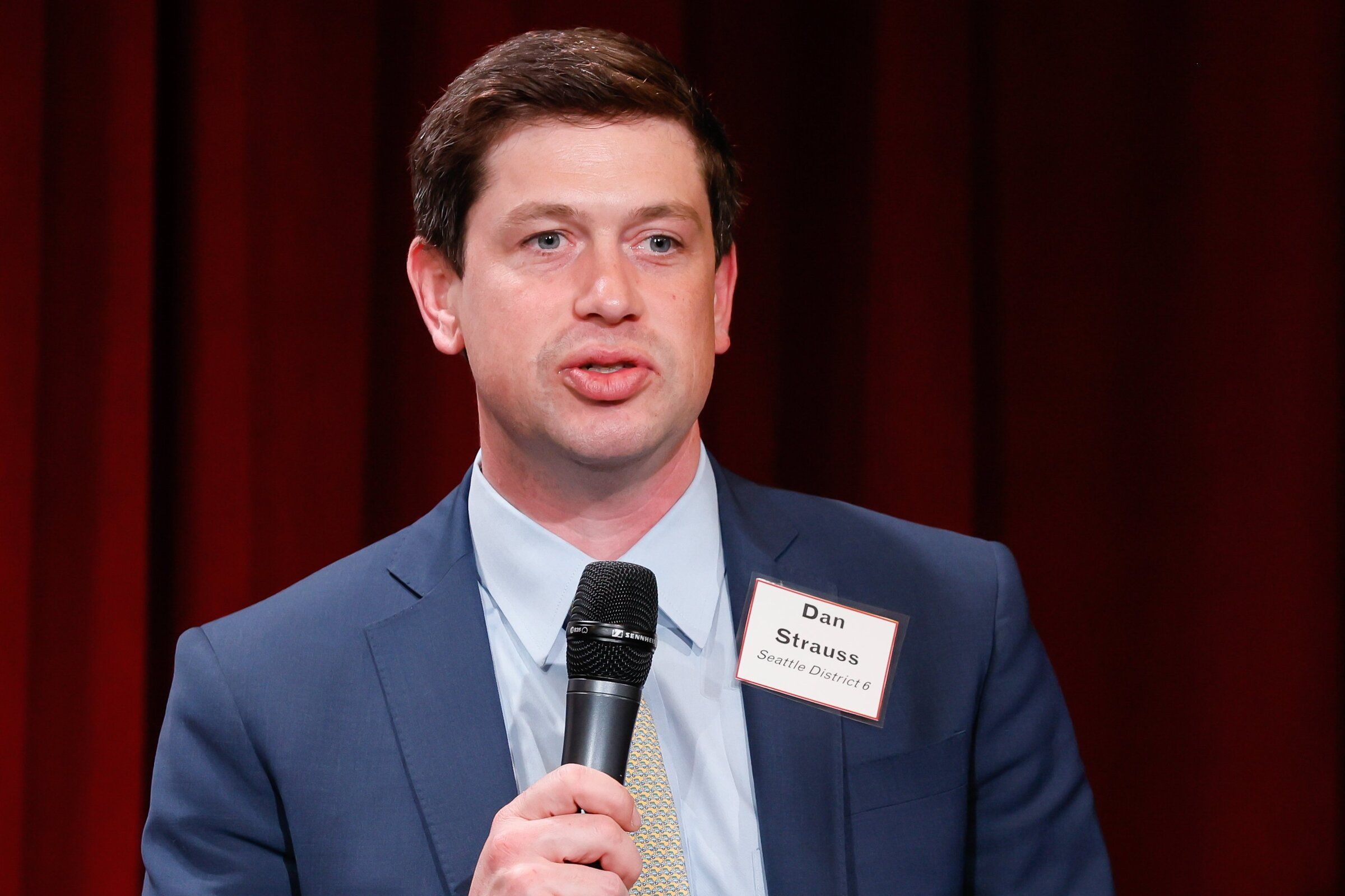
Now, three council members—Dan Strauss, Joy Hollingsworth, and Dionn Foster—are insisting on launching free meals, but funded through the city’s general fund rather than the Education Levy. Strauss emphasized, “Every child deserves to eat—whether that’s through free lunches or grocery cards. No one should have to choose.” Wilson met the idea with skepticism, saying she is curious what critical services the council plans to cut in order to find the money.
The budget picture is complicated. Seattle’s general fund totals about $2 billion, but most of it is reserved for public safety. The city is also facing a $150 million shortfall the following year. In the last four years, officials have plugged gaps with funds meant for other purposes (such as affordable housing) and with new taxes. Most of those temporary measures have already run out, so the upcoming budget process is expected to be tight and likely will lead to cuts to programs or staffing.
The council is scheduled to vote on the new initiative next month. The debate between universal and targeted programs has intensified since the 2020 protests. During protests in the Capitol Hill area, activists created the CHOP/CHAZ autonomous zone, where they tried to put into practice a model of “universal” services—free food distribution, mutual aid, and the abolition of policing. But the rise in crime and the inability to maintain order drew criticism. That strengthened the position of supporters of targeted programs (for example, programs limited to people experiencing homelessness or people with substance-use disorders) and weakened trust in the idea of universal benefits without state oversight. As a result, local progressive leaders have placed more emphasis on “evidence-based” social investments, such as a controlled-spending Guaranteed Basic Income program for people experiencing homelessness. It remains unclear whether Seattle’s budget will include funding for free meals for all schoolchildren amid a growing deficit.
Based on: Seattle council members revive plan for universal free school meals