
Good news for Seattle: after several years of decline, locals are once again visiting downtown attractions in larger numbers. New data from research firm Nielsen, based on a survey of 3,900 adults in the Puget Sound region (March 2025 — March 2026), show that 12 of 16 major tourist sites saw increases in visitor numbers compared with the previous year. That’s an encouraging sign after nearly all locations reported declines the year before — largely due to inflation, high costs of getting downtown and safety concerns.
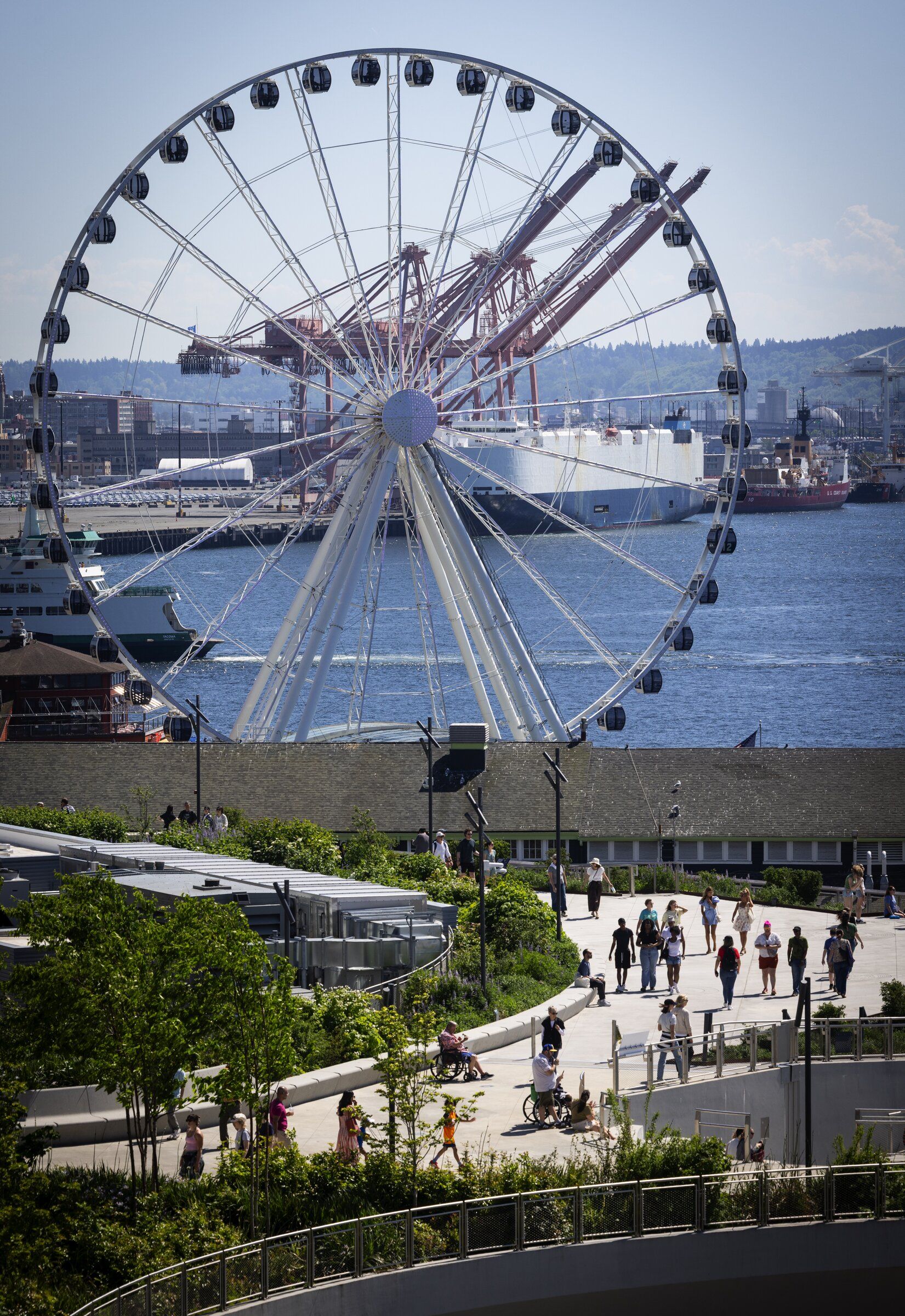
The main driver of growth was the revamped Seattle waterfront, a reconstruction that cost more than $800 million. As part of the multi-year project, aging roadway infrastructure — including the Elliott Bay Viaduct, which was demolished in 2019 — was replaced with pedestrian zones and parks. Sidewalks along Alaskan Way were widened, hundreds of trees and shrubs planted, new public spaces with seating and public art created, and waterfront access improved. The project connected downtown to Elliott Bay, making the waterfront greener and more attractive.
Legendary Pike Place Market remained the most popular spot: 1.5 million local adults visited — up 6% from the previous year. An even more impressive result came from the Great Wheel: 324,000 regional residents visited, 50,000 more than last year and 18,000 above pre-pandemic levels. The Seattle Aquarium also continued strong growth — up 44% year-over-year, reaching 719,000 local visitors, partly thanks to the new Ocean Pavilion. This three-story building of about 4,600 square meters opened in 2024 as part of the waterfront redevelopment and cost $113 million. It features a giant 1.1-million-liter aquarium with tropical fish and coral reefs, and its standout feature is a 12-meter-tall panoramic glass window for viewing sharks and rays. The pavilion also includes educational spaces, climate change exhibits and interactive displays highlighting connections between regional ecosystems and tropical seas.
Seattle Center also performed well — 528,000 local visitors, exceeding both last year’s and pre-pandemic figures. In sports, the Mariners (baseball) drew more than a million local fans (a great season) and the Storm (basketball) saw attendance rise nearly 11% to 143,000, reflecting growing interest in women’s sports. The Sounders (soccer) also recorded growth, while the Seahawks (American football) experienced a decline.
There were exceptions: the SIFF International Film Festival lost 9% of its local audience compared with last year and 34% compared with pre-pandemic levels, linked to financial difficulties and a substantially reduced program. The Museum of Flight showed a small dip (3%), and the Museum of Pop Culture (MoPOP) remained nearly unchanged. Woodland Park Zoo grew modestly by 2%.
It’s important to note that the data count the number of residents who visited a given location at least once during the year, without accounting for visit frequency. Nevertheless, the overall trend is clear: after a long decline, Seattle is gradually regaining the trust of local residents. The revamped waterfront, new exhibits like the Ocean Pavilion, and compelling events are helping overcome pandemic effects and safety concerns, making downtown appealing again for day trips.
Based on: Waterfront effect? Data shows locals heading back to downtown Seattle