
After the pandemic, about a quarter of Seattle’s working residents shifted to remote work. But even those who continued commuting to the office every day benefited: from 2019 to 2024, the average one-way commute fell by 2 minutes and 30 seconds—from 28 minutes, 24 seconds to 25 minutes, 54 seconds.
At first glance, that reduction may seem small, but over the course of a year it amounts to more than 20 hours saved for someone who works five days a week. Remote workers are not counted in the statistics as people with “zero” commute times; they are simply excluded from the calculation. As a result, the decline reflects a real time savings among those who continue commuting to work.
Across the United States, commutes also became shorter, but by only 24 seconds: in 2024, the average one-way trip took 27 minutes, 12 seconds. Among the country’s 50 largest cities, Seattle tied for third with San Francisco and Detroit in the size of the reduction. Commutes improved more significantly only in Oakland and San Jose.
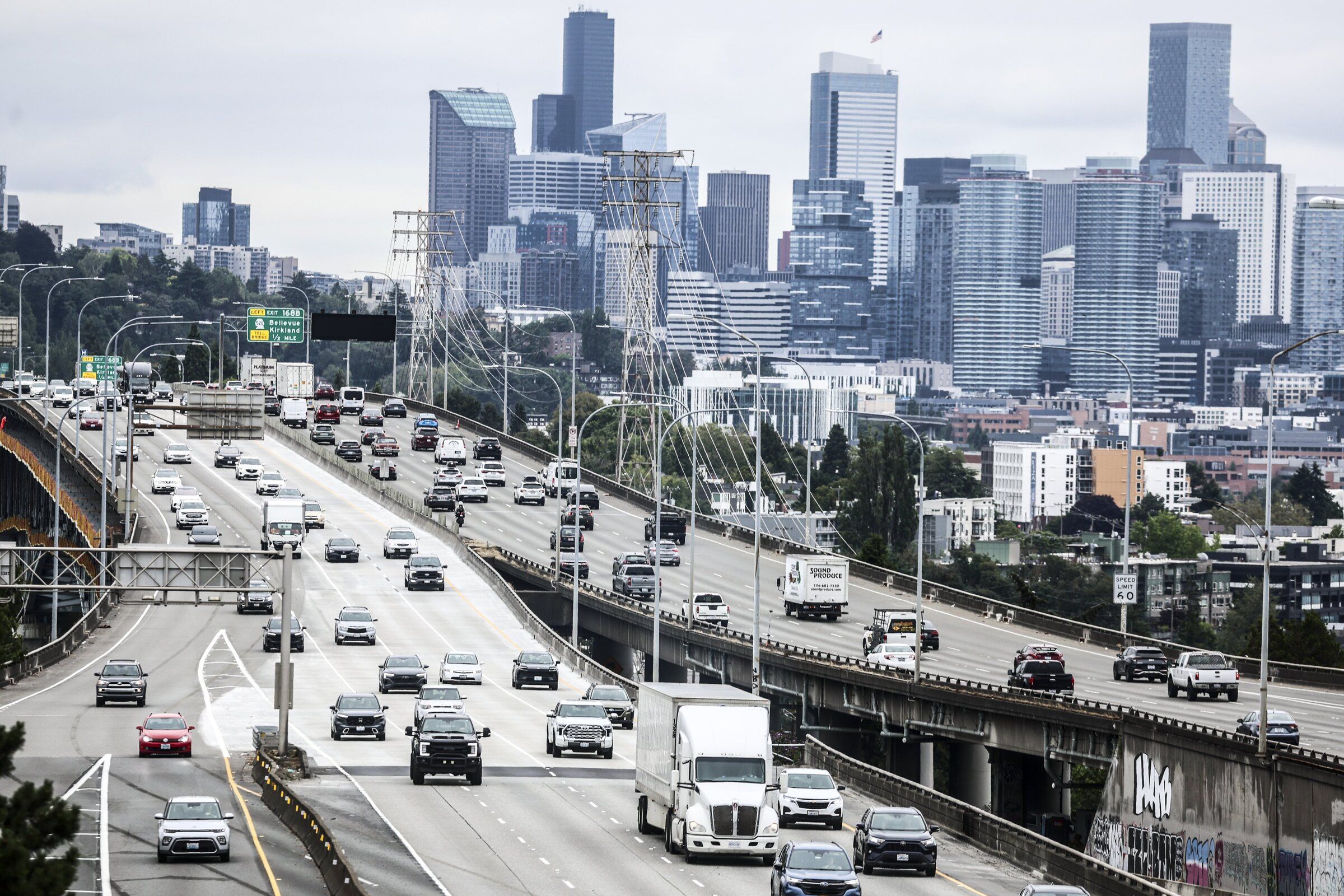
The main reason for the nationwide trend was the growth of remote work, which reduced congestion during rush hour. In Seattle, the widespread shift to hybrid schedules significantly reduced the daily flow of commuters to technology hubs, including South Lake Union and downtown. Road traffic and weekday public transit ridership declined compared with the pre-pandemic period, although congestion did not disappear entirely: some employees returned to offices, trips became less evenly distributed across the week, and population growth, construction and personal travel continue to sustain high traffic levels.
The decline in public transit ridership also played a role. In 2019, 25% of the city’s working residents used public transportation, compared with just 15% in 2024. Seattle’s transportation system is built around the King County Metro bus network, which connects the city with nearby suburbs. Before the pandemic, bus corridors linking downtown, residential neighborhoods and the suburbs were particularly busy, as was the Link light-rail system, which connects Sea-Tac Airport, downtown Seattle and northern neighborhoods. Sounder commuter trains primarily served people traveling to work from the suburbs, while the monorail was used mainly in the central part of the city.
Public transportation generally makes commutes considerably longer. In 2024, people who drove alone had an average commute of about 26 and a half minutes, while bus and train passengers spent nearly 49 and a half minutes traveling. Buses often move through the same traffic as cars, and dedicated lanes and traffic-signal priority are not available on every route. Passengers also have to wait for vehicles, transfer between routes and stop at numerous stations. The rail network is not yet extensive enough to replace car trips for most residents of the metropolitan area.
Remote work replaced some of these lengthy trips, and they were no longer included in Seattle’s overall statistics. A similar situation developed in Oakland and San Francisco.
In San Jose and Detroit, the decline in commute times had different explanations. These cities are more dependent on cars and have historically had a small share of public transit riders. In San Jose, remote and hybrid work in the technology sector was accompanied by a decline of roughly 15,000 jobs. Detroit lost more than 14,000 working residents, along with some of the cars that would otherwise have been on regional highways.
However, the trend was not universal. In rapidly growing cities in the southern United States, roads became more congested instead. In Tulsa, the average commute increased by more than a minute, while in Tampa, Fort Worth and Jacksonville it rose by 48 seconds. The influx of new residents into the Sun Belt, where the share of remote workers is relatively small, is outpacing transportation infrastructure development and leading to longer commutes.
Based on: Seattle ranks 3rd in U.S. for shrinking commutes. Here’s why