
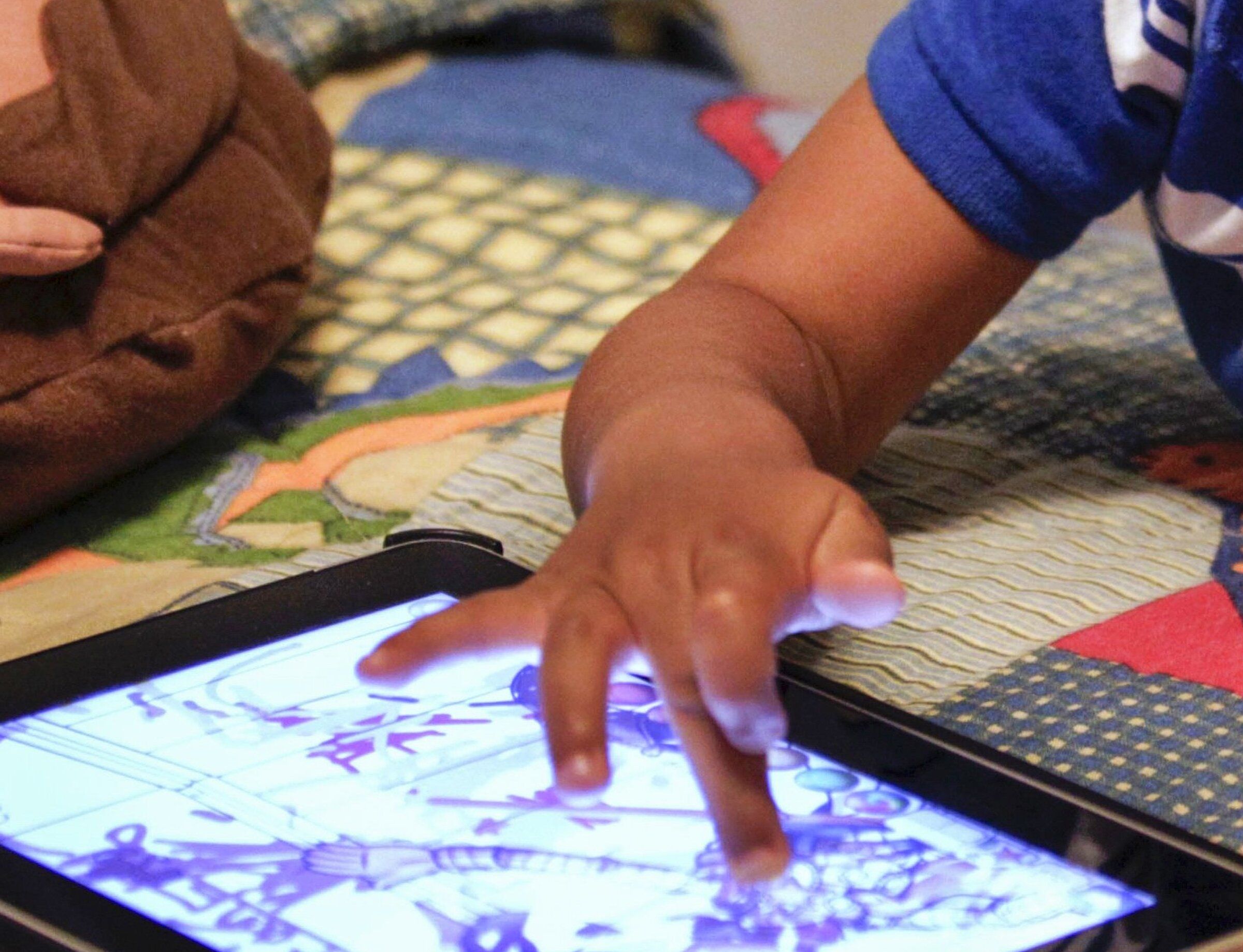
Starting January 4, 2027, kindergarten, first-grade and second-grade students in Seattle Public Schools will no longer receive individual iPads assigned to them. The tablets will remain in classrooms as a shared resource, but digital activities for the youngest students will generally last from zero to 30 minutes a day — and not necessarily every day. In doing so, Seattle Public Schools is trying to bring a long-running pandemic-era digital experiment to an end and return reading, writing, conversation and hands-on work to the center of the school day.
Until recently, a personal tablet seemed like an almost inevitable part of a student’s backpack: each child received a device intended for use both in the classroom and at home. The system emerged from the emergency circumstances of remote learning during COVID-19, when schools’ first priority was maintaining the possibility of communication between teachers and students. Now that in-person schooling has long since returned, district Superintendent Ben Shuldiner has described the “one student, one device” model as a relic of a time when it had a clear practical purpose.
The announcement was made September 21 and applies only to grades K–2. About 50,000 children attend schools in the district, but administrators decided not to extend the new practice across Seattle all at once. Older students will continue using district-issued devices, while the possibility of expanding the restrictions to elementary, middle and high schools will be considered later — after the first months of the new model.
This is not a rejection of technology, but an attempt to remove its automatic role. iPads will remain available to teachers for curriculum-based assignments, assessments and accessibility tools for students who need them. A tablet may be necessary, for example, when completing a digital component of an approved curriculum or addressing special educational needs. But teachers will now have to begin with a simpler question: Does the screen genuinely give the child something that a book, a pencil, a conversation with a classmate or an experience with physical objects cannot provide?
In a letter to families, the district particularly emphasized this shift in focus. Some days, the explanation says, an iPad may not be needed at all: a lesson may be better built around reading, writing, discussion, movement, creativity, a science experiment or manipulatives — counting rods, cards, models and other objects through which young children grasp abstract concepts. In a classroom where children are still learning the basic mechanics of communication and working together, this is less about nostalgia for paper than about what deserves their attention.
The decision also responds to pressure from parents and teachers. Seattle Families for Intentional Tech, a group representing families concerned about the role of educational technology in the school day, had pushed for more transparent rules and restrictions. Its representatives welcomed the change but see it as only a beginning: activists want to extend sensible screen-time guidelines to other age groups, restrict recreational games on school devices and suspend the use of generative artificial intelligence until the district develops its own approach to the safety, privacy and educational value of such tools.
For Shuldiner, the move continues a broader effort to protect students’ attention. In May, the district had already introduced uniform rules for mobile phones: students in grades K–8 must keep them turned off and put away throughout the school day, while high school students may not use them during lessons. Tablets, however, are a more complicated case: they can be distracting, but they can also provide access to assignments, assessments and support for students with special needs. The January change will therefore test not whether schools can exist without screens, but whether they can make screens tools again rather than the backdrop to childhood.
Based on: New screen time limits at school for Seattle’s youngest students