
Seattle voters will decide whether to raise the sales tax dedicated to public transit. Seattle Proposition 1, developed by Mayor Katie Wilson, would impose an additional 0.3% tax—about 30 cents on a $100 purchase. The city expects to collect an average of $138 million a year over 10 years.
The proposal would replace a 2020 tax measure that expires next year, but at twice the rate. The city estimates that a typical two-person Seattle household would pay about $58 more a year. If approved, the city’s total retail sales tax would reach 10.71%.
The vote comes amid debate over the cost of living and recent tax increases. In October 2025, the Seattle City Council approved an additional 0.1% tax for public safety, and the King County Council recently approved a 0.01% increase to expand shelters for homeless children and families. Because the new transit measure exceeds the statutory threshold, it must go to voters.
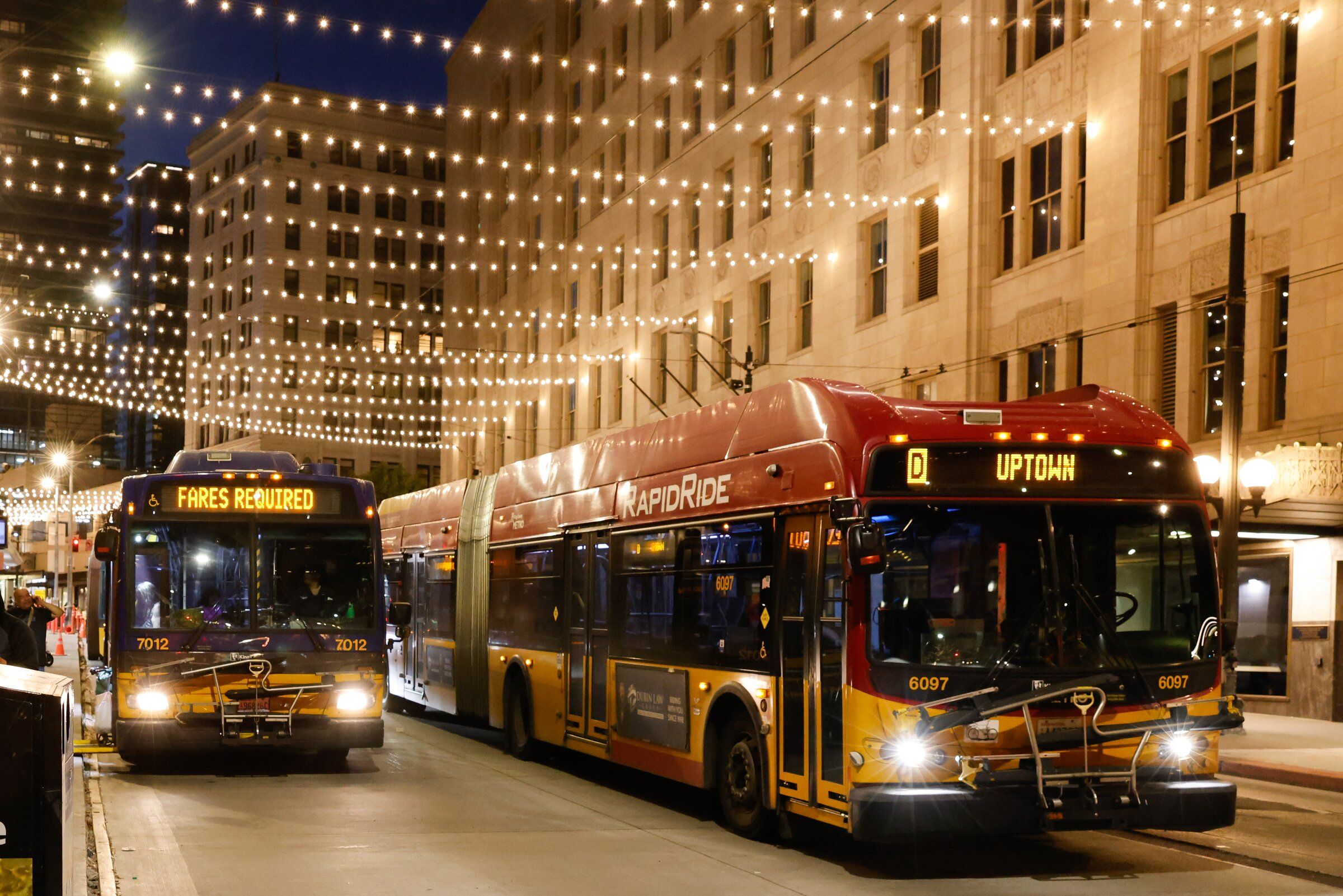
The measure is proposed by the city, which is responsible for policy and infrastructure within Seattle—including streets and bus lanes. King County Metro operates transit throughout the county, including the city, managing bus routes and some other forms of public transportation. In other words, the city sets local conditions for travel, while Metro directly organizes transit service.
Most of the revenue—about $94.6 million a year—would go to bus service: the money would maintain current service levels and add roughly 95,000 trips a year. Officials aim to run routes more frequently, especially in low-income neighborhoods, as well as late at night and on weekends. Another $23.4 million a year would go to the city’s streetcar, a separate local network whose vehicles run alongside car traffic on city streets.
About $9 million is earmarked for transit-access and education programs. In particular, the city could provide 12,000 annual passes to residents of housing subsidized by the Seattle Housing Authority. The region already has the ORCA LIFT program, which gives low-income riders discounted fares on buses and other participating transit services. There are also special fares for recipients of certain types of public assistance and free rides for children under 18; eligibility rules vary by transit agency and mode.
Another $6 million would support Sound Transit 3 projects, including planned lines to West Seattle and Ballard. Sound Transit is the regional agency that builds and operates the Link light rail system, connecting Seattle with neighboring cities. The future lines are to become part of that system and mostly run on dedicated tracks, while the city streetcar serves shorter routes within the city. Funding is also set aside for sidewalks, bike lanes, safer crossings, and bus-stop improvements.
Supporters point out that King County bus ridership recovered faster after the pandemic than that of many U.S. transit systems, although it remains well below its previous level: Metro carried nearly 128.7 million passengers in 2019 and about 94.5 million in 2025. The mayor, unions, and transit organizations have endorsed the measure. They argue that more frequent buses will help people get around an expensive city, reduce car trips, and advance climate and social goals.
There is no organized opposition to the proposal, but critics question whether the additional spending will necessarily increase ridership. They also note that sales tax is charged equally to all shoppers, regardless of income, and that many low-income residents still drive to work. The Washington State Transportation Policy Center also points to fare evasion: Metro estimates that about 34% of passengers in King County do not pay their fares.
Based on: Seattle ballot measure would raise sales tax to expand bus service