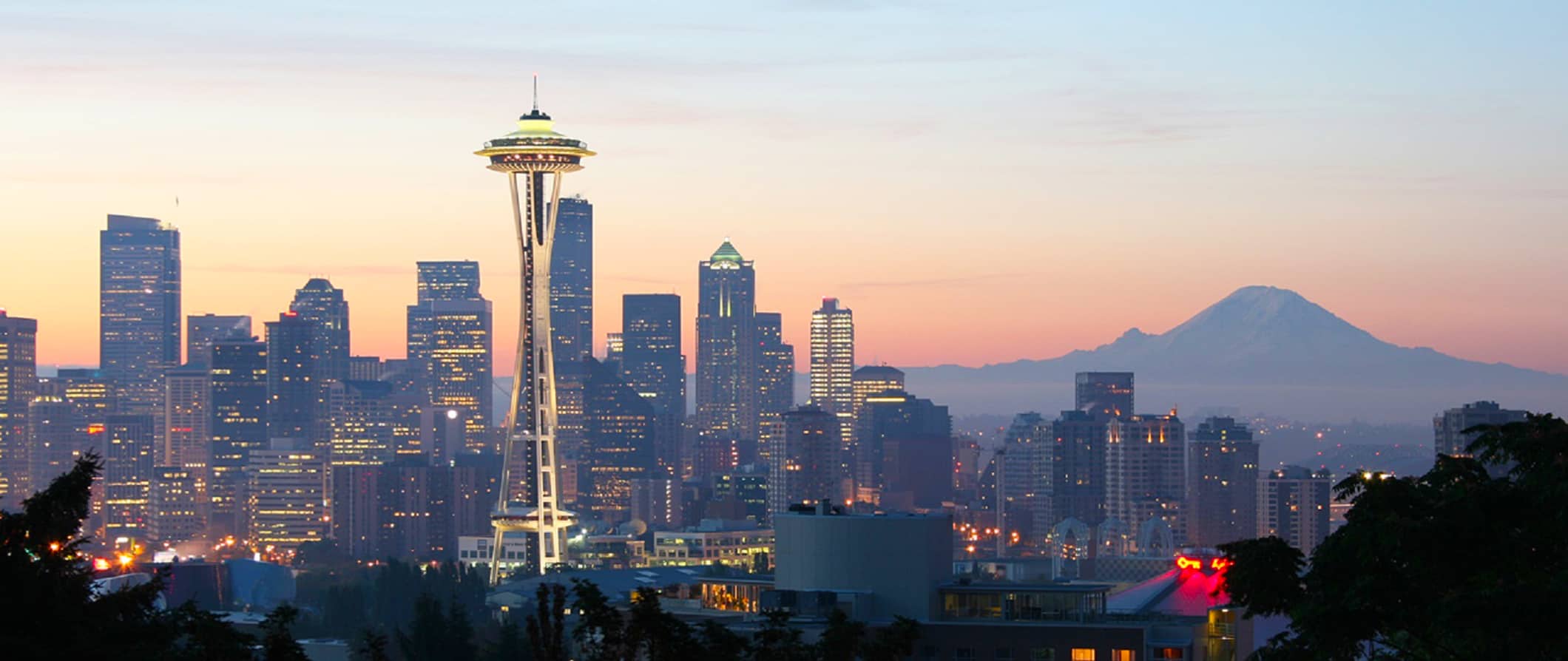
Residents in Seattle are in a “survival mode” due to high inflation and the high cost of living, selling homes and cutting back on food. Meanwhile, the city saw two overnight fires: one destroyed a warehouse in an industrial area, and the other damaged a commercial building in Madison Valley—both incidents had no reported injuries.
Title
Seattle: Residents sell homes and go into “survival mode” due to unaffordable prices
Residents in Seattle are increasingly saying that even families connected to the biggest tech giants can no longer afford to live in the city. Rising costs for groceries, gas, insurance, and housing are forcing people to cut spending, sell their homes, and change their usual way of life. The story of one family—where the husband works at Microsoft and the wife is a self-employed cosmetologist—is just the tip of the iceberg: they put their home in the Crown Hill neighborhood up for sale to move into more modest housing and “take the situation under control.” As reported by The Seattle Times, inflation in the Seattle–Tacoma–Bellevue metro area remains high—4.5% year over year, significantly above the national figure of 3.5%.
Lizl Gatchco, who with her programmer husband is raising twins, admits that the past year has been “an absolute tightening of the belt.” Her income as an aesthetician has dropped—clients are booking procedures less often. And her husband, who works at Microsoft, is constantly worried about layoffs: the company recently cut 4,800 employees in its Xbox gaming division and its sales department, and in 2025 it laid off 15,000 people. This year, the tech giant also offered voluntary buyouts to 7% of American employees. “Working in the tech sector used to be a guarantee of stability, but now that is absolutely not the case,” says Gatchco. The family decided to sell their home, where Lizl’s sister lives on the lower level, to reduce the financial pressure.
The article also cites other examples. Dusty Wilson, a math teacher at Highline College, says that they and his wife have nearly stopped using their car and switched to light rail—because in Seattle, gas was reaching $6 a gallon. And Veronica Brown, a 36-year-old tech employee, says she has no money problems, but she no longer orders food for delivery: a typical pad thai costs more than $40 once taxes, tips, and fees are included. Previously, she ordered delivery one or two times a month, but now she considers it a luxury. “Our money isn’t what it used to be,” Brown says. She worries that she won’t be able to afford big purchases, such as a house.
The situation is made especially acute by Washington State’s “millionaires tax”—a progressive tax on income above $250,000, which businesses see as a socialist measure that pushes companies and small business out of the state. Seattle authorities, meanwhile, are trying to soften the crisis: Mayor Kathy Wilson proposed banning “junk fees” for renters (additional charges large landlords tack on when signing a lease), speeding up the construction of shelters, and also released a Transit Measure proposal to improve public transportation as the cheapest option for getting around. In addition, the administration is working on a program for free school lunches and expanding utility assistance for low-income residents.
Nonetheless, the gap between income and the cost of living in Seattle continues to widen. Expensive restaurants, rental housing, and even the usual habit of ordering food have become an unaffordable luxury for many. The Microsoft family story is only one symptom of a bigger problem: “survival mode” has become the new normal for the middle class in one of the most expensive cities in America. If the trend continues, Seattle risks losing not only residents, but also its reputation as a hub of opportunity and innovation.
Fire at a three-story commercial building in Madison Valley: flames were put out in nearly two hours
Early Tuesday morning, a fire broke out in a three-story commercial building in the Madison Valley neighborhood of Seattle. The blaze started at about 3:33 a.m. local time, when calls from witnesses came into the fire department dispatch center. The building is located on East Madison Street near East 27th Avenue, not far from Julia Lee Park. When the first crews arrived, they saw flames pouring out of multiple windows on the third floor. Seattle Department of Transportation cameras recorded thick smoke billowing over the structure while firefighters quickly began exterior firefighting, directing water onto the facade.
At the same time, several groups of firefighters entered the building to search for possible victims, but none were found—fortunately, the building was empty. To check whether the fire had spread through the floors, firefighters used a ladder truck to reach the roof. There, they made openings for ventilation to release the smoke that had accumulated on the third floor. The fire was fully extinguished only by 5:30 a.m. After that, rescue workers began tearing apart smoldering debris on the affected floor. As a precaution, Puget Sound Energy—the local natural gas provider—shut off gas to the building. No one was injured.
On the lower floors of the commercial structure there are several shops and offices. The cause of the fire is still under investigation. As reported by KOMO, investigators are working at the scene to determine what could have caused the blaze so early. For readers unfamiliar with local conditions, it’s worth noting: Puget Sound Energy is a major energy company that supplies natural gas and electricity to a significant part of Washington State, and ventilating smoke through the roof is a standard fire service tactic to prevent hidden burning and improve visibility inside the building. The key takeaway from this incident is that coordinated action by the fire department helped avoid injuries and keep the fire from spreading to neighboring spaces. However, businesses on the first floor may need to temporarily suspend operations until experts determine the building is safe and establish the exact cause of the fire.
A giant fire destroyed a warehouse in Seattle’s industrial district
Overnight, a major fire broke out in Seattle’s industrial district, completely destroying a commercial warehouse and two tractor-trailer trucks. An alarm came in at about one o’clock in the morning, and the first arriving crews saw thick black smoke rising from the building. The fire started in the trailers parked next to the warehouse and quickly spread to the structure itself. Firefighters were forced to work defensively—putting out the flames from a safe distance—because large plastic and metal barrels were inside the trailers and along the warehouse walls. At that moment, no one knew what they contained or whether they posed a chemical hazard. Due to the heavy smoke, residents within a half-mile radius were advised to close their windows and doors—AlertSeattle’s local alert system was activated.
The fire rapidly intensified. At 1:06 a.m., it was classified as a second-alarm fire, and just six minutes later as a third-alarm fire. This ranking indicates how many fire crews and units are involved: the higher the number, the more city resources are brought in. In this case, multiple fire engines and ladder trucks arrived, allowing firefighting from above and helping control the spread of flames to nearby hangars. Around one o’clock in the morning, the building’s roof partially collapsed (the report mistakenly gives 1:15 p.m., but based on the timeline it was pre-dawn), after which entering the remaining portion of the warehouse became deadly. Fortunately, there was no one inside, and there were no injuries.
When the flames were finally brought under control at 2:07 a.m., and fully extinguished by 3:22 a.m., investigators found that the barrels were empty. As Seattle Fire Department officials explained, the warehouse was apparently used to process that type of container, so there was no dangerous material. The damage, however, was extensive: the building was completely destroyed, and both tractor-trailers burned down to the ground. The cause of the fire is still being investigated, but preliminary information indicates the flames started in the trailers and then spread to the warehouse. In his report for KOMO, SFD spokesperson David Cuerpo noted that the key task was to keep the fire from reaching nearby warehouses, and firefighters succeeded in that goal, even though they couldn’t save the building itself.