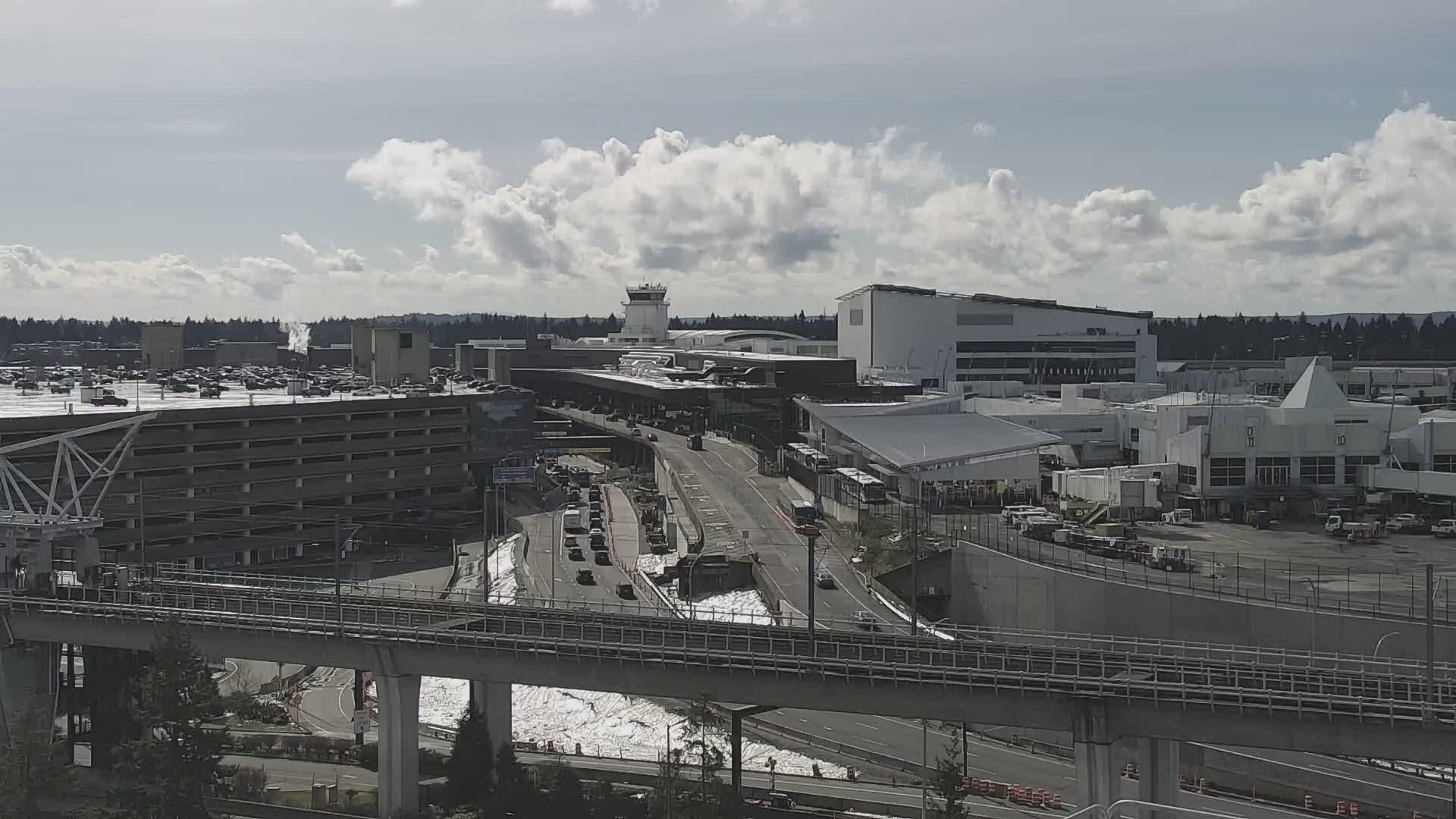
In Seattle, plans to convert vacant office space into housing are being discussed as a solution to the housing crisis. The peak bloom of the University of Washington cherry trees will occur later this year due to warm winters. A snowfall caused mass flight cancellations at the airport.
Seattle's empty offices: why might a historic building be turned into residential apartments?
In downtown Seattle stands the historic Liggitt office building, which has sat vacant for several years. Developers are now proposing to convert it into residential apartments, and the idea is finding strong support among local experts. Why is converting vacant office space into housing becoming increasingly relevant for the city, and what obstacles stand in the way?
KIRO Newsradio host Guy Scott, on his show "The Gee and Ursula Show," bluntly says that such a conversion "makes too much sense." He sees it as an opportunity to kill two birds with one stone: revive a hollowed-out downtown and slightly ease the acute housing crisis. "Right now Seattle has a Bellevue problem," Scott notes, referring to the trend of companies leaving downtown Seattle en masse and relocating to nearby Bellevue. In this situation, turning lifeless office blocks into living spaces seems like a logical step. According to Scott, the root of the problem is a chronic shortage of housing inventory that goes back to the Great Recession of 2008. Washington State, like many other regions, has for years been unable to keep up with the pace of new housing construction to meet growing demand.
However, the path from idea to implementation is littered with bureaucratic hurdles. As The Seattle Times reports, since 2020 developers have filed at least seven proposals to convert office spaces, but most have not been realized. The main difficulty lies in the buildings' structure: large office floors with deep floor plates and limited natural light were never designed for habitation, and reconfiguring them requires huge investments and engineering solutions. Nevertheless, Current Development founder Gene Pasquier is determined to bring the once-vibrant Liggitt building back to life. Together with architectural firm Graham Baba Architects, she has already submitted a preliminary plan to city officials proposing 93 apartments.
KIRO supervising producer Paul Holden sees these projects not just as a way to increase housing stock, but as an opportunity to create unique communities. He suggests thinking bigger: the ground floors of former office towers could house communal spaces — coworking areas, cafes, gyms — turning them into true hubs for new residents. Thus, conversion is a chance not only to solve a utilitarian problem but also to creatively rethink the urban environment, breathe new life into historic buildings, and make downtown Seattle lively and attractive to people once again.
Cherry blossoms at the University of Washington will peak this week
Spring in Seattle is unthinkable without one of its most picturesque symbols — the blossoming cherry trees on the University of Washington campus. Researchers predict that this year the peak bloom of the 29 famous pink trees will occur on March 20. This event, eagerly awaited by locals and tourists alike, traditionally marks the end of winter and the arrival of warmer weather.
According to a UW News post, peak bloom is considered the moment when 70% of the buds have opened. However, the university notes that the week before and after this date is also a great time to visit and photograph the trees. The trees, planted in 1936 in the Washington Park Arboretum and moved to the campus in 1962, are located in the so-called "Quad" — an open space at the center of the university where they create a stunning architectural and natural ensemble.
Interestingly, cherry bloom is not just a pretty spectacle but a complex biological process that depends on temperature cycles. As PhD candidate in the School of Environmental and Forest Sciences at UW Marley Teel explained, buds must accumulate a certain amount of "chilling units" during winter before they can begin to accumulate "heating units" in spring. These terms refer to models used in phenology (the study of seasonal events in living organisms) to describe the effect of temperature on plant development. "Chilling units" are conventional measures of exposure to cold temperatures required for a plant to come out of dormancy. When winter is too warm, this process slows, and buds need more time to "wake up," which may seem counterintuitive but is exactly what leads to later bloom.
The university's research team analyzed bloom records beginning in 1966 — the first available records for these campus trees. As recent UW PhD graduate Autumn Maust noted, their aim was to identify patterns in shifts of bloom timing. The results were surprising in the context of global warming. "Because spring temperatures are warming faster, I expected to see earlier blooms," Maust said. "But after reviewing the literature and the data, we found a delay in blooming as a result of warmer winters in Seattle." Thus, the mild winters of recent decades have shifted peak bloom later. Historically, it fell between March 12 and April 3, with an average date of March 23.
This phenomenon has broader significance beyond aesthetic pleasure. It serves as a clear indicator of climate change in the region. Researchers developed a temperature model based on the studied patterns to forecast future blooms, which is important for both science and planning cultural and tourism events. For those planning to enjoy the display, the university recommends visiting its website for information on the best routes to campus and even watching a live camera feed to choose the optimal time to visit. The UW cherry blossoms are not only a tradition and a symbol of spring but also a living reminder of the delicate connection between natural cycles and our changing climate.
Hundreds of flights canceled and delayed at Seattle airport due to snowfall
Seattle–Tacoma Airport faced chaos over the weekend after an unexpected late snowfall led to massive delays and flight cancellations. Hundreds of passengers had their travel plans disrupted as airlines and airport crews worked to cope with difficult weather conditions.
Although late-winter snow in Seattle is not uncommon, this storm's intensity was significant. According to the National Weather Service, about 3 inches (7.5 centimeters) of snow fell in the area around Seattle–Tacoma International Airport (SEA) by Friday evening. This led to restrictions on arriving flights and the need for de-icing procedures for aircraft. Flight-tracking site FlightAware reported that 411 flights connected to the airport were canceled in the 24 hours through Saturday morning. Airport spokesperson Perry Cooper clarified that on Saturday specifically, 45 arriving and 24 departing flights were canceled. He noted that the main operational issues related to clearing snow and ice from runways had been resolved: "The weather has calmed, and airlines are catching up, clearing delays and cancellations from previous days. They are still performing de-icing procedures on aircraft." Interestingly, despite the cancellations, there were not significant delays at security checkpoints within the airport. However, airline check-in counters were crowded with passengers trying to rebook their tickets. The snowstorm, as KING5.com reported, affected not only the airport but much of western Washington, bringing the heaviest snowfall to the Cascade foothills. The situation demonstrates how vulnerable even modern transportation infrastructure can be to sudden weather changes, especially at a major hub like SEA. For passengers, it served as a reminder to be prepared for winter disruptions and to check flight status in advance, while airlines continue working to "catch up" and restore normal schedules.