A roundup of key regional developments: new visualizations of the light rail line to West Seattle, a wave of high school football cancellations caused by a shortage of players and injuries, and a waterfront writing residency bringing the voices of Indigenous people back to the city.
West Seattle light rail extension: what the new visualizations show
Sound Transit, the agency responsible for expanding public transportation across the Seattle metropolitan area, has released an animated flythrough of the future 3 Line, which is expected to connect downtown Seattle with West Seattle. The video shows not only the trains’ route, but also the layered geology through which the tunnel will pass—from upper sedimentary deposits to denser layers that are important for engineering calculations. The footage shows what the track alignment is expected to look like when the line opens, currently scheduled for 2035.
The West Seattle Link Extension is one of the key stages of the region’s large-scale rail expansion program. In addition to West Seattle itself, the project covers areas including SoDo, Fauntleroy and Delridge, where new stations will be built. For residents of these neighborhoods, the 3 Line represents a fundamental change in transit access: trips to the city’s business district will no longer depend on bridges and automobile traffic, especially during rush hour.
The engineering component deserves particular attention. The depiction of soil layers in the animation is not merely a visual effect; it reflects the complexity of tunneling in West Seattle, where the geology is uneven. Understanding which materials lie at what depths directly affects the choice of drilling technology, as well as the cost and schedule of the work. That is why such visualizations are used both for internal planning and to inform the public.
The original material, including a gallery and video, is available on the KOMO News website, where viewers can also see what the route will look like after the line opens. The key takeaway for regional residents is that the project is moving from broad promises to specific engineering decisions, while 2035 is becoming an increasingly tangible milestone. The only question is whether the schedule can withstand the geological and financial challenges already visible in these animations.
Hazen canceled the rest of its football season—and it is not alone
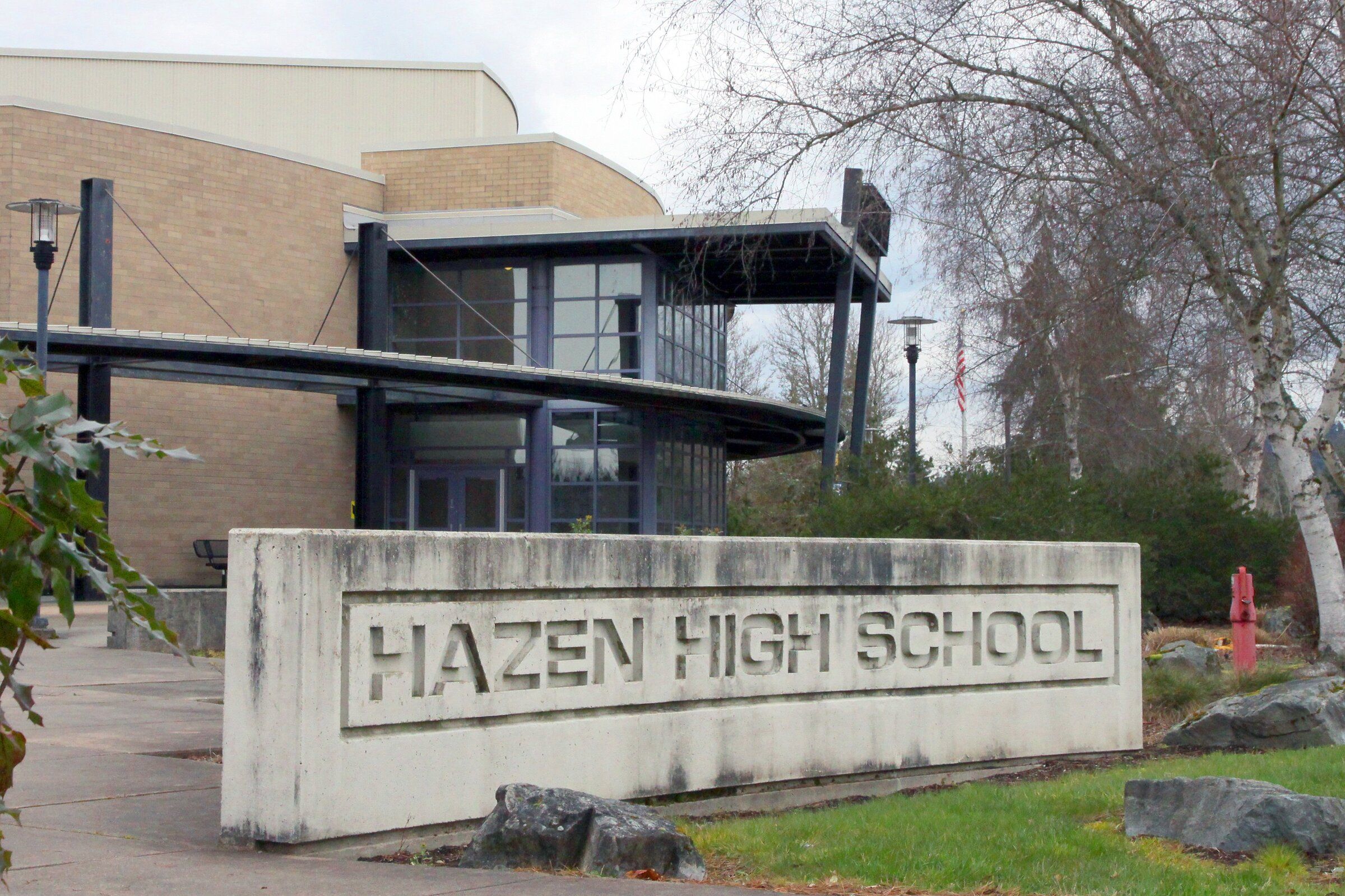
The high school football season in Washington continues to lose participants, and what recently looked like an isolated problem affecting one team is now becoming a troubling trend. In the Seattle suburb of Renton, administrators at Hazen High School decided to end the season early for the Highlanders football team. They cited a combination of injuries, player attrition and academic ineligibility, which left the roster without enough varsity-level players capable of taking the field safely. The Renton Reporter first reported the news, followed by The Seattle Times in an article about the cancellation of the remainder of the season.
On the surface, the news looks like an ordinary announcement in a school newsletter, but behind the dry wording lies a clear management rationale. Principal Craig Cooper posted a message on the communication platform used by staff, students and their families, and the key word in the notice was “safely.” The team is not withdrawing because it is losing or has lost motivation, but because it can no longer field enough varsity players—the primary senior-level squad—to compete without exposing teenagers to unjustifiable health risks. Friday’s game against Issaquah, the games against Eastlake on October 16 and Skyline on October 23, and a scheduled interdivision matchup on October 30 have all been canceled. JV and C-team games have also been canceled, further underscoring that this is not a problem with one particular week’s schedule but with the depth of the entire program.
The context makes the story far more significant than it might initially appear. Hazen’s decision came just one week after the Federal Way School District announced that Todd Beamer’s team was effectively ending its season. There, low practice attendance, inexperienced players and accumulating injuries were the reasons, according to coach Rodney McCurry. Rather than abandoning football entirely, Beamer chose a more flexible approach: it created a “custom schedule” under which a team made up mostly of freshmen plays against junior varsity-level squads. For two weeks—the seventh and 10th weeks of the season—it may still compete as a varsity team against opponents outside its North Puget Sound League division. McCurry announced that the modified season would resume Monday with a game against Evergreen High School in Burien, beginning at 6 p.m. A similar fate befell R.A. Long, a 2A program in Longview, where injuries to several key players led to the cancellation of the regular season and a shift to a junior varsity schedule.
This brings up an important concept that deserves separate explanation. High school football in the United States is organized by divisions and levels, with varsity as the highest level, where upperclassmen play and attract the attention of colleges and scouts. Below that are JV, or junior varsity, teams, as well as younger squads such as freshman and C teams. The difference is not only one of age, but also of physical readiness, strength and eligibility for competition. When a school says it does not have enough “available varsity-level players,” it literally means that either younger athletes with insufficient physical preparation would have to face older and stronger opponents, or that almost no team could take the field. Both scenarios create a risk of serious injury, for which the administration would be responsible. That is why canceling the season is not a surrender; it is essentially compliance with basic safety standards established by school athletic associations.
It is also notable how the school is trying to preserve at least some opportunities for the players who remain in the program. In his message, Cooper said the school was working to find potential opponents for those players and promised to provide updates as new games were added. This is an important detail: Hazen is not shutting down football altogether, but attempting to restructure the remainder of the season so that players are not left without competitive experience. Beamer is following a similar principle, shifting the focus to games against opponents of comparable ability so that freshmen can gain experience without risking injury against a clearly stronger team.
At the state level, however, these are no longer isolated incidents but symptoms of a deeper problem. High school football in Washington faces a range of challenges: declining interest in contact sports amid growing awareness of concussions and the long-term effects of head injuries, competition from other sports and extracurricular activities, demographic changes in certain areas, and simple lack of roster depth in smaller programs. When several schools—Hazen, Todd Beamer and R.A. Long—are forced to alter or cancel their schedules during a single season, it signals that the model in which every school fields a full varsity team for an entire season is breaking down. Flexible schedules and combined teams could be part of the solution, but such measures require coordination among districts, leagues and athletic associations, meaning the situation cannot be fixed quickly.
The consequences for the players themselves are not abstract. Seniors who had hoped to complete their final season and showcase themselves to college scouts are losing games that could have become part of their athletic portfolios. Younger players are losing opportunities to gain experience in competition. Parents and fans are being left without the Friday night games that have traditionally been at the center of school community life in the fall. Hazen’s administration found itself choosing between preserving a formal schedule and protecting student safety, and it chose the latter. The decision can be criticized from a competitive standpoint, but in terms of responsibility for teenagers, it appears logical and will likely be repeated at other schools as the season continues.
The voice bringing Seattle’s waterfront back to the city
A city waterfront is not merely a collection of piers, parks and promenades. It is a living organism in which every stone remembers someone’s footsteps and every story belongs to someone’s life. That is how Owen Oliver, a 27-year-old Quinault writer and artist, sees Seattle’s waterfront. He has become the first writer-in-residence in the Friends of Waterfront Park program. His task is to create a series of monthly columns, poems and short essays over the course of a year—works intended to breathe new life into the city’s waterfront and encourage residents to see differently the place where water meets the city. A KIRO 7 News report explores the initiative.
Oliver is not simply writing about the waterfront; he is literally weaving himself into the fabric of the urban landscape. He worked for several years as a consultant for the tribe and, among other things, helped create the artistic design for Overlook Walk, the pedestrian connection linking downtown with the waterfront. For him, this is not an abstract project but a way to restore residents’ sense of belonging: “I want everyone to have a strong sense of place in Seattle, and I want to achieve that through writing,” he says. For him, the waterfront is above all “a feeling of hospitality,” a meeting point of cultures and eras.
The Friends of Waterfront Park program, launched with support from local authorities and nonprofit organizations, has given its resident an ambitious task: not merely to record facts, but to collect collective memory. Oliver began his work in June 2026 and has since published pieces in the organization’s newsletter and blog. His writing combines poetry, documentary prose and personal observation. He believes Seattle is still too young as a city to have an established literary canon about itself, which is precisely why it is important to create new genres and forms of expression: “I hope there will be a surge of interest in the idea that we need more literature about Seattle—in every genre: fiction, nonfiction, poetry, essays. I really want us to think about how young our city still is and what it means to continue building this collective story together.”
In addition to his columns, Oliver is working on a novel that will portray Seattle’s history through the lens of Indigenous art and traditions. This is an important shift: for a long time, the waterfront was viewed primarily as a commercial and logistics hub, while its Indigenous past remained in the shadows. Today, the voice of an Indigenous resident is not an exotic addition but a central element of the city’s narrative. For readers unfamiliar with the context, the Quinault are one of the Indigenous peoples of the Pacific Northwest, historically living along the coast of what is now Washington state. Their culture is inseparably connected to water, fishing and oral tradition. The fact that a member of this people has received an official residency to tell stories about the waterfront signals a change in the way the city approaches its history and memory.
The central idea is not that Oliver is “writing about the past,” but that he is making the past a tool for the present. His work is meant not simply to remind people what the port once was, but to help them reclaim the space through personal experience, walks and art. “That’s really what the work is about: bringing people from the community here and getting them to use these spaces,” he emphasizes. In this sense, the writing residency is not an ornament but a social tool: literature becomes a way to restore residents’ sense of ownership of their land.
For Seattle, a city experiencing a technology boom and gentrification, the project is an attempt to balance the speed of change with the depth of memory. While some debate development and housing costs, Oliver is inviting people to slow down and listen to the voices of water, stone and people. And perhaps it is from these monthly columns, poems and future novel that the “collective history” the city so sorely lacks will emerge.