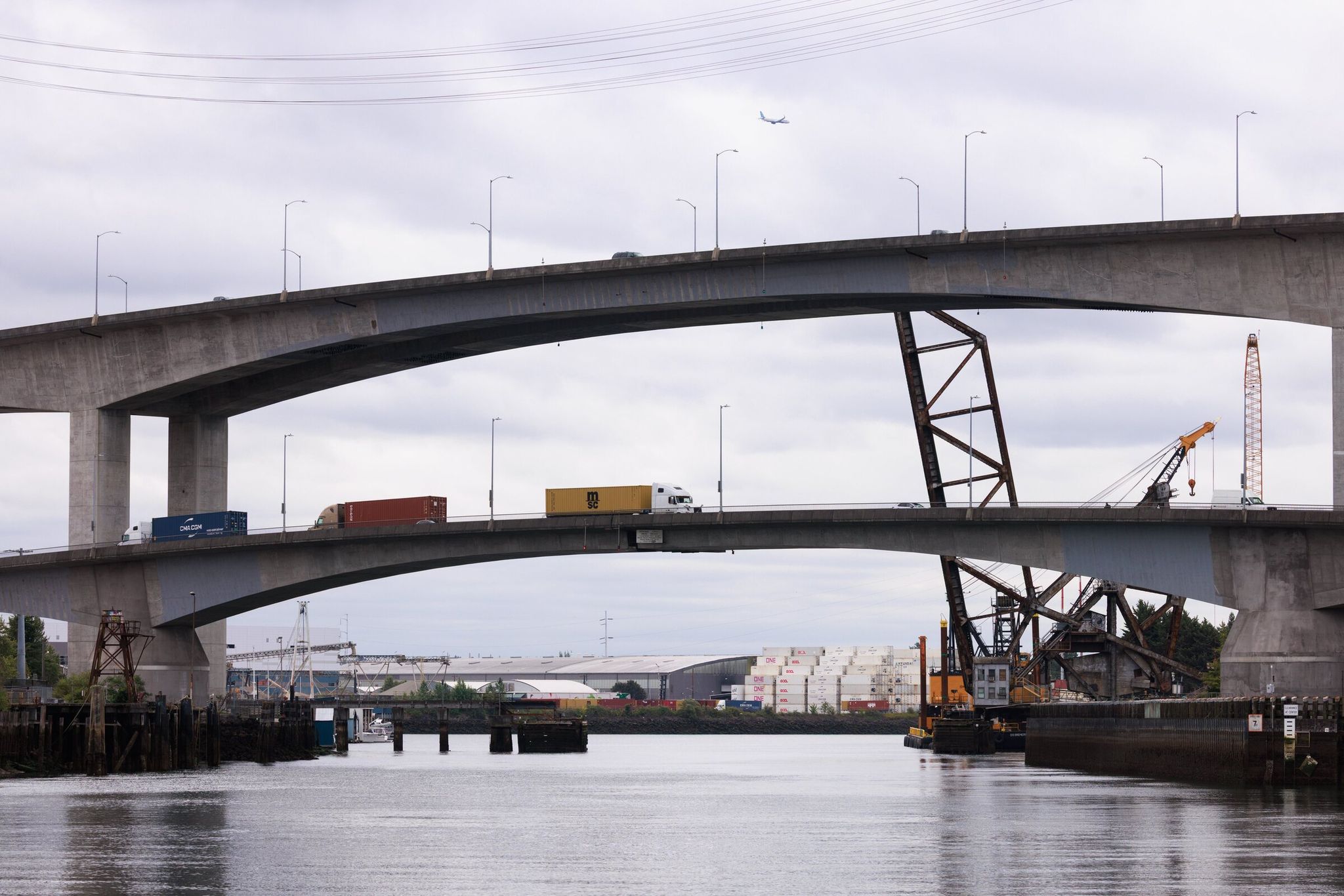
The U.S. men’s soccer team will face Belgium in the Round of 16 of the 2026 World Cup in Seattle. Meanwhile, police arrested a man who was stealing copper wires from the West Seattle Bridge and posing as an employee of the city’s electric utility.
U.S. will play Belgium in the 2026 World Cup Round of 16 in Seattle: the team returns—and a chance at history
The U.S. men’s national soccer team is returning to Seattle, and this isn’t just another group-stage match. The Americans have earned the right to play the Round of 16 of the 2026 World Cup in this city, and they’ve drawn a formidable opponent: Belgium.
The match is set for next Monday at Seattle Stadium, with kickoff at 5:00 p.m. local time. For the American team, it’s a chance to reach the World Cup quarterfinals for the first time in 24 years. The road to that success has been dramatic: on Wednesday in Santa Clara, the U.S. beat Bosnia and Herzegovina 2–0, scoring the decisive stretch while playing a man down.
According to The Seattle Times, this is the first win for the Americans in a knockout match since 2002, when they defeated Mexico in the Round of 16 and then lost to Germany in the quarterfinals.
Folarin Balogun was the hero against Bosnia, opening the scoring just before halftime. But in the second half, at the 64th minute, Balogun received a straight red card after a review involving the Video Assistant Referee (VAR). The officials reviewed the incident and determined the forward committed a serious foul, resulting in his dismissal. That means the tournament’s leading U.S. scorer will miss the match against Belgium—an important loss for the team.
However, the U.S. didn’t lose momentum. Just 18 minutes later, at the 82nd minute, Malik Tillman scored the second goal on a free kick, settling the question of the winner. The U.S. finished the match with 10 men, but held on to their advantage.
It’s worth noting that VAR once again became the center of attention: just a few hours earlier in Seattle, Belgium snatched a win over Senegal in stoppage time. Senegal led 2–0, but Belgium equalized in the 86th and 89th minutes, sending the match into extra time. Then, at 125 minutes, after an extended video review, the referee awarded a penalty, which Yuri Tielemans converted to give Belgium a 3–2 victory.
In this way, Belgium became only the second team in the last 11 World Cups to come back from 0–2 in the second half and win a knockout match. Notably, the first time such a feat happened was also by Belgium—in 2018, in a match against Japan. Now those two teams will face each other again, repeating the scenario from 2014, when at the tournament in Brazil they also met in the Round of 16. Back then, Belgium prevailed (2–1 in extra time), and U.S. goalkeeper Tim Howard set a World Cup record for saves in a single match—16.
For context: at this tournament, Curaçao goalkeeper Eloy Room made 15 saves in regulation time, which is the highest total for 90-minute matches.
So the upcoming match will be more than just a repeat of a historic rivalry—it will also test the weakened U.S. attack without the suspended Balogun. Will the Americans finally reach the quarterfinals for the first time since 2002, or will Belgium’s phenomenal fighting spirit prove decisive once again? Given how the previous rounds unfolded, fans are in for an exciting spectacle.
Copper thief detained in West Seattle for impersonating a city electric utility employee
Early on June 27, Seattle police arrested a 47-year-old man who, according to investigators, was stealing copper wires from the West Seattle Bridge while posing as an employee of the municipal power company Seattle City Light. The incident occurred at about 1:16 a.m., when an officer conducting a patrol targeting impaired drivers noticed a lone man on a narrow shoulder on the westbound side.
At first, the officer thought the person might be attempting suicide—he was standing facing the water. But when he turned and the officer pulled closer, the officer saw that the stranger was uncoiling some cable. After returning to the westbound lane, the officer noticed several rolls of copper wire on him.
When asked what he was doing, the man confidently said he was an employee of Seattle City Light and that he was repairing bridge streetlights due to some “tangled loop.” However, he couldn’t produce an ID issued by the city, saying only that he’d been working at the company for about two months. When asked about coworkers and service vehicles, the suspect said they were supposed to be on the bridge with him.
A check showed that the suspect was actually cutting and stealing wiring from the bridge’s lighting system. Officers found heavy-duty wire cutters, a flashlight, a screwdriver, and other tools on him, as well as methamphetamine and an illegal throwing knife with a fixed blade.
The man was taken to the Southwest Precinct, where he continued to insist that he had worked for Seattle City Light for two months. The company later officially confirmed that none of its employees were working on the bridge that morning.
As reported in a police blotter, the suspect has been charged with theft, malicious mischief, unlawful possession of a dangerous weapon, and—most importantly—criminal impersonation, i.e., posing as a representative of the government or as a public official.
The case highlights a growing problem of copper theft from city infrastructure: criminals often work under the guise of repair crews, taking advantage of the fact that street work is frequently done at night and without prior notification. The audacity with which the suspect attempted to convince police of his legitimacy suggests that similar schemes may be more widespread than it appears.
Police say that the lack of quick identification and inconsistencies in statements are major “red flags” that help distinguish a real professional from a scammer. The incident will likely lead to increased checks of credentials for people working at critical facilities, as well as closer attention from power companies to the condition of their networks—because even a short circuit caused by a cut wire can leave an entire neighborhood without power.
Copper theft on a Seattle bridge: suspect posed as a city electric utility employee
Over the weekend, Seattle police detained a 47-year-old man who was trying to steal copper wire from the West Seattle Bridge while posing as an employee of the Seattle City Light utility service. As reported by The Seattle Times, the incident occurred at about half past one in the morning on Saturday, when an officer spotted a suspicious person standing on a narrow shoulder of the bridge’s westbound lanes. Several spools of copper cable were near him.
When asked by the officer, the man said he was repairing bridge lighting due to some kind of “malfunction” and that he had been working for the city’s energy company for about two months. However, he was unable to produce any identification confirming his claim. After a check, it was found that the suspect had actually cut and stolen wires from the bridge’s lighting system. Officers found heavy-duty wire cutters, methamphetamine, and a prohibited throwing knife with a fixed blade.
The man was arrested and booked into King County Jail on suspicion of fraudulent impersonation, theft, malicious injury to property, and unlawful possession of a dangerous weapon. It’s important to note that copper theft from this bridge happens regularly—just a few weeks earlier, unknown suspects had already cut and removed wires from the structure’s panels. Copper is a valuable non-ferrous metal that is often targeted by thieves, especially as raw material prices rise. Seattle City Light is the city’s electric utility company that serves Seattle and surrounding areas, which is why the suspect chose that story.
This case underscores the vulnerability of city infrastructure and the need to strengthen security for important assets against crimes like these.