In Seattle, I-5 repairs are resuming, the band The Head and the Heart is returning for concerts, and in Monroe a mobile home fire has taken the life of a man.
I-5 Roadwork in Seattle Resumes After a Break for the World Cup
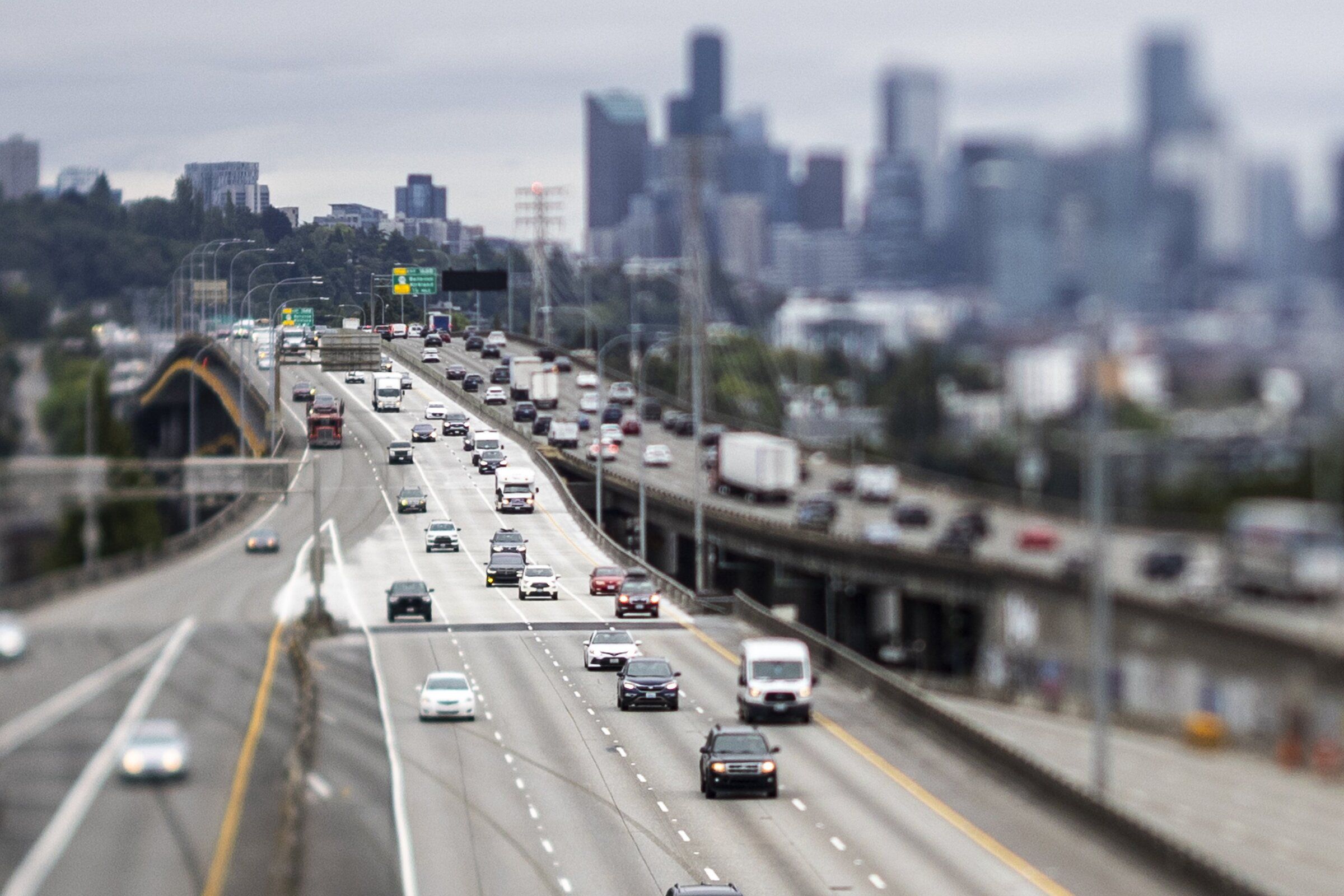
After Seattle wrapped up hosting the FIFA World Cup matches, drivers should again brace for months of gridlock on Interstate 5 (I-5). As The Seattle Times reports in its piece about the “Revive I-5” project, this weekend includes a full closure of the northbound lanes on the stretch of I-5 from the Ship Canal Bridge—covering the downtown area to the University District.
Crews will be staging equipment and materials, so traffic will be closed from the evening of Friday, July 10, until the morning of Monday, July 13. But this is only the beginning: starting Monday, the two right lanes on the upper level of the bridge will remain closed until December, while drainage and the bridge’s top concrete layer—about 1.5 inches (roughly 3.8 cm)—are replaced.
Earlier in the year, similar work took place on the left lanes, but it was paused for five weeks because of the World Cup. The bridge, opened in 1962, hasn’t seen major repairs since the 1980s, and over the past decade WSDOT—the Washington State Department of Transportation—has carried out more than 200 emergency repairs for potholes and joints. Now, estimates suggest drivers will face delays similar to those at the start of the year, when morning commutes from Lynnwood to South Lake Union averaged 56 minutes—20 minutes longer than normal. In the first days, traffic was reaching 80 minutes until people adjusted to new routes.
Even though the work is on the northbound side, the worst congestion is expected on the southbound I-5, because the express lanes are always directed north. During peak hours in a normal setup, the express lanes switch directions, but for now they are fixed. The backups are also spilling over onto the southbound I-405, which circles Lake Washington through Kirkland and Bellevue. Traffic Lab notes that in 2027, repairs on the southbound side of the bridge will begin—at which point the express lanes will be permanently directed south, a change likely to anger drivers headed north.
Beyond I-5, other road projects are also restarting. For example, this week, detours are being introduced on Eastlake Avenue East in Seattle as part of a project to build bus lanes. Highway 18 will be fully closed under I-90 at Exit 25 (Snoqualmie Parkway) from Thursday evening until Monday morning. Drivers will need to detour via Exit 20 on High Point Way. In late July, there are overnight closures planned on I-405 in the Renton and Bellevue areas for the construction of toll lanes, and in Kirkland due to the installation of a fish passage culvert.
Drivers are advised to plan routes in advance and note what WSDOT spokesperson Tom Pierce said: the Harvard Avenue exit to northbound I-5 will close as early as Friday evening and won’t reopen until sometime in mid-October. Access from State Route 520 will remain in operation, except for this weekend. Given that the Ship Canal Bridge is one of the busiest stretches of highway on the entire West Coast (about 240,000 vehicles a day), even a small narrowing of lanes leads to major delays. Road crews hope to complete the work by December, but until then, motorists’ patience will be put to a serious test.
The Head and The Heart Return Home: Reflections on Seattle Roots Ahead of Carnation Concerts
The headline of an article published on KOMO promises to cover the return of the acclaimed indie-folk band The Head and the Heart to their hometown of Seattle—and their reflections on their local roots ahead of concerts in the small town of Carnation. But the text provided for analysis turned out to be a jumble of unrelated updates about I-5 traffic jams, passport problems at the border, and the launch of a new Boeing production line—an obvious data-extraction error.
Still, the gist of the supposed material can be reconstructed from the headline and URL.
Judging by what the article was likely meant to do, it should have highlighted the band’s creative path—formed in Seattle—and their connection to the city that became a launching point for many musicians. The Head and the Heart is a group whose sound blends folk, indie rock, and elements of Americana, and whose lyrics are often steeped in nostalgia and affection for home. Returning for concerts isn’t just a stop on the touring schedule; it’s an emotional moment that symbolizes continuity and gratitude toward an audience that has supported the band from the very beginning. One can assume the band members were sharing memories of their early performances in Seattle’s small clubs, how the local music scene shaped their sound, and how the city has changed over the years of their career.
Choosing Carnation for these concerts is an unusual move for such a well-known band; typically they play larger venues like KeyArena. Carnation is a small community east of Seattle, known for its rural scenery and farmers markets. Perhaps the artists wanted to create a more intimate atmosphere reminiscent of their early shows, or to emphasize their connection to nature—something that often inspires their music. For locals, these concerts offer a rare chance to see world-level stars in an informal setting.
If the full text were available, it would likely include quotes from band members—such as lead singer Joseph Rosi or violinist Charis Cho—about what it means to return to Seattle after long tours. Another important theme could have been discussion of changes in the music industry: how the band adapted to the digital era while still preserving authenticity. The article might also have touched on a broader context—the renewed interest in live performances after the pandemic, and the role independent artists play in shaping the cultural landscape of the U.S. Pacific Northwest.
Unfortunately, due to the content-extraction error, we don’t have the exact figures, quotes, or details that could support these hypotheses. However, the very fact that such a headline appears on a regional news outlet’s website points to the band’s significance to the community. The Head and the Heart remain symbols of Seattle’s music scene, and their “homecoming” isn’t just a news item—it’s a reminder of how local roots can fuel global success.
Tragedy in Monroe: Mobile Home Fire Kills a Man
A tragic incident that occurred Friday in the small city of Monroe, Washington, is yet another reminder of how fragile human life is—and how deadly fire can be in enclosed spaces. The mobile home fire that broke out during the day proved fatal for a local resident despite the rapid arrival of firefighters and attempts at resuscitation. The story, steeped in grief, also raises questions about the safety of this kind of housing and the effectiveness of fire services.
According to information provided by the Snohomish County Regional Fire and Rescue, the report of the fire came to dispatchers at around 3:00 p.m. Fire crews arrived quickly, but unfortunately the flames had already caused irreversible damage. Even though medical responders began CPR immediately, they were unable to save the man—he died at the scene. As noted in a KIRO 7 News Seattle report, the tragedy was not limited to the loss of a human life: during the search of the debris, responders also found the body of a dog that had died in the fire. This detail adds an extra layer of heartbreak, underscoring that the victims of the blaze were members of one family—both a person and a pet.
It’s important to understand that fires in mobile homes (trailer homes or manufactured homes) represent a distinct category of risk. The construction of these buildings often involves flammable materials, and the limited space helps fire spread rapidly—along with suffocating smoke. That’s why evacuation time can be critically short, and any malfunction in electrical wiring or heating systems can quickly lead to catastrophe. In this case, investigators say they began looking into the cause of the fire later that same evening, according to County Fire Marshals. This is standard procedure and typically includes a thorough examination of the scene, interviews with witnesses, and possibly bringing in forensic experts to determine whether the fire was accidental or caused by improper use of fire, a technical malfunction, or other factors.
The key takeaway from this news is not only the sorrow of the loss, but also that even with fast professional response, the chances of survival in such conditions can be low. Statistics show that deaths in mobile home fires are disproportionately high compared with traditional homes. This case therefore serves as a harsh reminder for residents of these homes to regularly check smoke detectors, have an evacuation plan, and be extremely careful around sources of ignition. Investigators still need to clarify the precise circumstances of the tragedy in Monroe, but it’s already clear that this day is a dark one for the local community—having lost one of its members.