The sale of Seattle Met, debates around the Seahawks draft and the mayor’s new housing plan are the main topics in Seattle.
Sale and layoffs: Seattle Met’s future in doubt
Seattle Met, one of the Northwest’s leading city magazines, is facing major changes. Its parent company, SagaCity Media, was sold, triggering immediate staff cuts and casting doubt on the publication’s future. This story illustrates the challenges facing local journalism in today’s economic climate.
Court documents filed March 23 in King County show that Hour Media of Michigan, which calls itself the largest publisher of city and regional magazines in the U.S., bought SagaCity Media for $1.6 million. Within a week, employees at several of SagaCity’s titles—including Seattle Met, Portland Monthly and Houstonia Magazine—were laid off. According to The Seattle Times, former Seattle Met editor-in-chief Eric Nusbaum appears to be the only staffer in his editorial department who has lost his job so far. In his department—consisting of himself, two editors and an art director—only he has been let go to date. In Portland Monthly, Willamette Week reported that two of the seven editorial employees listed in the magazine’s masthead were laid off.
Nusbaum, who became editor-in-chief in March 2023, said he received a call from SagaCity CEO and co-founder Nicole Fogel on Tuesday afternoon shortly after the deal closed. “There was no warning or time to prepare,” he said. “For me, at least, there were no real explanations.” Fogel and Hour Media CEO John Balardo did not respond to requests for comment. It’s important to note that SagaCity had been in receivership for several months—a court-appointed process in which a third party manages a company’s assets as an alternative to bankruptcy. That indicates the company faced serious financial trouble and the court transferred control of its assets to an outside manager to settle with creditors.
In a LinkedIn post, Nicole Fogel said the company “returned to profitability” last year but that “the public debt we accumulated during COVID was too large, forcing us to sell the business.” Under the purchase agreement, SagaCity owed at least $2.5 million to First Fed Bank. Fogel expressed hope that “incredible brands” like Portland Monthly, Seattle Met and others would “get a new opportunity to grow and thrive.” But a tougher reality came in an email to laid-off staff from receiver John Riccardi. Riccardi wrote that Hour Media did not commit to rehiring specific employees or paying severance. He added that although he and Fogel “may disagree with how the Buyer is approaching this,” they have “no authority to act on behalf of the Buyer.”
Seattle Met, which published its first issue 20 years ago, now faces an uncertain future. It’s unclear how the monthly magazine will operate or change under the new owner. Expressing gratitude for the chance to work with colleagues, Eric Nusbaum shared his concerns: “I will miss the independence, the craft, and the opportunity to be part of… local journalism and to tell the story of our region. I think that is important work, and it is hard. How hard it is to keep doing it.” His words reflect a broader issue: preserving an independent, high-quality local voice in a media landscape where financial pressures often outweigh editorial values. The sale of SagaCity is more than a change of ownership; it’s a signal of the fragility of the city-magazine ecosystem that for years helped shape cultural conversations in their communities.
Aggressive Seahawks draft: why Mike Salk opposes an expensive trade up for a running back
With less than three weeks until the NFL draft, some Seattle Seahawks fans are pushing the idea of trading up from the No. 32 pick in the first round to select a more talented player. But prominent sports commentator Mike Salk, writing for Seattle Sports, is strongly against such a move if it comes with two key conditions.
Salk admits he is not categorically opposed to trading up in the draft, but he insists on two important caveats. The first and most significant concerns the future. He is adamantly opposed to the Seahawks giving up next year’s first-round pick. He notes that the 2025 draft is widely regarded as exceptionally deep and loaded with future stars, while the current draft is seen as mediocre—more likely to supply starting-caliber players than superstars. “If you have a chance to get stars next year, I want to take as many of those chances as possible,” Salk emphasizes, urging patience and strategic planning from the front office.
The second caveat is even more specific and concerns the name of a potential target. Salk’s colleague Brock Huwart suggested the Seahawks should do whatever it takes to land Notre Dame running back Jeremiah LaV, whom he considers possibly the best player in the entire draft. Salk doesn’t dispute LaV’s talent, but he strongly disagrees with the cost of such a deal. He says he won’t support a trade that sees the team give up first-round picks in both this year and next—and possibly more—just to move into the top 10 and select a skill-position player (running back, wide receiver). “You want to trade two first-round picks now and try to get a running back? Sorry, that’s where you lose me,” the commentator says.
Salk backs up his position by pointing to the team’s recent financial decisions. He recalls reluctantly agreeing to $225 million contracts for receivers Jaxon Smith-Njigba and Rashid Shaheed, noting that significant money will also go to cornerback Devon Witherspoon. While he likes all those players, such massive investments in positions away from the line of scrimmage make him uneasy. Adding an expensive trade for a running back on top of those commitments seems excessive. In today’s pass-dominant NFL, running backs are often not valued as highly—compared with quarterbacks, offensive tackles, or pass rushers—enough to justify sacrificing multiple draft assets. Salk urges fans and perhaps Seahawks management to be prudent, arguing that the short-term gain from trading for a talented running back isn’t worth the long-term strategic losses, especially given the bright prospects of the 2025 draft.
Mayor’s Seattle plan: more housing in quiet neighborhoods
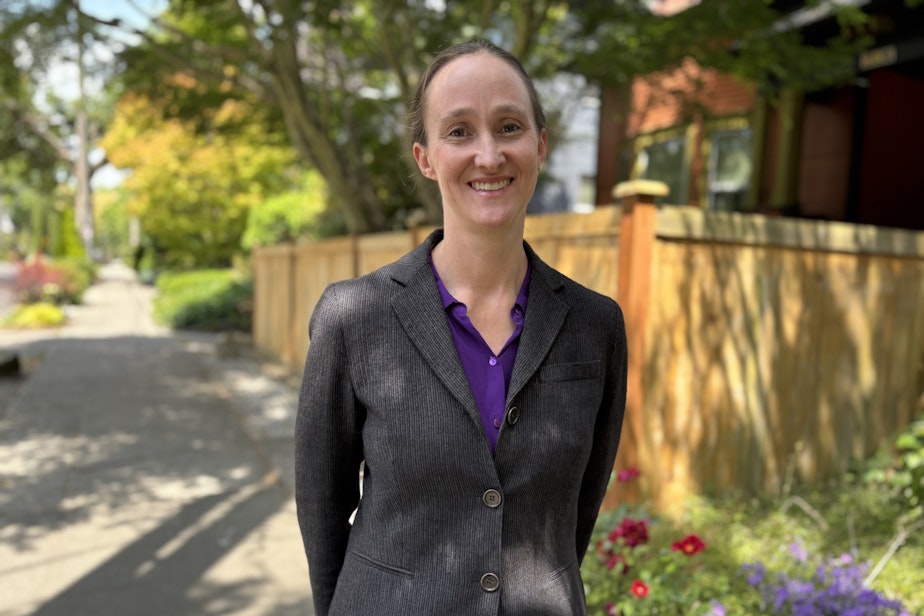
Seattle Mayor Kate Wilson is proposing a bolder approach to the housing crisis than her predecessor, seeking to expand construction beyond busy corridors. In an interview with KUOW, she criticized the current comprehensive plan as “stingy” and laid out her vision to allow more housing in more neighborhoods—and to do it faster.
Wilson believes the current version of the city’s comprehensive plan, developed under former Mayor Bruce Harrell, too narrowly limits where increased density can occur. The plan now allows so-called upzoning—increased housing density—only within about a half-block of frequent transit routes. The mayor says this concentrates new multifamily housing mainly along noisy, polluted arterials, which she calls short-sighted. Wilson wants to permit such housing on quieter streets away from heavy traffic, discussing a specific radius—whether a few blocks or, for example, a 5–10 minute walk from transit hubs. Another key element of her strategy is reviving the concept of “neighborhood centers”: small, compact nodes where housing clusters around local cafes, pizzerias, ice cream shops and other small businesses, creating a walkable environment. Wilson notes that early drafts of the plan proposed many more such centers, but the previous administration and the city council substantially reduced their number. She now intends to revisit that decision and possibly restore some of the removed locations.
These plans, however, face pushback. Critics like Tree Action Seattle activist Sandy Shettler worry that accelerated development without adequate protections will lead to the loss of street trees and green spaces. Her group does not advocate for lower density; rather, it insists Seattle should combine dense housing with dense urban forests. The economic context is clear: building new housing is seen as the main tool to curb rising housing costs. Frustrated with slow local progress, Washington state lawmakers in recent years have increasingly passed statewide zoning-reform laws requiring cities to increase housing supply. Mayor Wilson’s actions indicate she is willing to go well beyond the state’s minimum requirements. At the same time, she stresses she won’t radically change the current comprehensive-plan update process, since a dramatic expansion of changes would trigger new lengthy environmental reviews that—ironically—would slow construction. Her strategy, then, is an attempt to balance the urgency of addressing the housing crisis, preserving urban ecology, and creating more comfortable, vibrant neighborhoods away from major traffic arteries.