In brief: Nestlé challenges the name and logo of a small Seattle coffee shop; Trump fired a new prosecutor less than an hour after taking office; Seattle votes for a transport tax that adds 100,000 bus trips per year.
Nestlé expands legal battle with a small Seattle coffee shop—fight over a name and logo
The owner of a small coffee business in Seattle has found himself at the center of a legal standoff that threatens to wipe out his company. The dispute began a year ago over a trademark, but now the conflict has entered a new, tougher phase. Swiss giant Nestlé, which owns the brand Seattle's Best Coffee, has expanded its claims and is now challenging not only the name Seattle Strong Coffee Co., but also its logo—essentially the entire visual identity of the small cold-coffee maker.
In an interview with local TV station KOMO, Seattle Strong Coffee founder Evan Offline described what was happening as “a fight for my life.” His company started in 2017 as a student project at the University of Washington business school, and today sells canned cold coffee through many stores in the region. But since last year, Nestlé has argued that the name Seattle Strong is too similar to Seattle's Best and could mislead customers. Now the corporation is also going after the logo—Offline said the move threatens “the whole essence of the brand, its colors,” and everything he had built over nearly ten years.
“The only overlap between Seattle's Best and Seattle Strong is the word ‘Seattle,’” the entrepreneur told KOMO News. “But this is our hometown: we roast here, we brew coffee here, we work here, we live here.” Offline believes no corporation has the right to monopolize the name of a city. Comparing it to someone trying to “privatize” the concept of “Texas barbecue” makes the absurdity of the claims clear from a small-business owner’s perspective.
At the heart of the dispute are the finer points of patent and trademark law. Trademark registration protects a company against cases where similar names or logos may genuinely confuse consumers. However, the “likelihood of confusion” test often becomes the subject of lengthy court proceedings, especially when one of the parties is a global giant with a multi-million-dollar legal budget. For Nestlé Seattle's Best Coffee is one asset; for Offline it is a matter of survival—rather than growing production, he is forced to spend scarce resources defending himself in court. The company has already restarted a fundraising campaign on the crowdfunding platform GoFundMe, hoping to rely on community support so it won’t be crushed by a corporate machine.
Nestlé has offered no comment on the new demands to journalists. But if the court sides with the corporation, it could set a dangerous precedent: any small business whose name includes a city name would risk a lawsuit if a similar brand already exists somewhere in a multinational company’s portfolio. For Seattle’s coffee culture—where Starbucks and many other iconic brands were born—such an outcome would be especially bitter, because “Seattle coffee” has long been a symbol rather than just a geographic label. Offline and his team are hoping that common sense and support from fellow locals will help them defend the right to name their product according to its place of origin, without fear of giant lawsuits.
Trump fired the new federal prosecutor in Seattle in less than an hour after taking office
When federal judges in the Western District of Washington appointed longtime prosecutor Roger Rogoff as acting U.S. attorney in Seattle, it seemed like a routine procedure to fill a vacancy that had gone unfilled for three years. But less than an hour after Rogoff took his oath on Tuesday, President Donald Trump sent him packing. As reported by KOMO News, Rogoff himself took the short turnaround with humor, calling it “the greatest hour of my life.” Behind the story, however, lies a serious constitutional dispute over the boundaries of presidential and judicial authority.
Rogoff is an experienced federal prosecutor, a former judge on the Washington State Supreme Court’s King County Superior Court, and a former director of the Washington State Office of Independent Investigations. He said the notice of his removal arrived by email with the subject line “Message from the President.” In the letter, Trump said he was removing Rogoff from his post as U.S. attorney based on his own powers. Rogoff admitted he wasn’t surprised: his team had spent the last two weeks trying to reach the administration without getting any response.
The Department of Justice, commenting on the firing, pointed to a post by Deputy Attorney General Todd Blanche on social media platform X. Blanche wrote that district judges can appoint an acting prosecutor, but the president has the right to fire him. He also criticized judges in the Western District of Washington for not consulting the administration before making the appointment—allegedly violating “time-tested practice.” In his view, presidential authority overrides the judges’ decision.
Rogoff, for his part, believes the firing was unlawful. He said the judges acted within the Constitution and the law, while the president removed him without a conversation, without checking his intentions, and without any understanding of what he planned to do in the role. “I think the termination is inappropriate and likely unlawful,” he said. At the same time, Rogoff emphasized that the issue isn’t about him personally, but about the rule of law: if Trump had appointed someone who had been confirmed by the Senate, he would “applaud that.”
To understand the context: the U.S. attorney position is the head of federal prosecution in a particular judicial district. Usually, the president appoints such an official with Senate confirmation. But when a seat remains vacant for a long time, federal judges can temporarily appoint their own candidate under the law. In the Western District of Washington, there had been no “constitutionally appointed” U.S. attorney for three years—the role had been filled by temporary appointees. Rogoff became acting U.S. attorney by judges’ decision, and his firing an hour later demonstrated how directly presidential power can intervene in the workings of the court system.
When reporters asked the judges who appointed Rogoff whether they could comment, the court’s office declined. As a result, the conflict remains without an official assessment from the judicial branch. The case raises an important question about political influence in American justice: can a president simply undo judges’ decisions if they’re inconvenient? Despite the firing, Rogoff remains optimistic and said it was an honor to be selected by the judges—and, at least for an hour, to feel connected again with the prosecutors who do this work every day.
Mayor Wilson pushes a transport tax—Seattle prepares to add 100,000 bus trips per year
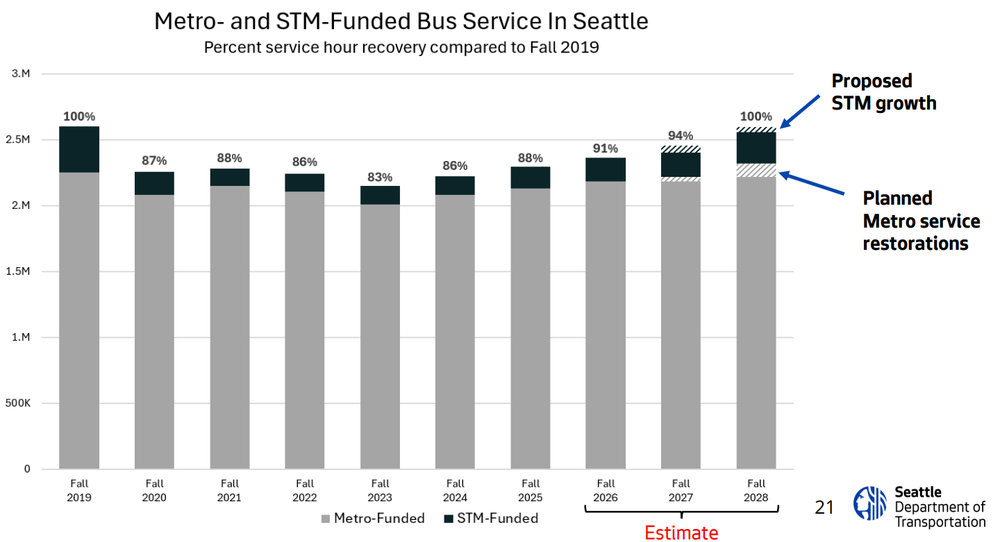
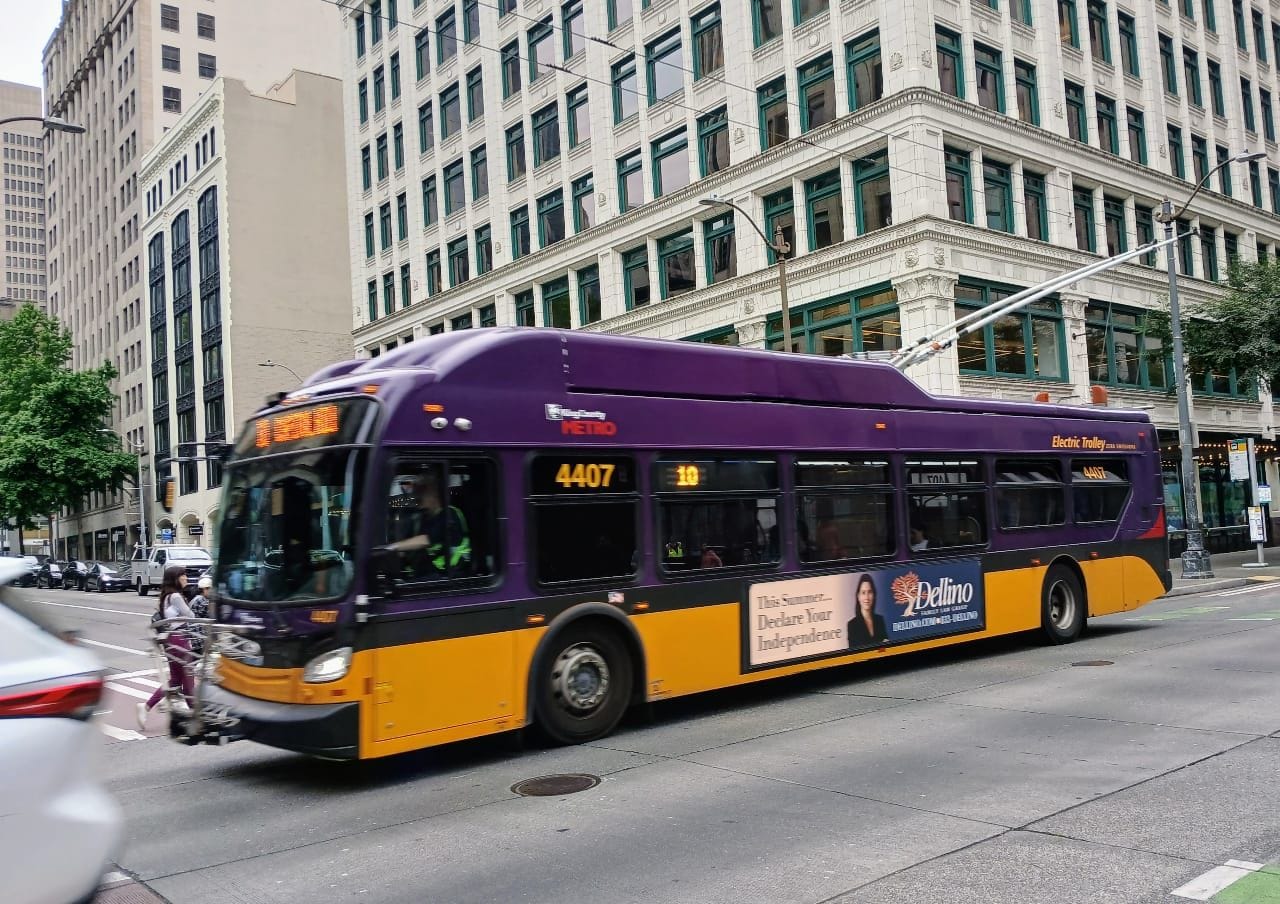
On Thursday, Seattle city council’s committee rejected attempts to cut Mayor Cathy Wilson’s transport funding proposal after nearly four hours of debate. That means residents of Washington state’s capital will vote in November on increasing the sales tax by 0.3% for 10 years. If the measure passes, the city will increase investment in King County Metro bus service by about 100,000 trips per year, while continuing to fund programs such as the Seattle Streetcar and discounted ORCA cards for low-income riders. As The Urbanist writes, the current 0.15% tax was approved in 2020 with record support of 80% of voters.
Council members still proposed amendments: the text now explicitly allows spending on overnight trips, and vocational students will receive free ORCA passes. The Seattle Department of Transportation (SDOT) was tasked with reporting on stop locations and the effectiveness of the free Waterfront Shuttle ferry service, and in 2032 it will conduct an “interim assessment” of the expenditures. But proposals to reduce the tax to 0.225% or shorten its term to seven years were rejected. Most councilmembers agreed with Mayor Wilson: this additional funding source—supplementing Metro’s service hours since 2014—should deliver the maximum number of buses to city streets.
If the tax is approved in November, by the end of 2028 service levels will reach 2019 performance benchmarks. The city is still dealing with the fallout from the pandemic, and the focus is on increasing evening and weekend frequencies so wait times are comparable to weekdays. “From my perspective, we really have an opportunity to invest in transportation and make it accessible for people,” Councilmember Deionne Foster said, adding that it would help increase ridership.
The biggest risk to the measure came from an amendment by Councilmember Bob Kettle, who proposed 0.225%—essentially keeping the current level without expanding it. He cited the tax burden on lower-income residents. But Councilmember Alexis Mercedes Rinck countered: “This amendment would save the average household about a dollar a month at the cost of 100,000 hours of service—this deal doesn’t work for me.” Even Committee Chair Rob Saka, who called the inflation arguments “not trivial,” said transportation shouldn’t suffer due to limited capacity of the state’s tax system. “When the music stops, some priority will go unfunded—but let it not be transportation. Transportation today, tomorrow, and forever,” Saka said.
Councilmember Maritza Rivera, who supported Kettle, insisted that opposing the proposal doesn’t mean opposing transportation: “We’re not reducing investment; we’re acknowledging that the sales tax hits low-income communities hard.” But to activists, that argument sounds doubtful.
Another separate discussion involved Saka’s amendment to allocate funds for transportation safety. Although about 10% of every dollar in the Metro city budget already goes to security, and a newly approved 8-year transportation funding measure includes $9 million for safety, the council still approved the amendment. Foster and Rinck voted against it, arguing that safety is already built into every dollar.
The measure will now move to a final vote by the full council on Tuesday; it is expected to pass and then be put to voters in November alongside state legislative elections, the state senate election, special elections in District #5, and a Washington state initiative to repeal the millionaires’ tax. If voters back it, Seattle will take a major step toward restoring its transportation system after the crisis.