
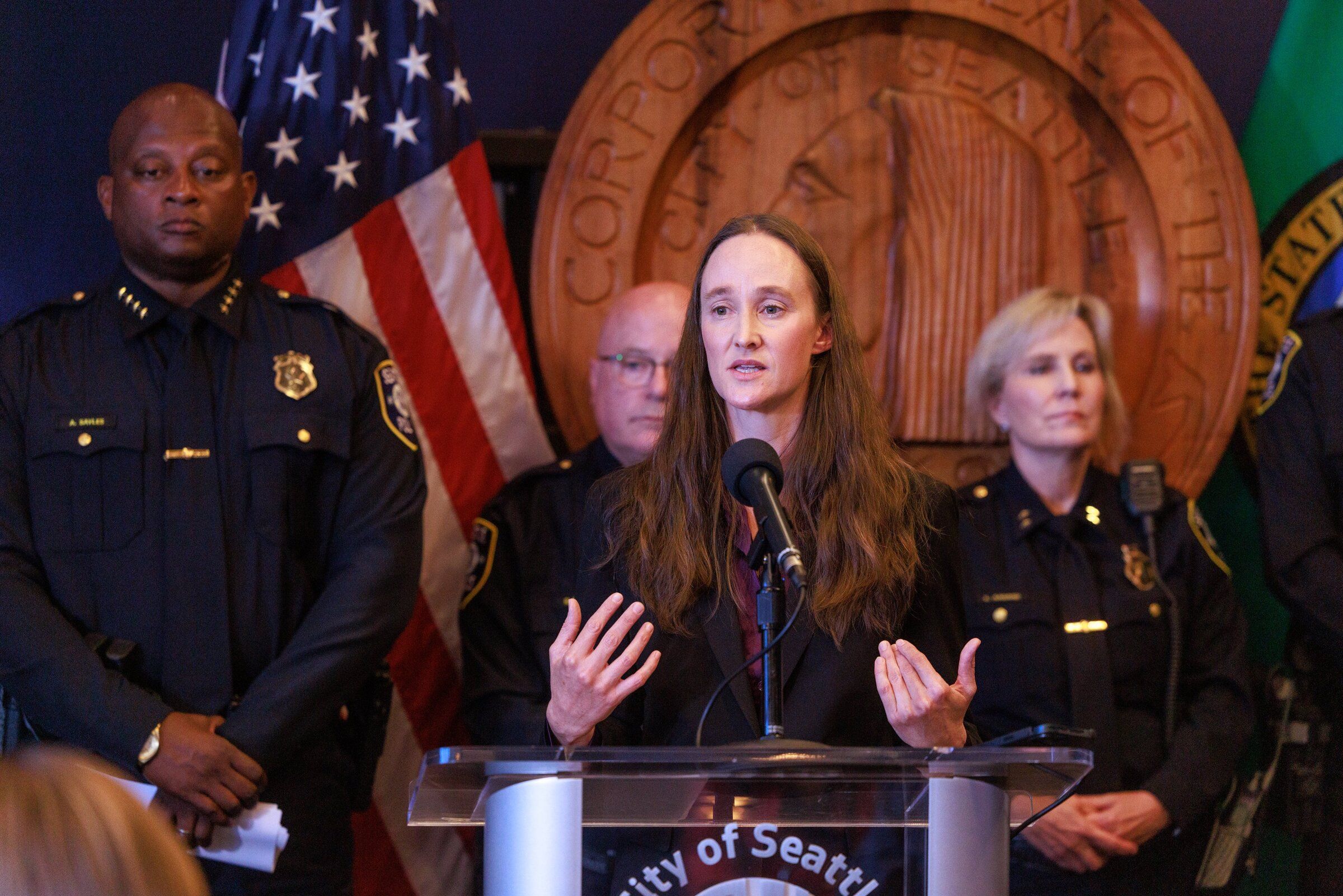
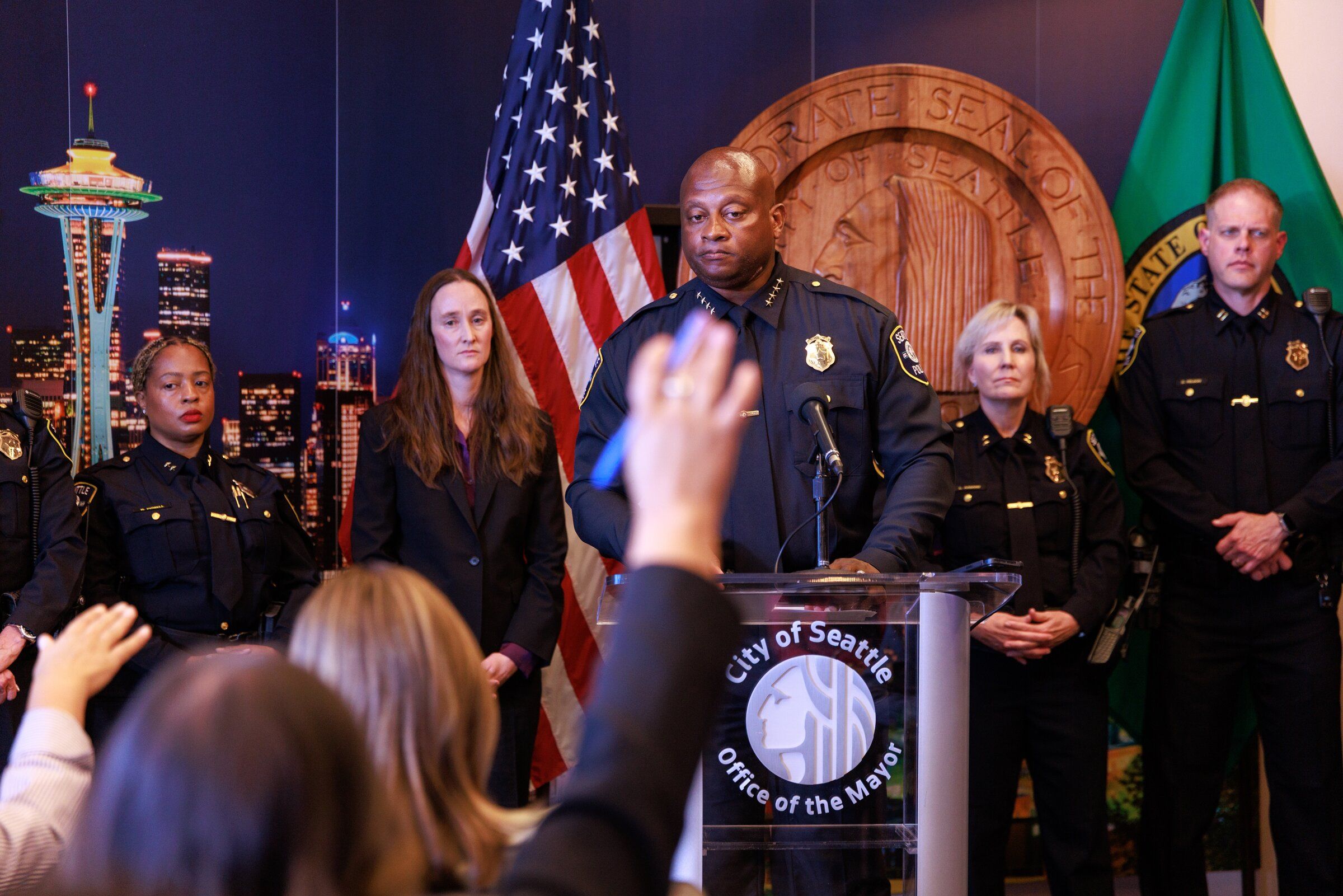
Seattle Mayor Cathy Wilson said Friday at a press conference that the search for a permanent police chief is being conducted “with urgency” and will include the creation of a special screening committee. In her words, she is looking for someone who knows how to build relationships within the department, can listen to criticism, and “can maintain clear communication in stressful situations.” “Despite all the complexities of the moment we’re in, I’m very optimistic about the future of our police and public safety in Seattle,” Wilson emphasized.
While the search for a permanent leader is underway, the duties of the interim police chief have been taken on by Deputy Chief Andre S. Searles—after Sean Barnes resigned on Thursday. Wilson said she chose Searles because “he’s done this job before and will be able to step into the process quickly.” She also noted his deep commitment to the principles of community policing and working with youth, as well as his ability to build ties between law enforcement and city residents.
Searles is stepping into the role at a particularly tense time for the city: last week, a shooting occurred at Seattle Center, killing three people and injuring four. Seattle Center is not just a park, but the city’s main public gathering place, created for the 1962 World’s Fair. It is home to the Space Needle, theaters, museums, concert halls, and fountains; every summer, the largest festivals and fairs take place there. For residents, it symbolizes Seattle—a place families and children come to for picnics and celebrations—so the shooting is being felt as a blow to the city’s very identity and sense of safety. That is part of what explains the strong public reaction.
One of the sharpest questions has been why the police took so long to release information about the incident—people, in fear, waited for news for almost five hours. After a wave of criticism, city officials promised to change the order of operations so that in crisis situations alerts would work much faster and more clearly.
As for the resignation of Sean Barnes, appointed by former Mayor Bruce Harrell in late 2024, Wilson confirmed that she asked him to step down and that he did so voluntarily. According to the mayor, the decision was tied to Sunday’s events—“but not only to them.” She acknowledged that on that day there were breakdowns in communication both within the police department and between the department and her office. “In the future, in situations like this, we need to start informing the public much earlier,” Wilson added.
The new permanent chief will have to work under federal oversight imposed on the Seattle Police Department as far back as 2012. At the time, after an investigation, the U.S. Department of Justice found that the city’s police systematically used excessive force and conducted unconstitutional stops, especially targeting minorities. The court approved a required agreement—“consent decree” —which requires the city to carry out reforms: change use-of-force policies, improve officer training, keep strict statistics, and report to an independent monitor. As a result, the future police chief must be more than just a leader—a reformer: they will have to ensure the court’s requirements are implemented, roll out new standards, and rebuild community trust.
Wilson also said the future chief should understand the value of alternative crisis response systems. In Seattle, programs already send teams beyond armed police to calls involving mental health, homelessness, or addiction. For example, there are paired “medic + social worker” teams (HealthOne), joint patrols of police officers with psychologists, and the LEAD program, which directs people with drug addiction away from jail and toward treatment and social support. There are also civilian crisis teams that, in some cases, fully replace police. Support for such systems is required not only by the federal agreement, but also by common sense: it reduces the number of conflicts and cases of brutality, saves police resources for investigating serious crimes, and makes the city safer without unnecessary arrests.
Andre Searles began his law-enforcement career more than 20 years ago with the Beloit Police Department in Wisconsin, where he rose to chief in 2021. He spent 12 years in the Special Operations Unit, serving as commander for four of those years. In 2025, he moved to the Seattle Department as deputy chief for administrative affairs and investigations. At his first press conference, Searles said he does not take the new role lightly: “This week has been difficult, but I know what our department and city can do when we come together for the shared goal of keeping residents safe.” He also promised to increase the number of officers at all major summer events.
City officials have not yet released major details about the shooting investigation, other than that the police continue to look for multiple suspects. Searles said the officers “are very close” to arresting at least one of them. Recall that a 15-year-old was arrested at the scene on Sunday and faces charges of first-degree assault. Wilson also responded to criticism from residents and the city council, who questioned the wisdom of changing police leadership during such a chaotic period. “As the head of the city, I have a different view of our department, and I’m confident I’m making the right decision at the right time,” she said.
One factor that appears to have contributed to Barnes’s resignation was his frequent absence from the city—at the time of the shooting, he was attending a conference in Dallas and returned only by Monday morning. Wilson emphasized that the new permanent chief must “be constantly present in Seattle” and keep travel to a reasonable minimum. Searles, for his part, said he lives in King County’s Eastside area, and that his family is partly in Illinois, but he plans to ultimately settle here. The mayor added that the future chief should be able to work with oversight bodies and maintain feedback with the community. “I believe that an overwhelming majority of our city’s residents want the same thing,” she concluded.
Based on: Seattle mayor describes what she wants in new police chief