
The Sound Transit light rail system in April 2025 became the busiest in the United States, surpassing Los Angeles, Boston and San Diego. Daily ridership reached 155,000 people — a quarter higher than in February, when the figure was 122,700. The jump surprised even agency staff, who confirmed the data last week and noted that similar demand has continued into May.
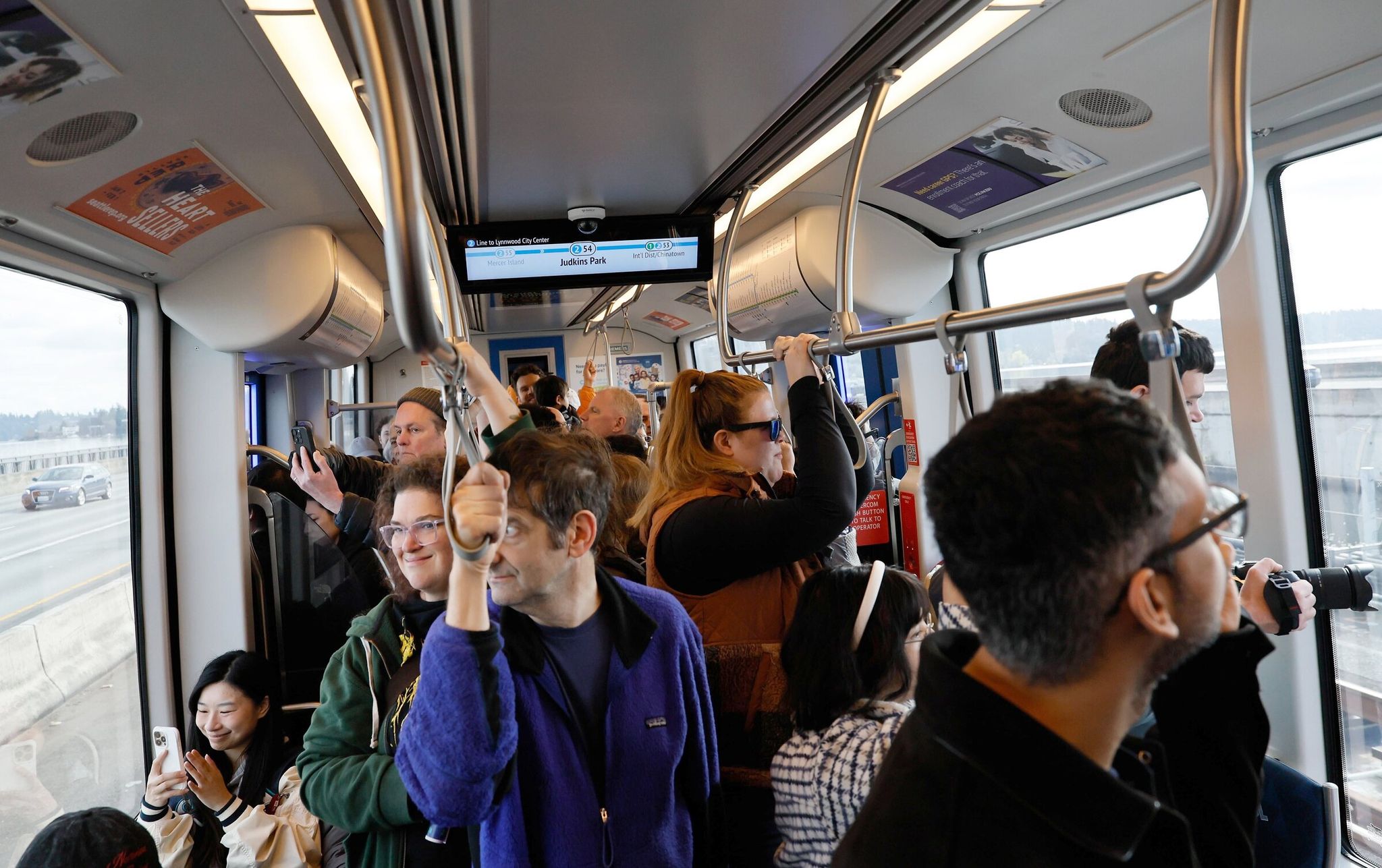
The main catalyst for the increase was the March 28 opening of a new route across Lake Washington, connecting Bellevue and Seattle. It is the first passenger rail line in the world routed over a floating bridge. The project was delayed six years due to disputes over routing in Bellevue and defects in concrete rail ties that Sound Transit deemed defective and replaced. Lake Washington is a large freshwater lake separating the city of Seattle from its eastern suburbs. The region east of the lake, known as the “Eastside,” includes the cities of Bellevue and Redmond, home to Microsoft’s headquarters, Amazon’s second offices and many other tech companies. There are no bridges across Lake Washington in the middle of the lake (bridges exist only at the ends), and all trips between Seattle and the Eastside have relied on the already congested SR-520 or I-90 bridges during peak hours, so the light rail route has dramatically cut commute times for thousands of workers and eased pressure on the roads. The start of the Mariners’ baseball season — a traditional driver of game-day trips — also contributed to the increase.
The 58-mile (about 93 km) system links Lynnwood, Seattle, Redmond and Federal Way, with most of the tracks running on elevated structures or in tunnels, making it more like a subway than a conventional streetcar. Better on-time performance (two years ago the situation was disastrous) and appeal to a broader range of riders, not just office workers, have helped the system exceed even pre-COVID levels.
However, the light rail’s triumph contrasts with serious problems: Sound Transit faces a $35 billion funding shortfall, timelines for new megaprojects are slipping, and the promised extension to the Ballard neighborhood is at risk of cuts. Ballard is a historic neighborhood in northwest Seattle, once a separate town and now known for its Scandinavian heritage, many breweries, restaurants and rapidly growing population. Its connection to downtown is considered critically important: currently the neighborhood is served only by one rapid bus line (RapidRide D Line) and has no direct rail link. Sound Transit plans to extend the light rail to Ballard, providing fast, reliable access to downtown, but financial strains (caused by rising construction costs, inflation and delays) put the project in jeopardy. Without it, Ballard could face even greater transportation problems, slowing growth across the city. Still, today the rails carry the equivalent of two-and-a-half football stadiums’ worth of passengers per day — the same number as cross Interstate 90 — but without the congestion and exhaust.
Based on: Seattle’s daily light rail ridership jumps to No. 1 in U.S.