
New data confirm that the Seattle metropolitan area stands out not only for its high resident incomes but also for substantial household net worth. The median household net worth in the region, which includes King, Pierce and Snohomish counties, was an impressive $901,000 last year. That is more than twice the national metropolitan median of about $341,000. A historically strong economy based on technology (Amazon, Microsoft in King County), port activity (Tacoma in Pierce County) and the aerospace industry (Boeing) has attracted high-paid workers, creating sustained housing demand.
Among the 50 largest metropolitan areas in the country, Seattle ranks fourth on this financial measure. It is surpassed only by San Jose (about $2 million), San Francisco ($1.6 million) and Boston ($913,000). By comparison, the lowest median net worth is in Oklahoma City — about $148,000. Within Washington state, Seattle’s wealth stands in marked contrast to other cities such as Tacoma or Spokane. In those cities housing prices are lower and the economy more diversified, but average incomes are also lower, leading to a less pronounced wealth gap compared with the tech center.
The main driver of such high wealth is the housing market. In a region where home prices have traditionally been high and rose sharply during the pandemic years, a home is the largest asset for many families. The market’s resilience is supported by steady demand and investment, as well as limited land supply due to geographic constraints (mountains, water). Home equity is calculated as the market value of the home minus the remaining mortgage balance or other loans secured by the house.
The wealth gap between homeowners and renters in Seattle is enormous. Estimates put the median net worth of a homeowner household at nearly $1.7 million. At the same time, for renter households the figure is about $213,000, which, although the fifth-highest in the country, is many times lower. Urban planning and zoning policies that often restrict dense development and allow only single-family homes in many neighborhoods reduce the supply of affordable housing and raise prices. Homeowners benefit from rising housing values, accumulating equity, while renters face high rents and cannot build savings toward a purchase, which widens the gap.
This substantial difference is explained primarily by renters lacking home equity. Demographic factors also play a role: homeowners are more likely to live in family households with multiple working adults, which makes asset accumulation easier, while renters are more likely to live alone.
On the national stage Seattle’s figures look particularly striking. Across American metros, the median net worth of homeowners is about $554,000, while renters’ median is only about $60,800. That highlights how Seattle residents’ wealth, especially among homeowners, exceeds national norms.

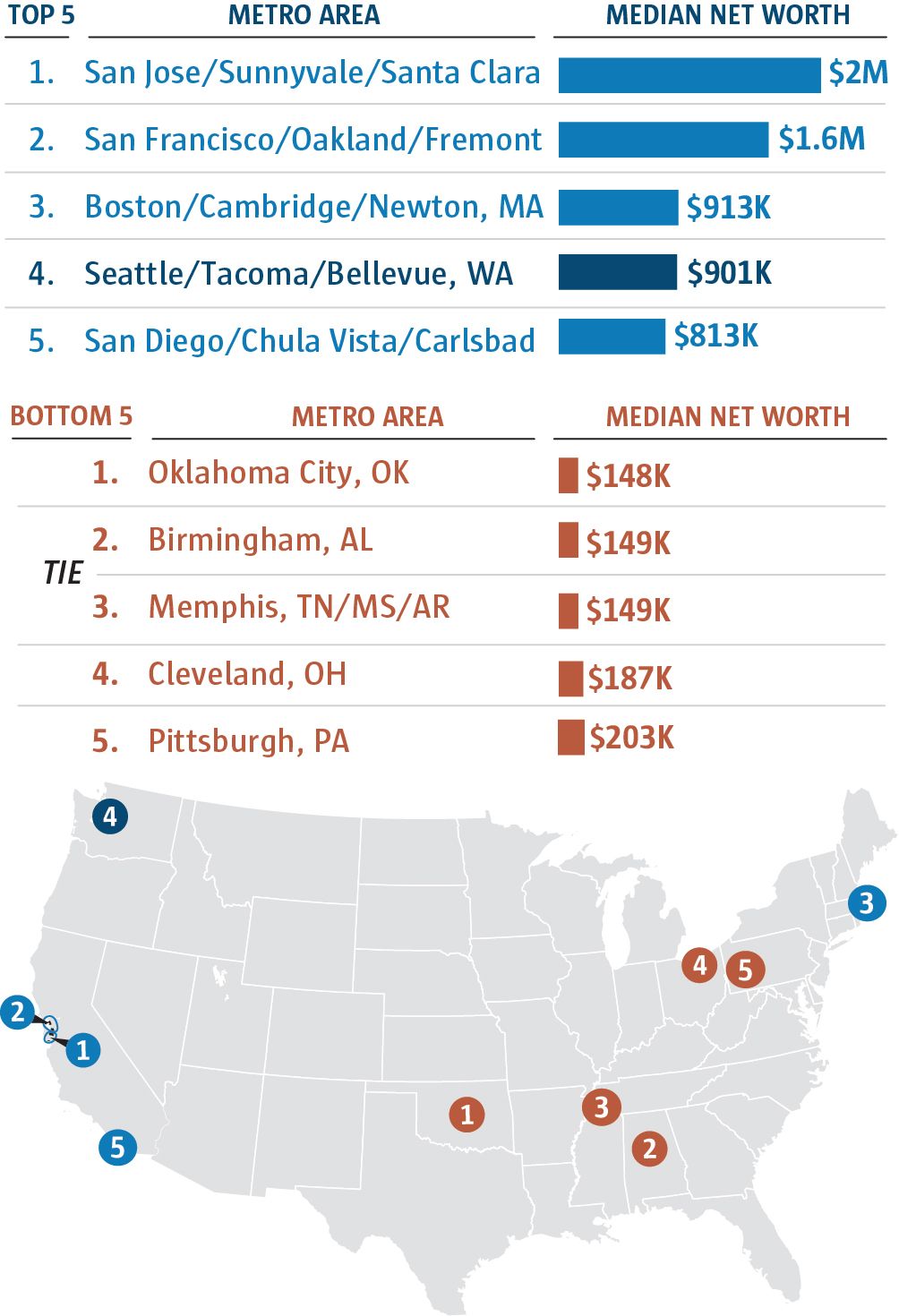
Based on: Net worth of Seattle-area households more than double the U.S. median