
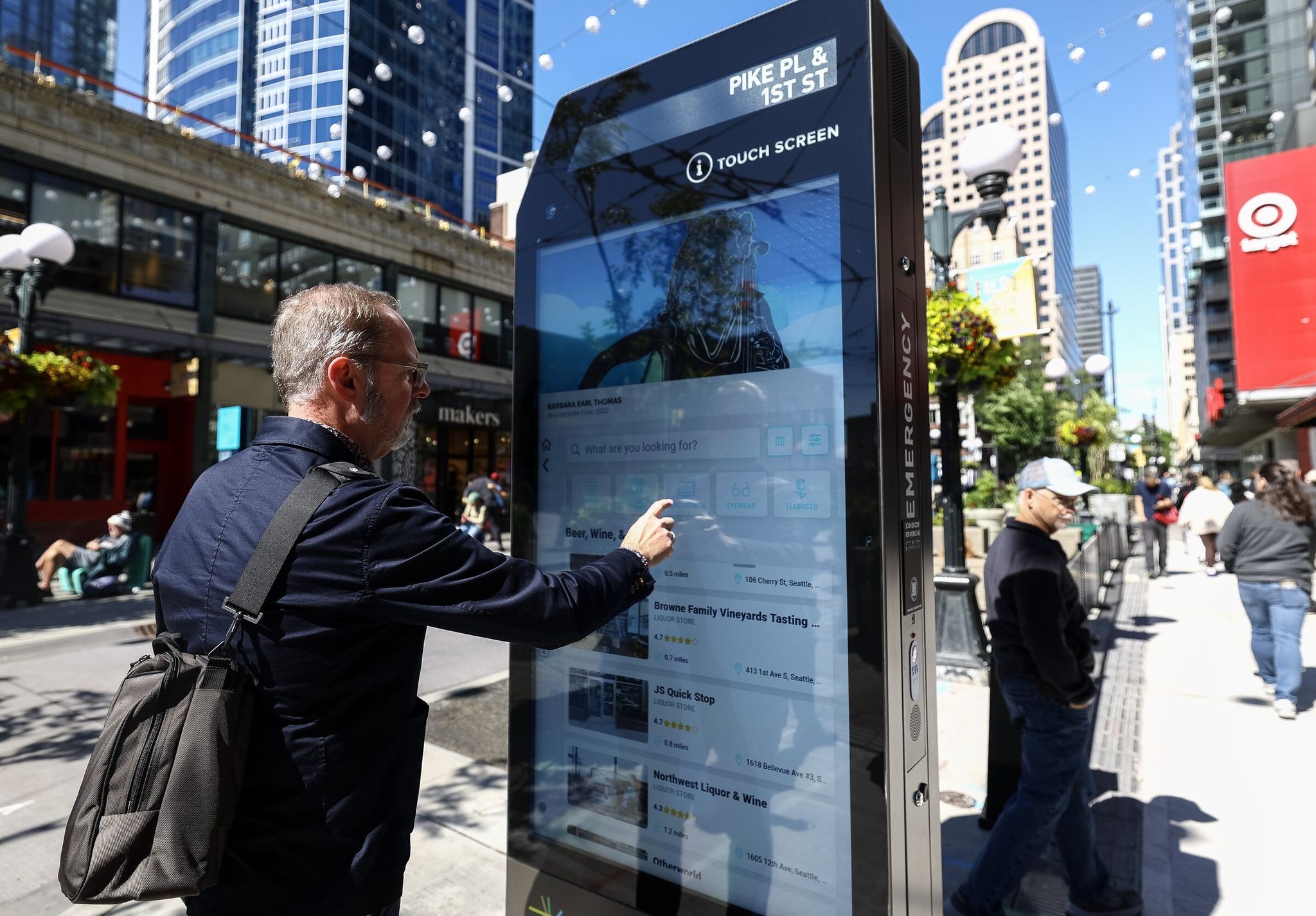
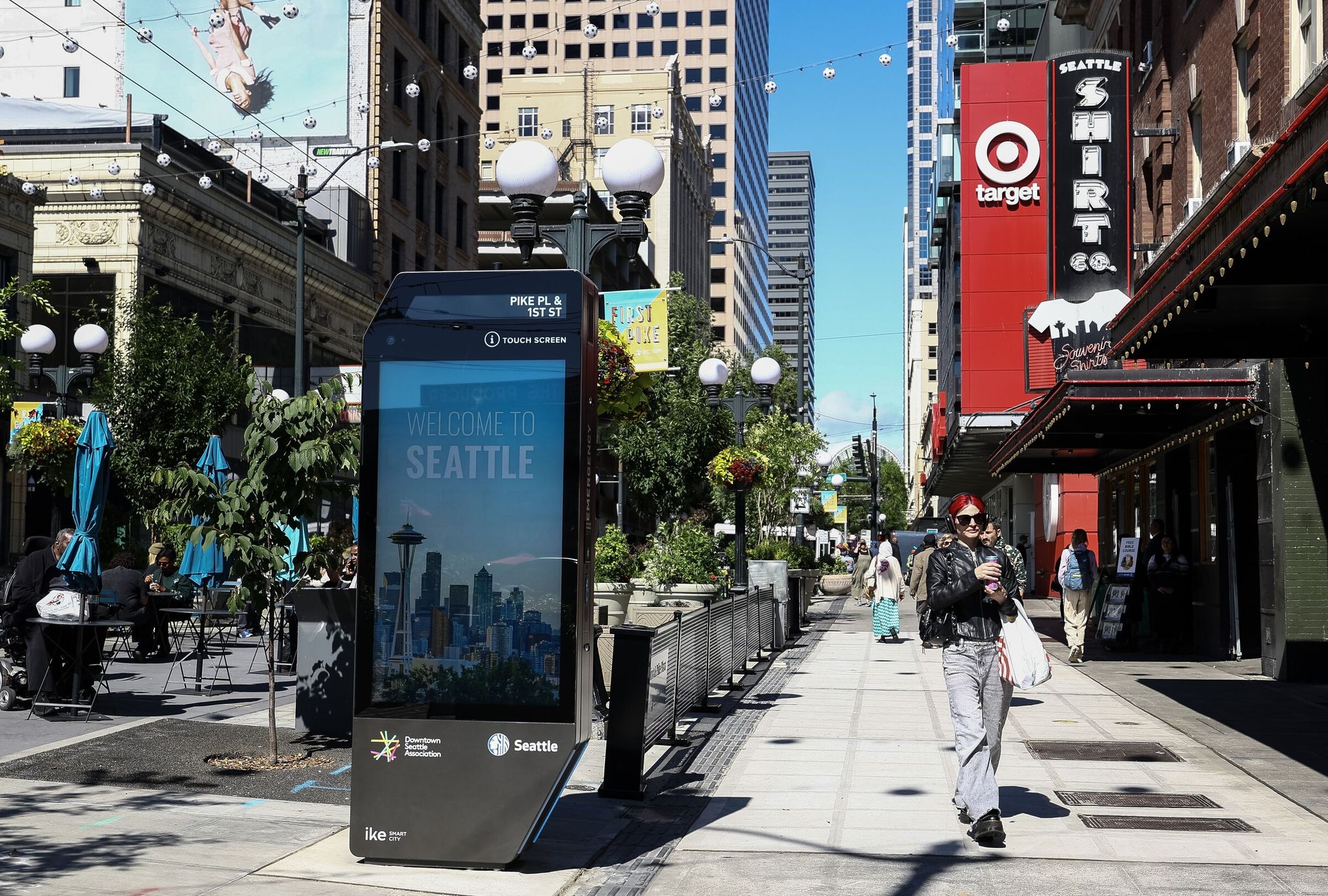
On Tuesday the first of a series of eight-foot digital kiosks that resemble giant smartphones began operating in Seattle. The devices are installed at the intersection of First Avenue and Pike Street (by the famous Pike Place Market) and at the corner of Fourth Avenue and Pine Street. The developers say that over the next 10–12 months 30 such kiosks will appear in the downtown area, serving as information hubs for locals and tourists: helping to find restaurants, check bus schedules, browse event listings and receive emergency alerts.
The kiosks are owned by IKE Smart City, which has committed to keeping them operational for at least 20 years. The main revenue source is advertising shown on the screens when they are not being used as information panels. Meanwhile, the principal beneficiary of the project has become the Downtown Seattle Association: after the first 30 kiosks are installed the organization will receive $1.1 million annually, with the remaining profit going to IKE Smart City.
However, the project has not been without controversy. The city council approved the installation of the kiosks a year ago, and the decision was hard-won. Skeptics pointed to aesthetics — flashing digital signs could spoil the look of downtown — and questioned their usefulness since every passerby already has a smartphone. The Seattle Design Commission recommended rejecting the project, although its opinion was advisory rather than binding. Supporters, on the other hand, emphasized the social benefits: revenues from the kiosks will fund downtown improvement programs, including the work of ambassadors in green jackets — staff who help tourists and residents navigate, pick up litter and keep order. Their work is financed by advertising on the kiosks: the city signed an agreement with a private company under which part of the profits are directed to sustain the ambassadors and to improve public spaces.
The 2026 FIFA World Cup, for which Seattle was chosen as one of the host cities, accelerated implementation. It was initially planned to deploy 30 kiosks by the start of the games, but the rollout was delayed and so far only two are operating. In the future the city could place up to 80 such units — in Ballard, the University District, West Seattle and SoDo. The interactive kiosks are the first instance since 2014 of private use of public space after the closure of the Pronto bike-share system. That municipal system shut down in 2017 due to low user numbers, technical problems and financial losses despite subsidies, making city officials more cautious: they now require private companies to conduct thorough demand studies and provide financial guarantees to avoid a repeat of Pronto’s failure and to prevent spending public funds on projects that could go bankrupt. The city is now watching to see how the new technology will change navigation and the look of downtown.
Based on: First glitzy interactive kiosks hit Seattle’s streets