Seattle is once again proving itself a city of the future, from a salmon-saving hydrogel sponge and the ADA feeding robot to the CiviForm platform and Tin Can’s analog phones. Meanwhile, the Mariners are weighing a bold move to trade for Guardians manager Stephen Vogt, and the Seahawks have activated running back Zach Charbonnet from the PUP list ahead of the season’s decisive stretch.
Seattle Is Inventing the Future Again: From a Feeding Robot to a Laser Weeder
Seattle has long been used to being a city where the future arrives earlier than anywhere else. Back in 1962, the World’s Fair program opened with the words “Welcome to the Future!”, directing visitors to the monorail, the Bubbleator and exhibits on space technology—all part of “the exciting realm just beyond the edge of tomorrow.” The city made good on that promise: Boeing grew here, Microsoft ushered in the age of personal computers, grunge redefined cool, and Amazon reshaped the world in its image as an e-commerce giant. But Seattle ingenuity has never been limited to big, successful companies. In 2002, a puppeteer from the University District came up with seven-foot-tall Johnny Jetpack, a human model that flew 120 feet through the air on its own little rocket engine. A Magnolia homemaker created the Slinky Dog toy. We invented the Sonicare toothbrush and, ahem, Clippy the paper clip. We’re inventive, yes, but also reliably a little weird. And that hasn’t changed in the age of AI. Seattle tech companies are, of course, refining AI into specialized tools and applications for biomedical research—but local innovators still think beyond the expected. High school students bring ideas to PhDs, and inventors still tinker with projects in their own backyards and spare bedrooms. Whatever the future holds, chances are it will arrive here first.
One striking example is Aina Abiodun, a co-founder of the Seattle Climate Innovation Hub. When the hub was being developed in 2025—a joint project involving the city, the University of Washington and private companies—VertueLab understood that big environmental solutions depend on bringing people together. A downtown space is well suited to that. “Investors don’t show up,” Abiodun says, “unless they know there’s an ecosystem where people are trying to build businesses.” She believes Seattle is ready for the next breakthroughs in building materials and battery technology.
Sometimes big ideas come from connecting the dots. It took a high school student introducing two scientists to create a “salmon sponge.” Lakshmi Agrawal, a student at Interlake High School in Bellevue, introduced Benjamin Xiao of Stony Brook University in New York and Ed Kolodziej of the University of Washington over Zoom. She says it “felt like matchmaking.” She brought their work together to create a sponge that can capture a substance harmful to Washington’s most iconic fish. Kolodziej had been studying 6PPD-quinone, a salmon-killing oxidized chemical used in car tires—and the leading cause of urban runoff mortality syndrome in fish. Xiao’s lab developed hydrogels that can pull dangerous fertilizers out of the environment. Realizing that these sponges had exactly the properties needed to filter 6PPD-quinone earned Agrawal the Regeneron Young Scientist Award at just 18. The “very, very soft” sponges don’t just physically filter the compound, she explains; they also chemically bind and trap it. And because the production process generates almost no waste, the hydrogels “use 80% less energy and cost 98% less” than existing methods. “It’s a much more scalable and applicable solution than what we have now.”
Another innovation is the ADA robot, short for assistive dexterous arm. Developed in the University of Washington’s Personal Robotics Lab, it wields a 3D-printed fork to help people with motor impairments eat independently. While working on his PhD in the lab, Amal Nanavati collaborated with researchers who had personal experience with paralysis. They described feeling awkward about having to ask a caregiver for every bite, and the broader frustration of being unable to eat what they wanted, when they wanted. The robotic arm can pick up pieces of fig-and-cucumber kimchi pizza and avocado toast and bring them to the user’s mouth. A connected web app, controlled using existing assistive technologies such as a sip-and-puff device or chin joystick, lets users direct every meal. ADA, Nanavati says, “is still not faster than a caregiver, but we’ve heard from users how important it is to be able to feed yourself.”
Can paperwork—or its online equivalent—be revolutionary? In Seattle, yes. Online applications for public programs such as the Seattle Preschool Program and emergency bill assistance have become faster over the past couple of years thanks to the CiviForm platform. It’s a quiet but significant change, especially for vulnerable populations. The idea took root in 2017, when Mayor Jenny Durkan called for a centralized benefits portal where residents could learn about assistance programs and apply for them. The goal was to cut through the maze of repetitive forms, hard-to-find links and endless waits on hold separating public benefits from the people who need them. In 2021, Google engineers joined forces with the City of Seattle through the company’s philanthropic arm to create CiviForm. The result was a dashboard that replaces a dozen separate applications with one centralized, survey-style form. The average time to apply for a single service in Seattle fell from 30 minutes to seven. The system has since spread across the country, and its collaborative, adaptable design means Arkansas’s current project to bring WIC and SNAP into CiviForm could serve as a road map for other places. Time named the product one of the best inventions of 2025. “The benefits landscape is constantly changing,” says Ethan Elisara of Exygy, the company that manages CiviForm. “The faster governments can adapt, the faster they can get benefits to people.”
A ringing phone that actually sounds like a bell, a handset, even a coiled cord—all are making a comeback, at least for kids. The screen-free analog phones children are picking up are the creation of Seattle startup Tin Can. The three young children of co-founder Chet Kittleson were the first testers of his idea: connect an old-fashioned landline phone to Wi-Fi, integrate it with a caregiver-controlled app, and give kids independent, safe communication without screen time. When Kittleson and his two co-founders installed prototypes in their neighborhood, they couldn’t keep up with local demand. The phones look like landlines—made in bright colors, with real buttons and a handset you can physically hang up—but operate within a closed communications ecosystem. Caregivers add approved contacts: either actual phone numbers, through the monthly Party Line subscription, or other Tin Can devices, which can call one another for free. Only those calls can come in or go out, keeping strangers and scammers at bay. The product has proved popular with parents who want to encourage homework chats or calls to grandparents without the complications of a smartphone. Launched in 2025, the first batches sold out instantly; by mid-2026, new orders were taking more than a month to fulfill. The company’s slogan is as simple as one of its mottos: “Twist that cord.”
The Museum of Flight called Seattle the “satellite capital of the world” in 2025, and about half of all active spacecraft in orbit today were built in Western Washington. Manufacturers include Starcloud, Xplore and SpaceX, whose Starlink satellites are made in Redmond. This summer, Pentagon supplier K2 Space announced it would open a new satellite engineering center here, too. And in 1998, seven strangers were chosen to live in a house for The Real World: Seattle. Nearly 30 years later, that same place—Pier 70 in Belltown—has become an incubator for AI innovation, under the name AI House. The founders of
Stephen Vogt Could Return to Seattle: Why a Guardians Coaching Trade No Longer Seems Far-Fetched
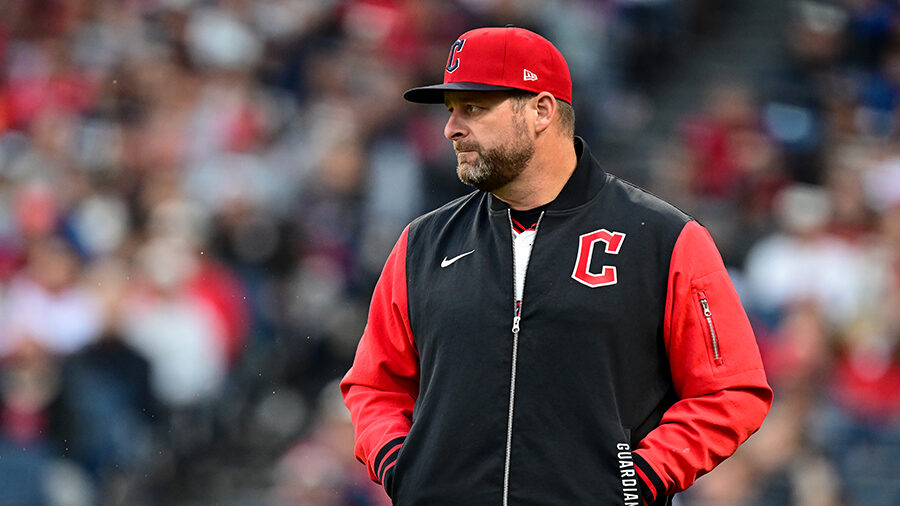
Talk about who will lead the Seattle Mariners has taken an unexpected turn, introducing a possibility that no one seriously considered at the start of the search. Stephen Vogt, who was a bullpen coach in the organization just two years ago and has since been named American League Manager of the Year twice, has emerged as a potential candidate to manage the Mariners. At first glance, the idea seems absurd: the Cleveland Guardians would hardly volunteer to part with a manager who has led the team to three consecutive division titles and two AL Championship Series appearances. But there’s one variable in this equation that can’t be dismissed: family.
Vogt, a former All-Star catcher, retired as a player in 2022 and moved almost immediately into coaching. He spent the 2023 season in Seattle as the bullpen coach, then took over the Guardians the following year and quickly began collecting awards: AL Manager of the Year in 2024, followed by a repeat in 2025. His family lives in the Olympia, Washington, area, where his wife, Alyssa, is from. In the view of MLB.com columnist Anthony Castrovince, that geographic factor makes a hypothetical move less far-fetched than it might seem. Speaking on 92.3 FM The Fan in Cleveland, Castrovince said that, watching Vogt in Cleveland, he can see how difficult it is for him to be away from his loved ones. “His family is in Washington, and from that perspective, it makes sense. Yes, he has a contract, and that complicates everything, but manager trades have happened before. Personally, I wouldn’t rule it out,” the journalist said, while adding that he still considers the scenario unlikely.
It’s the legal side of the question that turns this from fantasy into something worth discussing. Vogt is under contract with Cleveland, so this would not be a free-agent signing but a compensation deal between clubs. There have been very few such precedents in MLB history—just six manager trades. One involved Seattle directly: in 2002, the Mariners sent Lou Piniella and a prospect to Tampa Bay in exchange for outfielder Randy Winn. The most recent case dates to 2012, when the Boston Red Sox bought John Farrell out of his contract with the Toronto Blue Jays. So the mechanism exists, but it’s an exception that requires everyone’s agreement and generally involves financial or player compensation.
MLB Network insider Jon Morosi discussed the situation on Wyman and Bob on Seattle Sports. He said he had called his sources and heard the same answer everywhere: “It’s going to be difficult.” At the same time, he said, no one with real decision-making authority had told him a deal was impossible. “Until the Mariners hire someone else, or Vogt publicly says there’s zero chance and he isn’t going anywhere, we have to at least acknowledge the possibility,” Morosi stressed. In terms of on-field value, he sees a potential acquisition as a huge win for Seattle. Vogt checks nearly every box: he has two Manager of the Year awards, has already worked for the organization and lives in the region. The easiest part of the deal, the insider jokes, is deciding that Vogt is the right candidate. The hard part comes next: whether the Guardians would even discuss letting their manager go, what the compensation might look like and what the terms of his contract allow.
The key argument for a move isn’t about money or ambition, but about the human side of the equation. If Vogt takes the initiative and tells Cleveland’s leadership that he has done everything he can for the club and that the issue is now his family and his desire not to spend long stretches away from his children, the conversation could take a very different turn. Morosi is careful to say he isn’t claiming a deal is likely or that the parties are already negotiating, but he isn’t ruling it out either, agreeing with Castrovince. In effect, both experts describe the situation as “unlikely, but possible,” with the manager’s personal motivation, rather than market logic, playing the decisive role.
For Seattle, that creates a delicate dilemma. The club is continuing its search for a manager, and other names are on the list—notably Rocco Baldelli and Joe Espada, according to local commentators. If the Mariners hire someone before the situation with Vogt becomes clearer, the window will close on its own. If the front office instead decides to wait and test the waters in Cleveland, it risks losing out on other candidates for the faint possibility of landing a manager the Guardians could, in theory, keep. Tellingly, even skeptics don’t consider the scenario dead: it fits Vogt’s background almost perfectly—he’s a West Coast native, a recent Mariners employee and one of the league’s most successful young managers. The only question is whether the two clubs are willing to turn a convenient coincidence into a real deal, and whether the manager himself is prepared to put his family ahead of his contract with a team he has just turned into a dynasty.
A few terms may help put this in context. In baseball, a “manager” is the head coach, responsible for tactics, player rotations and in-game decisions; the Manager of the Year award is given annually in each league, based on a vote by journalists. A manager trade is a rare practice in which a club releases a coach under contract to another team in exchange for compensation: money, a player or a draft pick. A bullpen coach is an assistant responsible for preparing relief pitchers who come in as replacements; for Vogt, the role became a springboard from player to head coach in just one year. Finally, a “prospect” is a young player in a club’s system who has yet to establish himself in the major leagues and is often used as trade currency—as happened with Piniella and Winn in 2002.
Charbonnet Returns: Seahawks Get a Boost on Offense
The Seattle Seahawks have finally received some good news from the injured list. On Thursday, the club announced that running back Zach Charbonnet had been activated from the PUP list (Physically Unable to Perform, for players who are not ready to practice because of injury) and returned to the 53-man roster. The move came at the very last moment—right up against the league’s three-week deadline for a player returning from injury to either rejoin the roster or be moved to injured reserve and miss the rest of the season. The Seahawks used every bit of the time they were allowed, but the important thing is the outcome.
Charbonnet had been out since January, when he tore his ACL in a playoff win over the San Francisco 49ers. The injury ended his involvement in the rest of the team’s run to the Super Bowl title. Now, nearly a year later, one of the team’s most reliable running backs is back in action. The club also made the expected corresponding move: tight end Elijah Arroyo, who injured his shoulder last week against the Denver Broncos, was placed on injured reserve for the second year in a row. Arroyo will now miss at least four weeks, though in theory he could return later in the season if the club opens a return window for him.
Charbonnet’s return is especially important given what has been happening with Seattle’s backfield all season. After Kenneth Walker left for Kansas City as a free agent—a period when players whose contracts have expired can negotiate with any club—the Seahawks were left with a thin group of running backs. It became even thinner when first-round rookie Jadarian Price landed on injured reserve with an injury in early October. As a result, Seattle’s rushing offense became a group effort: veteran Emanuel Wilson gained 303 yards on 87 carries and became the team’s primary workhorse; Price managed 119 yards on 28 carries before his injury; and George Holani, for whom this was the biggest opportunity of his career, added 97 yards on 31 touches. But the three share one worrying trait: each has fumbled at least once, turning the ball over. Charbonnet, by contrast, has never fumbled in his NFL career. That’s valuable right now, because the Seahawks put a premium on ball security.
Before his injury, 25-year-old Charbonnet had the best season of his career: 730 yards and 12 touchdowns, both team highs. So he’s not just “another player in the rotation” returning—he’s the leader of the ground game, capable of taking on the workload and easing some of the pressure on Wilson. Given that Seattle has had to piece together its running game all season, activating Charbonnet may be the club’s most timely roster move of the year. If he gets back into form quickly, the team will have a real chance to turn one of its most problematic positions into one of its biggest strengths down the stretch. The timing of his activation and the details of the roster moves were reported by Field Gulls—a rare case of an injury report that really is good news for Seahawks fans.