
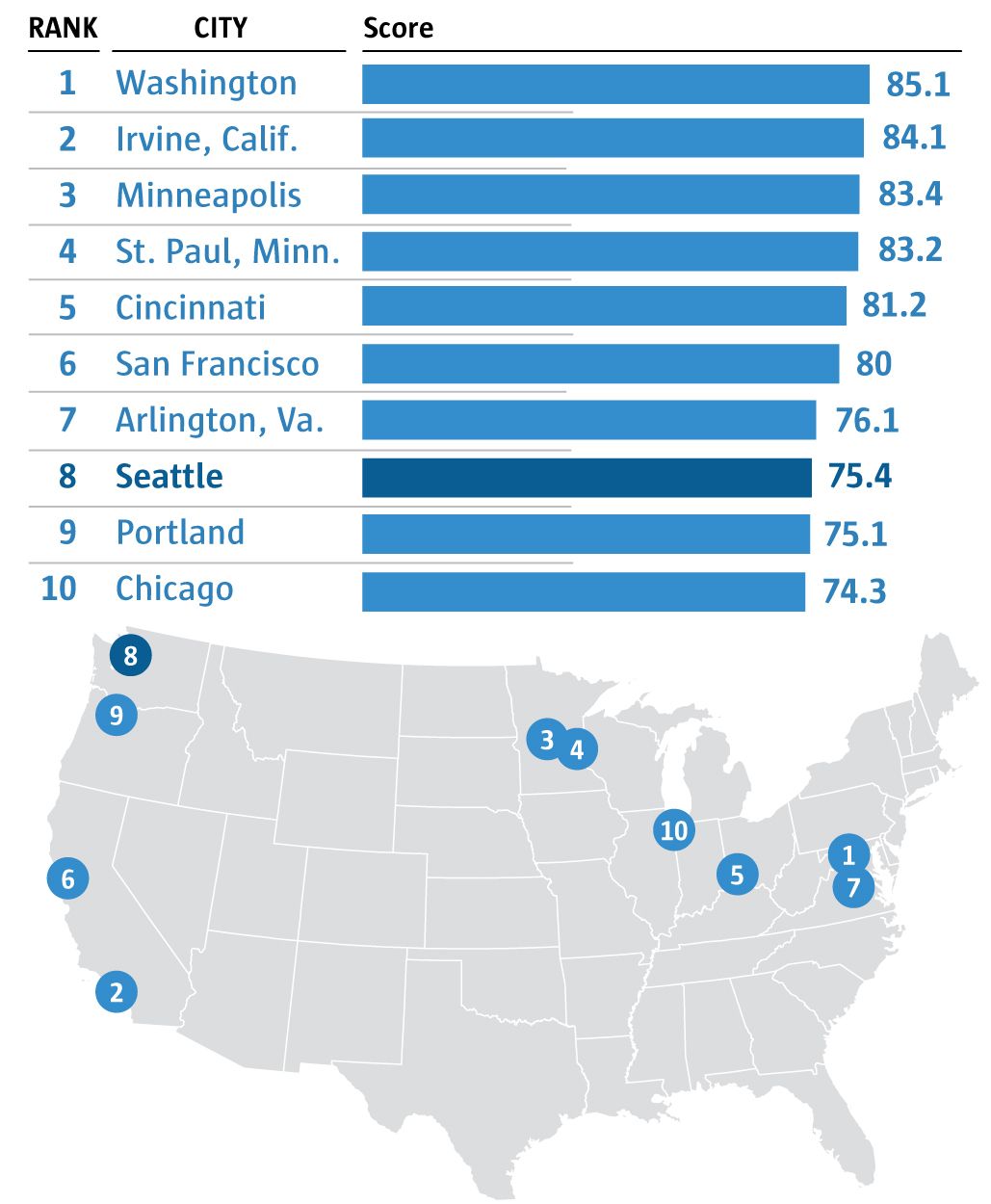
Seattle has ranked among the top ten U.S. cities for park quality for the sixth year in a row. According to ParkScore 2024, the city is eighth among the 100 largest U.S. cities with a score of 75.4 out of 100. For comparison: the leader is Washington, D.C. (85.1), second is Irvine, California (84.1), and Minneapolis rounds out the top three (83.4). The bottom spot went to Durham, North Carolina, with 36 points.
But a high rating doesn’t come cheap. Seattle spends an impressive $440 per resident to maintain its parks — nearly three times the national average ($154). The city outspends solid mid-range cities like Portland ($274) and even some top-ranked cities such as Minneapolis. Only two cities spend more than Seattle: San Francisco ($476) and Washington, D.C. ($449).
Importantly, this spending reflects a conscious choice by residents. Local voters have repeatedly approved multimillion-dollar taxes and bond measures to develop parks. Funds go toward purchasing new green spaces, upgrading recreation centers, and fixing deferred maintenance. A key accessibility measure: 99% of Seattle residents live within a 10-minute walk of a park (the national average is 76%). That accessibility is the result of deliberate early-20th-century planning, when landscape architect Frederick Law Olmsted, creator of New York’s Central Park, designed a parks system that links the city with “green corridors.” By using the hilly terrain and waterways, planners placed parks on slopes with views of the bay and mountains, and walking trails lead directly to Puget Sound beaches. Large forested areas, such as Discovery Park and Seward Park, were preserved by prohibitions on spot development in recreational zones, and investments in “nature bridges” — park paths connecting neighborhoods to forests and the shoreline — allow residents to reach the wild on foot in 10–15 minutes without using a car.
Experts at the Trust for Public Land say every dollar invested in parks returns $3 in economic benefits: from reduced healthcare costs due to physical activity to natural filtration of stormwater. Free swim lessons at Seattle’s beaches and pools are a clear example of that return. But the ParkScore does not account for complex realities, such as the problem of homeless encampments in parks, which affects safety, accessibility, and maintenance. Tent camps create unsanitary conditions — trash, human waste, used needles — and contribute to increased crime, including theft and assaults, making parks unsafe for families and children and forcing closures of sports fields and recreation areas. The city spends millions on cleanup, security, and homeless assistance programs, but quick solutions are difficult due to a shortage of affordable housing amid some of the highest rents in the U.S., a complex bureaucratic relocation system, and legal limits on removing tents without providing alternatives. The mayor’s office also faces public protests demanding both park cleanups and protection of homeless people’s rights.
Seattle has weaknesses too. The average park size is 5.4 acres, matching the national average but trailing more extensive systems. There is a particular shortage of sports fields, basketball courts, and public restrooms. Ironically, Seattle — birthplace of pickleball (invented in 1965 on nearby Bainbridge Island) — ranks near the bottom in courts per capita: just 0.1 per 20,000 residents. While pickleball was born geographically on Bainbridge, its strong association with Seattle stems from the city becoming the epicenter of the sport’s popularization. Locals, including the family of Congressman Joel Pritchard, one of the game’s creators, actively promoted it through public parks, schools, and the YMCA. In the 1970s Seattle was among the first to include pickleball in municipal tournament programs, and today the city is known for more than 400 courts and major annual competitions, becoming a cultural “capital” of the sport’s modernization and broad adoption.
Despite these shortcomings, Seattle residents show a willingness to pay for their green legacy. High taxes and years of investment pay off in unique access to nature — you can reach both saltwater beaches and century-old forests within a 10-minute walk. The question is whether officials can find ways to solve problems no ranking captures: from homelessness to lack of restrooms.
Based on: Seattle parks rank high nationally, but that doesn’t come cheap