In the news: the Seattle Mariners leaned into college talent on the final day of the MLB draft, prospects Cade Anderson and Ryan Sloan shined in the Futures Game, and Seattle Reign is gearing up for a heated NWSL derby against Portland Thorns.
What the Mariners did on the final day of the MLB draft: a focus on major-college players
On the final day of the Major League Baseball (MLB) draft, the Seattle Mariners focused on signing players from major college programs, selecting 15 college players and just one high school graduate. As The Seattle Times reported in a story, 15 of 16 picks on Sunday came from college players, with the sole exception being outfielder Dominik Santarelli, selected in the 18th round. The day before, the Mariners also leaned toward college: in the first four rounds, they drafted third baseman Acey Reese (first round) from Mississippi State, outfielder Jake Brown (second) from LSU, pitcher Nathan Taylor (third) from Cincinnati, and third baseman Trevor Lucas (fourth) from UNC Wilmington. Over two days, the club signed contracts with 19 college players, and most of them came from top-tier programs: LSU, Tennessee, Florida, Georgia, Auburn, the University of Oregon, and Stanford.
Mariners vice president of amateur scouting Scott Hunter explained the approach during a Sunday phone interview: “When we finished day one and got into day two, we looked at the list and said, ‘We really have a great group of college guys.’ You always think that college guys are more mature and at their peak. But the guys we took today have a lot of room to grow—we think we’re picking them at the right point in their career, and they’re going to be even better than they are right now.” Hunter noted that in the past, the Mariners have found success with picks from less prestigious schools—for example, Logan Gilbert (Stetson, 2018), George Kirby (Elon, 2019), and Bryan Woo (Cal Poly, 2021). This year, however, the scouting department intentionally emphasized students from the Southeastern Conference (SEC), which is rich in talent. “I’m not saying that it’s necessarily a requirement to play in the SEC or a big program—that’s not true,” Hunter added. “But this year, SEC guys— I won’t say it was a priority— but we had real information that pulled us toward those guys.”
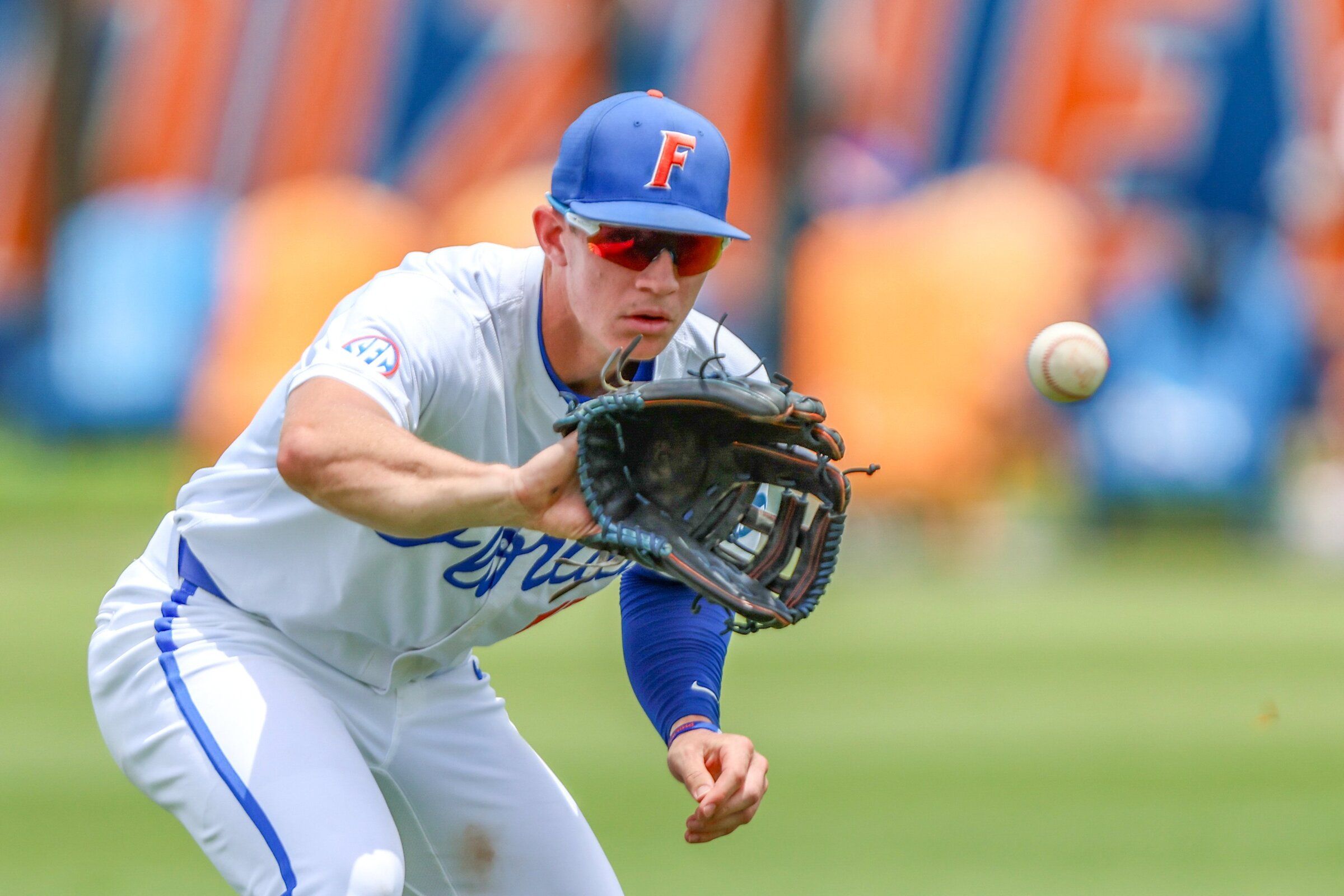
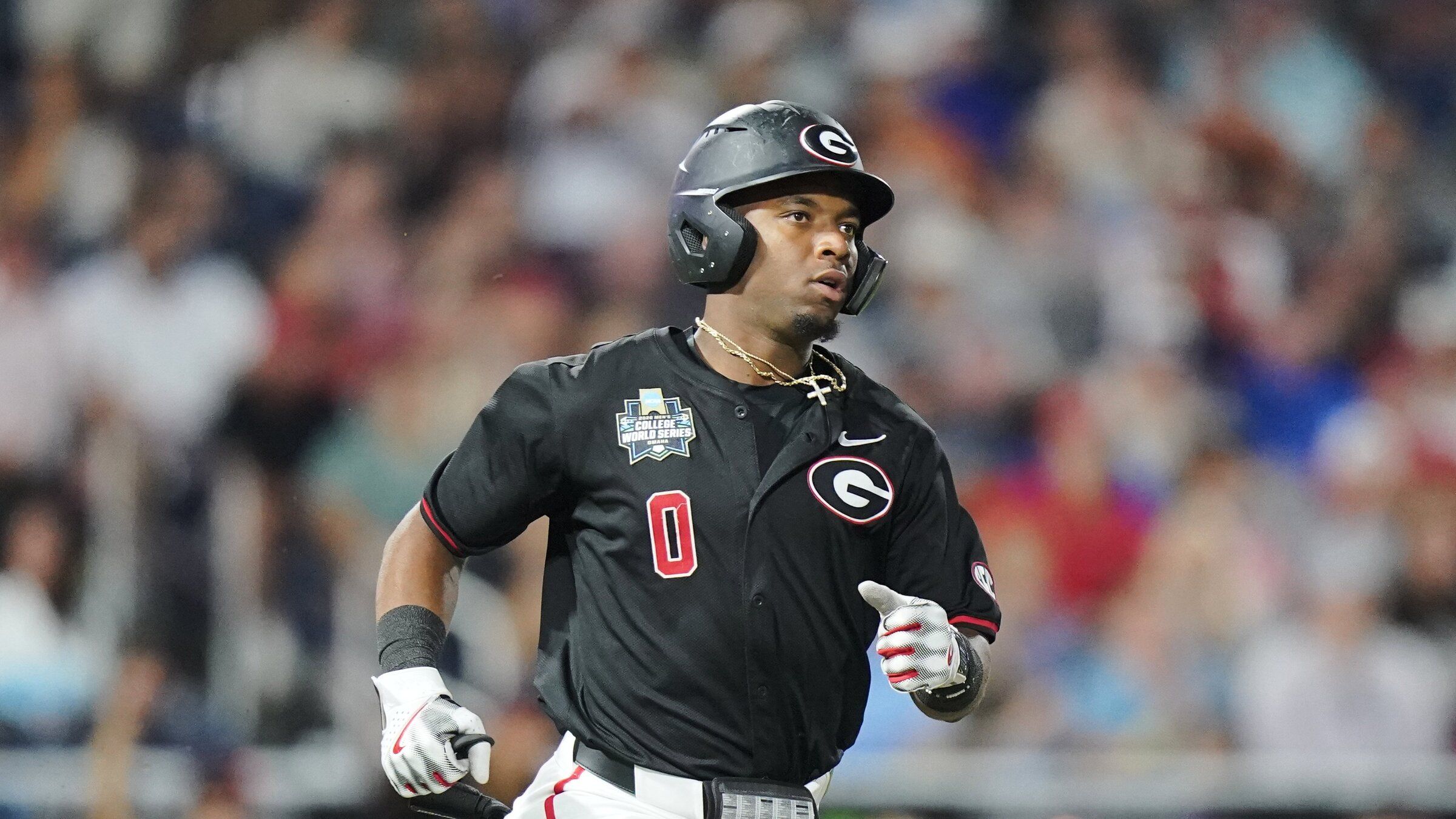
Hunter singled out two names in particular: Florida outfielder Hayden Yost (selected in the fifth round) and Georgia shortstop Ryan Wynn (seventh round). “They weren’t the top guys on their teams at the start of the year,” Hunter explained. “In big SEC programs, everything is tough, like it’s the Major Leagues. If you don’t have a good weekend, you may not make the field the following week. Our scouts stayed true to these guys.” A left-handed pitcher listed at 6-foot-1, Yost put on a standout performance to finish his junior season: all 10 of his home runs came during his last 24 starts for the Gators. He closed the season with a 26.2% batting average, a 36.9% on-base percentage, and a 58.9% slugging percentage (OPS 0.958), playing mostly in left field but also gaining experience in center. “Yost is a perfect example,” Hunter said. “He didn’t start the season in the lineup, got his chance, adjusted his swing, and ended up having a great year. He has ‘plus’ skills, and we think there’s even more ahead.” The term “plus tools” in baseball refers to abilities above average on a scouting scale (20 to 80, with 50 being average and 60 already considered a “plus”). Yost and Wynn are just two examples of eight college position players selected on Sunday; joining them were third baseman Henry Ford (sixth round) from Tennessee, catcher Mason Eckelman (eighth) from Ohio State, second baseman Erik Gene (10th) from Stanford, Minnesota outfielder Charlie Sutherland (15th), Virginia Commonwealth outfielder Michael Petit (19th), and Texas Tech third baseman Connor Shauz (20th).
In addition, the Mariners selected seven college pitchers: right-handers Drew Walen (ninth round) from Auburn, Wyatt Quinn (11th) from the University of Oregon, Connor Marshburn (12th) from UNC Wilmington, Anthony Tretto (13th) from Tarleton State, Chris Diaz (14th) from Florida Gulf Coast, and Matthew Mattis (17th) from North Carolina, along with left-hander Chris Torres (16th) from South Carolina Upstate.
This tilt toward upperclassmen from the strongest conferences is a clear strategy by the Mariners, who are seeking players that are more ready for professional baseball—able to move faster through the farm system. The emphasis on the SEC is explained not only by the quality of the opposition, but also by the fact that, in that conference, players face high competition every day, which scouts believe makes them more mentally resilient. Still, passing on high school players (with one exception) may point to an effort to reduce risks tied to the uncertainty of how young talent develops. At the same time, Hunter stressed that the selected players have “projectability”—a growth potential that isn’t always obvious with college graduates. If at least some of these picks live up to expectations, the Mariners will significantly strengthen their system, especially among position players, where the organization has historically had issues. The next few years will show how accurate the bet was on “mature” newcomers from top programs.
Mariners prospects Anderson and Sloan shine in MLB’s Futures Game
Last Sunday at Citizens Bank Park in Philadelphia, the annual MLB Futures Game was held, featuring the top young talents from every franchise. In the game—played in advance of the main All-Star weekend—Team American won 6-1, and two Mariners prospects, pitchers Cade Anderson and Ryan Sloan, played a major role. Both took the mound and each threw one scoreless inning, allowing no earned runs. As detailed in a report on Seattle Sports, Anderson, who currently ranks fifth among baseball’s best prospects according to MLB Pipeline, entered in the first inning and handled three of four opposing batters, throwing just 10 pitches. He forced Washington Nationals top prospect Eli Willits to fly out, then got a ground out from Colorado’s Roldy Brito, allowed a single from Milwaukee’s Jesus Made—the league’s most exciting prospect—before removing Charlie Condon of the Rockies right away. The second Mariners representative, Ryan Sloan (ranked eighth by MLB Pipeline), entered as a substitute in the fifth inning and also worked a scoreless frame, though he needed 17 pitches. He topped his fastball at 100 mph, got two batters to ground out, then surrendered a double to Dakota Jordan of San Francisco, but finished the inning with a fly out from the same Jesus Made.
Cade Anderson, who is currently 22, was selected by Seattle with the third overall pick in last year’s draft and is making a sensational debut in the organization’s system at the Double-A level with Arkansas. His numbers are truly impressive: across 14 starts, he has a 1.36 ERA, and from May 22 to June 19 he recorded a record streak of 27.2 innings without allowing a run. Over 72.2 innings, Anderson has struck out 108 batters with only 10 walks. He is firmly leading the Texas League in nearly every key category among pitchers: ERA, strikeouts, WHIP (0.69), opponent batting average (0.160), strikeout rate (41.4%), and walk rate (3.8%). That level of dominance is incredible, especially for a young pitcher who transitioned from college baseball. Ryan Sloan, who is only 20, was taken in the second round of the 2024 draft straight out of high school. This season he is also pitching for Arkansas and has an ERA of 4.04 after 14 starts, though his ERA has dropped to 2.07 over his last four outings. Sloan has 77 strikeouts and 12 walks in 62.1 innings, and his best game came on May 30, when he struck out 11 batters in six perfect innings.
For terminology: the Futures Game is an annual exhibition held as part of the MLB All-Star week, where the best prospects from every farm system across all teams compete. MLB Pipeline is the official prospect ranking produced by the league itself. Double-A is the second level below the top league in minor league systems, where more experienced newcomers who are ready to move toward the big leagues play. ERA (earned run average, the number of earned runs allowed per nine innings) and WHIP (walks plus hits per inning) are standard pitcher performance metrics: the lower they are, the better. The successful showing by Anderson and Sloan in such a high-profile event not only confirms their ranking, but also points to the impressive depth of Seattle’s pitching-development pipeline. The organization has a serious opportunity in the coming years to strengthen its starting rotation with these two talents, which could help ensure competitiveness down the line. For now, Mariners fans can closely track their progress in the lower levels, expecting a quick jump to the highest level.
“Organic and the most intense”: Seattle Reign hosts Portland Thorns in a Cascadia derby
On Sunday, July 12, at Lumen Field in Seattle, another round of the NWSL Cascadia derby will take place: the local Seattle Reign will face Portland Thorns. For the home side, this is only the fourth home match of the season, and the club expects support from nearly 14,000 fans—the fourth-largest crowd in its history. The team is going through a rough stretch: just one win in their last eight matches. In an interview with Sounder at Heart, Reign head coach Laura Harvey called the matchup the most “organic” and most hostile in the league, emphasizing that mutual respect comes hand-in-hand with animosity—“that,” she said, “is what a true derby feels like.”
Portland enters the match in strong form: the team sits second in the table, and in their last outing they routed Racing Louisville 4-0. Portland has scored 24 goals in 14 matches—the best mark in the NWSL. The standout players include forward Sophia Wilson (6 goals), returning after maternity leave, and midfielder Olivia Moultrie (5 goals and 5 assists), playing at an MVP level. Seattle, by contrast, is in 11th place with 14 points and just 11 goals scored. After the World Cup break, the team lost to North Carolina (1-3), though they looked decent in the first half.
In head-to-head history, the Thorns hold the advantage: 18 wins for Portland versus 16 for Seattle, with 10 draws. However, Seattle’s last win in Portland occurred in April 2025, and earlier this year, in March, Portland won 2-0 despite two send-offs. Right now, the hosts are dealing with injuries to Shay Holmes and Claudia Dici, and left back Madison Curry is also out—she will be replaced by Ryanne Brown or Phoebe McClernon. There is hope for the return of Jess Fishlock, who has been training with the team following a leg injury.
The key question is whether Seattle’s defense can hold back Portland’s attack, especially in the first half, where the visitors are traditionally strong. Reign needs to improve their finishing: they create chances, but don’t score enough. Harvey noted that after a poor performance against Portland in March, they worked on creating numerical advantages on the flanks, and that effort started to pay off in the previous match against North Carolina. Forward Maddie Dalien hopes the support of the fans will inspire the team to deliver the same kind of forceful performance she saw in the U.S. vs. Australia friendly in Seattle.
Among Portland’s absences are injuries to Raylyn Turner and Morgan Weaver, and the offseason departure of captain Sam Coffey to Manchester City. Still, the return of Sophia Wilson and the progress of Pietra Tordin (4 goals, 6 assists) make the visitors’ attack dangerous. The match will start at 1:00 p.m. Pacific Time and will be broadcast live on ESPN. The atmosphere at Lumen Field is expected to be one of the deciding factors in this high-stakes derby.