Daily roundup: Seattle ranked fourth in Oxford Economics’ global city rankings, a PFF analyst says the Seahawks should not abandon the run after their loss, and police have quietly expanded the surveillance network to 1,320 cameras.
Seattle Among the World’s Top Four Cities: What Lies Behind the Oxford Economics Ranking
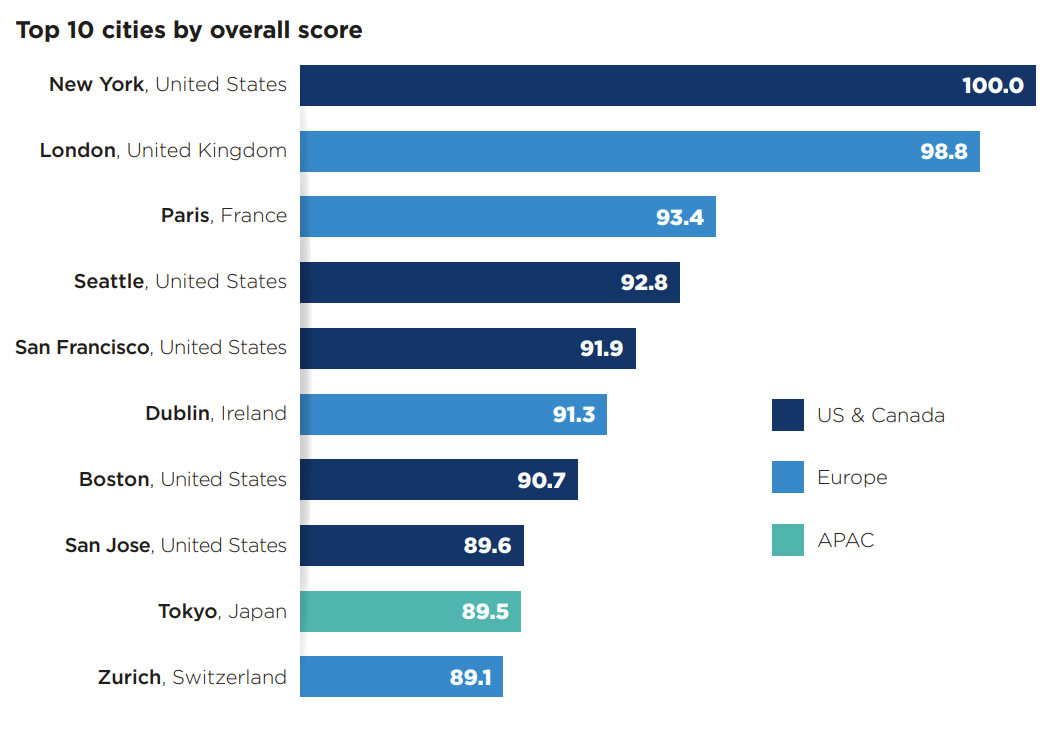
When it comes to economic rankings, it is always interesting to see how the same facts can be interpreted in completely different ways. This week, Oxford Economics published its 2026 Global Cities Index, ranking Seattle fourth in the world behind only New York, London and Paris. The news came amid rather gloomy reports from the local administration warning that the city’s economy is insufficiently diversified and vulnerable to a potential exodus of technology companies. As The Urbanist notes, this contrast is a useful reminder that economic analysis is always relative and depends heavily on which metrics underpin your conclusions.
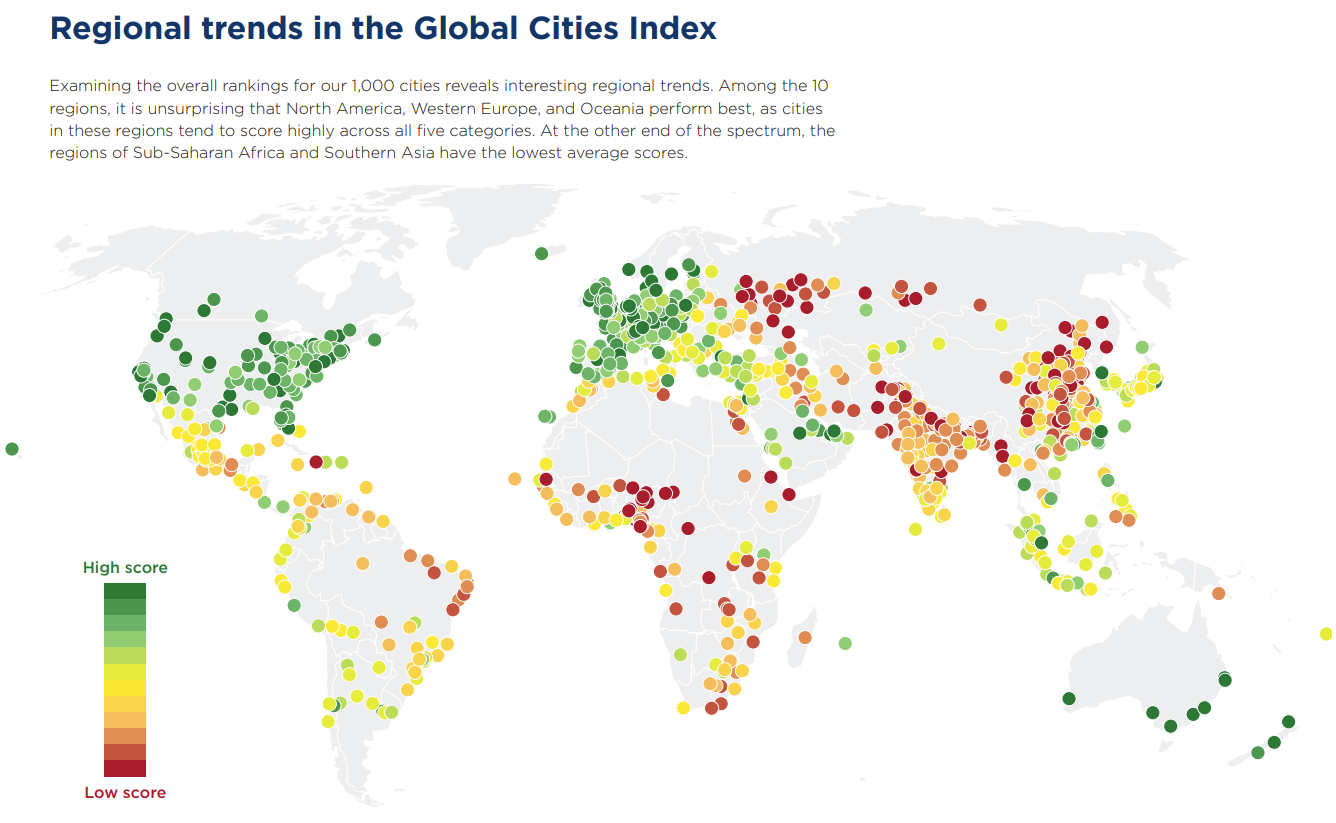
According to the Oxford Economics report, Seattle’s economic strength is driven primarily by its large technology sector, home to Microsoft and Amazon, as well as aerospace giant Boeing and the headquarters of Starbucks, Costco and Nordstrom in retail. This range of major employers gives the city one of the highest GDP-per-capita figures in the index—$152,000, placing it fourth in the world on that measure. Seattle scored 92.8 points, narrowly trailing Paris and finishing one point ahead of San Francisco. The report’s authors emphasize that they evaluate cities in five categories: economics, human capital, quality of life, environment and governance. Although GDP per capita appears to carry the greatest weight, some cities rise in the rankings primarily because of quality-of-life, governance and environmental factors—a path often followed by European cities.
However, there is another side to the story, one the analysts themselves warn about. Very high incomes can be a double-edged sword, driving up housing costs, particularly when supply fails to keep pace with demand. The report states directly that Seattle’s sustained population growth and limited housing supply are making homes and rents increasingly unaffordable, with part of the blame lying with the slow pace of zoning reform and other barriers to development. Moreover, despite ranking fourth in the world for income per capita, the city also continues to have very high income inequality. It is this tension—between reducing inequality and curbing the power of major technology companies without killing the “golden goose” that pays a significant share of the city’s bills—that Mayor Katie Wilson is trying to address. Her campaign was built around housing affordability and the idea that the economic boom should be distributed more evenly among residents. To that end, she launched the Sustainable Seattle Economy Task Force, which is expected to develop a growth and diversification strategy.
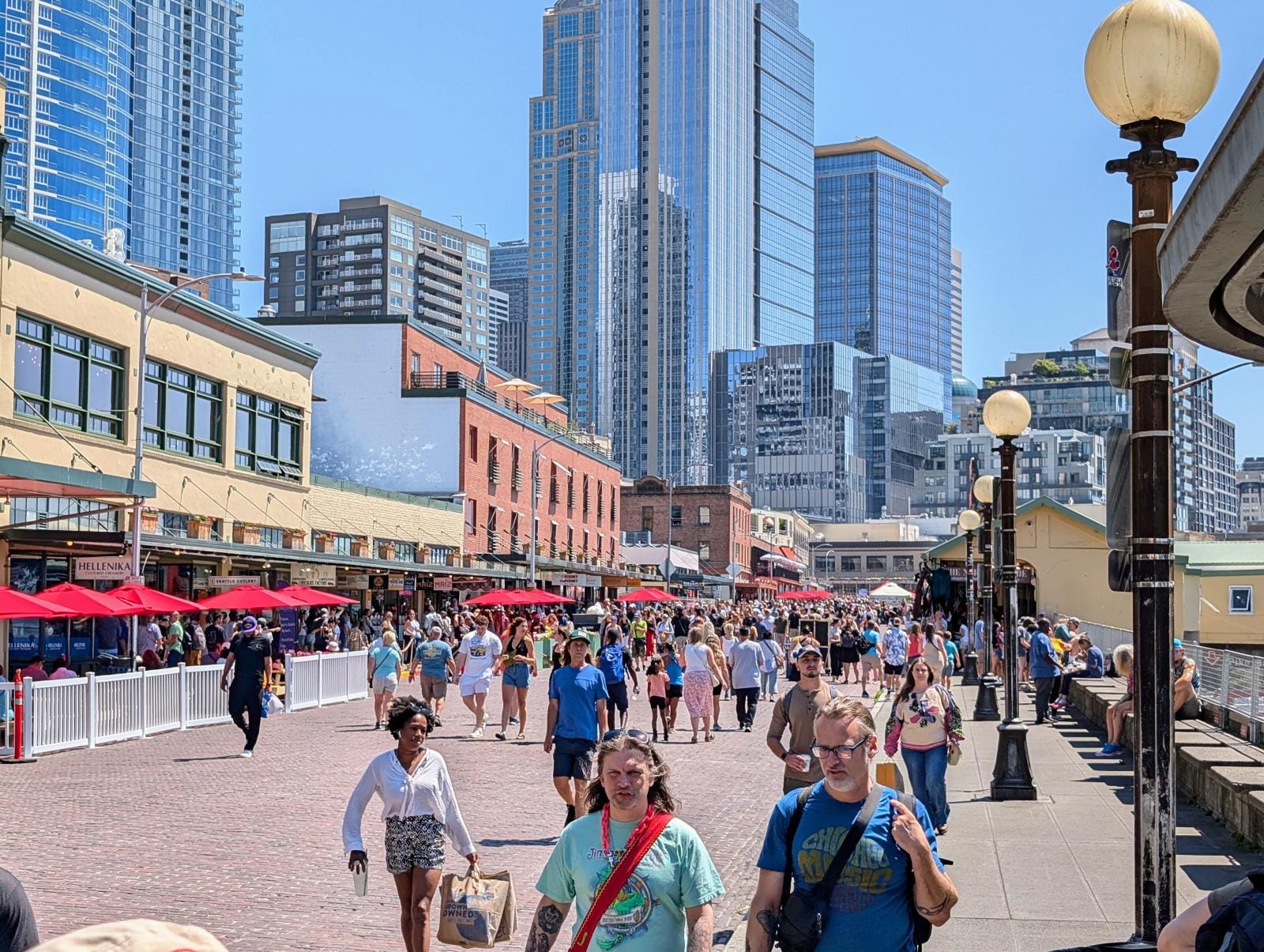
Seattle’s quality of life ranked second in the United States and 22nd in the world, surpassed only by San Jose, California, which, perhaps surprisingly, placed 13th in the global rankings. The city’s quality of life was on full display internationally this summer, when downtown Seattle hosted six matches in the FIFA Men’s World Cup. The city earned a reputation as one of the tournament’s best hosts thanks to its extensive transit system, vibrant pedestrian areas and beautiful waterfront park. By comparison, in the San Francisco Bay Area, fans had to be transported to distant Santa Clara, isolated in the suburbs. Seattle also generally outperforms other American cities on per-capita environmental footprint and climate pollution, thanks in large part to policies limiting suburban sprawl and encouraging housing construction in areas with good transit access. In addition, the Seattle metropolitan area is pursuing arguably the country’s most ambitious plans for expanding its transit network, though not without delays and problems.
Interestingly, the Oxford Economics report did not overlook political realities. The authors note that Trump’s chaotic policies are affecting governance in American cities, while anti-immigration measures could deprive them of the influx of talented immigrants who drive economic development. All U.S. cities in the ranking received only a 198th-place position for governance—an unmistakable jab at the Trump administration. The report particularly highlights the threat that Trumpism poses to Seattle: restrictions on international immigration could slow population growth and reduce the share of foreign-born residents, potentially preventing the city from improving its human-capital ranking in the coming years.
Beyond federal challenges, some governance problems are linked to Seattle’s high turnover among mayors. Wilson will likely try to break the pattern of single-term mayors, but as the publication notes, some representatives of the local mainstream media already seem to be against her, manufacturing negative headlines at the expense of more positive stories that also exist—and the Oxford Economics report is vivid confirmation of that. Overall, the situation resembles a classic dilemma: a city with brilliant economic indicators and a high quality of life faces serious challenges involving inequality, housing affordability and political instability. How Seattle handles these contradictions will determine whether it remains among the world’s elite cities or slips downward, as some local analysts fear.
The Seahawks Should Not Abandon the Run: Why a PFF Analyst Is Calling for Patience
The Seattle Seahawks’ 33–31 loss to the Washington Commanders, who started backup quarterback Marcus Mariota, was one of the biggest surprises of the current NFL season. The main cause of the collapse was not the defense but a completely stalled rushing attack. Seattle gained just 44 yards on 18 attempts, including only 39 yards by its running backs, while 11 of those yards came on the very first play. After that, it was a constant struggle, compounded by a painful fumble from rookie Jadarian Price near his own 20-yard line that gave the Commanders the game’s first points.
At first glance, this is cause for concern: Seattle had rushed for 162 yards the previous week, but through the first three weeks overall, the offense has looked inconsistent. However, Pro Football Focus analyst Trevor Sikkema, a guest on Brock and Salk on Seattle Sports, is urging fans not to panic. In his Seattle Sports interview, he says the team lacked patience—both in its game plan against Washington and in its trust in the young running back.
“Jadarian Price gives you explosive speed, but he’s also a rookie,” Sikkema explained. “He fumbles early in the game. I don’t want to say he fell out of favor, because he still played and they needed him, but they didn’t lean on him as much as I think they could have. And it felt like the game plan moved a little away from getting back to the run.”
The expert’s central point is that the problem is not the scheme or its fundamental principles, but Price’s adjustment to the speed of the NFL. He was the second choice at Notre Dame behind Jeremiyah Love, who is projected to be a top-three pick in the 2026 draft. And although many believe Price would have been the starting running back at almost any other school, Sikkema points out that having fewer attempts and snaps matters. “That practice means a lot,” he emphasized.
The Seahawks’ scheme remains unchanged: the same outside-zone running concepts designed to get backs to the perimeter and give Price room to showcase his explosive ability. Sikkema does not want the team to make any drastic changes. In his view, it is simply a matter of time: the young running back must learn the timing, the force involved, how quickly defenders close space and how tightly he needs to secure the ball to avoid losing it. “It’s always been a matter of time for him, but I don’t think schematically or fundamentally they’re doing anything that really needs to change. He’s just a young running back who, in my opinion, needs time.”
Seattle does have some good news, meanwhile: Zach Charbonnet, who suffered a torn ACL in January, returned to practice Thursday, opening a 21-day window for his return to the roster. That could provide the rushing attack with an additional boost and ease some of the pressure on Price, who, judging by the circumstances, needs not a new plan but a little patience—from both coaches and fans.
Seattle Police Quietly Built a Surveillance Network Five Times Larger Than Reported
When Seattle officials launched a pilot program to install street cameras a year ago, residents were promised a cautious experiment: several dozen devices in three neighborhoods where crime was causing the greatest concern. However, as became clear this week, a much larger surveillance system had grown behind the modest project’s façade—one unknown to the City Council, the mayor and the wider public.
The Seattle Police Department has disclosed the actual figures connected to its Real-Time Crime Center for the first time. It turns out that the center receives live video from 427 cameras. Of those, 308 were installed by police, 96 belong to the Seattle Department of Transportation and another 23 belong to private business owners in the East Precinct whose names have not been disclosed. A further 893 privately owned cameras are registered with the center: analysts can see their locations and contact the owners to request footage during an investigation or after a 911 call.
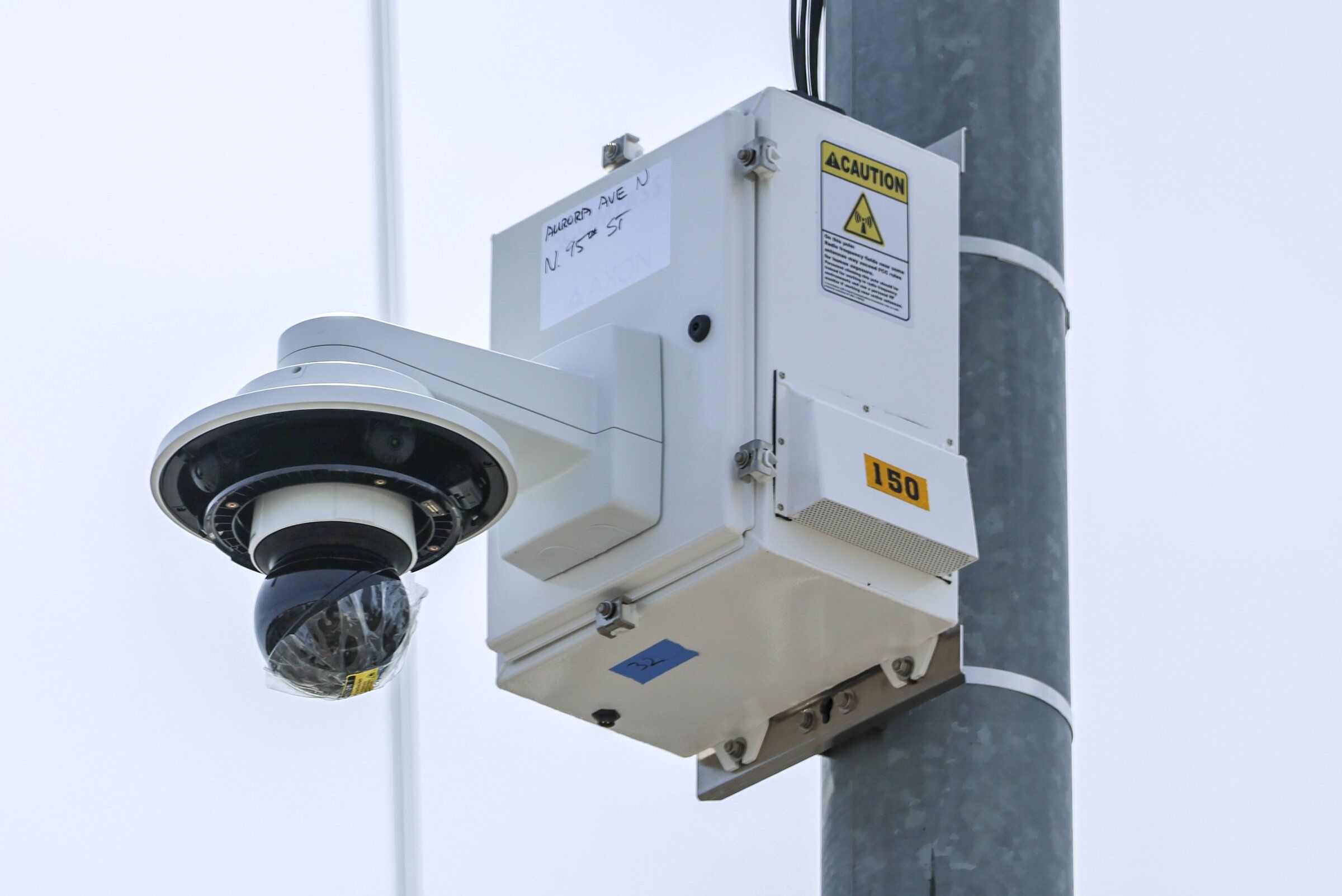
In other words, 1,320 cameras are under police control or within its sphere of influence—far more than has ever been officially acknowledged. Particularly notable is that many of the devices are located outside downtown, Chinatown and Aurora Avenue—the only three areas where police were allowed to install cameras under the pilot program approved in April 2025. The number of devices installed by police themselves—62 locations with five cameras each, or 310 cameras— is five times higher than the previously reported figure of 62 cameras. Each “cabinet” has cameras facing east, north, west and south, plus one pan-tilt-zoom camera. Two cameras on Aurora had to be disabled because of concerns that they captured views of a reproductive-health clinic, said center technical director Nick Zajchowski. The count does not include 105 inactive cameras installed for the FIFA World Cup; Mayor Katie Wilson ordered them shut down after the tournament.
The Connect Seattle program is a separate matter. Launched by police last April without public announcements and apparently without consultation with the City Council, it appears neither on the city’s website nor the police department’s website, including the pages about the Real-Time Crime Center and video surveillance system. References appeared only in local technology and neighborhood blogs. Business owners can voluntarily give the center access to their cameras’ live feeds, allowing analysts to watch them around the clock without additional authorization. To do so, businesses must purchase and install an Axon device that enables artificial intelligence to search footage for objects such as an item of clothing or a vehicle.
A policy adopted in October 2024 allows private cameras to be integrated into the pilot project provided that police submit a plan to the City Council’s Public Safety Committee. Brian Maxey, then the department’s chief operating officer, sent such a plan to Councilmember Bob Kettle on March 31, 2025. The letter said the cameras would help officers identify crime scenes more quickly, locate suspects and victims, and reduce the time needed to gather evidence. The plan included 11 privacy safeguards: filming only public areas, prohibiting facial recognition and limiting access to recordings. To recruit participants, crime-prevention coordinators were supposed to speak before community groups, while patrol officers would hand out cards with a QR code linking to the program’s website. The plan said nothing about publicly announcing the changes or seeking residents’ views on their impact on privacy and civil liberties. Council or mayoral approval was not required for implementation.
A report by the Office of the Inspector General for Public Safety, published Wednesday, concluded that police rules allow the use of private cameras as a “future opportunity” but contain no criteria governing their use. Under the city’s 2017 surveillance ordinance, those criteria should at minimum describe where cameras may be located, how long recordings are retained and what to do if an owner points a camera into a nonpublic space. Inspector Lisa Judge recommended that the department and city officials adopt the necessary policies and procedures. Police agreed and promised to propose them by March 15, 2027. Dan Pitts, an audit supervisor in the inspector general’s office, summarized the problem this way: “Their position right now is to try to integrate cameras from anywhere in the city—private cameras. They need a clearer structure around the organization, criteria and data retention.”
The report was released two days after a separate city auditor’s review found that police had spent months accessing feeds from nonpublic city transportation cameras, even though policy prohibits using them for law-enforcement purposes.
How familiar Mayor Wilson herself is with Connect Seattle remains unclear. Her spokesperson, Alex Hudson, declined an interview but said in a written statement that the issues raised in the audit were “exactly the reason” Wilson requested an assessment of the city’s surveillance practices. “The public should be confident that the government is using and storing surveillance data responsibly and transparently,” Hudson wrote. “Wilson is committed to that in any current or expanded use of cameras.” Police spokesperson Sgt. Patrick Michaud explained why the program had not been announced: officials did not want to advertise Axon. The vendor’s products power the Real-Time Crime Center and devices connected to private cameras. Last year, the city paid Axon nearly $3.5 million. “Advertising a private company is a poor use of city resources,” Michaud said. “People should trust that they can come to Seattle Police Department pages for news, not an advertisement.” He said a page about CCTV and the Real-Time Crime Center exists, but Connect Seattle does not because the first two concern city cameras rather than private property. Kettle acknowledged in an interview that he could have “done more in terms of oversight” and plans to conduct a “status check” on the program with police and the director of public safety to find a balance between security, privacy and civil liberties.
The central concern here is not only the scale but also the system’s architecture: a private camera connected through Axon allows algorithms to search for people based on descriptions of their clothing or vehicles, while access to the live feed remains open around the clock without renewed consent from the owner. The program is growing quietly, without public discussion, while city officials learn the details after the fact—from an audit. This is a classic example of surveillance infrastructure outpacing the rules meant to constrain it.