Seattle is grappling with rising homelessness, while other U.S. cities are finding solutions. Against this backdrop, massive Pride celebrations are underway, alongside a Egypt–Iran football match featuring political protests and rainbow flags.
Seattle becomes an outlier: why the homelessness crisis in the city is only getting worse while the rest of America finds solutions
A new homelessness report for Seattle and King County, published in 2026, paints a grim picture: the situation is not just failing to improve—it is rapidly deteriorating, even as most major cities across the United States show at least modest progress. Two years ago, experts at Brookings Institution already labeled Seattle an “outlier” compared with other major metros in terms of how severe the crisis is. Now that status has become even more pronounced.
If, nationwide, the number of people experiencing homelessness who are living on the streets decreased by 3% in 2025, then in Seattle and King County the total number of homeless people rose by 9%, and the number of people sleeping outdoors climbed by as much as 21%. Over the last four years, the count of people living directly on the streets has jumped by 54%. At the same time, cities such as San Diego, Miami, Honolulu, and San Francisco achieved reductions of 11–22%.
Boston makes the comparison especially stark: there were just 118 people sleeping outside, while in Seattle and King County there were 11,829—about a hundred times more. The share of homeless people with no shelter at all is only 3% in Boston, but 64% in Seattle. One might think Boston’s climate is harsher, motivating people to seek cover. But the key factor is the availability of shelter itself. In Seattle, by contrast, the number of places in shelters has dropped by 689 over the past year (about 11%), which looks like a clear step backward against a backdrop of a growing crisis.
So what’s causing the gap? The article’s author notes that claims about the high cost of living don’t hold up: all six of the cities mentioned where conditions are improving have higher rent than Seattle (which ranks only 15th for the cost of renting). The difference is in approach.
San Francisco—often viewed as a place with an even worse situation—has taken a path in the post-pandemic period that combines toughness with support. There, crisis centers were opened where police or rescue workers can forcibly hold people to begin treatment—so-called “locked beds.” The city also added 470 shelter beds with a sobriety requirement or a special program for treating drug dependence.
To tackle car-squatter encampments, a two-hour parking limit was introduced, but at the same time the city rolled out a program to buy vehicles and rapidly relocate people into subsidized housing, and it provided special permits to those who agreed to receive help from social workers. As a result, the number of large vehicles parked on city streets fell by 42% in a year, and the number of homeless people living in the worst conditions decreased by more than a thousand people—to a low not seen since 2011. In Seattle, over the same period, the number of people in those conditions increased by two thousand.
Even Los Angeles, long a bleak leader in the number of homeless people sleeping outside, has reduced that figure by 17% in recent years. In Seattle, in effect, for an entire decade officials allowed people to set up tents across the city without building a sufficient network of temporary shelters. Instead, the authorities have focused on constructing affordable housing and permanent supportive housing, but new buildings take years to build, while the crisis demands an immediate response.
In response to the report, King County’s Regional Homelessness Authority issued a press release explaining the rise in the crisis by citing the high cost of living. But as the author points out, that isn’t an explanation: San Francisco is more expensive, yet it managed to change the trajectory. Seattle Mayor Jenny Durkan set a goal of opening 1,000 new shelter beds this year, which would be a major shift—but for now it is only a plan. There are also calls to get rid of ineffective management—the authority itself—but the politics seems to be about postponing reforms, commissioning audits and endless meetings.
The author’s conclusion is bleak: Seattle should give up its progressive pride and simply copy the working models from other cities. The only question is whether there will be enough political will to do it. The full text of the original article can be read on The Seattle Times website: Seattle area’s outlier status on homelessness is only getting worse. The core point: the data show not just a failure, but a humanitarian catastrophe, made worse by reluctance to admit the ineffectiveness of current measures and apply the “carrot-and-stick” combinations already tested in other cities.
PrideFest kicks off in Seattle: thousands filled the streets of Capitol Hill
On Saturday, PrideFest—the annual festival—kicked off on Seattle’s Capitol Hill, drawing thousands of people ahead of Sunday’s Pride parade. The major event, the largest in the area, stretched across five blocks—from North Broadway to Cal Anderson Park. Participants of all ages came by light rail, by car, or on foot, filling the surrounding area to celebrate the community. Pride symbols were everywhere—on flags, balloons, and the clothing of attendees.
Organizers stressed that the festival plays a key role as a place for connection, safety, and acceptance. “As a community and our allies, we’re really showing up in full force—letting people know that being queer or trans is not only normal, but something to celebrate,” PrideFest executive director Egan Orion said. He added that the festival is especially important for visitors from outlying areas: “For some, especially in smaller communities, this may be the only two days a year when they can truly be themselves.”
The festival drew a diverse crowd: families, long-time attendees, and allies eager to express support. Nikki Hurley came with her four-year-old son, Indigo. “Indigo has two moms, so he’s part of the queer community, and we decided to come out and celebrate Pride,” she shared. Another attendee named Jim told FOX 13 that in Seattle, everyone can join in: “Seattle is an inclusive and friendly city. You don’t have to be afraid of religious pressure like in the past. There’s a lot more freedom now to be yourself.”
Particular attention was drawn to Cory Larson, who arrived at the festival wearing a T-shirt that read “Free Dad Hugs” (free dad hugs). He emphasized the importance of showing support for those who don’t get it from their own family. As reported in the FOX 13 Seattle article, the event became more than just a celebration—it was a symbol of unity for the LGBTQ+ community and its allies, showing that Seattle remains a safe space for self-expression. Amid ongoing national debates about the rights of queer and transgender people, events like PrideFest take on added significance: they provide visibility, support, and solidarity. Thousands of participants and volunteers demonstrate that the community is not planning to give up ground—instead, it is ready to assert its rights and enjoy life despite any challenges.
Egypt and Iran on the field, protests and rainbow flags beyond it: a report from Seattle
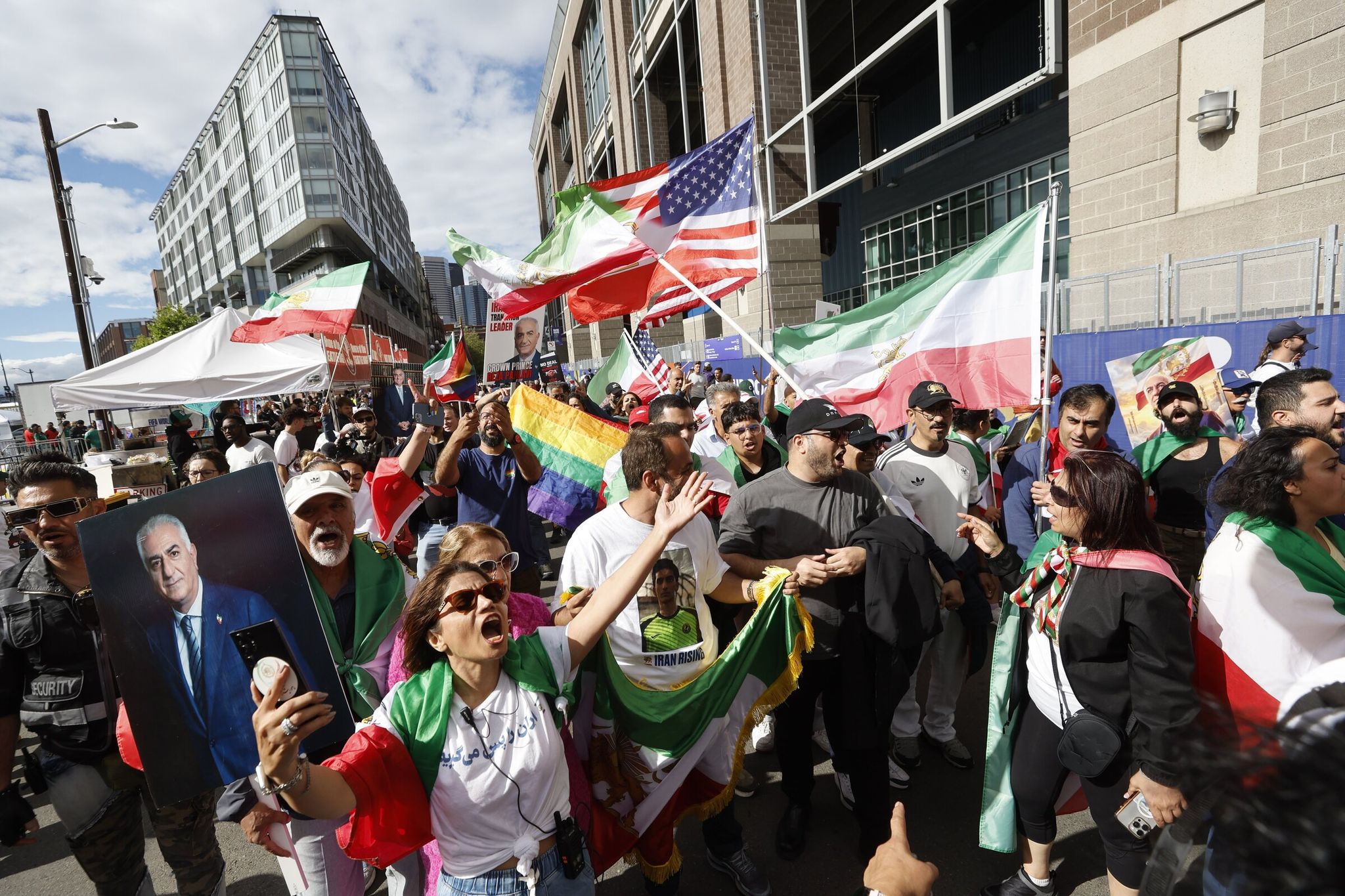
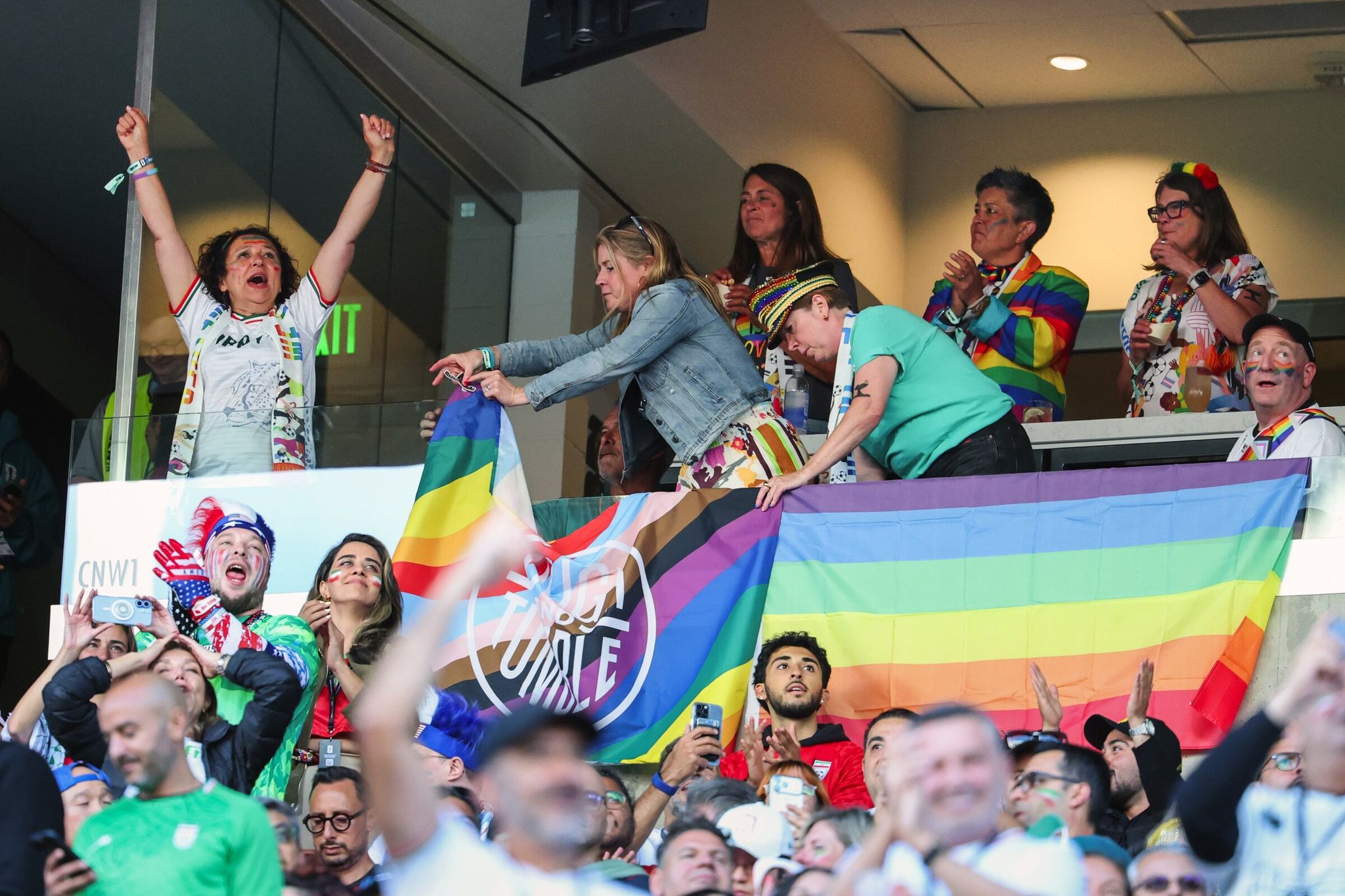
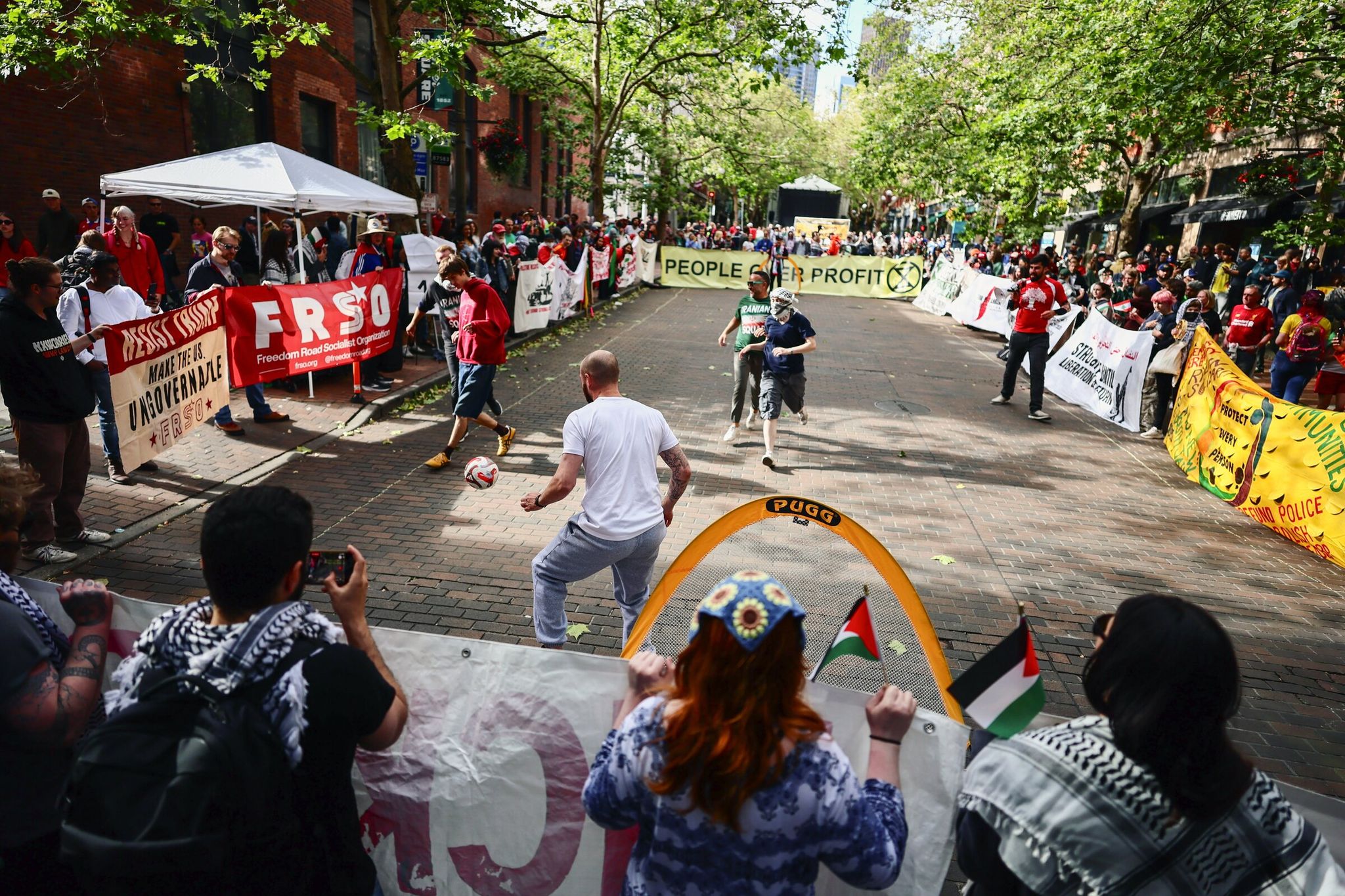
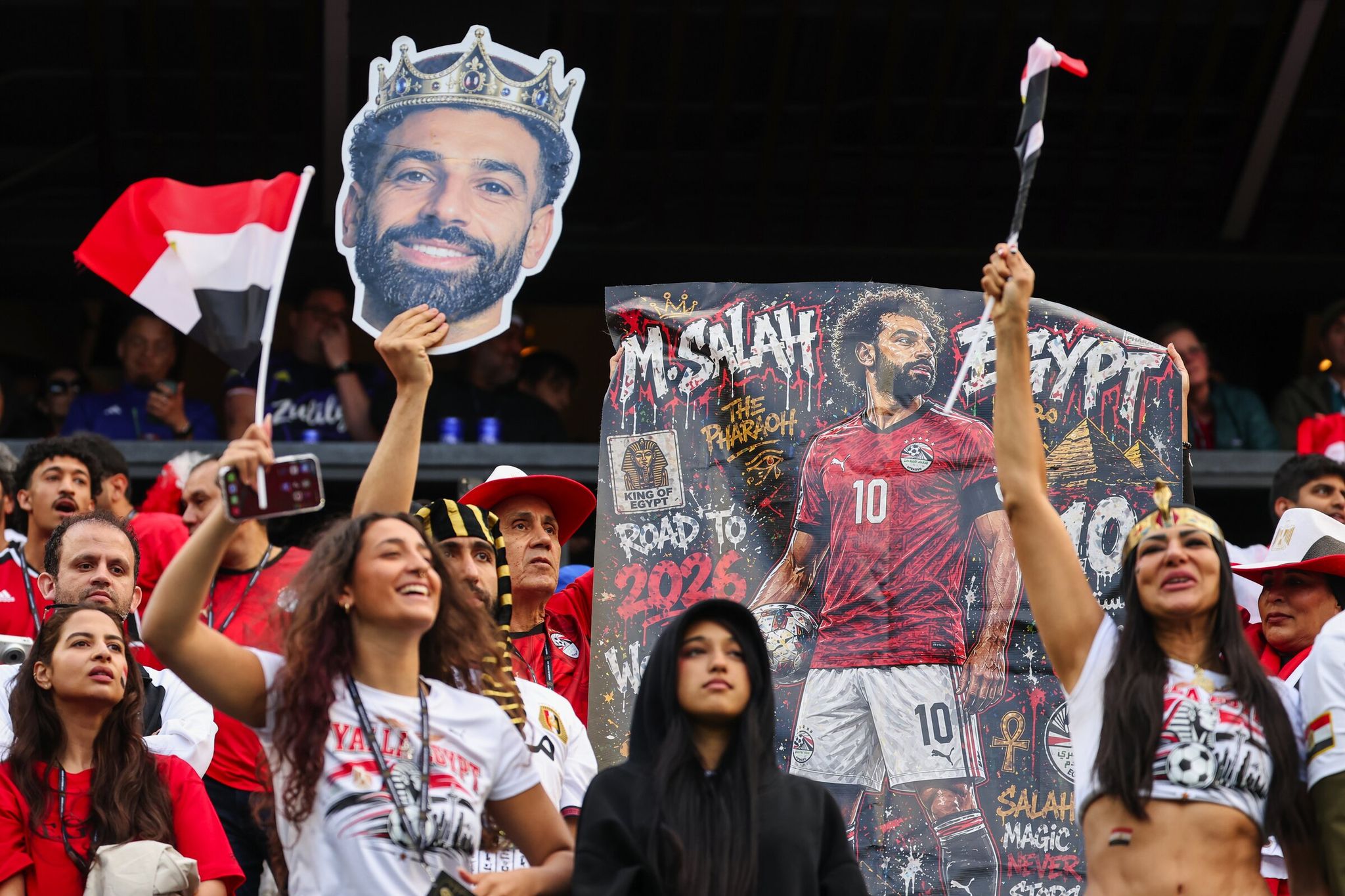
The match between the national teams of Egypt and Iran in Seattle, which ended 1–1, became more than a football event—it was a real intersection of politics, human rights, and sports excitement. Hours before the opening whistle, Seattle Stadium and the surrounding streets turned into an arena for demonstrations of all kinds. Crowds of fans waved national flags of Egypt and Iran, rainbow banners in support of LGBTQ+ people, and flags featuring a lion and sun—an emblem of pre-Islamic Iran used by opponents of the current regime. This eclectic mix became the evening’s leitmotif.
The tournament organizers had announced in advance that the game would be a “Pride Match,” but later it became known that teams from countries where same-sex relationships are criminally punishable would be facing each other on the field. That, along with the escalation of the conflict between the United States, Israel, and Iran, added extra sharpness to the event. In its piece, The Seattle Times describes how fans, protesters, and even passersby blended into a single stream.
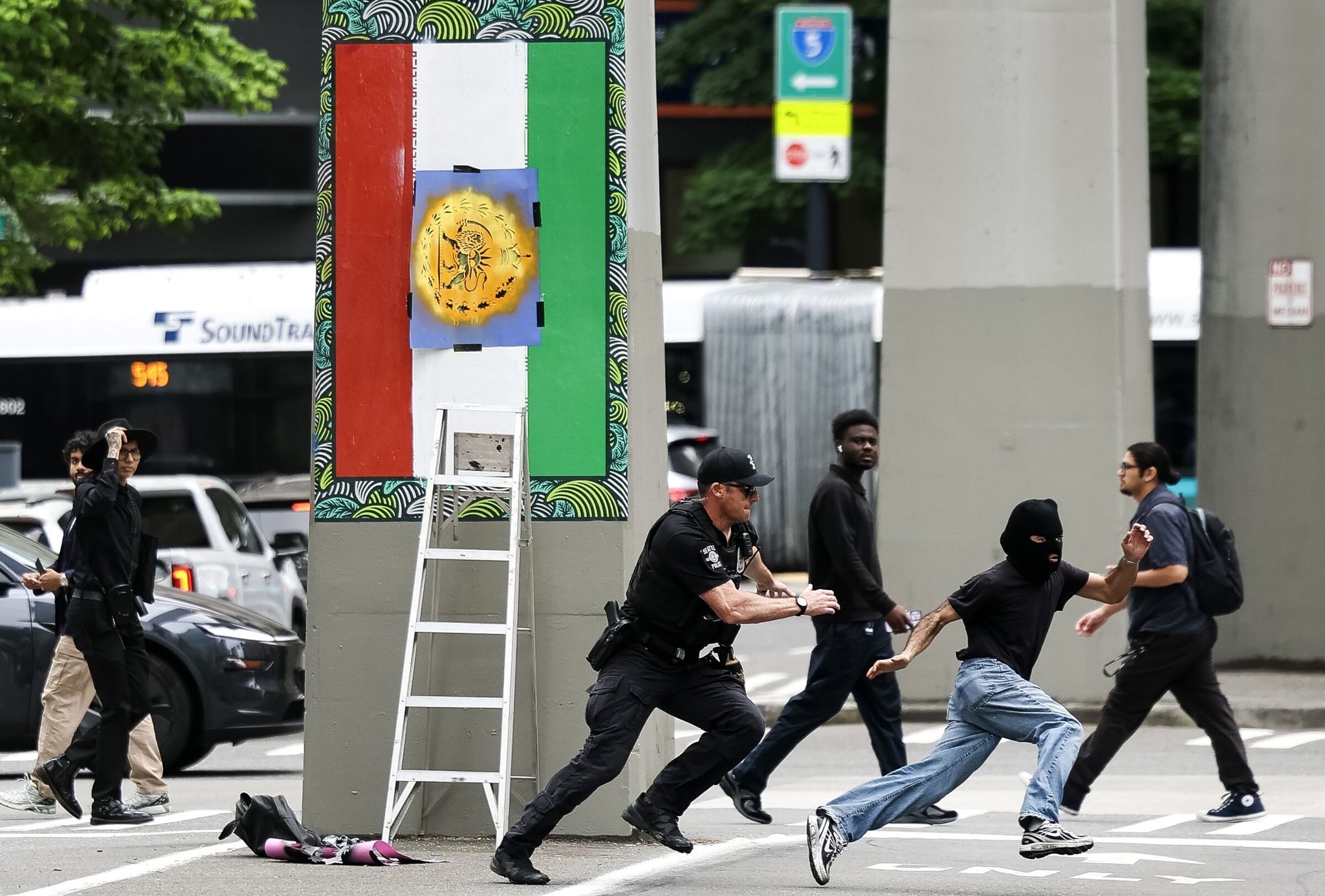
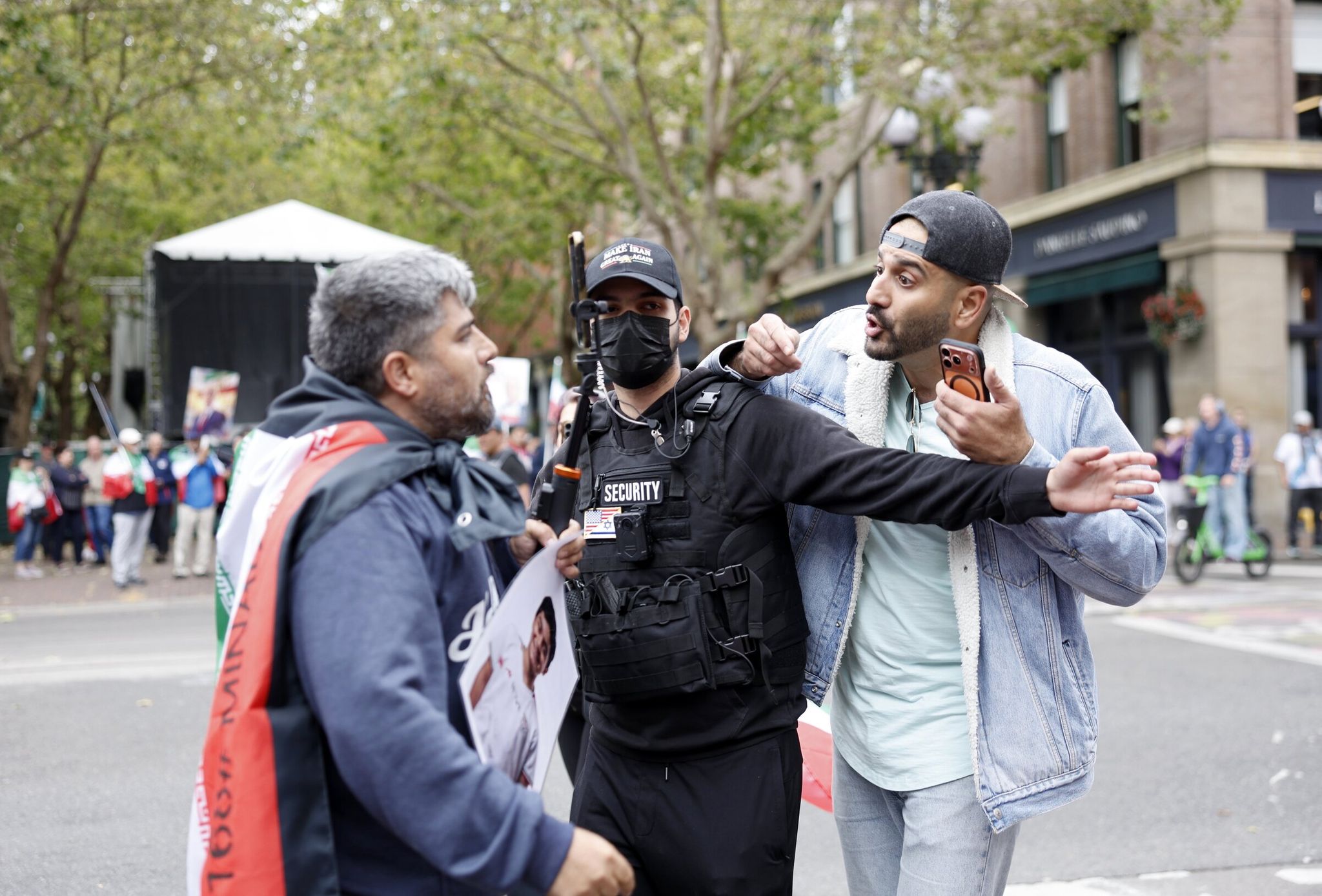
While an intense contest unfolded inside the stadium—Egypt scored quickly, Iran equalized, and then, in the final minutes, Iran scored what would have been a winning goal, only for it to be ruled out for offside—outside, passions were running just as high. A group of Iranians and Iranian Americans opposed to the Islamic regime chanted slogans calling for the Islamic Republic to be removed from participation in the tournament. They called the Iranian team “the regime team” and urged a return of the heir prince Reza Pahlavi. Their lion-and-sun flags were banned inside the stadium; FIFA volunteers demanded they be taken down, prompting pushback.
Many members of the Iranian diaspora found themselves in a difficult position. For some, the team represented oppression; for others, it was a symbol of national pride not directly tied to the government. “Saying this is the Islamic Revolutionary Guard Corps team is giving the IRGC too much credit,” one fan said. “It has always been a national team that wins people’s hearts. They represent us.”
At the same time, openly gay Iranian-American Sam, who traveled from San Francisco specifically for the Pride Match, stressed the importance of his presence: “This is a historic match. I’m grateful for the freedom in the United States, which gave me a new home where I can express myself freely.”
Protesters chanting “Shame on FIFA” and “The Islamic regime must go” exchanged tense back-and-forth with people carrying the official Iranian flag or Palestinian banners. In several blocks, there was also a separate demonstration demanding that Israel be removed from FIFA competitions. However, despite all the political heat, most viewers, the outlet notes, were focused on football. Egyptian immigrants from Portland tried to avoid politics, simply wanting their team to win. Some came to back the “dark horse”—Iran—like a fan from Mexico City for whom this match was his first World Cup tournament game.
Interestingly, Pride-related events took place without major incidents, despite objections from Egyptian and Iranian officials. A couple from Colorado who ended up at the match by chance painted both countries’ flags on their cheeks and carried rainbow flags, saying everyone was in “great spirits.” The match itself showed that even amid the sharpest geopolitical disagreements, soccer remains a universal language capable of bringing people together—while still being unable to completely avoid reflecting the real conflicts that divide them.