In the roundup: debates over universal school meals in Seattle, the departure of legendary commentator Kevin Calabro from the Portland Trail Blazers, and a federal charge against a passenger accused of harassment on a Delta flight to Seattle.
A delay to Seattle’s free meals program: a fight for equity or a political compromise?
Mayor of Seattle’s plan to make free meals for all students in public schools a reality by fall 2026 may face a delay of a full year. The reason is an amendment proposed by Seattle City Council President Joy Hollingsworth, aimed at making sure those who need it most are fed first. Rather than feeding everyone indiscriminately, the amendment’s backers want to concentrate resources on children from low-income families—providing them with grocery cards not only during the school year, but also during school breaks. While there is already a summer vacation program, winter, spring, and February breaks remain unsupported. This gap is what the initiative is meant to fill.
Hollingsworth, who is also vice chair of the committee on libraries, education, and neighbourhoods, acknowledges that she is being forced into a false choice: universal free meals or targeted help for the poorest. “It makes me upset when two things are put against each other,” she said. In April, Mayor Wilson unveiled her spending plan for the “Families, Education, Preschool, and Promise Levy” (FEPP), which included launching universal free breakfast and lunch starting in fall 2026. At the time, the mayor emphasized that it would give children a better start, help teachers by creating a calmer environment, and ease families’ grocery bills. “K-12 education is free and universal, and the basic food necessary for learning will also become free and universal,” she said, according to KUOW.
But Hollingsworth says that approach is unfair. Based on her figures, 51 of Seattle’s 105 schools already provide free lunches—mainly the so-called Title I schools, which are funded through the federal government to support low-income students. Most of those schools are located in the city’s southeast, where food insecurity is highest. “Rolling out universal meals would benefit other neighborhoods more than the ones where the real need exists,” she explains. So instead of spending money on everyone, she proposes directing $500,000 per year to grocery cards for the most vulnerable families, with a full launch of the universal program moved to 2027.
The savings from delaying universal meals—as well as from a pilot program for early childhood education vouchers—would total about $4 million, and those funds would go to the cards. Hollingsworth and her co-author, Councilmember Dionne Foster, are also concerned about the program’s long-term sustainability. Under the mayor’s current plan, after two years of city funding, the program would shift to state money coming from the so-called “millionaires tax.” But if voters or courts overturn that tax, the funding source would disappear. That uncertainty is also pushing the council toward a more cautious approach.
So the debate isn’t about whether free meals should exist—both sides support them. The question is how and when to roll them out. Hollingsworth admits she has found herself “in a fire between two sides”: conservatives criticize her for “highlighting the racial issue,” while progressives accuse her of “taking food away from children and attacking the mayor.” Still, she insists that she is trying to thread “a very, very fine needle”—finding a balance between universality and equity. A vote on the amendment is scheduled for Wednesday at 9:30 a.m. If it passes, thousands of families will receive support this year, while universal meals will be delayed by one year.
Kevin Calabro leaves the Portland Trail Blazers: the legendary commentator is back on the job market
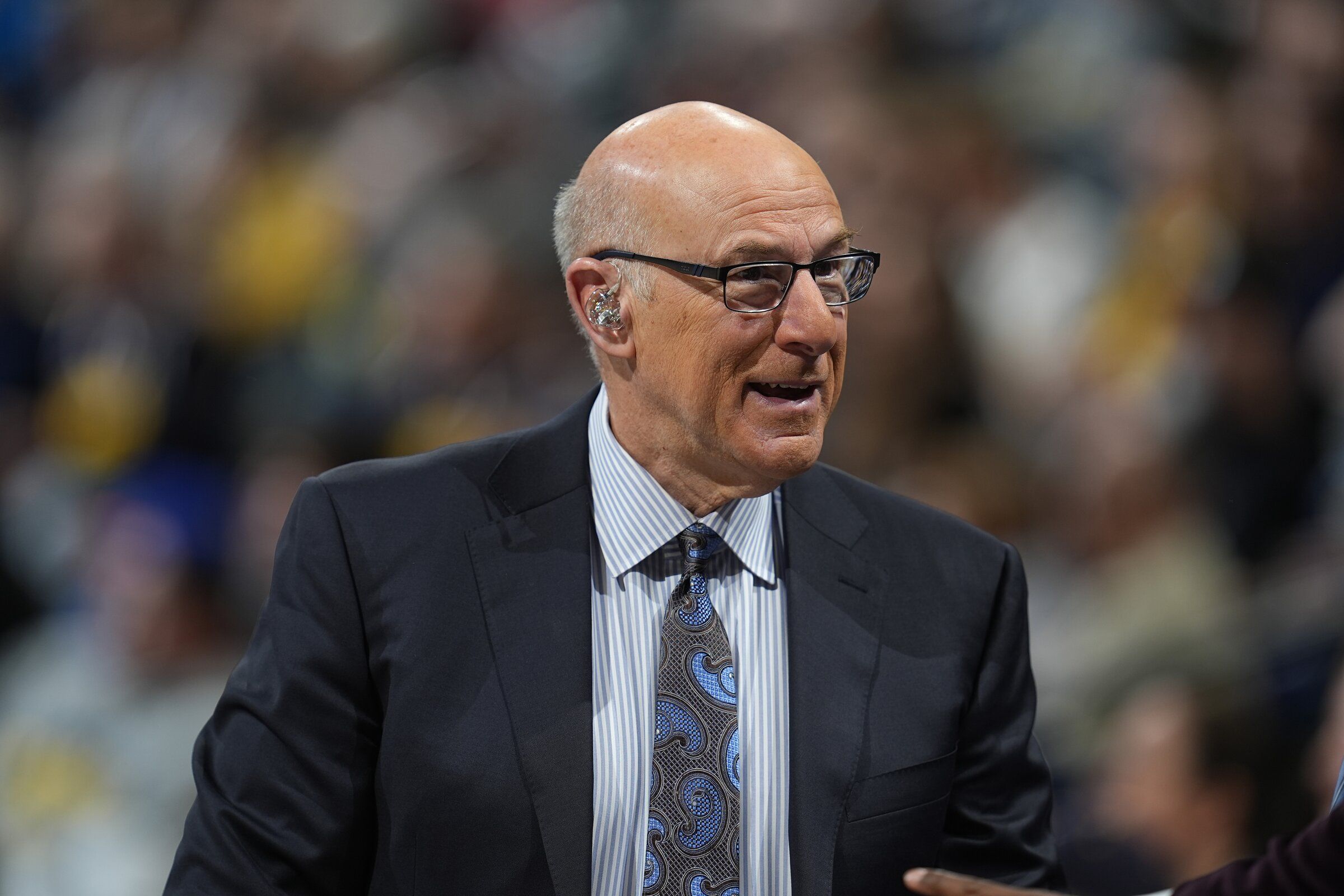
Kevin Calabro—the voice of the “Seattle SuperSonics” for twenty years and one of the most recognizable basketball commentators in the United States—has again found himself on the market. His contract with the Portland Trail Blazers ended at the end of June, and negotiations for a new deal, as he put it himself, stalled over offers he called “substandard.” The development not only brings an end to his decade-long partnership with the Oregon club, but also revives questions about whether Calabro could return to Seattle—where an NBA team revival has been discussed for years.
Kevin Calabro’s story is tightly intertwined with basketball in the U.S. Northwest. After starting his career in Seattle back in 1988 with the legendary Bob Blackburn, he became the longtime commentator for the SuperSonics in 1992. His voice accompanied the team’s peak era in the 1990s, including reaching the NBA Finals in 1996, and later a painful farewell to the city when the franchise moved to Oklahoma City after the 2007–2008 season. After that, Calabro worked for national outlets including TNT, NBA TV, and ESPN Radio, and in 2016 he joined the Trail Blazers as the lead voice for televised broadcasts. Notably, he also called the first season of the Seattle Sounders’ soccer club after the team entered MLS. Now at age 70, Calabro is once again free—and it comes amid serious changes in Portland.
As reported by The Seattle Times, the Trail Blazers’ summer has been turbulent. The club has changed owners: Tom Dandan, known for investments in the Carolina Hurricanes hockey team, is the new owner. Almost immediately after the purchase, the organization began major cost cuts. Calabro isn’t the only one leaving the team’s media lineup: multi-year analyst Michael Horton, reporter Jamie Hudson, host Neal Everett, and statistician Tom Habberstro all had their contracts not renewed. In addition, the Trail Blazers reportedly clashed with Portland city officials over funding plans for a renovation of the Moda Center. Taken together, it suggests a push toward austerity—and the departure of a marquee commentator like Calabro is just one symptom.
In an interview with The Oregonian, Calabro himself described the club’s offers as “subprime” (subprime)—a term usually used in finance to describe higher-risk credit, but here used metaphorically to indicate the contract terms were clearly below his expectations and market value. At the same time, the commentator stressed that he plans to keep working. For SuperSonics fans, the news is especially bittersweet: for years, Seattle has been talking about bringing the NBA back, and Calabro has repeatedly said he would be interested in being the team’s voice again. However, even if the League approves an expansion this year, the team’s first season would not begin until 2028–2029 at the earliest. So any reunion between Calabro and the Sonics is, for now, a distant prospect.
The key takeaway from this situation is not only a loss for the Trail Blazers of one of the league’s most respected voices, but also a signal of deep changes within the club following the ownership shift. Kevin Calabro remains a figure who symbolizes an entire era of basketball in the region, and his departure from Portland once again makes him a free agent—in the literal and the figurative sense. Whether he waits for a call from Seattle or finds a new home in another city or on national television remains to be seen, but his name will remain part of NBA history forever.
Why a Delta passenger had to climb over a stranger—and then the man admitted to harassment
At the end of June, a Delta Air Lines flight from Hawaii to Seattle saw an incident that led to a federal charge against a 27-year-old man from Kansas. Dominic Cortez Nichols is accused of committing violent acts of a sexual nature after, according to investigators, he touched a fellow passenger and masturbated twice on board the airplane. Details laid out in a federal court complaint from the Western District of Washington shed light on how quickly a routine flight can turn into a nightmare for passengers.
According to court documents, the incident occurred on June 23 on Delta Flight 485, which flew nonstop from Kona, Hawaii to Seattle-Tacoma International Airport. The 27-year-old victim, after boarding, discovered that her window seat (28F) was already occupied by Nichols. He moved to the middle seat, but, as stated in the complaint, did not even stand up to let her pass to the window—the woman had to literally climb over him, and another passenger witnessed the scene. Later, after the victim fell asleep—about half an hour after Nichols asked whether Seattle was soon—prosecutors allege that, without consent, he placed his hand between her arms, touching the inside of her thigh and the lower part of her pelvis. The woman immediately reported it to a flight attendant, and she was moved to a different seat.
Notably, when Nichols was questioned, he did not deny what happened. As described in the complaint, he admitted that he wanted the window seat, and that he began touching the passenger because he hoped she would leave—so he could masturbate alone. During the conversation with investigators, the man also said he became aroused while watching a movie onboard, and then, after covering himself with a blanket, demonstrated the movements he was making while touching the woman. He also admitted masturbating twice: first while the victim was still seated next to him, and then again after she had been moved. After the plane landed, flight attendants held Nichols on board until police arrived. His Kansas driver’s license was taken.
It is important to emphasize that at this stage all allegations are only the prosecution’s account, and under U.S. law, Dominic Cortez Nichols is presumed innocent unless and until his guilt is proven in court. Still, the fact that the federal charge has been filed—violent acts of a sexual nature on an air carrier being a federal crime—points to the seriousness of the case. Unfortunately, incidents like this are not isolated, and airlines increasingly find themselves needing to protect passengers from aggressive behavior on board. In this case, the crew’s quick actions (immediate seat reassignment for the victim and then holding the suspect onboard until arrival) and the accused man’s own admission were key factors in bringing charges. The full text of the story is available on KOMO.