News from Seattle: wildfires have become a round-the-clock threat due to climate change, a historic parking garage is closed after an unsolved homicide, and an attack on a runner has raised questions about city safety.
Fire anomaly: why wildfires no longer "sleep" at night
In recent years scientists and firefighters have observed a troubling trend: wildfires that traditionally calmed with nightfall are increasingly burning around the clock. This phenomenon, covered in detail in the KIRO 7 News Seattle report, is radically changing firefighting tactics and represents a new danger directly linked to climate change.
Night used to be a natural ally for firefighters. As the sun set, temperatures dropped and humidity rose, producing the so-called "nighttime lull" — fires would lose intensity, their spread would slow or even stop. This gave crews a crucial window to strengthen firelines, conduct controlled burns and rest before the next day. Now that pattern is breaking. Fires are increasingly active after dark, continuing to spread rapidly and pushing responders to their limits.
The key cause of this anomaly is climate change. Global warming is raising average nighttime temperatures, and prolonged droughts dry soils and vegetation into highly flammable fuel. When nighttime humidity remains abnormally low and temperatures stay high, fires have no reason to “sleep.” In some regions, “heat domes” — high-pressure systems that trap hot air — further suppress nighttime cooling. This turns night from a period of relative calm into a continuation of the dangerous daytime nightmare, leaving firefighters with no time to rest or regroup.
The consequences are severe. First, daily fire spread and total burned area increase significantly. Second, a round-the-clock threat endangers not only forests and infrastructure but also the lives of firefighters forced to work without respite. Third, suppression strategies change: traditional methods that relied on nighttime lull become less effective, requiring new approaches and resources. This phenomenon is a stark and dangerous example of how climate change is already transforming natural cycles and creating unpredictable risks for ecosystems and public safety worldwide, including the region covered by KIRO 7 News Seattle.
Legendary "Sinking Ship" parking garage in Seattle closed after unsolved homicide
The historic and notorious "Sinking Ship" parking garage in downtown Seattle has suddenly closed to the public, leaving local businesses perplexed and without a convenient place for customers to park. The decision followed a series of violent incidents, culminating in an unsolved homicide. The garage owner has fenced off the multi-level structure, leaving residents to wonder about the future of this architectural landmark.
The garage, nicknamed for its distinctive sloping design, long stood as a divisive symbol of the neighborhood. On one hand, it provided much-needed parking in the busy city center. On the other, it had increasingly become a crime hotspot. As FOX 13 Seattle reports, the last straw was a shooting that left three people wounded and one dead. That homicide remains unsolved, and the Seattle Police Department continues to investigate. The garage owner filed a form with police to consider unauthorized people trespassers, effectively allowing them to eject people from the property, but the structure’s final fate is unclear — perimeter signs indicate only a "temporary" closure.
For local businesses this uncertainty translates into real financial losses. Maria Espinosa, who works at a salon across from the garage, notes that despite safety concerns about the lower levels, the garage was a vital resource for the area. Salon clients, especially those running late, relied on that convenient spot. Now, Espinosa says they’ve had to send mass notices to clients warning of the parking unavailability, which causes frustration and inconvenience. Sunit Sharma, the head chef at a nearby restaurant, shares those worries: street parking isn’t always available or safe, and the lack of the garage directly affects customer turnout. Both business owners would like to see the garage reopen, but obviously with safety assurances.
Not everyone regrets the closure. Some residents, like Jeff Paul who works nearby, see it as an opportunity for positive change. He argues that such garages “waste space” in the city core and that repurposing them for housing or new businesses could draw more pedestrians and enliven the area, creating a more pleasant urban environment. This view reflects broader debates about the future of urban spaces, especially amid safety concerns. The closure of the "Sinking Ship" is not just another crime story on the map. It’s a case study in how violence and poor management of public space can hit small businesses, how historic structures can become liabilities, and what trade-offs between convenience, safety and urban development must be negotiated. While the garage owners remain silent and police hunt for the killer, local entrepreneurs and residents are left in limbo, unsure whether the garage will reopen as a convenient parking spot or fade into history, as its name implies.
Attack on Seattle runner: viral safety warning about popular waterfront trail
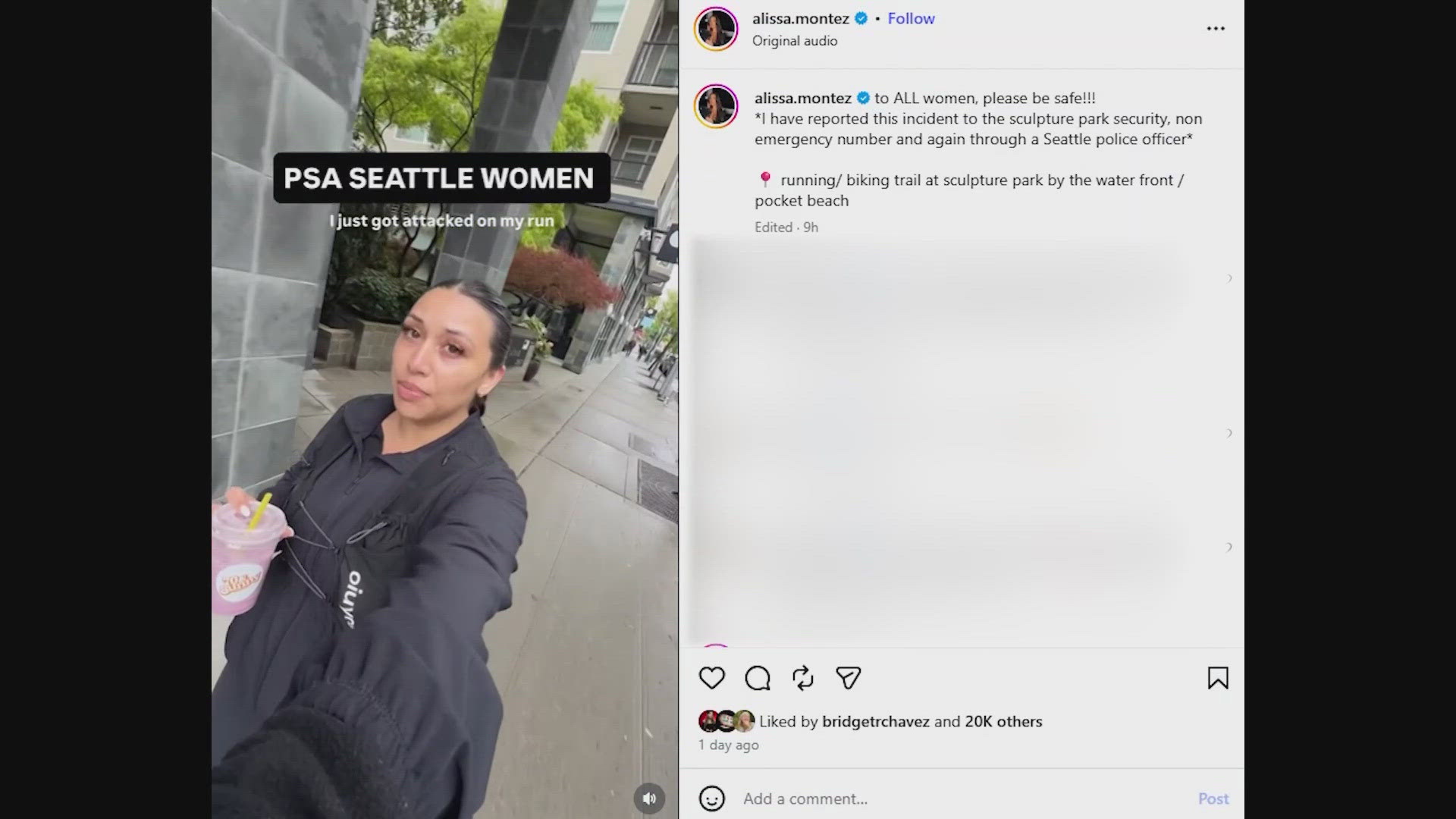
In Seattle, an alarming incident on the busy waterfront in the Belltown neighborhood has once again raised urgent questions about women’s safety in public spaces. The story of a young woman attacked in broad daylight quickly went viral on social media, prompting an outpouring of responses and personal accounts from other city residents.
Twenty-nine-year-old Alyssa Montes, who has 86,000 followers on Instagram, said she was assaulted during a morning run on Wednesday at about 11 a.m. on the popular pedestrian trail by the Olympic Sculpture Park. She said a man she initially thought was a construction worker grabbed her arm and clothing and tried to pull her off the trail. "He grabbed me, yanked my arm and my clothing and tried to drag me away," Montes said in a video message she quickly posted online to warn others. She managed to break free, and the attacker fled into the bushes. Despite the shock, Alyssa showed determination and refused to let the incident derail her plans: "I finished the whole run. I ran my 5k. I remember thinking to myself: this loser is not going to ruin my run."
Her post, in which she urged women to stay vigilant and carry self-defense tools like pepper spray or a stun gun, received about 20,000 likes and nearly a thousand comments, showing how strongly the issue resonated. "It’s just a reminder that if you’re a woman, we’re not safe anywhere, but we’re definitely not safe when we’re vulnerable," she said. The online reaction suggested Montes’s case is likely not isolated. Shortly after posting, she received a private message from another woman who said the same thing had happened to her on the same trail several years ago, but she did not report it to the police.
Montes filed a police report and notified park security. According to the police report, security personnel described the suspect as a "local transient." The incident was especially striking to Alyssa because she had always considered the spot safe for running. In her interview with KING5 she emphasized that her aim is not to scare women away from outdoor exercise but to inform and urge preparedness. Her story became a powerful reminder to remain alert even in seemingly calm and well-trafficked places, and it sparked an important conversation about personal safety and the culture of reporting such incidents.