
Eleven organizers and operators of Seattle’s biggest public events sent a letter to Mayor Kathy Wilson on Monday urging her to turn police surveillance cameras back on in the stadium district and expand their use at Seattle Center. The request follows a recent spate of shootings, including an incident on July 26 at Seattle Center in which three people were killed and at least four others were injured; police are still searching for suspects.
Among the signatories are Seafair, Climate Pledge Arena, Capitol Hill Block Party, the Seattle Storm basketball club, Downtown Seattle Association, Visit Seattle, the Seattle Convention Center, the Space Needle, and others. Seafair is a legendary summer festival that has been held since the 1950s: its core includes hydroplane races on Lake Washington, an air show featuring the U.S. Navy’s “Blue Angels,” and lakeside music events that draw hundreds of thousands of viewers. Climate Pledge Arena is named after the “Climate Pledge,” a global initiative by Amazon and Global Optimism requiring companies to reach net-zero carbon emissions by 2040. Amazon bought the naming rights to the iconic arena KeyArena after a major renovation; it is now the world’s first arena with a “net zero” certification—it runs on renewable energy, including solar, and uses ice slabs for cooling. For Seattle, which considers itself a leader in “green” policy in the U.S., such naming naturally reflects the city’s values. The organizers noted that the World Cup matches went smoothly, but recent shootings are a reminder: any large-scale event is vulnerable to threats to public safety that can put human lives at risk.
Wilson previously questioned the need to expand the network of police cameras, citing risks to privacy and civil rights. She also worried that the federal government could use the recordings for its own purposes, including in the fight against illegal immigration. Since taking office, the mayor has tried not to alienate either side—those who want tough action on cameras and those concerned about their impact. Her spokesperson, Don Sellenberger, said the mayor values the business community’s involvement but will continue to carefully examine the issue, while police will maintain a visible presence at upcoming summer events.
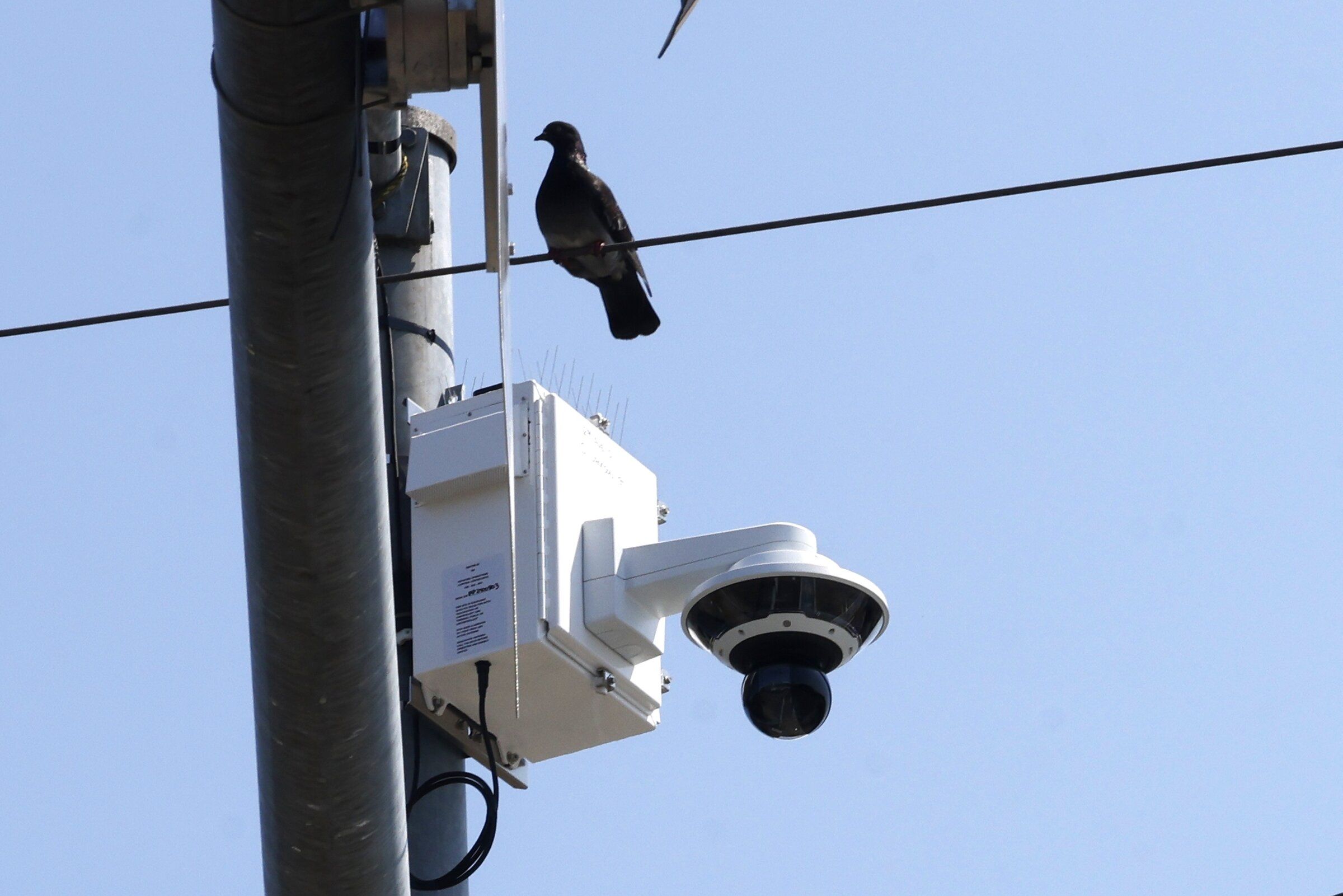
In the city, about 60 police cameras are already operating on Aurora Avenue, downtown Seattle, and in the International District’s Chinatown area. Aurora Avenue—part of State Route 99—has for decades been known for street prostitution, drug dealing, and violent crime, largely due to 24/7 traffic and the large number of motels. The Chinatown International District is Seattle’s oldest neighborhood, where Asian immigrants have historically settled; dense development, older buildings, and social inequality have also contributed to street crime there. These two areas were first equipped with cameras because they recorded the highest number of incidents, and city officials expected that constant video surveillance would improve crime clearance rates and help prevent crime.
After taking office, Wilson paused the installation of new cameras in central Seattle, but allowed cameras to be mounted near stadiums, promising they would be turned on only in a “real threat”—a situation that arose during the World Cup. After the tournament ended, cameras in the stadium area were turned off, as the mayor had promised.
In the letter, the organizers ask to “reactivate 22 surveillance cameras in the stadium district and Pioneer Square,” which are connected to the Seattle Police Department’s Operations Center. They emphasize that armed violence and the availability of weapons pose an “obvious and real threat” to the city. Addressing the mayor, the letter’s authors urge her not to pause camera use, even during the period of research, because tragedies continue to happen year-round.
Wilson commissioned an audit by New York University to study the potential risks of cameras for privacy and civil rights—especially in areas involving immigration enforcement and healthcare related to reproduction and gender identity. At the same time, the University of Pennsylvania, under the oversight of the city’s Office of the Inspector General for Public Safety, is evaluating the cameras’ effectiveness, the results of investigations, and how local residents perceive the program. The results of both independent studies are expected in September.
Joshua Curtis, executive director of Washington State Ballpark, which owns T-Mobile Park, said his organization signed the letter because Mariners fans expect the area around the stadium to be “active, interesting, and safe.” He noted that in June the mayor made the right decision by turning the cameras on, and that the dangers that led to that decision have not disappeared with the end of the World Cup. Curtis acknowledged the legitimacy of privacy concerns, but believes city rules on how the footage is used and stored will prevent improper use: “An audit is absolutely the right step, but you don’t have to stop everything and just wait.”
The cameras were included in the budget proposal made by former Mayor Bruce Harrell for 2024 and were approved by the City Council. Late last year, the council voted to expand their use to part of Capitol Hill, the area near the athletic stadiums, and the surroundings of Garfield High School. Garfield High School is one of Seattle’s oldest and most prestigious public schools, founded in 1920. It is located in the Central District, the historic center of the city’s Black community, and played an important role in the fight for civil rights: in the 1960s, it hosted protests against racial segregation and inequality in education. Despite gentrification, the Central District still faces street crime and shootings, and the school’s proximity makes safety issues especially sensitive; placing cameras around Garfield, city officials say, is a way to protect students and maintain public order. Former police chief Sean Barnes, who retired last week at Wilson’s request, strongly supported the use of the cameras and called them invaluable, putting him at odds with the mayor. How the issue will be handled by new acting police chief Andre Sayles remains unclear.
Based on: Seattle’s big event organizers ask mayor to turn on police cameras