The Seattle housing market crisis amid the Iran conflict, Starbucks' flight to Nashville over taxes, and a dangerous road-rage shooting — the day's key events.
Perfect storm: Seattle housing market suffers steep downturn
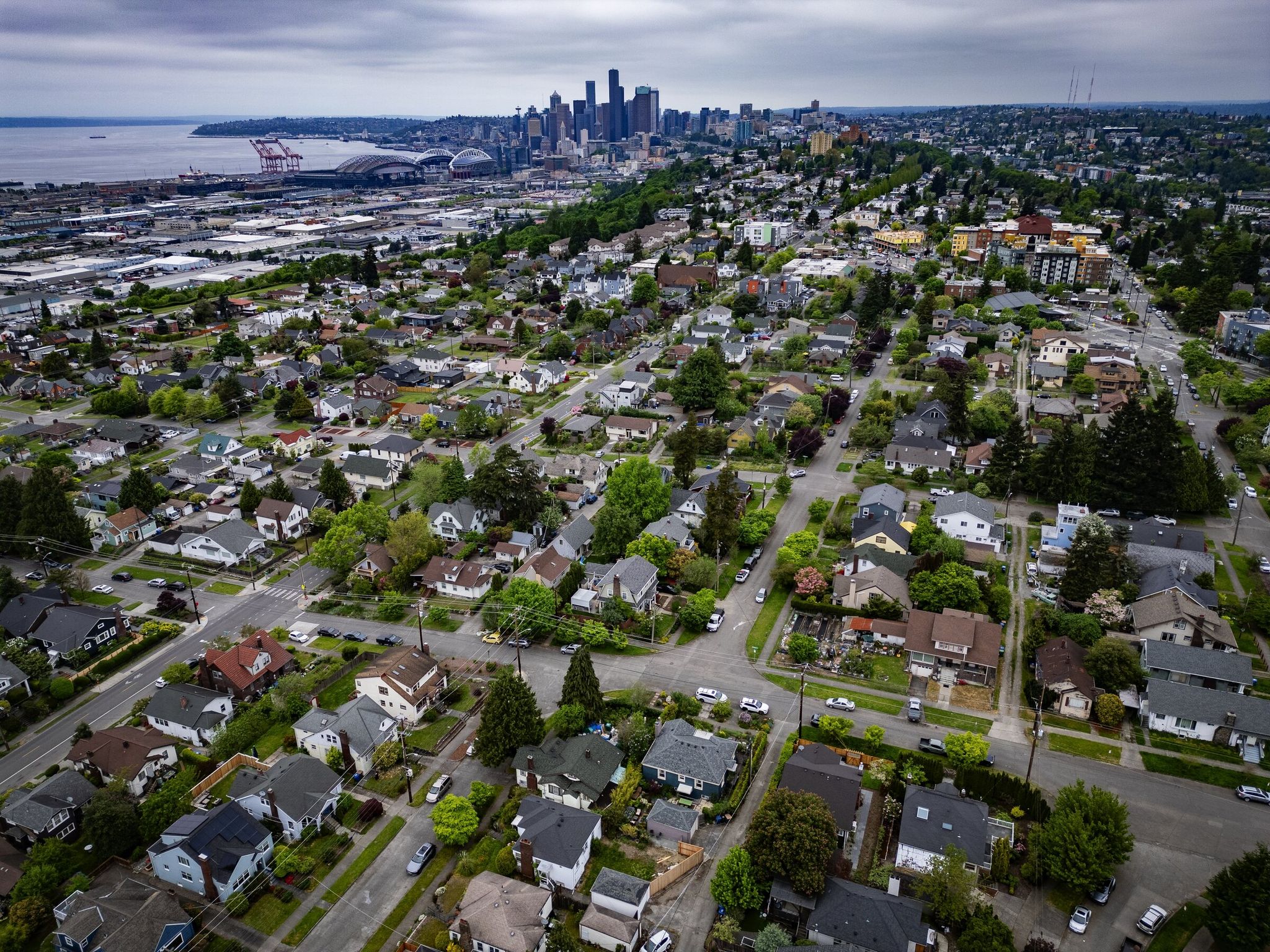
Spring, traditionally the busiest season in real estate, has brought disappointment to both sellers and buyers in Seattle and surrounding areas. Instead of the usual bustle, the market has encountered a unique combination of negative factors that experts call a "perfect storm." According to data published by the Northwest Multiple Listing Service and analyzed by The Seattle Times, in King County, the most populous county, the median price for single-family homes fell 7% year-over-year to $960,000. This drop is accompanied by a decline in closed transactions, signaling a deep stagnation.
The main reason for this situation is geopolitical tension that erupted into conflict with Iran. Military actions and the resulting effective blockade of the Strait of Hormuz, one of the world's key oil routes, led to a sharp spike in energy prices. That, in turn, immediately affected mortgage rates, which jumped from nearly 6% at the end of February to 6.5% in early April. Although rates eased slightly to 6.3% by the end of April, that was enough to paralyze buyer activity. Stephen Burras, director of the Washington Center for Real Estate Research, comments pessimistically: "Overall, things look pretty bad in King County. But that's not surprising. We knew a month ago that a war with Iran would likely put upward pressure on interest rates."
Realtors note that their clients are overwhelmed with information. Buyers, especially those working in the tech sector where layoff specters linger, are extremely hesitant. High gas and grocery prices are draining budgets, making major purchases like a home even more risky. Windermere broker in Renton Heather Maddox describes buyer behavior: "Buyer confidence bounces up and down, but mostly down. They quickly convince themselves not to buy." According to her, the market has split: homes considered "perfect" still sell with multiple offers within days, but all other listings hang on the market. "I think more homes are 'falling through the cracks' now than ever," she adds. That has left sellers who remember the pandemic boom with record-low rates in a difficult spot. They not only have to cut prices but also endure a painful reassessment of reality, Maddox says: "We’re having more conversations with sellers about pricing than ever, explaining that a home is worth exactly what a buyer is willing to pay, regardless of what the neighbor’s house sold for."
If single-family homes are troubled, the condominium market has outright collapsed. The median condo price in King County dropped 10% to $539,000. High HOA fees and reduced interest in urban living in the era of remote work are weighing on that segment. However, as Team Diva Real Estate broker Kim Colapreti notes, this is where opportunities open up for buyers. She advises looking for properties that have been on the market for a long time, as they can yield significant discounts and concessions from sellers. She herself recently bought a condo in Seattle and watched its price fall month after month until the unit sold.
Despite the grim picture in central King County, neighboring areas such as Pierce and Kitsap continue to see price gains. Analysts warn this may be temporary, as the sharp drop in closed transactions (down 15% in Snohomish County) indicates sellers there are still refusing to lower prices, leading to stagnation. The market is now flooded with new listings — inventory rose 13–19% across different counties. Sellers, tired of waiting for rates (which have been stuck at 6–7% for more than a year) to fall, have finally decided to list their homes. However, as Stephen Burras summarizes, "In this situation you can expect prices to fall, and I don’t see the situation improving in the near term."
Starbucks picks Nashville over Seattle: tax policy reshapes America's business landscape
When a major company chooses to expand not in its hometown but in a distant southern hub, questions follow. Starbucks' recent decision to create a new 2,000-job office in Nashville rather than in its native Seattle has sparked debate. A local business reporter at The Seattle Times asked directly: "What does Nashville have that Seattle doesn't?" The answer appears to lie not only in lower wages but also in the radically different tax policies of the two states. While Washington recently enacted the state's first-ever income tax — the so-called "millionaires tax" — Tennessee has no income tax at all. That difference seems to be decisive for businesses seeking not only skilled workers but also fiscal predictability.
As Fox News reports, citing The Seattle Times, Tennessee's business tax climate was ranked the eighth best in the country by the nonpartisan Tax Foundation. Washington, by contrast, ranks only 45th. That ranking considers income, business, sales, and property taxes, and unemployment insurance rates. For Starbucks, which last year reported that at least six of its top executives (including the CEO) earned more than $6 million each, Tennessee's lack of an income tax becomes a powerful draw. Meanwhile, in Seattle the company continues to close locations: in March it announced five more store closures, following earlier shutdowns including the famed Starbucks Reserve Roastery in Capitol Hill.
A key factor was Washington's March passage of an income tax on households earning more than $1 million per year. The rate will be 9.9% on income above that threshold. The law, signed by Democratic Governor Bob Ferguson, takes effect in 2028 but is already drawing criticism. The Wall Street Journal called it a "scam" in an editorial that will "inevitably affect the middle class." Skeptics argue that sooner or later the threshold won't be indexed to inflation and will then catch not just millionaires but many affluent professionals. This concern is shared by business owners in Washington, who fear that a "socialist tax" is pushing companies to relocate.
But it's not just taxes. The Seattle Times also points to a more obvious factor: wage differences. The average hourly wage in the Nashville area is $31, which is 5% below the U.S. average and a full 28% below the Seattle-area average. For companies seeking IT specialists — positions that will make up more than half of the new jobs in Starbucks' Nashville office — that savings is critical.
In response to a Fox News Digital inquiry, a Starbucks spokesperson reiterated April remarks by Sarah Kelly, chief partner officer. She emphasized that the Nashville office will "supplement" Starbucks' global and North American headquarters in Seattle, which remains primary. Starbucks expects 2,000 jobs to be created in Tennessee over five years, while most support teams will continue to be based in Seattle. Some of the positions are new roles; some result from insourcing work previously done by contractors into full-time employees; and only in a few cases does the move involve relocating entire teams. Nevertheless, the transfer of procurement departments and the creation of a hub in another state suggest that the "supplement" could become substantial over time.
This story vividly illustrates how a combination of tax policy and labor costs can redraw corporate America. Companies once tied to a single region increasingly look to southern states with low taxes and affordable labor. The question is how far this trend will go and whether Nashville will become for Seattle what Austin became for San Francisco. The Fox News article notes this is not an isolated case but part of a broader trend that raises questions about the future of expensive northern metropolises.
Seattle police search for shooter who opened fire over aggressive driving
Seattle police released footage of the incident and appealed to Washington state residents for help locating an armed assailant who opened fire at another vehicle at an intersection. Authorities say the aggressive behavior stemmed from a road argument. Video capturing the moment of the shooting was distributed by local media, including KIRO 7 News Seattle. Investigators believe the attacker acted in a fit of rage commonly referred to by motorists as "road rage." This is a state where a driver loses emotional control and begins threatening other road users, sometimes using weapons.
It's worth clarifying that the term "road rage" describes dangerous on-road behavior where a driver intentionally cuts off others, blasts the horn, and in worst cases uses physical force or firearms. In this case the aggressor fired toward another vehicle, which is a serious crime and poses a threat to bystanders. Law enforcement is urging witnesses or anyone who recognizes the suspect to contact police immediately.
Interestingly, the incident comes amid rising gas prices. Analysts note that the price per gallon of regular gasoline in the U.S. jumped by 31 cents over the past week and is now 52% higher than before the start of the military operation against Iran. While the KIRO 7 report does not draw a direct link between fuel prices and the incident, road-safety experts often observe that increased economic stress can heighten driver aggression.
The key takeaway from this incident is that even a minor road dispute can escalate into a tragedy involving firearms. Police hope for public assistance to bring the shooter to justice and prevent further violence. For everyday drivers, the reminder is: if you encounter aggressive behavior from another road user, it's better not to engage — try to drive away safely or call the police. Any attempt to "right a wrong" on the road can cost lives.