
A Seattle City Council discussion of a moderate package of traffic-safety bills escalated into a sharp conflict over the authority of historic districts. The debate raised a broader question: Can historic preservation block necessary changes, from housing construction to street modernization? Pioneer Square and Pike Place Market were at the center of the dispute.
Councilmember Rob Saka proposed adding the principles of Vision Zero to city law — a policy adopted in 2015 with the goal of eliminating traffic deaths and serious injuries by 2030. The measures include improving visibility at intersections by clearing sight lines and adding lighting, as well as installing side guards on city trucks to reduce the risk of pedestrians and cyclists being pulled under their wheels. Saka expected these measures, which he viewed as broadly accepted, to pass quickly.
However, the bills accumulated numerous amendments. The most contentious was a proposal by Alexis Mercedes Rinck to give the city’s transportation engineer explicit authority to install traffic signs, road markings and signal devices. At present, such changes in Pioneer Square and Pike Place Market often must be reviewed by historic-preservation boards. These city advisory and regulatory bodies assess projects not only for safety and transportation efficiency, but also for compliance with historic standards. Although final decisions typically remain with the city’s transportation and administrative agencies, the boards’ positions can significantly affect the timing and substance of projects.
Rinck said she was uncomfortable seeing historic-preservation bodies given the ability to reject initiatives intended to improve safety. Pioneer Square previously opposed a larger-scale intersection reconstruction before the World Cup, while Pike Place Market has been conducting a controversial experiment limiting vehicle traffic for more than a year.
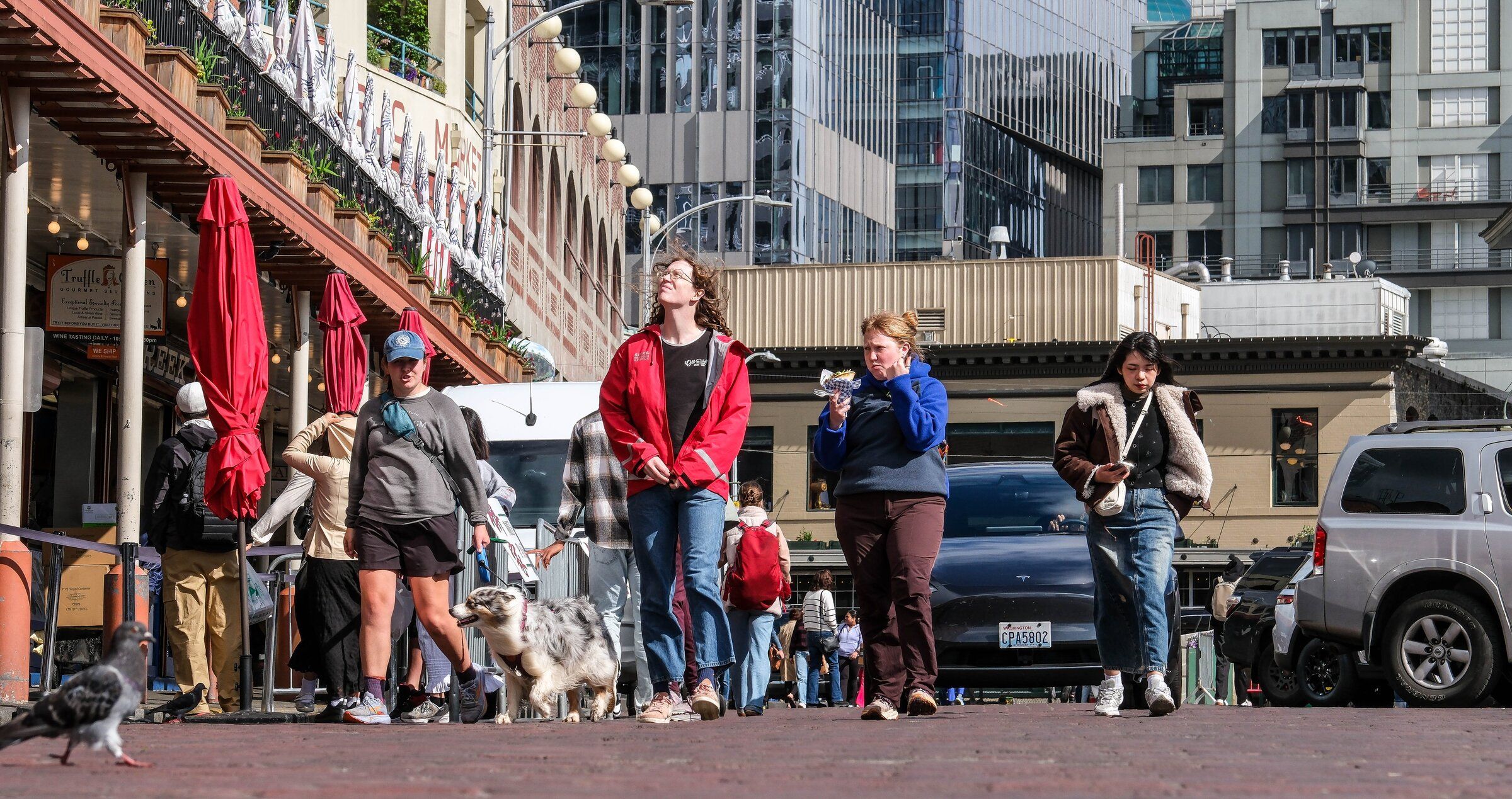
The experiment is intended to show how the market will function with large pedestrian crowds during major international events, including preparations for the 2026 FIFA World Cup. The city is evaluating safety, access for suppliers, public transit, taxis and emergency services. Officials are not yet ready to close the market completely to vehicles: Regular deliveries, access for residents and businesses, building maintenance and emergency response must be preserved. In addition, they want to collect data first and develop a permanent plan in consultation with merchants and other stakeholders.
Business owners, merchants and residents complain about confusion caused by open entrances and inconsistent rules, while transportation advocates are calling for the market to be completely closed to vehicles. Because of the disagreements, Saka insisted on additional discussions with representatives of Seattle’s eight historic districts, so the vote on the revised package of bills was postponed until late October.
Based on: Vote on Seattle traffic safety bills aims at historic districts