The World Cup drew 3 million people, but the return on $120 million is unclear; 26 years later, the family hopes to solve the killing of Jacqueline Jones; the Seattle Kraken will play 13 back-to-back games and take an international road trip.
Title
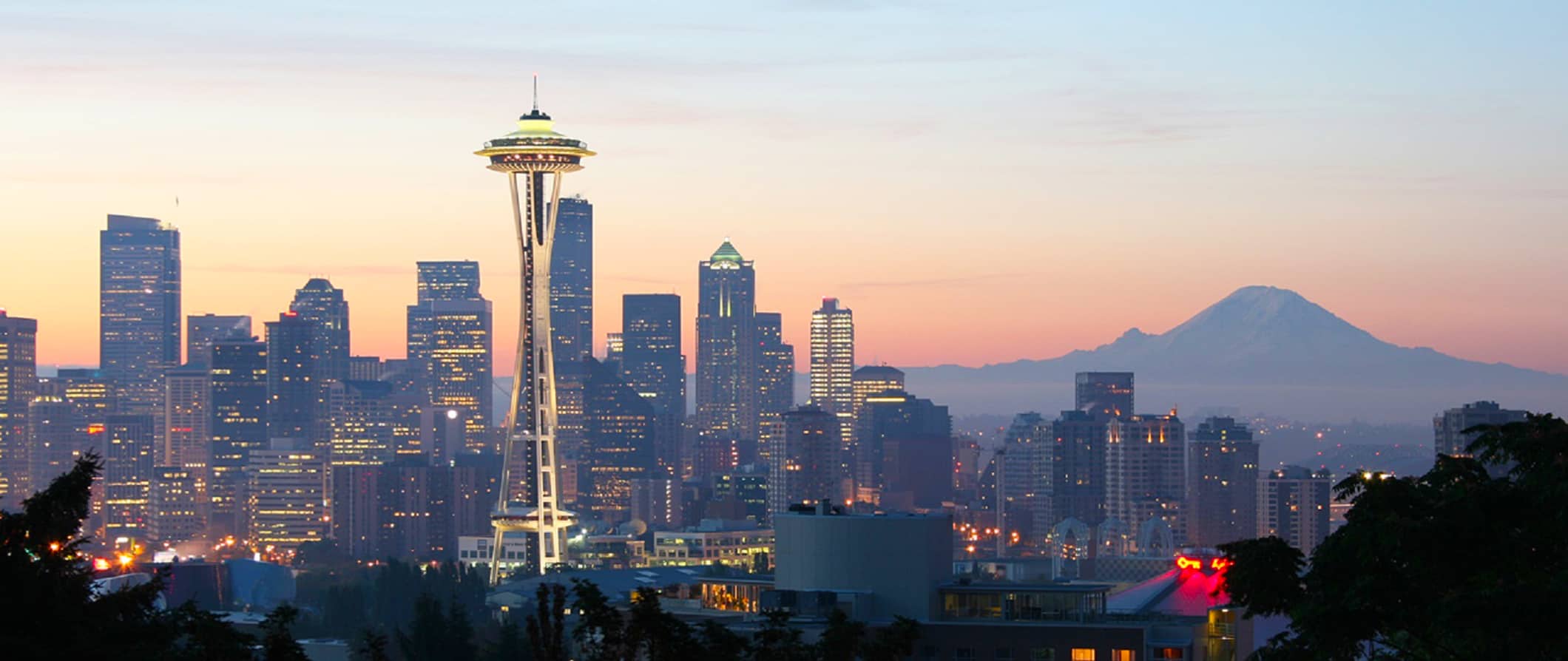
World Cup in Seattle: 3 million visitors and a $120 million question
After Seattle wrapped up its hosting of the World Cup matches, residents and officials began asking whether the $120 million spent by local and state authorities to prepare for the tournament paid off. The answer will take months of analysis, but the first figures are already starting to come in, and the picture is gradually becoming clearer.
The Downtown Seattle Association used data from Placer.AI, a company that tracks mobile-phone movement, to measure foot traffic. According to that data, over six days—when the city held matches—downtown Seattle was visited by more than 3 million people. At first glance, that is only 17% (about 500,000) more than during the same days last year. It’s important to remember that this is the cruise-ship season, so the waterfront would be busy even without the tournament. Still, the real number of visitors is likely significantly higher, because the company tracks only the phones of domestic tourists—it has no digital records of Europeans, since Europe has stricter data-protection laws.
The biggest surge in visitors came on the matches featuring the United States against Australia and Belgium. Each of those games drew more than half a million people, again without counting Europeans. Did the early projections—which promised 750,000 guests—pan out? Rough estimates suggest the result is very close to that figure. Experts predicted that the ratio of domestic to foreign tourists would be about 60:40. If that holds, the total number of additional visitors above the usual cruise-season baseline exceeds 800,000 people.
What will remain after the World Cup? Of the $120 million spent on preparations, about $14 million came from Seattle’s own city budget. Those expenditures leave a legacy—an infrastructure built for the games that will stay in place after the tournament. One example is Pacific Place, a doughnut-shaped mall with an atrium under a skylight. After the pandemic, it struggled with empty stores and low footfall, but during the World Cup it became a massive public living room: hundreds of people gathered on balconies to watch matches on a four-story screen. As KUOW reports, Seattle’s director of economic development, Beto Jarse, has already discussed with the director of the Department of Arts and Culture what to do with that screen next. In his view, both he and the other official are keen to use it not only for sports—perhaps for cultural events that bring people together. “Let’s go crazy: hook it up to wine, cheese, a blanket…” Jarse jokes. He hopes the screen will draw people to downtown year-round, especially in winter, when the weather isn’t as good.
So, the first data suggest Seattle may have met expectations—or even exceeded them—for visitor numbers, but a full economic assessment will take time. The key question is not only about money, but also whether the atmosphere and infrastructure created for the tournament can be preserved for everyday life in the city.
The Jacqueline Jones family: 26 years later, hope for the truth
Nearly three decades have passed since that April day in 1999, when 32-year-old Jacqueline Jones was shot in a tent on the grounds of an unauthorized encampment in South Seattle. Her sister, Valerie Jones, is again turning to the public, urging people to help solve the killing—still unsolved. Valerie hopes that time has softened the hearts of witnesses and that someone will finally decide to tell the truth.
According to information reported by the local TV station KOMO News, the tragedy took place in the 6800 block of Holly Park Drive. Jacqueline was inside a tent with her friend, Peter Tagoai, when an unknown person approached and opened fire. The woman suffered multiple gunshot wounds and was taken to Harborview Medical Center, where she died. Her friend survived, but a few years later he died of other causes unrelated to the attack.
The victim’s sister stresses that Jacqueline was not homeless, even though the crime happened in a tent camp. She lived in West Seattle, though it’s possible that friends brought her to that location. Valerie Jones says that right after the killing, rumors circulated about possible suspects—allegedly even a woman near the famed Pike Place Market had confessed to being involved. But those leads never led to an arrest.
Now, 26 years later, the family—rooted in Alaska Native communities and connected to Seattle, Bellingham, and Southeast Alaska—has not lost hope. The regional “Crime Stoppers” program for Puget Sound has also joined the investigation. Its director, Jim Fuda, notes that Seattle police do not consider the case “cold”—more like old—but detectives continue to work leads. Fuda urges potential witnesses who once feared speaking up to reconsider their decision.
A $1,000 reward has been set for information that leads to an arrest. Anonymous tips can be submitted online or through the P3 Tips app. “Everyone needs to take responsibility for their actions, especially for a violent crime like this,” Valerie Jones insists. She has the questions that haunt families of victims in unsolved murders: Are the people who did this still alive? Are they serving time for other crimes? Or are they already dead? There are no answers yet, but the family believes the truth may come out if someone finally finds the courage to talk.
Seattle Kraken schedule for the 2026–27 season: thirteen back-to-backs and one international trip
The National Hockey League club, the Seattle Kraken, has released the schedule for the upcoming 2026–27 regular season. The key features of the slate are thirteen so-called “back-to-back” games (when the team plays two matches on different days without a full day off to rest) and one international road trip. The information appeared on Yahoo Sports and sparked lively discussion among fans and analysts.
Thirteen back-to-back games are a fairly standard workload for NHL teams, but for Seattle—which is still in the early stages of building itself as a league contender—such a schedule could prove a serious test. Playing two games in a row without a day off takes a heavy toll on players’ physical condition: the risk of injuries rises, recovery slows, especially if one of the games is on the road. For the coaching staff, that means having to manage ice time more carefully between the main and backup goaltenders, as well as rotating the forward lineup.
Another major point was the international trip. At this stage, it’s not yet specified which country the Kraken will visit, but it will most likely be one of the NHL’s traditional European events—such as the Global Series in Sweden or Finland. Such trips broaden the league’s geographic footprint, and they also help the team bond away from home, though the long flight across the ocean can disrupt players’ usual biological rhythms and lead to a shaky start when they return.
It’s worth clarifying what “back-to-back” means in hockey: it’s when a team plays two games on different calendar days, but there isn’t a full day of rest in between. For example, a Friday night game followed by a Saturday afternoon game. These stretches of the schedule are considered among the toughest, because the body doesn’t fully recover—especially if the second game is on the road. For Seattle, 13 such sequences add up to nearly 20% of the entire regular season, and each one could become a turning point in the fight to reach the playoffs.
Based on the available information, the club’s front office has chosen a fairly aggressive scheduling strategy: back-to-backs save travel days, but at the same time they increase the burden on players. The international trip, meanwhile, is both a marketing move and a test of the team’s mettle. Kraken fans should expect exciting—and exhausting—stretches of the season, when every goal and every goaltender save will matter more than ever.