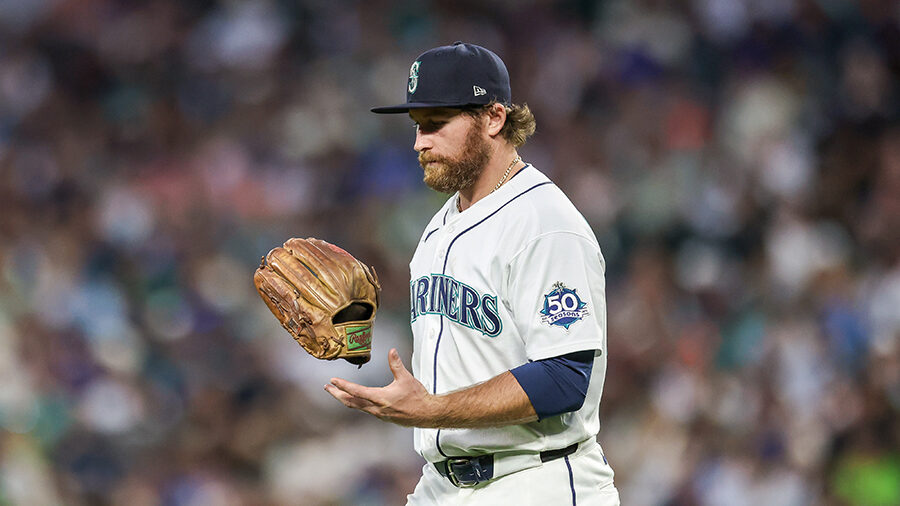
A look at Seattle’s top stories: the hidden gem of Carkeek Park, with panoramic views of the Olympic Mountains; a frustrating injury to a Mariners player threatening the team’s playoff hopes; and The Wayland Mill restaurant, which made Bon Appétit’s national best-new-restaurants list.
Seattle’s Carkeek Park: A Hidden Gem Among Emerald Forests
When people think of Seattle, many picture the famous Space Needle, Starbucks cafés on every corner, and seemingly endless rain. But locals know that the city’s nickname, the “Emerald City,” has nothing to do with the land of Oz. It comes from the remarkable number of green spaces, parks, and wooded areas woven into the urban landscape. Among them is a true giant that tourists often overlook: Carkeek Park, sprawling across 216 acres of scenic land along the shores of Puget Sound.
The park is a genuine wildlife refuge within the city, where mountain ranges meet ocean waves and dense forests alternate with low-lying wetlands and flower-filled meadows. Its history stretches deep into the past. Long before European settlers arrived, Indigenous encampments stood here. Later, the land was used for farming and, at one point, even served as a garden to grow food for animals at the local zoo. In the 1920s, the Civilian Conservation Corps worked in the area, and it was not until 1929 that the land officially became a city park. Thanks to its hilly terrain and steep ravines, which made development difficult, the area has retained much of its original beauty.
Carkeek’s main attraction is its breathtaking view of the Olympic Mountains from the beach. On a clear day, visitors can take in a magnificent panorama of snow-capped peaks reflected in the waters of the sound. Guests can stroll along the shoreline and watch seals and sea lions, which often rest on the coastal rocks. However, visitors should keep their distance and avoid disturbing the wildlife. The marine life is not the park’s only draw for nature lovers: a network of hiking trails winds through wooded areas, along babbling streams, and across open meadows. The park has all the amenities of a modern urban park, from playgrounds and picnic areas to parking and restrooms. Its true value, however, lies in its wild and untouched character.
What makes the park especially appealing is that it remains less familiar to tourists than better-known destinations such as Discovery Park or the Washington Park Arboretum. One reason may be its distance from downtown: reaching Carkeek from central Seattle takes about half an hour by car. But that remoteness also protects the park from crowds, allowing visitors to enjoy a sense of connection with nature in relative solitude. As noted in an article on Islands.com, Carkeek is an ideal destination for anyone who wants to see Seattle at its most beautiful without dealing with tourist crowds.
To understand the park’s scale, consider that it is comparable in size to such major attractions as the 230-acre Washington Park Arboretum, though it is smaller than the 534-acre Discovery Park. Carkeek stands out, however, because of its unique ecosystem, which combines coastal areas, wetlands, forests, and open meadows. This variety of landscapes makes the park a paradise for bird-watchers and wildlife enthusiasts. It is particularly impressive that, despite the surrounding urban development, the park has preserved its native flora and fauna—a rare achievement for a major city.
Beyond its natural beauty, Carkeek plays an important role in the lives of Seattle residents. It is not merely a place for walks but also an ecological corridor connecting different natural areas of the city. Locals use the park for morning runs and family picnics. After dark, astronomy enthusiasts can often be seen arriving to admire the night sky away from the city lights. The park’s historical value is also undeniable: traces of Indigenous activity and early settlement serve as reminders of the area’s rich past. Perhaps it is this combination of natural beauty, historical heritage, and relative solitude that makes Carkeek one of Seattle’s most attractive destinations for those seeking a true connection with nature without leaving the city.
Donovan’s Injury: A Bizarre Incident That Could Cost the Mariners a Playoff Spot
An unusual and deeply frustrating incident occurred within the Seattle Mariners organization ahead of Saturday’s game against the Chicago Cubs. It emerged that one of the team’s key players, Brendan Donovan, suffered a head injury during pregame practice while in the batting cage without a protective helmet. General manager Justin Hollander revealed details of the incident, calling it a “freak accident.” A ball thrown inaccurately by an unnamed Mariners staff member struck the player directly in the head, forcing him to leave the field and go on the injured list with a concussion.
This is already Donovan’s third injury of the season, his first year in Seattle. Earlier, he landed on the injured list twice because of a strained left groin, with one recovery period lasting more than two months. As a result of all these health problems, he has appeared in only 39 games—a major disappointment for both the player and the team, which had high expectations for him. Hollander expressed sympathy, saying the year had been “hell” for Donovan: someone who loves playing baseball has barely been able to do so.
The timing makes the injury especially frustrating, as Donovan had only just begun to regain his form after returning to the field in early August. In the 11 games before the incident, he had performed consistently well, reaching base in 10 of them, including six games with two or more hits. His numbers during that stretch were impressive: a .318 batting average, a .375 on-base percentage, and six runs scored. The player had clearly found his rhythm, and the team was counting heavily on his contribution during the decisive stage of the season.
For context, the baseball slash line of .318/.375/.386 includes three key statistics: batting average, on-base percentage—which includes walks and hit-by-pitches—and slugging percentage, which accounts for total bases. The .375 figure means Donovan successfully reached base in 37.5% of his plate appearances, a very strong result at the professional level.
The problem is compounded by the fact that the injury occurred at the most critical point of the season. The Mariners are in a desperate fight to reach the playoffs, with only 31 regular-season games remaining. At present, the team trails the Houston Astros by three games in the race for first place in the American League West and is also three games behind the Cleveland Guardians in the pursuit of the final wild-card spot. Every lost game could prove decisive, and the roster is already depleted by injuries.
Donovan is not the club’s only significant loss. The team is also without shortstop J.P. Crawford, who is recovering from inflammation in his left wrist, although he is expected to return Tuesday. In addition, rookie Colt Emerson will undergo wrist surgery Wednesday, ending his season. Together, these developments leave the team’s management facing a difficult question: how can it compensate for the absence of several key players at the most important point of the year?
Hollander said that standard batting-cage drills before a game are entirely routine for major-league players, and Donovan frequently takes part in them. He stressed that it was “nobody’s fault,” but simply an accident in which a thrown ball veered off course. Donovan is still experiencing concussion symptoms, although his condition has improved significantly since the first few days. He will not be able to return before Sunday, but the precise recovery timeline remains unknown because concussions are unpredictable injuries in which symptoms can fluctuate.
As Seattle Sports reports, the Mariners face an extremely demanding schedule, and every game is now crucial. The team hopes Donovan will return quickly, but medical professionals are always especially cautious with concussions, and the player’s health is more important than any playoff ambitions. The incident also raises questions about safety measures during practice, although the team does not appear poised to change its routine based on management’s comments. Baseball remains a sport in which even an innocuous practice can turn into a serious setback. For now, all that remains is to hope that the talented player makes a quick recovery and can help his team in the decisive fight for a playoff berth.
The Wayland Mill: The Seattle Restaurant That Impressed Bon Appétit
Seattle has traditionally been associated with coffee, famous hot dogs, and an abundance of seafood. Now the city has another reason to be proud: The Wayland Mill has been named one of the 19 best new restaurants in the country by the respected culinary magazine Bon Appétit. It is the only restaurant from Washington state to make the prestigious list and one of six representatives from the West Coast.
The magazine highlights the restaurant’s atmosphere, which its writers say leaves a lasting impression. Even if you cannot get a table during peak hours—and on weekends, hopeful diners may wait about an hour in a crowd outside—you will still be charmed by the hospitality that defines the place. Standout dishes include biscuits with miso gravy and chashu pork, as well as meatloaf with spicy tonkatsu sauce, served with a slice of shokupan from Saint Bread bakery.
The restaurant is led by chef and owner Yasuaki Saito, who offers guests a unique combination of Midwestern American warmth and Japanese aesthetics. Located in the North Lake Union neighborhood, the restaurant presents itself as an all-day café and restaurant open every day. Its concept is based on “yōshoku,” the Japanese tradition of adapting Western dishes to Japanese tastes.
To understand yōshoku, consider such Japanese creations as hambāgu, the Japanese-style hamburger steak; spaghetti Napolitan with vegetables and sausage; or doria, a casserole resembling French gratin. The Wayland Mill interprets this tradition in its own way, creating what it calls “yōshoku Americana.” Its Japanese-American breakfast, for example, includes an omelet with mirin, dashi, and aonori, served with teriyaki-glazed bacon or marinated shiitake mushrooms. Even the classic Caesar salad has been reimagined: the traditional dressing has been replaced with a sauce based on shottsuru and yuzu.
Interestingly, Chef Saito also owns Saint Bread bakery, allowing him to use fresh shokupan, a Japanese bread known for its soft texture. A FOX 13 Seattle article notes that the restaurant also offers dishes with a local touch, including a breakfast sandwich with egg foo yung salad and yum-yum sauce. This bold blending of cultures makes the restaurant distinctive not only in Seattle but across the country.
Making Bon Appétit’s list is more than recognition for the chef; it is also a sign that interest in Japanese-American cuisine extends far beyond traditional sushi bars. Experts note that such hybrid concepts are becoming a trend in modern gastronomy, and The Wayland Mill demonstrates how seemingly incompatible culinary traditions can be combined. For diners, it is an opportunity to try something genuinely new. For the restaurant industry, it is an example of how creativity and attention to detail can lead to national success. Given that the restaurant is open seven days a week and offers online ordering, it is clear that the team expects a steady stream of guests eager to discover why the establishment was named one of the best in the United States.