In today’s digest: a prosecutor has again declined to pursue charges against a teacher from the Edmonds School District in a student sexual abuse case; the mother of a young man killed in Seattle continues seeking the truth four years later; and a repeat offender suspected of human trafficking has been arrested, linked to a missing teenager.
Prosecutor Again Declines to Charge Edmonds School Teacher in Student Rape Case
Last week it was reported that the Snohomish County prosecutor’s office, for the second time in two years, declined to file charges against a special education teacher from the Edmonds School District, who was suspected of sexually harassing students. As reported by The Seattle Times, the allegation included a charge of first-degree child rape, but investigators concluded there was insufficient evidence to bring charges.
Michael Held, chief of staff to the county prosecutor, explained in an email that the police in Lynnwood conducted a thorough investigation, after which the office received “one count of first-degree child rape.” But after reviewing the materials, prosecutors determined that “there is not sufficient admissible evidence to prove the commission of a crime beyond a reasonable doubt.” That is the standard required for criminal prosecution in the United States: jurors must be convinced of guilt at nearly one hundred percent, otherwise the case is considered not proven.
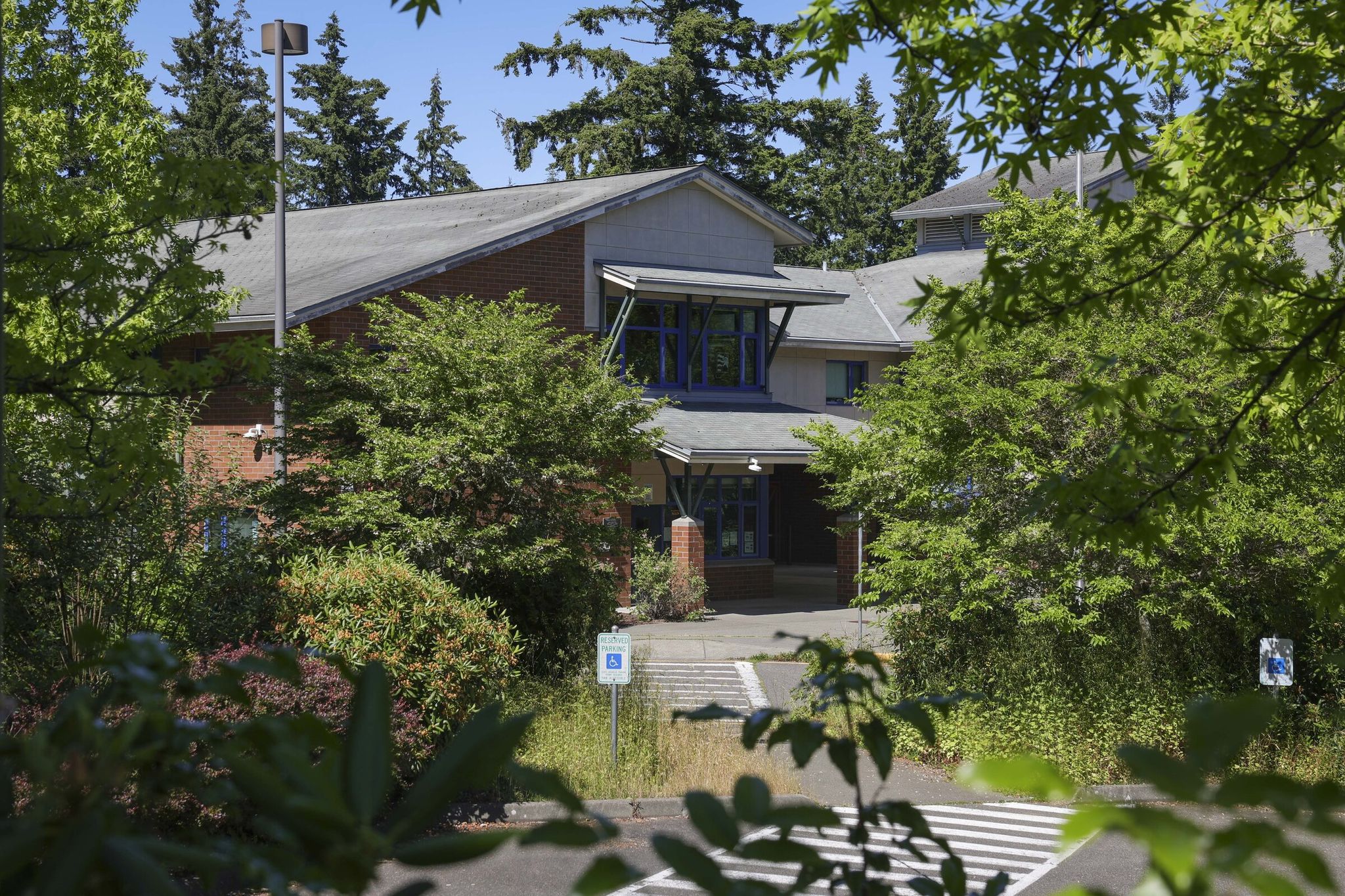
The teacher filed a request to resign from the district back in January, but under a settlement agreement obtained by the newspaper through the Public Records Act, he remains on administrative leave until August 31, 2026. In other words, he is still officially listed as an employee, even though he is no longer working. The situation drew widespread attention after, in May 2024, staff at Meadowdale Elementary School—where the suspect taught—reported to police complaints of sexual harassment by staff members and inappropriate touching of students. Police conducted an investigation and issued two citations to the teacher—one for fourth-degree assault of an employee and one for a similar assault with a sexual motive on a student. The case was sent to the Lynnwood city prosecutor.
However, in February 2025, Lynnwood contract prosecutor Chad Kreps first declined to pursue charges against the teacher for the incident involving alleged harassment of a staff member. In a memo obtained by The Seattle Times, he wrote that the touching was “not welcome” and triggered the victim “negative psychological reactions,” but legally it was not considered a crime: “the city must prove beyond a reasonable doubt that the touching was harmful or offensive… the reported incidents can be viewed as ordinary, common, or harmless.” Kreps also noted that the hugs the teacher gave students are concerning, but not criminal.
Only in June 2025, after additional investigation, Kreps acknowledged that there was probable cause to charge the teacher for assault involving a student. That related to an incident in which the teacher “carried” the student across a field by wrapping his arms around her body—preventing the girl from moving her hands and legs, as stated in an addendum to the memorandum. Even then, the city declined to bring charges: “the violation date falls outside the two-year statute of limitations for criminal misdemeanors of the gross misdemeanor level.” In other words, the crime may have occurred, but the law no longer allowed prosecution.
The most serious allegation came in August 2025: the student said the teacher raped her in the classroom while she was in fifth grade. Lynnwood police sent the materials to the county prosecutor’s office, but there the decision was also made not to file a felony charge (a serious offense). Held confirmed that they reviewed the prior investigations, but it did not change the decision. The teacher’s attorneys did not respond to requests for comment.
The story raises several important questions. First, the “beyond a reasonable doubt” evidentiary standard is one of the highest in the legal system, and even with serious suspicions and the victim’s statements, prosecutors may decide they do not have enough evidence for a conviction. Second, the statute of limitations limits the ability to prosecute certain crimes after a certain period of time—in this case, two years for a misdemeanor. That protects defendants from unwarranted prosecution, but sometimes prevents punishment of the guilty if the victim remained silent for a long time. Finally, the school district’s decision to keep the teacher on administrative leave until 2026 shows that even without a criminal case, educators can face disciplinary consequences, though it can be difficult to fire them without a final court ruling.
According to The Seattle Times, this is the second case in two years in which the prosecutor’s office has declined to bring charges against an Edmonds School District employee for alleged sexual misconduct. Incidents like these undermine parents’ trust in the education system and raise questions about how effective child-protection mechanisms are in schools.
Four Years Without Answers: Mother of a Young Man Killed in Seattle Continues Searching for the Truth
It has been four years since that April night in 2022, when 23-year-old Gibson Moore was shot dead in Seattle’s Chinatown area. His mother, Kate Tunsvik, still does not know who killed her son—or why. She continues to search for answers, hoping that someday justice will prevail. As reported in a MyNorthwest article, the case remains unsolved, and police are offering a $1,000 reward for information that leads to an arrest and charges.
Gibson Moore was a young man his mother describes as kind, smart, and principled. He didn’t tolerate prejudice and was always ready to help. But it may have been his desire to protect someone else that most likely led to the tragedy. That night, Gibson and his girlfriend were walking home in the Chinatown area of Seattle. They couldn’t get in through the front door, so they went around the building on the side. There they saw a familiar neighbor they had previously walked with, who was arguing with three men. Gibson decided to intervene because the neighbor was alone against three. His mother recalls: “Gibson went to help him because there were three of them and he was alone. Then they knocked Gibson to the ground and started kicking him. That made Gibson very angry—he got up and charged one of them, and that person shot him four times.”
After the killing, police investigated, seized surveillance footage showing two men who were likely involved in the crime. The video quality is good, and detectives believe someone who knows the men will be able to identify them. Detectives told the mother they believe it was a random attack—Gibson simply happened to be in the wrong place at the wrong time. But for Kate Tunsvik, that doesn’t make the pain any less sharp. She lives with that loss every day: “The destruction—my life is never going to be the same. I deal with it every day; it never goes away. I think about it constantly. He’s not here, and it’s tragic. It’s been four years, but to me it doesn’t feel like four years. It’s such a fresh wound that it seems like it will never heal.”
Jim Fuda, executive director of Crime Stoppers, is urging the public to take a look at the images of the suspects. He emphasizes that tips are taken anonymously, and a reward is available for information that leads to an arrest. Anyone who knows anything about Gibson Moore’s killing is asked to call 800-222-TIPS. This case is one of those “cold” cases that continues to be investigated, but without help from witnesses or people who know the perpetrators, it risks staying unsolved forever. Gibson’s story is a reminder of how one moment can destroy an entire life—and of how community support is crucial in finding justice.
Seattle Arrests Suspect in Human Trafficking Case Linked to Missing Teen
Seattle police have arrested 45-year-old Lavell Cotton, also known as “Prince Making Money.” His June 5 detention was the result of a lengthy investigation into human trafficking, an attempted prostitution scheme, robbery, and assault involving a 20-year-old woman. But before that, Cotton had already been identified as a person of interest to police in Port Orchard, where in December 2025 a 15-year-old girl went missing after being seen getting into his Buick Enclave. Thankfully, the teenager was later found alive and unharmed. As reported by FOX 13 Seattle, Cotton had previously been convicted of first-degree murder and drug trafficking, and at the time of his arrest he denied all allegations and refused to unlock his phone for police, saying it contained evidence proving his innocence. He is now being held on $1 million bail, and on June 11, when charges were filed, he pleaded not guilty.
According to documents supporting the arrest, Cotton targeted the 20-year-old woman for months. It began in December 2025, when he contacted her via Instagram, writing: “Go home.” The woman called him back, and Cotton explained that he initially thought she was the missing 15-year-old girl—the one he said he had dropped off with another girl in downtown Seattle. He then moved on to attempts to get her involved in prostitution, using the term “choose up,” slang for agreeing to work as a prostitute under someone else’s control. When the woman refused, Cotton began stalking and threatening her, especially in the Aurora Avenue area, known for street prostitution.
One of the most blatant incidents happened on May 16. The woman was working near the intersection of North 135th Street and Aurora Avenue when Cotton tried to run her over in a car. As a result, he crashed into a protective pole near a coffee kiosk. Then he got out of the vehicle and demanded that she hand over the money she had earned. The woman tried to leave on high heels, but Cotton shoved her from behind, tripping her with his foot—she fell onto broken glass and badly cut her knee. As she told police, she had to cover the wound with superglue to stop the bleeding. On another occasion, Cotton approached her, pressed what looked like a firearm to her stomach, and demanded she hand over her “trap”—slang for prostitution earnings. Only a passing police car reportedly forced him to back off.
Notably, the woman also told investigators that other girls said Cotton was involved in shootings in the Aurora Avenue area. Although Cotton has a criminal history including murder (sentenced to 240 months in prison) and methamphetamine distribution (60 months in 2019), he denies all allegations related to human trafficking. Police, however, note his refusal to provide the password for the phone on which, they say, there is evidence that would clear him. The King County Prosecutor’s Office has charged him on four counts: second-degree human trafficking, attempted first-degree promoting prostitution, first-degree robbery, and second-degree assault. At this time, Cotton remains in custody on $1 million bail while awaiting further court proceedings. The case has again brought attention to the problem of human trafficking in Seattle, where Aurora Avenue has long been notorious as a site for sex work, often controlled by criminal elements.