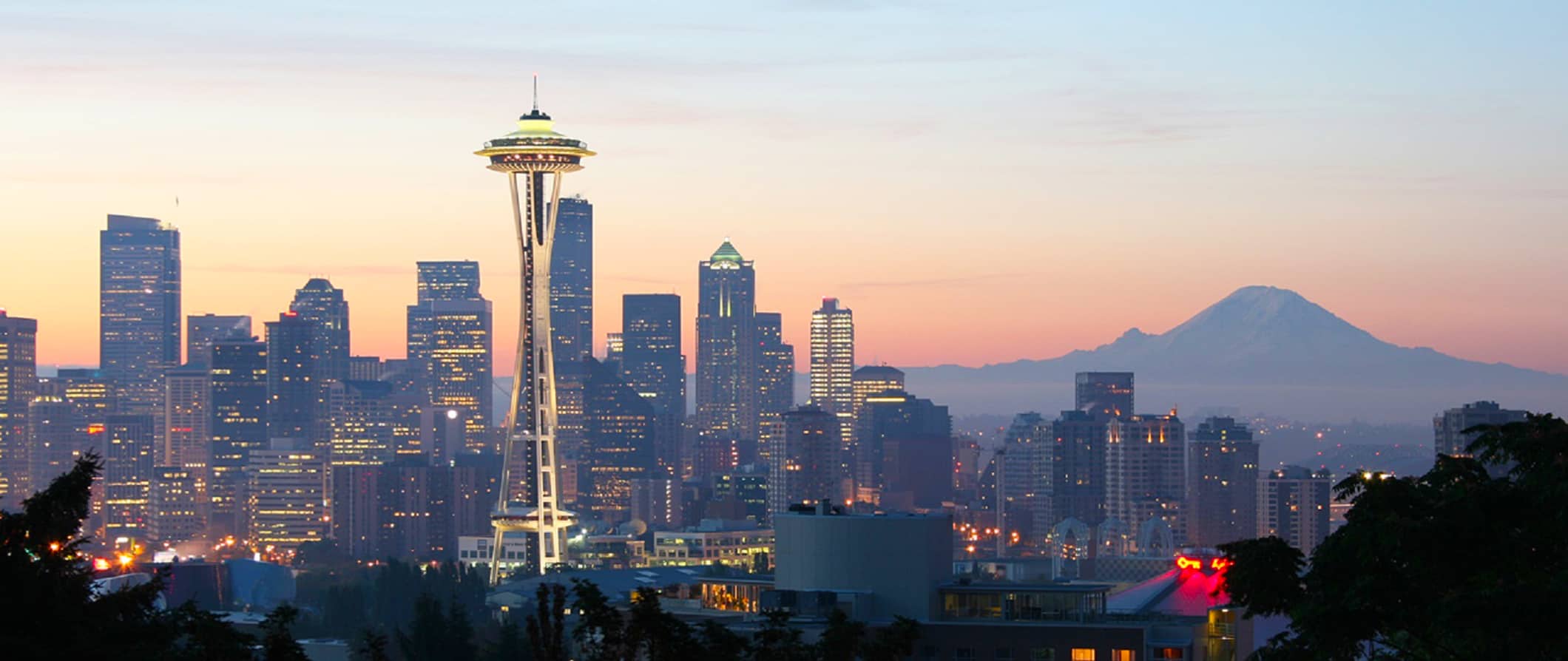
Today’s news: the arrest of Seattle teens for a shooting in Portland, an unexpected confession of love for opponents by a Seahawks player, and reflections on how the FIFA World Cup could breathe new life into downtown.
Seattle Teens Arrested for Shooting at a Gas Station in Portland and Auto Theft
In Portland, Oregon, four Seattle juveniles were arrested on suspicion of a string of armed crimes that culminated in a shooting and robbery at a gas station. The incident took place early Friday morning: several armed youths burst into the convenience store at the station, threatening the cashier. When another employee came out to investigate the commotion, a struggle broke out, during which the suspects opened fire. The injured person received at least five gunshot wounds—four to the abdomen and one to the leg. The bullets also damaged the walls and shattered the storefront window. Police arrived four minutes later and summoned medics; the injured person was taken to the hospital, where he underwent extensive surgery. Police say he will survive.
According to KOMO News, the teens are also linked to other crimes committed in Portland earlier that same week: an armed carjacking from a rideshare driver on Tuesday, an attempted theft from a vehicle with threats, and an attack on an employee at another gas station—who was struck in the head with a pistol. Hours before the shooting, police were already receiving reports of suspicious masked individuals trying to get into the store. When they left, officers swept the area, waiting for the next incident.
On Friday, after the shooting, investigators tracked the suspects by their vehicles and went to a home in northeast Portland. With support from the SWAT team and negotiators, a search was conducted: twelve people were detained, and several pistols were seized. Three Seattle teens—aged 15, 16 and 17—are charged with robbery and shooting, as well as earlier incidents. Another 17-year-old is listed in connection with the Tuesday car theft. An adult man from Portland was arrested on unrelated warrants. The investigation is ongoing, and additional charges are possible.
The case once again raises the issue of so-called “ghost guns”— firearms without serial numbers that can be assembled from parts kits or printed on a 3D printer. The news report says the teens had exactly those kinds of firearms. The problem is especially acute among minors who cannot legally buy guns. The lack of markings makes tracing difficult, and crimes like these are increasingly happening not only in the teens’ home state, Washington, but also in neighboring Oregon. A string of attacks carried out over several days shows the boldness of young offenders who did not hesitate to cause serious bodily harm. The fact that the victim survived five gunshots can be considered almost a miracle. Interstate crimes involving teens create a complex challenge for police: they must not only solve the case, but also figure out how to prevent similar incidents in the future. Right now, the arrested teens are in Portland, where they face serious charges for armed robbery and assault, and it’s possible their cases will be sent to adult court.
Grey Zabel: “Kobie Turner is my kryptonite.” Seahawks player confesses his love for the Rams’ opponent
In professional sports, it’s rare to hear a player openly admire their bitter rivals—especially when the rivalry is within a division. Still, Seattle Seahawks guard Grey Zabel, a Super Bowl ring winner, didn’t hold back in an interview on the podcast “Green Light with Chris Long,” offering praise to the defenders for the Los Angeles Rams: Puna Ford and Kobie Turner, as well as the team as a whole. Zabel called them “really great guys” and specifically emphasized that players like that make him want to work harder—and love football. His comments are a rare example of how the hatred that’s sometimes unavoidable in sports can give way to respect once the final whistle has blown.
With at least two matchups against the Rams coming in the upcoming season, Zabel chose appreciation over any sniping. He pointed to Puna Ford’s raw physical strength: “That’s a guy who just lifted me when I was trying to block him in my stance. I was like, ‘Alright, I can’t do anything about that.’” But the warmest words were reserved for Kobie Turner, whom Zabel called his “kryptonite in football right now.” According to him, Turner beats him in every game—yet that’s “so cool.” Zabel admitted that he knows he’d rather try to block a bigger, stronger, but slower player than a shorter, stockier, faster one who moves laterally in a fraction of a second. In his view, those are exactly the qualities Ford and Turner have.
Zabel’s story about a moment after the Seahawks’ win over the Rams in an NFC Championship game was especially touching. Turner got injured and wasn’t able to finish the game. Even though Zabel’s team had triumphed, he immediately went over to the opponent to talk: “I was sad that he got hurt. I wanted him to know how much I appreciated the way he plays. Kobie is just a smile. He plays for love of the game, no doubt.” Given that Rams head coach Sean McVay and general manager Les Snead have repeatedly said how important it is to them to have players who truly “live football,” Zabel’s remarks appear to confirm that Turner is exactly that kind of player. It’s also notable that, by his own admission, Zabel himself falls into the same category of fans.
Published on Yahoo Sports, this interview raises an important topic: mutual respect in sports. Zabel could have answered aggression with aggression—or just stayed silent—but instead he chose openness. He showed that even after losing (the Seahawks lost to the Rams in the regular season, but won in the playoffs) it’s possible to offer words of encouragement to the people who help make the game better. In the face of intense competition and constant day-to-day pressure, such actions are a reminder that behind the form and statistics are people who share a common passion. Now all that’s left is to wait until December, when the Rams and Seahawks meet again—so it remains to be seen whether Zabel will keep his love for Kobie Turner if, this time, his team comes up short against the winner.
Can the FIFA World Cup be a stepping stone to revitalize Seattle’s downtown?
It’s been nearly two weeks since Seattle wrapped up its mission hosting FIFA World Cup matches, and the city now faces an important question: how to keep the flow of people that flooded downtown when the games were being played in the stadiums? Recently released data from the Downtown Seattle Association (DSA) paints an impressive picture: over six game days, more than three million people visited downtown—an increase of 17% compared with the same six days in 2025. The numbers are encouraging, but they reflect only the short-term effect. Now that the World Cup has left town, city officials and businesses are looking for ways to turn that success into a long-term revival of downtown neighborhoods that, in the words of local residents, have noticeably emptied out in recent years.
DSA CEO John Scholes emphasizes that millions of documented visitors prove that people want to find community and share experiences in Seattle—even without tickets to a specific sporting match. He believes the city should more actively use free street activations to encourage people to spend time downtown. “It should be the standard,” Scholes said. “That’s how we should do things in Seattle.” A vivid example of this approach was Nordstrom’s second annual “Downtown Summer Block Party,” held alongside its anniversary sale. Last Saturday, roads around Westlake Park were closed so people could stroll, visit local vendors, shop, and take photos. The event didn’t draw millions like the World Cup did, but it filled the streets with a lively crowd—and residents believe more events of this kind could support the revival. “I’d love to see way more events here,” said Joan Wellman. “You can still see people enjoying what’s going on. If you add more, you’ll have even more people.”
As Scholes reported, discussions are already underway between the DSA and city officials about using some strategies tested during the World Cup—such as creating more pedestrian zones and interactive spaces around major events at places like Climate Pledge Arena, Lumen Field, and T-Mobile Park. Just as important, the positive trend began even before the first match: according to DSA, in May 2026 consumers spent nearly $140 million in downtown—8.6% more than the month before. And in June, Sound Transit recorded a record 5.4 million trips on public transportation. These figures show that interest in the city is growing, and the key task now is to not miss the moment—turning a temporary surge into a sustained trend.
As Seattle native Taz Donaldson put it, “We need something that brings people back downtown; it’s been too quiet the last couple years. I think the World Cup was an amazing reminder of why Seattle is great.” In their article for KOMO, the journalists emphasize that now the ball is in the hands of city planners and businesses—whether they can make a celebration of everyday life.