The Mariners are parting ways with veteran J.P. Crawford, while the Seahawks held on to their assets at the NFL trade deadline, adding nothing to their receiving corps or offensive line amid tight salary-cap constraints.
Mariners part ways with J.P. Crawford: the end of an era at shortstop in Seattle
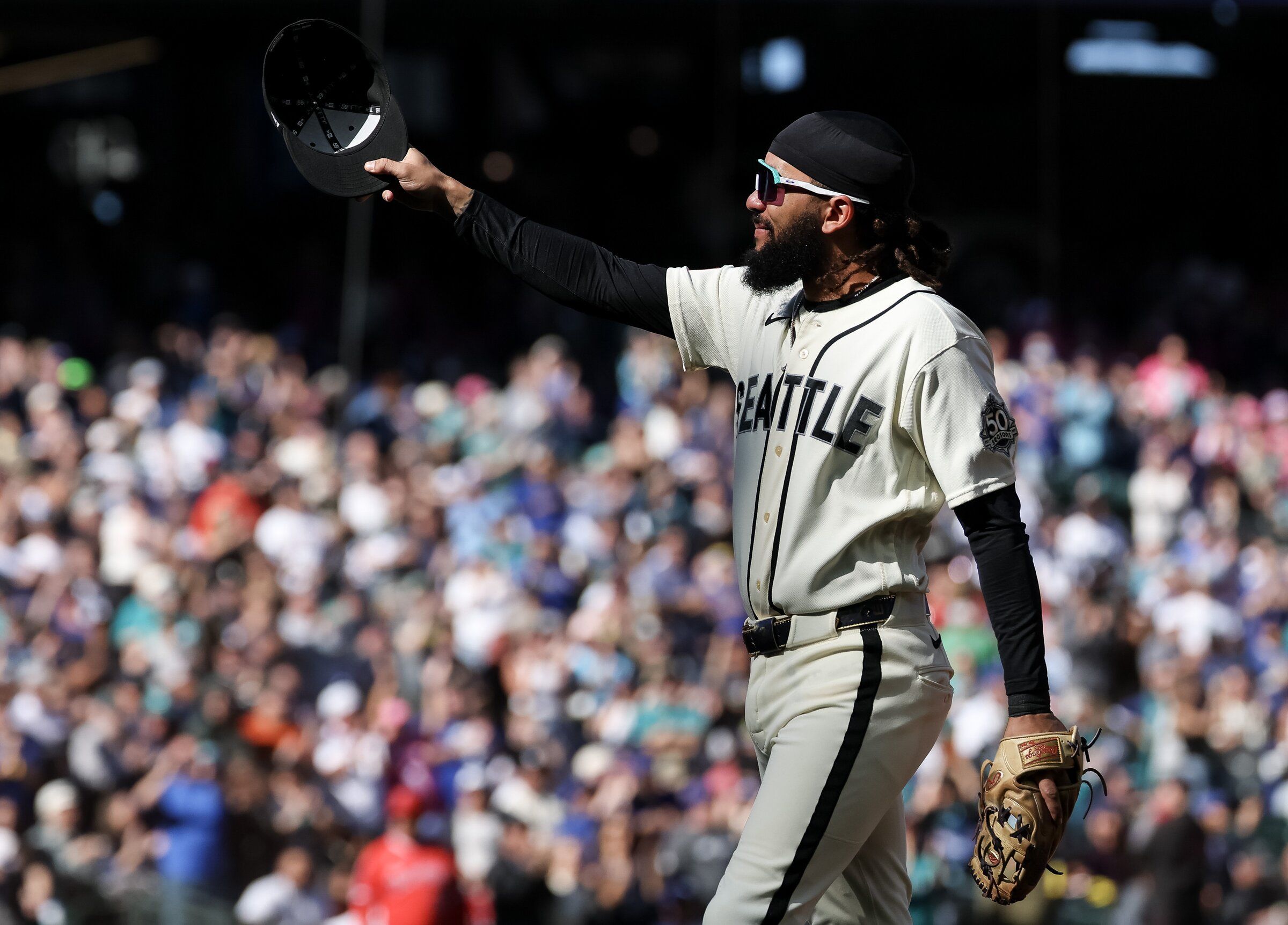
The Seattle Mariners have officially announced that they are parting ways with veteran shortstop J.P. Crawford, the longest-tenured player on the team. The decision seemed inevitable as far back as the end of last season, and now it has become reality. For Mariners fans, this is more than a roster move; it is a symbolic moment: one of the few players who embodied stability and continuity in the clubhouse is leaving.
J.P. Crawford joined the Mariners in 2019 in a trade with Philadelphia and has since become not only the team’s starting shortstop but also a spiritual leader. His defense has saved the team in key games more than once, while his presence on and off the field helped create the very “club culture” people in baseball like to talk about. But baseball is a business, and Crawford’s offensive production has declined over the past two seasons, while young players in the Mariners’ system have been pushing for spots in the lineup.
The term “veteran shortstop” refers to an experienced player at shortstop, one of baseball’s most demanding positions, requiring quick reactions, a strong arm, and the ability to read the game. Crawford was the kind of player valued less for his batting statistics than for his reliability on defense and his ability to be the team’s “glue.” “Longest-tenured player” means the player who has been with the club longer than anyone else on the current roster.
According to The Seattle Times, the split took place without a major controversy—the two sides agreed that continuing the relationship made no sense. It is rare in modern sports for a player’s departure to be handled amicably and predictably, without a media “soap opera.” For the Mariners, this marks the start of a rebuild of the infield: the club will likely turn to a younger, less expensive player and use the money it frees up to strengthen other positions.
The main takeaway is simple: the Mariners are entering a new phase, prioritizing youth and flexibility over experience and loyalty. For Crawford, this is a chance either to find a team where he can finish his career on his own terms or to take a position on a coaching staff. In any case, his name will remain part of Seattle’s history as one of the most reliable and respected players of the past decade.
Seahawks take their time at the deadline: Seattle keeps its assets, but questions remain
The NFL trade deadline is traditionally a day of nerves, rumors, and unexpected decisions. For the Seattle Seahawks, it was marked by restraint: general manager John Schneider seemed to signal his intentions when the team acquired All-Pro guard Quenton Nelson on October 27, but no other moves followed. On Tuesday, the Seahawks made no additional trades, even though reports said the club was actively exploring the market. This lack of activity was not due to a shortage of resources: including projected compensatory picks, Seattle has 10 selections in the 2027 draft, so if no deals were made, the reason was something else.
The biggest name linked to the Seahawks was star Indianapolis Colts running back Jonathan Taylor. The Colts ultimately decided to keep him, but Taylor was probably the most talked-about trade candidate ahead of the deadline, and Seattle was among several teams reportedly interested. However, NFL reporter Corbin K. Smith later said Seattle’s interest “began and ended” with an initial inquiry. Given that the Colts wanted a package comparable to what the 49ers gave up for Christian McCaffrey in 2022—a second-, third-, fourth- and fifth-round pick—Schneider’s decision not to force a deal seems logical, especially since running backs Zach Charbonnet and Jadarian Price recently returned to action.
Amid the Taylor rumors, Schneider offered more insight into the organization’s approach to the deadline. In a pregame interview before the Seahawks’ 34–17 loss to the Chicago Bears on November 2, he said the team remained engaged in the trade market and was actively looking into potential deals, though he did not specify which positions were priorities. NFL insider Jordan Schultz reported Monday that the Seahawks were looking for a receiver to support superstar Jaxon Smith-Njigba, but no deal came together. It remains unclear which players Seattle was interested in.
The context matters: while the Seahawks stood pat, their direct NFC rivals strengthened their rosters. The Minnesota Vikings acquired quarterback Kirk Cousins, while the San Francisco 49ers added veteran receiver Keenan Allen—both teams are among the best in the conference. This creates an understandable tension: restraint at the deadline may be a sensible bet on the draft and internal options, but in the short term it leaves Seattle behind rivals who were willing to strengthen their teams right away. As Field Gulls notes, the lack of trades is unlikely to be explained by a shortage of assets; it is more likely that Schneider was unwilling to pay what he considered an inflated price for players.
Understanding a few terms helps make sense of the details. All-Pro is a status awarded to a player named to the league’s symbolic all-star team—in other words, recognized as one of the best at his position that season. Compensatory picks are extra draft selections awarded by the NFL to teams that lose free agents in the offseason; they help clubs maintain roster depth without taking on expensive contracts. The trade deadline is the cutoff after which teams cannot trade players for the rest of the season, making it an especially tense day for managers. A package like the one Carolina received for McCaffrey consists of draft picks from different rounds given up by a team for one player; that is apparently the price for Taylor that put Seattle off.
The main takeaway is that Schneider opted to play the long game. The acquisition of Nelson addressed the offensive line’s biggest need, while the return of Charbonnet and Price eased the urgency to add a running back. Passing on Taylor at the McCaffrey price, along with the failed attempt to trade for a receiver, shows that the club is willing to trust its internal options and preserve flexibility in the 2027 draft. The risk is obvious: in an NFC where the Vikings and 49ers have added experienced players, passivity could cost Seattle a playoff spot. But overpaying for short-term additions could also have consequences down the road. Now the question is whether Smith-Njigba and company can make up for what the club did not acquire on the market.
Quiet on the market: why the Seattle Seahawks risk being left without a second receiver
With only a few hours left before the NFL trade deadline, the Seattle Seahawks had already made a splash by trading for guard Quenton Nelson. After a move like that, it would have seemed logical to add another player—especially at receiver, where the team has an obvious problem: there is no second reliable target alongside Jaxon Smith-Njigba. However, as Seaside Joe columnist explains in an article about the deadline and the prospects of a receiver trade, the Nelson deal ate up nearly all the team’s remaining cap space, and now any significant trade runs up against tight financial constraints.
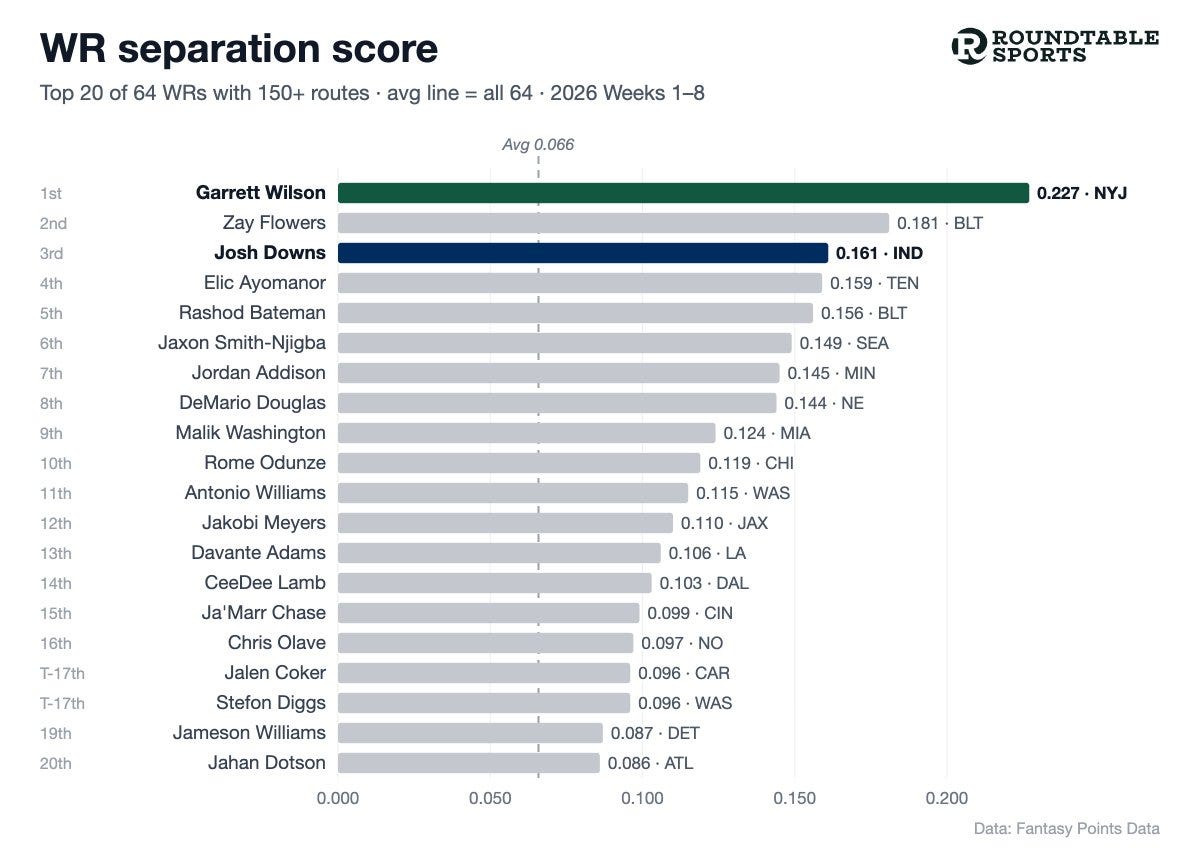
The main question the author raises is whether Seattle can afford any of the names being floated in trade rumors. The list includes Brian Thomas Jr., Josh Downs, Garrett Wilson, and George Pickens. The team has only about $4 million in available cap space, which means it has virtually no options. Pickens, for example, is due to earn $13.6 million for the rest of the season. On top of that, he missed a game with a hamstring issue and, according to Dallas, a shoulder problem as well—a detail unlikely to be a smokescreen designed to make him more attractive to buyers. To free up the necessary money, Seattle would have to restructure Sam Darnold’s contract—its only real lever—but that would make him more expensive next season and limit the team’s options for 2027: release him, trade him, or extend him. Is it worth it for a rental on an inconsistent, injured player who will become a free agent this summer? The author’s answer is an unequivocal no, and giving up a first-round pick for Pickens would be absurd.
Garrett Wilson looks ideal on paper: he is just 26, earns only $2 million this year, can play both outside and in the slot, and alongside his college teammate Smith-Njigba could put up 80–90 yards per game. But it sounds too good to be true. Sources inside the Jets believe the team is in no hurry to part with him, which means the asking price would start at a first-round pick—and be considerably higher for a team picking late in the round. It is telling that New York traded Sauce Gardner only for two first-round picks, and got a first- and a second-round pick for Quinnen Williams. Wilson is also in the concussion protocol, and his four-year, $130 million extension takes effect in 2027: a $20 million roster bonus plus $13 million in guaranteed salary means Seattle would need to account for $33 million, while its entire projected cap space for 2027 is $34 million. One source put it plainly: “It’s extremely unlikely.”
That leaves Brian Thomas Jr.—perhaps the most intriguing and most concerning option. In his 2024 rookie season, he put up 1,282 yards and 10 touchdowns. Now the Jaguars are steadily cutting his playing time and targets, with Trevor Lawrence looking to anyone but him: over the past seven games, Thomas has had just seven catches on 19 targets for 77 yards and has been benched. The author calls this a “huge red flag”: it is practically unprecedented for a first-round pick who was one of the league’s best receivers as a rookie to start declining in his second year. But Thomas would cost almost nothing against the cap in 2026–27, and if Jacksonville is asking for, say, a 2028 fourth-round pick just to send him out of the AFC, the risk may be worth it. The author advises against giving up a second-round pick for him.
Seaside Joe also considers the possibility of Calvin Ridley, whom the author himself suggested as an option weeks earlier. The Titans do not need a valuable draft pick to make a deal, but there is a risk that nothing remains of the player Ridley once was. Overall, the conclusion is not encouraging for fans: Cooper Kupp and Rashid Shaheed are Seattle’s receiver additions for the season, since the club chose not to release Kupp and extended Shaheed. Kupp consistently produces one to three first downs per game and perhaps a couple of touchdowns, but he will not draw attention away from Smith-Njigba and probably does not deserve more than a few targets. The hope is that Shaheed returns from his knee injury and that players like A.J. Barner and Tory Horton continue to develop.
One intriguing alternative the author considers more promising is to look for a pass rusher rather than a receiver. The Eagles traded Jordan Davis; perhaps they would consider moving Nolan Smith, too? Seattle needs more pressure on the quarterback while maintaining its strong run defense. In the columnist’s view, a move like that would help the team more down the stretch than any of the realistically available receivers, who are unlikely to make a major difference. A seventh-round pick for Ridley is probably the only deal that makes sense on a value-for-money basis—and not because he is expected to return to his previous form. The author does not expect a major Seattle trade on Tuesday, but allows that if one happens, it will either be far more modest than the Nelson deal or so unexpected that nobody will have predicted it.
Readers unfamiliar with the subject should keep a few things in mind: the NFL salary cap is a hard limit on total player spending, and teams can create cap space only by restructuring contracts—pushing payments into the future—which always makes a later season more expensive. Compensatory draft picks are awarded across different rounds, and a first-round pick is effectively the right to select one of the best young players in the country. The concussion protocol is a mandatory clearance process after a head injury, and a player may miss an indefinite amount of time. Finally, the second part of the article is not about trades but about Seaside Joe’s in-house “Greatest Expectations” game, in which fans guess statistics for each game: AggieHawk won in Week 9, and Mike Nay leads the season standings by average percentile.
The main takeaway is simple: the Seahawks have become victims of their own successful trade. Their cap space is nearly exhausted, the receivers they want are either unavailable, unaffordable, or not worth the asking price, and so the team’s attempt to repeat its championship run will likely depend on internal options rather than big names on the market.