A Seattle court released the 15-year-old suspect in the Bite of Seattle festival shooting to house arrest, finding his self-defense claim plausible. The Mariners are considering Jason Kanzler of the Cubs as their new manager. The city’s schools are seeking young artists to decorate Memorial Stadium.
Seattle court releases 15-year-old Bite of Seattle shooting suspect to home confinement
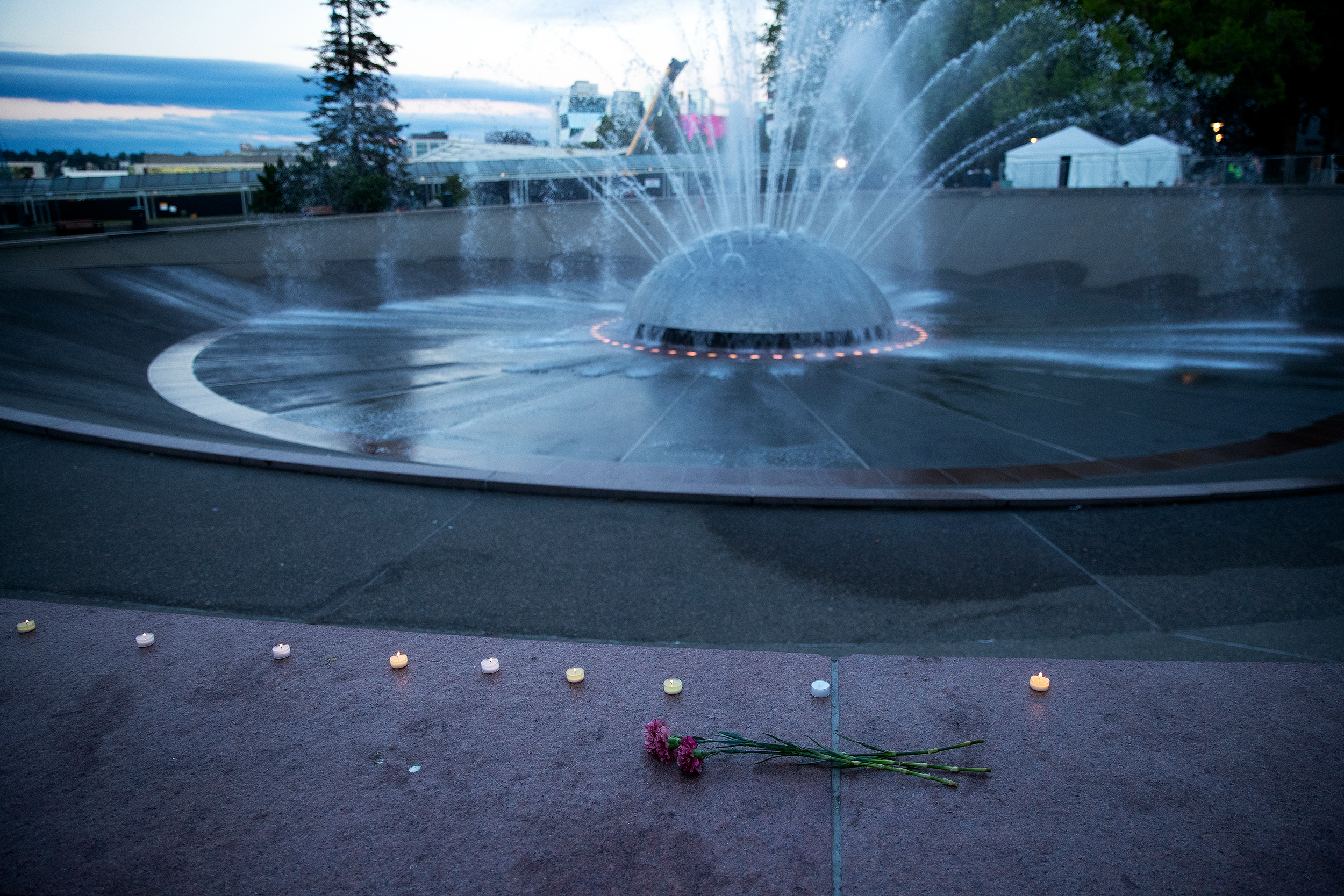
A 15-year-old charged in connection with a mass shooting at the summer Bite of Seattle festival has been released from a juvenile detention center. On Wednesday, King County Superior Court Judge Veronica Galvan ruled that the evidence gathered by investigators does not link the defendant to either the deaths or the injuries at the festival near Seattle Center on July 26. The decision marked a turning point in a case that had kept the teenager behind bars for nearly three months while also raising serious questions about how the justice system handles minors accused of particularly grave crimes. He will now live at home under strict supervision, while prosecutors continue seeking to have him tried as an adult.
Under the court’s ruling, the teenager will be subject to round-the-clock electronic home monitoring, must remain at home at all times in the presence of an adult, attend online classes and meet regularly with a counselor. He is also barred from Seattle Center and from contacting anyone else involved in the shooting case. In court, the teenager’s father, Charles Black, said the boy had already been enrolled in school and had a comprehensive support system: “We enrolled him in school, and he has a full support system.” He said that he and the teenager’s stepmother would make sure someone was always home. Attorney Hong Tran confirmed that the teenager was released Wednesday morning shortly after the ruling was announced. As the family left the courtroom, the stepmother whispered emotionally: “He’s going home.”
The background of the case is as follows: The 15-year-old was arrested on the day of the shooting, and court documents say a pistol was found in his jacket. Seattle police officers who detained him later wrote in their reports that he cooperated without incident. In an interview with police shortly after the shooting, the teenager said he had opened fire in self-defense after other people in the crowd began shooting at him. The shooting killed three people and left many others injured. State prosecutors have charged him with first-degree assault with a firearm and second-degree unlawful possession of a firearm. Prosecutors are also asking that he be tried as an adult. Their position has been forceful: The teenager allegedly brought a gun to a food festival and opened fire into the crowd, making him a threat to the public and requiring that he remain in custody. Judge Galvan, however, rejected that argument, noting that the defense had a credible self-defense claim: “There is a plausible claim of self-defense. This court has placed people facing similar charges under community-based conditions in other circumstances, and the court will do so here as well.” The next status hearing in the case will take place in November and will be held virtually if the teenager complies with the conditions of his release.
Several legal concepts are important to understand in this case. Electronic home monitoring means that the teenager wears a device that tracks his location and alerts authorities to violations of his restrictions; it is an alternative to detention. A status hearing is a procedural court session at which the parties report on the progress of the case and compliance with the conditions, rather than litigating the merits. A motion to try someone as an adult is a prosecution request to transfer a juvenile case to general criminal jurisdiction, where penalties can be considerably harsher. Finally, a “plausible claim of self-defense” is a legal concept in which the defense’s version appears sufficiently well-founded for the court to take it into account when deciding on pretrial conditions, even though guilt has not yet been established.
The key conclusion from Judge Galvan’s ruling is that the presence of a weapon and the fact that a shooting occurred do not, by themselves, amount to proven involvement in the deaths and injuries. That distinction underlies the entire logic of the release: Investigators found no evidence directly linking the teenager to the victims, while the self-defense account remained viable. It is also significant that the family presented the court with a concrete reintegration plan—school, constant adult supervision and psychological support—which became an important argument for home confinement instead of detention. At the same time, prosecutors are maintaining an aggressive position and seeking an adult trial, so the case is far from over. The November hearing will test how well the teenager complies with the release conditions. For the Seattle community, the case remains a painful reminder of the festival shooting that killed three people, as well as of the fragile balance between public safety and the presumption of innocence for a minor. KUOW reports on the court’s decision.
The “Mariners” seek a skipper: a new candidate emerges in Seattle
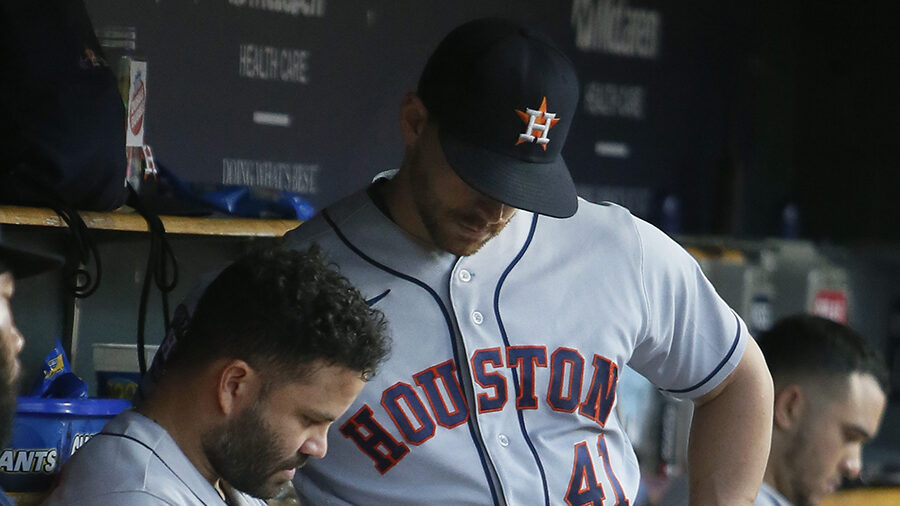
The search for a new manager for the Seattle Mariners is generating new details, and the club apparently is not limiting itself to prominent names among current or recently dismissed managers. According to the latest information, Jason Kanzler has emerged as a candidate to replace Dan Wilson—a man whose career was built not on the bench but in training centers and player-development offices. Kanzler currently serves as the Chicago Cubs’ director of player development.
The news comes amid reports that the Mariners are already at an advanced stage of negotiations. According to The Athletic, the shortlist includes former Houston Astros manager Joe Espada and former Minnesota Twins manager Rocco Baldelli in addition to Kanzler. The latter two have been mentioned in connection with the Seattle vacancy before, while Kanzler is a new and unexpected figure for the broader public.
Kanzler is only 36, and his path in baseball is illustrative of the modern era, in which analytics and work with young players are sometimes valued more highly than managerial experience. He has been responsible for player development in Chicago for three seasons. Before that, he spent five years in the Houston Astros’ system, beginning in 2019 as a minor-league hitting coordinator. In 2022, he was promoted to the major-league coaching staff—the same year the Astros won the World Series. In 2023, he became an assistant hitting coach. Sources credit him with helping develop young shortstop Jeremy Peña during his rookie season, as well as building a close relationship with Alex Bregman, which ultimately helped the Cubs sign the star third baseman to a five-year contract last winter.
Several points help put this in context. A “director of player development” is not exactly a coaching position in the traditional sense. Such a specialist oversees the entire pipeline, from the draft and the signing of prospects to their adjustment to the minor leagues and preparation for the move to MLB. The director develops methodologies, monitors prospects’ physical and mental preparation and often works closely with the analytics department. Appointing someone with this background as manager represents a bet on long-term development and the ability to maximize internal resources, rather than on short-term results built around established stars. Kanzler was also a player: Minnesota selected him in the 20th round of the 2013 draft. He played three seasons in the minor leagues but never advanced beyond the High-A level. He therefore knows the system from the inside, but has no experience managing an MLB team.
Notably, The Athletic report by Astros beat writer Chandler Rome emphasizes Kanzler’s role in Peña’s development and in negotiations with Bregman. This suggests that the Mariners are looking not simply for a tactician, but for someone able to build bridges between the front office and the clubhouse while working effectively with young talent, of which Seattle has plenty in its system.
The Mariners’ managerial search is moving quickly. On Monday, The Athletic’s Jim Bowden reported that the club hoped to complete the hiring process by the end of October. Sources now describe the process as being at an “advanced stage,” while noting that other candidates remain in contention. This likely means the front office has already conducted initial interviews and is moving into the final stages, where it will evaluate not only coaching qualities but also compatibility with the club’s philosophy.
The key insight is that the Mariners are clearly willing to take a risk by considering a candidate without MLB managerial experience. For a team that has hovered on the edge of the playoffs in recent years but has been unable to clear that hurdle, the choice could either provide a breath of fresh air or represent another attempt to find “their” specialist—someone who can finally build a stable system. Compared with Espada, who has already managed the Astros and is known for his emotional style, and Baldelli, who has a reputation as a calm analyst, Kanzler represents a bet on development and internal resources. The only question is whether the club is prepared to entrust its clubhouse to someone who has never made decisions in the ninth inning. Judging by the timeline, we should have an answer very soon—by the end of October.
Seattle schools seek young artists to decorate Memorial Stadium stands
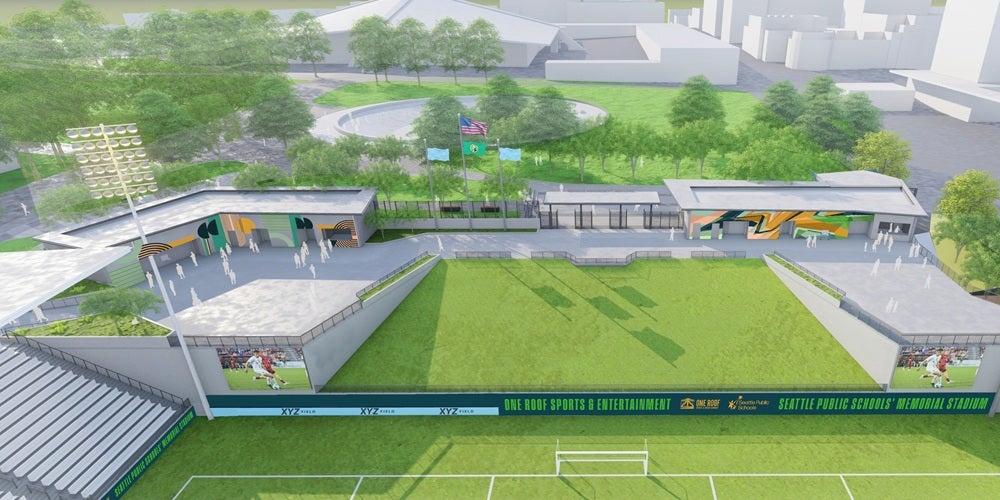
Seattle Public Schools’ program to find young talent to decorate one of the city’s best-known sports venues is more than a drawing contest. It is an attempt to turn an ordinary school initiative into a genuine pathway for teenagers dreaming of careers in art. The Memorial Stadium Art Wall Program will feature high school students’ work printed on an industrial scale and installed at the stadium as a long-term architectural element.
According to the official announcement on the school district’s website, SPS high school students may participate individually or in pairs. Applications are due by October 30, 2026, and the winners will be announced on November 20 of the same year. The selection process is intended to identify not simply technically skilled artists, but teenagers with a genuine passion for visual art and the determination to see a project through—qualities listed among the key criteria.
The project’s essence is that the selected students will create large-format murals inspired by Memorial Stadium’s meaning and legacy, as well as its role in Seattle life. The sketches will then be professionally printed and mounted on the arena’s walls, becoming part of a permanent installation. For a teenager, this is a rare opportunity not merely to see their work displayed publicly, but literally to leave a mark on the urban environment—with the potential to add a real public-art project to their portfolio, résumé and college applications.
Applications are submitted through the special Memorial Stadium Art Wall Application Form, and an SPS account is required to access it. This technical requirement underscores that the program is open exclusively to current students in the district, not outside participants. A detailed project description, including the selection criteria and design process, has been published separately—suggesting that organizers expect a thoughtful approach rather than spontaneous sketches.
Several terms are worth explaining. A mural is a monumental, large-format image typically painted on a wall or façade; in this case, the design will be printed and mounted, allowing it to retain its quality and durability. Memorial Stadium is a historic Seattle stadium owned by the school district and used for sporting and community events, so its decoration is viewed as a contribution to the city’s collective memory. SPS (Seattle Public Schools) is Seattle’s school district, while an “SPS account” is a student account in the district’s digital system.
The main paradox—and a signal for careful observers—is that the deadline is listed as October 30, 2026, while the winners will be notified on November 20, 2026. This may be a typo in the year, which does happen in official announcements, or it may indicate that the program is intended for long-term planning in coordination with a stadium renovation or upgrade. In any case, the schools are effectively being urged to “Spread the word!”—suggesting a desire to reach as broad a student audience as possible, including those who might otherwise miss the announcement.
The key insight is that the school district is using an infrastructure project as an educational tool: Teenagers receive not an abstract grade for a drawing, but a real commission involving professional production and public responsibility. For Seattle, it is also a way to strengthen ties between schools and the wider community through art. For the participants themselves, it is an opportunity rarely available even to adult artists: to see their name and work permanently displayed at a city stadium.