A Seattle judge who blocked a Trump order has been backed by the Supreme Court. The city council is voting to close streets near Aurora to fight crime. At a Pride event, a man with a baseball bat attacked attendees; the suspect has been arrested.
The Seattle judge who was right from the start on birthright citizenship
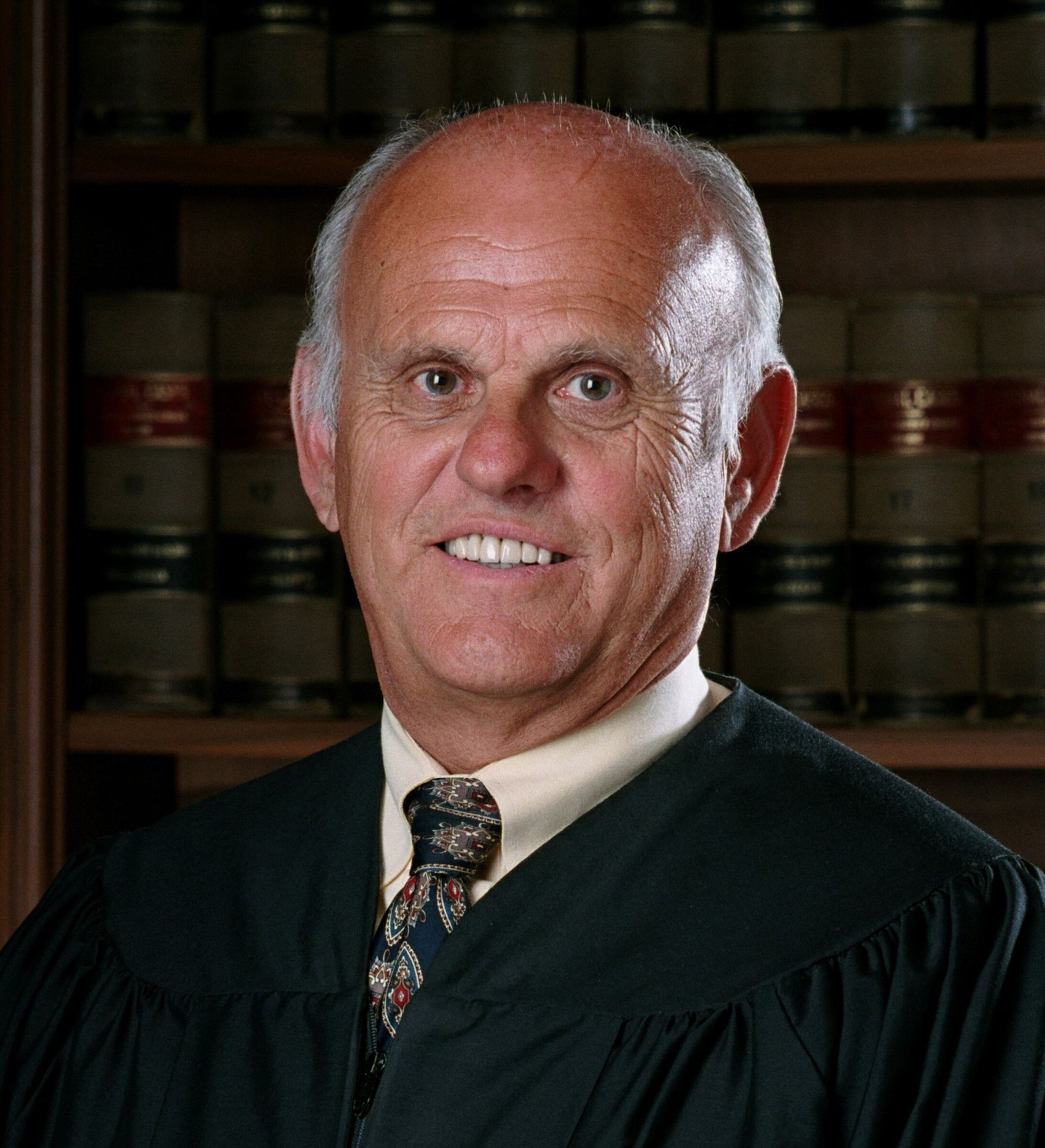
After 17 months of debate and thousands of pages of legal filings, the U.S. Supreme Court ruled on President Donald Trump’s attempt to end birthright citizenship. But Seattle federal judge John Coughenour got it right from day one. The 84-year-old veteran of the bench, with 45 years of experience, heard arguments from both sides in January 2025 and delivered his verdict in a matter of minutes. “This is plainly unconstitutional,” he said in court on the 16th floor in downtown Seattle at the time. “I have served as a judge for more than four decades, and I don’t recall any other case where the question was so clear.”
As The Seattle Times reported, on Tuesday the Supreme Court agreed with Coughenour by a 6–3 majority, rejecting Trump’s effort to redefine who counts as an American.
The dispute turns on the 14th Amendment to the U.S. Constitution, which says: “All persons born or naturalized in the United States, and subject to the jurisdiction thereof, are citizens of the United States.” Trump argued that children of undocumented immigrants are not “subject to the jurisdiction” of the U.S. and therefore should not automatically receive citizenship. His order, issued on the first day of his second term, would have stripped citizenship from about 4,000 infants in Washington state and 150,000 nationwide each year—not only the children of undocumented immigrants, but also those whose parents were in the country legally but temporarily, for example on student or work visas.
Washington Attorney General Nick Brown filed the lawsuit the day after the order was released and won the first hearing before Coughenour. Coughenour immediately blocked the order, and later it was joined by roughly half a dozen other federal courts. Brown argued that children of undocumented immigrants are clearly subject to U.S. jurisdiction: they pay taxes, register in the electoral system, and can be brought to court and face criminal liability—just like citizens. The Supreme Court ultimately confirmed that reasoning. Chief Justice John Roberts wrote in the decision that citizenship “was the right to enjoy rights—freely to participate in our political community,” and that the Founding Fathers of the 14th Amendment extended that promise to “every person, born free, on this earth.”
Notably, in early hearings, Judge Coughenour interrupted a Justice Department lawyer, Brett Schumate, even before he could finish his opening line. When asked whether Schumate believes the order is constitutional, he replied yes. Coughenour pushed back immediately: “I have difficulty understanding how a member of the bar could unequivocally state that this is a constitutional order. It just doesn’t make sense to me.” Then he added: “There are moments in world history when we look back and people of good will ask: where were the judges, where were the lawyers?”
The key takeaway from this case is not just a win for the “soil gives citizenship” principle, but also a reminder of how resilient the U.S. constitutional system is—even when the executive branch tries to circumvent it. For Trump, it was a major defeat: his attempt to revise a 150-year legal tradition failed even within the Supreme Court’s conservative majority. Attorney General Brown called the ruling “a confirmation that the truth is stronger than the lies, hatred, and authoritarianism of President Trump.” For ordinary citizens, the precedent means that being born on U.S. territory remains a reliable basis for citizenship, regardless of the parents’ status. And for lawyers, it’s a reminder that sometimes the fastest and most forceful verdict is also the right one.
In Seattle, council votes on an emergency plan to close streets in crime areas
In Seattle, the city council is preparing to vote on an emergency plan that would block through traffic on several residential streets near Aurora Avenue. The measure is intended to reduce shootings and other crime connected to illegal sex trafficking. Authorities have already installed temporary barriers and signs on the west side of Aurora at the blocks of 96th, 98th, 100th, and 102nd streets. The restrictions are planned to remain in place through the end of summer as the city evaluates how effective they are. The decision follows pressure from residents in northern Seattle neighborhoods, who for weeks demanded action along the Aurora corridor—where, they say, shootings, prostitution, and other crimes have spilled into adjacent communities.
As KOMO News reports, after local residents marched along Aurora Avenue demanding change, city officials began developing the plan. Mayor Katie Wilson said the administration is coordinating work across several departments. She directed the Seattle Department of Transportation to close certain streets and add traffic-calming measures—for example, speed bumps and narrower lanes to make it harder for drivers to circle around the area. In addition, the city has increased police patrols. Police Chief Sean Barnes said two officers will work the area at night, and bicycle patrols will operate at other times.
Erika Evans, the city prosecutor, warned that customers of sex services and business owners who permit illegal activity could face arrests or business closures. Utility crews have already removed barriers installed on their own by local residents, replacing them with temporary traffic-calming measures. The council vote will determine whether the plan is adopted on a permanent basis, while officials monitor whether the temporary closures reduce crime and volume of through-traffic. The central message of the initiative is to break the cycle where street prostitution and human trafficking lead to violence—including violence involving firearms—and that restoring safety to residential neighborhoods requires not only a police presence, but also a physical change to the city environment. Results from the experiment will be released after a summer monitoring period.
Baseball bat attack at a Seattle Pride event: what the viral video showed
Over the weekend, an incident in Seattle spread rapidly across social media. Footage filmed by bystanders shows that during Pride celebrations in Cal Anderson Park, a man with a baseball bat attacked attendees. What was supposed to be a peaceful celebration of equality turned into chaos.
As MyNorthwest.com reports, the video captures the moment the man swings the bat like a samurai sword. The footage shows him striking people whom police said were part of a small group of provocateurs. A local resident named Tim, who recorded what was happening, said he expected violence to flare up as soon as he saw the arrivals. “They came for it on purpose. They came here to provoke a fight,” he said. Tim added that the group picked a bad location because at first no one was protecting them, and then the situation got out of control.
Seattle Police Department (SPD) quickly detained the suspect—a staff member who happened to notice the attack caught him a few blocks away. The man was booked into King County Jail on charges of assault and resisting. His next hearing is scheduled for July 1. Police representatives also noted that, besides the bat, water bottles, beer, eggs, and pepper spray were used. Tim, the eyewitness, emphasized: “They were spraying pepper spray into the crowd, and you can’t do that.”
Notably, the incident occurred amid a counterprotest. A small group of activists arrived to antagonize Pride attendees. Tim called it not a lawful right to demonstrate, but illegal provocation. “The right to protest is not the right to provoke,” he summed up.
While reporters try to get a comment from Seattle City Hall, the video keeps racking up millions of views. The case once again raises questions about safety at large public events and about the boundaries of free speech when it turns into violence.