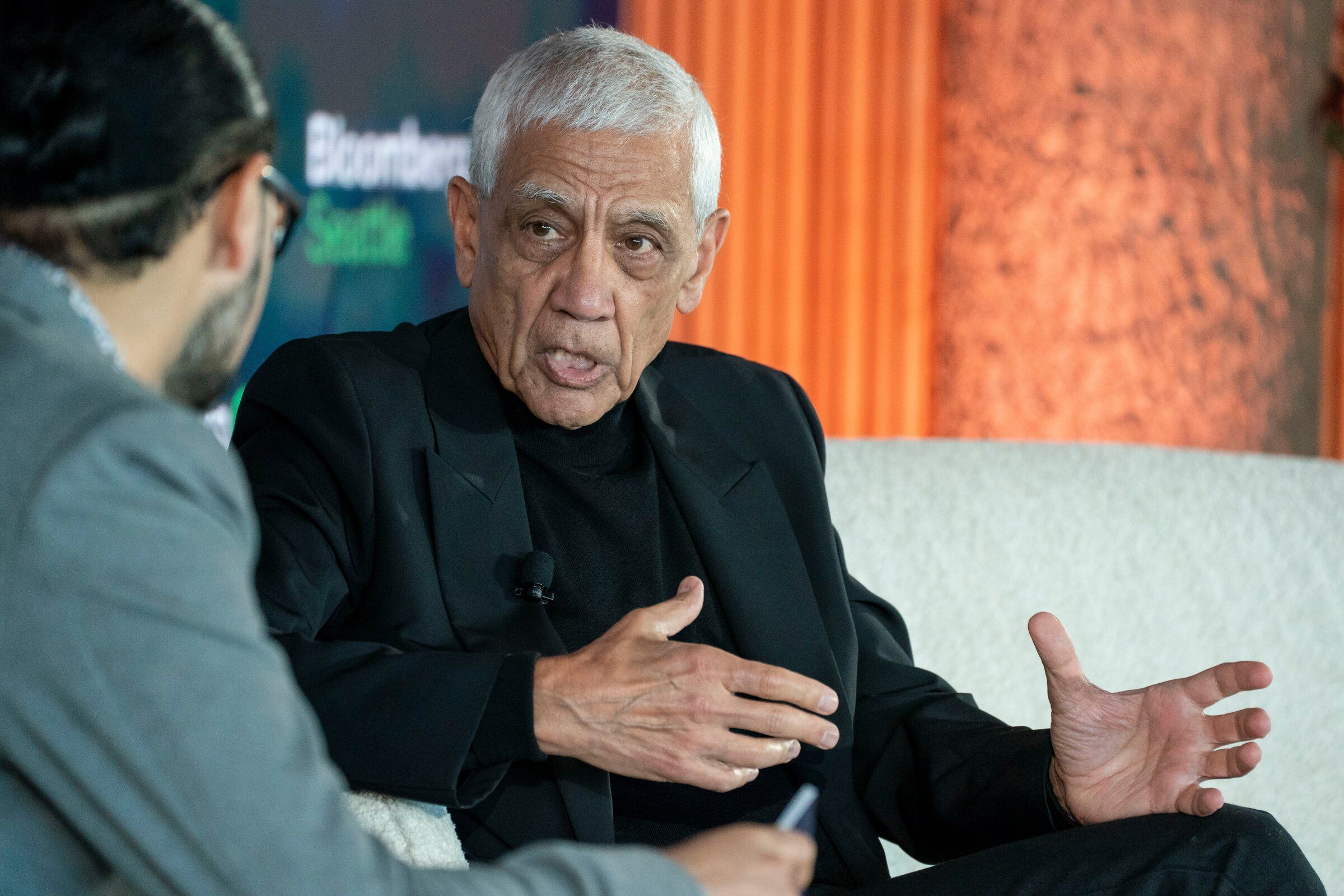
In the roundup: concert announcements from Lily Allen, Rebecca Black and other stars; an analysis of the Seahawks’ offense after the coordinator change; details on the club sale to the Khosla family with new investors.
Ticket news: Lily Allen, Rebecca Black and other stars coming to Seattle
Every week, the EverOut portal (part of The Stranger) publishes announcements for new concerts and shows whose tickets go on sale. This week was no exception: several big names have announced tours bringing both excitement and big-time hits to Seattle’s most iconic venues. At the center of attention is British pop legend Lily Allen, who in September will bring her candid “divorce” album West End Girl in full to the Showbox SoDo stage. Released in 2025, the record became her way of reworking a painful breakup—sharp, ironic, and brutally honest lyrics have already earned praise from critics. Allen performs it from start to finish, promising a particularly emotional and cohesive show.
Another intriguing figure is Rebecca Black. She once became the target of online harassment because of the viral video for “Friday,” but since then she’s emerged as one of hyperpop’s most vivid representatives—an extravagant, intentionally exaggerated style that blends pop melodies with distorted synths and absurd lyrics. Black has announced a new album coming out in the fall and heading into a North American tour. In Seattle, fans will be able to see her at the same venue, Showbox SoDo—where people are expecting both old hits like “Friday” in a new treatment and brand-new material. Also on the horizon is the first American tour for rising Japanese hip-hop star Yuka Chiba. Growing in popularity thanks to a bold fusion of trap and traditional Japanese motifs, she will perform for a Western audience for the first time with a full solo set.
The ticket lineup also includes concerts by K-pop group ARTMS (October 25 at Showbox SoDo), punk veterans The Bouncing Souls marking three decades on stage (February 20, 2027 at the Neptune Theatre), and experimental artist Emma Ruth Rundle, known for her dark guitar aesthetic (November 24 at Neumos). All tickets go on general sale on Friday, July 24, at 10 a.m. local time, unless otherwise noted.
For those unfamiliar with the term “hyperpop”: it’s an energetic, grotesque offshoot of pop music where producers deliberately overload the sound with effects, making vocals distorted and the rhythms broken. Rebecca Black became one of its symbols, showing that internet fame can be reinterpreted as art. As for Lily Allen’s West End Girl, the title refers to a London district where many of her songs are set, and in the lyrics she dissects marriage and divorce with her trademark sarcasm—topics that will sound familiar to many listeners. In her review on The Stranger, the authors note that announcements like these help “plan the future fun,” and indeed the upcoming season promises to be packed—from nostalgia for the 2000s to fresh sounds from Japan and the K-pop world.
Super Bowl defense: How will the new coordinator, Brian Fleury, change the Seattle Seahawks?
Last season was a triumph for the Seattle Seahawks—the team won the Super Bowl, and the leading figure in the conversations, general manager John Schneider, finally confirmed his status as a Hall of Fame candidate. But in the world of fantasy football (and real football too), the key question is what the offense will look like after the departure of coordinator Clint Kubiak, who took over the Raiders. Replacing him is Brian Fleury, the former outside run game coordinator for the San Francisco 49ers, who has no experience calling plays. Combined with the loss of running back Kenneth Walker and the injury to Zack Charbonnet, that creates extra intrigue—especially for those who follow fantasy.
Schneider is betting on continuity: Fleury comes out of the “Shanahan clan” (an offensive system built on concepts from Mike Shanahan), and according to ESPN, he’s expected to emphasize more movement pre-snap and shifts. But the dirty secret of last year’s Seahawks offense is that without Walker, the outside run game was ineffective: by DVOA (a metric of efficiency adjusted for defensive resistance), the team ranked just 15th, and the whole success depended on Walker’s phenomenal ability to break tackles—he broke 105 tackles on 252 carries, the best mark in the league, per FTN. Charbonnet was reliable in short-yardage situations, but he’s a different type of player. Now, in January, Charbonnet tore his ACL, and his return is expected no earlier than November—possibly later. The rookie Jadarian Price, drafted in the first round, becomes the main hope for the outside run. His average draft position (ADP) in fantasy is around 50–70, but the risk is significant: the Seahawks also have George Holani and Emanuel Wilson, though the latter’s contract ($1.595 million per year) suggests more of a depth role.
In the passing game, everything centers on Jaxon Smith-Njigba, who is rightly being selected in the first round of fantasy drafts. Still, caution won’t hurt: a new coordinator and a non-elite quarterback could turn his 119 catches for 1,793 yards and 10 touchdowns into something like 105/1,500/8—without any surprises. On top of that, the Seahawks signed Rashid Shaheed to a $51 million deal, and there are rumors that they want to use him more actively. Shaheed is the kind of player who can score a touchdown from anywhere on the field, and his draft position (top 150) makes him an interesting late-round option. Even with the title, Sam Darnold remains a modest QB2 in superflex leagues: in 17 games, he threw for 300 yards only twice and for more than two touchdowns only three times, and his mobility is essentially zero. At age 33, Cooper Kupp has mostly been doing grunt work, while tight ends A.J. Barner and Elijah Arroyo are dependable blockers but not fantasy stars.
The offensive line is expected to be strong: left tackle Charles Cross and right tackle Abraham Lucas are the foundation. The Seahawks’ defense is too good to drag the team into the kind of shootouts needed for high passing-game production. According to DraftKings sportsbook lines, the season win total is 10.5, and analysts lean toward the over (-115), believing last year’s success wasn’t just a fluke. The main question is whether Fleury—who has never called plays—can find the balance between continuing Kubiak’s traditions and adding elements from the 49ers’ system, where the outside run game was also not ideal last year. The answer will determine not only the team’s fate, but also the value of its players in fantasy drafts. As noted in an NBC Sports piece, “Schneider’s instincts worked out last year,” and now he’s risking it again.
Selling the Seattle Seahawks: potential partners for the Khosla family are reported to have leaked
More details continue to emerge around the $9.612 billion sale of the NFL franchise Seattle Seahawks. The Khosla family, which reached a preliminary agreement to buy the team on July 11, is now in talks to bring in additional investors. According to Bloomberg, the consortium could include major players such as global investment firm Carlyle Group, private investment company Sixth Street Partners, and former Sequoia Capital managing partner Mark Stevens, as well as the Dynasty Equity Partners Management fund. Carlyle Group, as a reminder, acquired 97% of the Seattle Reign in 2024 in partnership with Seattle Sounders. Sixth Street Partners, based in San Francisco, owns 3% of the New England Patriots— the very team the Seahawks beat in the Super Bowl. It’s important to emphasize that these negotiations are still actively ongoing, and, as Bloomberg writes, “it’s possible the deal ultimately won’t be completed.”
NFL rules are quite strict when it comes to ownership structure. The controlling owner must hold at least 30% of the shares, and the total number of owners (including individuals, families, and private investment funds) cannot exceed 25 people. Since 2024, the league has allowed selling stakes to multiple private investment companies, but no single stake can be less than 3%, and in total all PE funds can’t own more than 10% of the team. In addition, these stakes can’t be sold for at least six years—to avoid “flipping, like real estate.” Notably, the NFL pre-approved four private investment firms that can purchase stakes in clubs, including Sixth Street, Carlyle, and Dynasty. If the deal goes through, all four approved funds would be represented in the NFL franchise for the first time.
The role of the Khosla family itself is worth highlighting. Bloomberg also reports that Khosla Ventures— the venture firm founded by Vinod Khosla in 2004—plans to raise up to $5.5 billion for new investment funds. This is not directly related to the Seahawks purchase. Moreover, investors were told that Vinod Khosla has no intention of handling the day-to-day management of the team—he will fully dedicate himself to the venture business. According to the league’s memorandum, the controlling owner would be Niru Khosla, while their son, Neel, is expected to play a significant role within the ownership group. The more precise division of responsibilities will be known after the NFL owners meeting in Atlanta on August 26 votes to approve the deal. The Seahawks hope to complete all formalities before the first regular-season game on September 9 against the New England Patriots at Lumen Field.
Overall, what’s happening shows how the NFL investment landscape has shifted: an influx of private capital and institutional investors is becoming the norm, and franchise prices are soaring to record levels. The Seahawks deal is one of the biggest in sports history, and its details are being scrutinized not only by fans, but also by M&A market analysts. In the original Seattle Times article, it’s emphasized that a lot can still change before the transaction is finalized, but even now it’s clear: the new ownership roster will be among the most diverse in terms of capital structure in the league’s history.